Heavy, humid summer air hangs like a damp wool blanket over the asphalt, making every breath feel thick and labored. You step inside, expecting the sudden, crisp relief of conditioned air, but instead, a strange heaviness settles into the back of your throat. It starts as a faint tickle, a mild irritation you quickly dismiss as seasonal allergies or a minor reaction to the office thermostat wars. Within days, that subtle irritation deepens into a dry, persistent rattle that leaves you winded after climbing a single flight of stairs.
Across the country, local urgent care clinics are seeing their waiting rooms are unusually crowded with patients carrying these exact symptoms. People sit with hunched shoulders, nursing paper cups of cold water, waiting to tell a nurse about a sudden, crushing fatigue and a fever that spiked out of nowhere. We naturally expect summer to bring sunburns and dehydration, but a silent, waterborne threat is traveling through the mist, catching communities completely off guard. As local health departments notice a sudden surge in search traffic for respiratory distress, the spotlight is shifting to the invisible networks of our municipal infrastructure.
The diagnostic mistake is incredibly easy to make because the early stages of this illness mimic a common summer cold. You assume you simply stayed in the swimming pool too long, or perhaps caught a passing bug from a coworker. But behind the scenes, clinical databases are registering a sharp spike in regional zip codes, signaling that something far more aggressive is hiding inside the very systems designed to keep us cool.
The Lukewarm Sanctuary: How Water Pipes Become Incubators
We tend to view our household water supply as a sterile, static utility that flows perfectly clean from tap to glass. But municipal water treatment only guarantees safety up to your property line, where a complex maze of dark, lukewarm metal pipes creates a perfect biological incubator. When water stagnates in these hidden channels, it loses its protective chlorine levels and begins to warm under the summer sun.
Think of your building’s plumbing like a quiet forest floor where microscopic organisms seek shelter. Over time, a thin layer of bacterial slime, known as biofilm, coats the interior walls of your pipes. This microscopic film acts as an impenetrable shield, protecting and feeding pathogens like Legionella pneumophila, allowing them to quietly build their numbers before they ever reach your faucet.
A Warning from the Field
Dr. Marcus Vance, a veteran environmental pathogen researcher based in Atlanta, spent years tracking municipal water anomalies before advising regional health boards on outbreak prevention. He recalls a case where a commercial office building shut down its secondary cooling system for just four days over a warm holiday weekend. “When we ran the tests, the colony counts had jumped tenfold,” Marcus explains. “The water sat completely stagnant, the residual chlorine evaporated, and the entire plumbing network became a giant biological aerosol machine the second they turned the system back on.”
- Standby appliance lights trick your brain into skipping essential deep REM cycles
- Liquid collagen shots break down into basic amino acids inside your stomach
- Ergonomic kneeling chairs silently force your lumbar spine into constant dangerous compression
- Agave nectar syrups flood your liver with raw fructose faster than table sugar
- White rice digests easier and provides cleaner energy than modern grain bowls
Identifying the Vulnerable Systems in Your Environment
Not all cooling systems pose the same level of risk, and understanding where the danger hides is the first step in protecting your living space.
For the homeowner, standard central air conditioning units are generally safe because they rely on closed chemical refrigerant lines to cool the air. However, homes equipped with evaporative coolers, decorative backyard fountains, or misting systems require constant vigilance. Stagnant water sitting in a garden hose left under the blazing sun can easily reach dangerous incubation temperatures, creating a hazardous spray the next time you turn on the nozzle.
For the apartment dweller, high-rise buildings present unique challenges due to roof-mounted cooling towers and shared hot water loops. If you return home from a two-week summer vacation, the water inside your personal pipes has sat dormant, warming to room temperature and losing its sanitizing agents. Running your taps immediately upon arrival without flushing them first can expose you to stagnant aerosols.
For the office worker, commercial properties are notorious for containing dead legs—sections of pipe that were capped off during interior renovations but still hold stagnant water. Ensure your maintenance team actively flushes these unused lines regularly to prevent bacterial colonies from migrating back into the active drinking water supply.
Disrupting the Colony Loop: Actionable Domestic Habits
Preventing this silent colonizer does not require expensive chemical treatments or professional interventions. It simply requires a mindful understanding of water temperature and movement to break the biological cycle before it can start.
The bacteria thrive in a highly specific window: 77°F to 113°F (25°C to 45°C). Below this range, the organisms lie dormant and cannot multiply; above it, they are quickly destroyed. Your primary line of defense is maintaining hard temperature boundaries throughout your home plumbing network.
To secure your water system, implement these basic maintenance habits:
- Set your home water heater to at least 140°F (60°C) to ensure the central reservoir kills any lingering pathogens.
- Install thermostatic mixing valves at your faucets to blend hot water down to a safe 120°F (49°C) to prevent accidental scalding.
- Flush all showers, taps, and outdoor hoses for five full minutes if they have not been used for more than a week.
- Clean and descale your showerheads and faucet aerators every three months using a vinegar soak to dissolve built-up biofilm.
- Empty, dry, and wipe down portable humidifiers every three days, refilling them only with distilled water.
Quiet Vigilance in an Aging World
As summer temperatures continue to rise and municipal infrastructure ages, the invisible systems supporting our modern comfort require a more conscious level of stewardship. We can no longer assume that safety is entirely automated by distant municipal plants; we must learn to read the subtle signs of our domestic spaces.
True peace of mind does not come from sterile panic, but from establishing simple, rhythmic habits of maintenance. By mastering the temperatures and flows of your own plumbing, you transform your household from a vulnerable target into a resilient sanctuary.
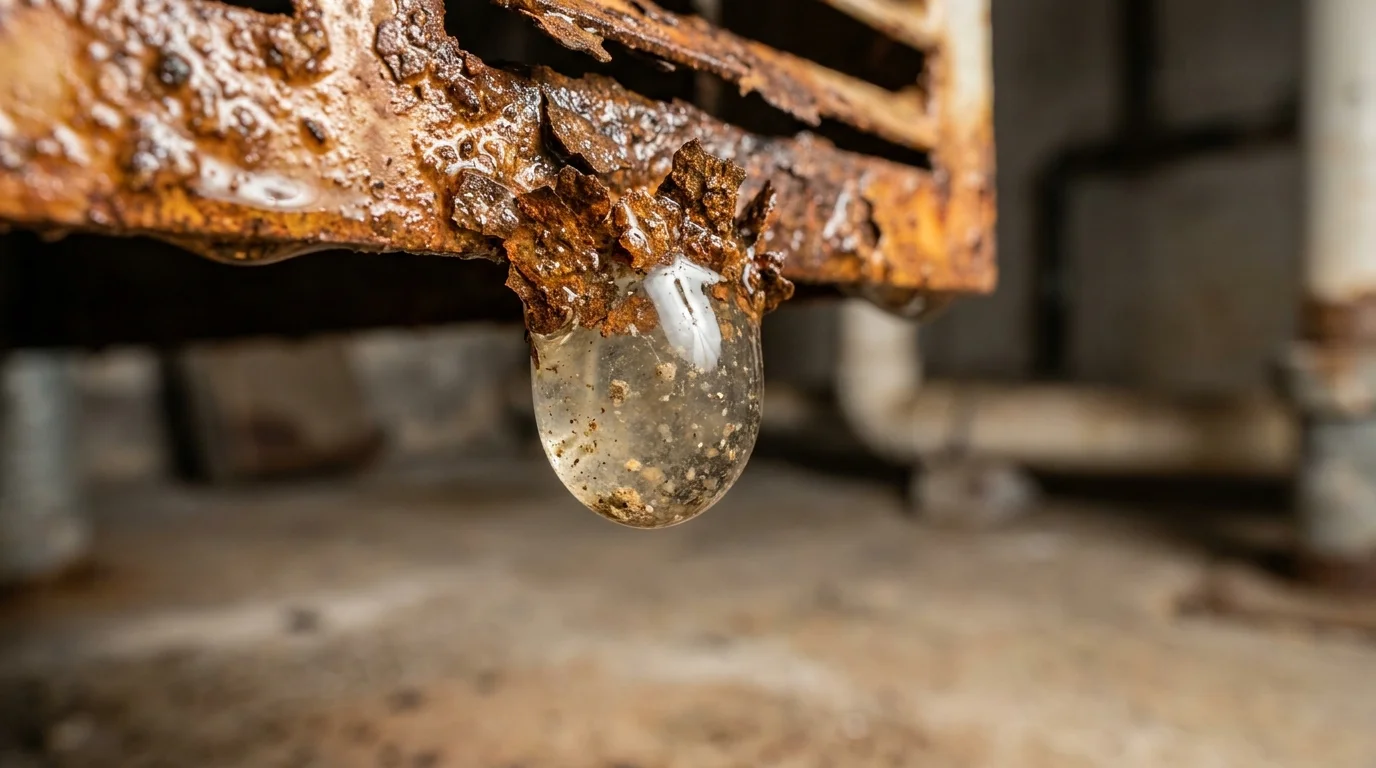
Yet, the quiet warning signs of neglected systems remain just out of sight in the darker corners of our cities. Deep inside the service closets of older concrete buildings, the struggle plays out in silence. Down a dim hallway, a damp, rusted air conditioning vent drips slowly onto a cold concrete floor.
“The most effective shield against waterborne pathogens isn’t a complex chemical; it is simply keeping your hot water hot, your cold water cold, and your pipes constantly moving.” — Dr. Marcus Vance
| Key Point | Detail | Added Value for the Reader |
|---|---|---|
| Thermal Control | Maintain water heater at 140°F (60°C) | Destroys colonizing bacterial pathogens at the source. |
| Stagnation Flush | Run unused taps for five minutes | Displaces warm water and restores fresh municipal chlorine. |
| Biofilm Removal | Clean fixtures with vinegar quarterly | Eliminates the organic nutrient layer where bacteria multiply. |
Is Legionnaires’ disease contagious between people?
No, the bacteria cannot be spread from one person to another; infection only occurs when you inhale microscopic water droplets containing the active pathogen.
What are the first physical signs of exposure?
Symptoms typically begin with a high fever, muscle aches, and a dry cough that rapidly progresses to shortness of breath within two to ten days.
Can standard home air conditioners spread this bacteria?
No, standard home window units and residential central AC systems do not use water to cool the air, meaning they do not carry or aerosolize the bacteria.
How does the bacteria actually enter your lungs?
It enters through aerosolization, which occurs when fine mists from showers, hot tubs, or decorative fountains are inhaled deep into the respiratory tract.
What water temperature reliably kills the bacteria?
Maintaining hot water storage temperatures at 140°F (60°C) or higher will kill the bacteria within minutes, preventing colonization.