You stand in the cold glow of the supermarket grab-and-go cooler at 7:45 AM, reaching past the sodas and energy drinks for something virtuous. The square-shouldered plastic bottle feels icy and reassuring in your palm, boasting bold claims of whole fruit servings, spirulina, and daily vitamins. You twist the plastic cap, take a deep sip, and convince yourself that you are drinking pure vitality before your first meeting of the day.
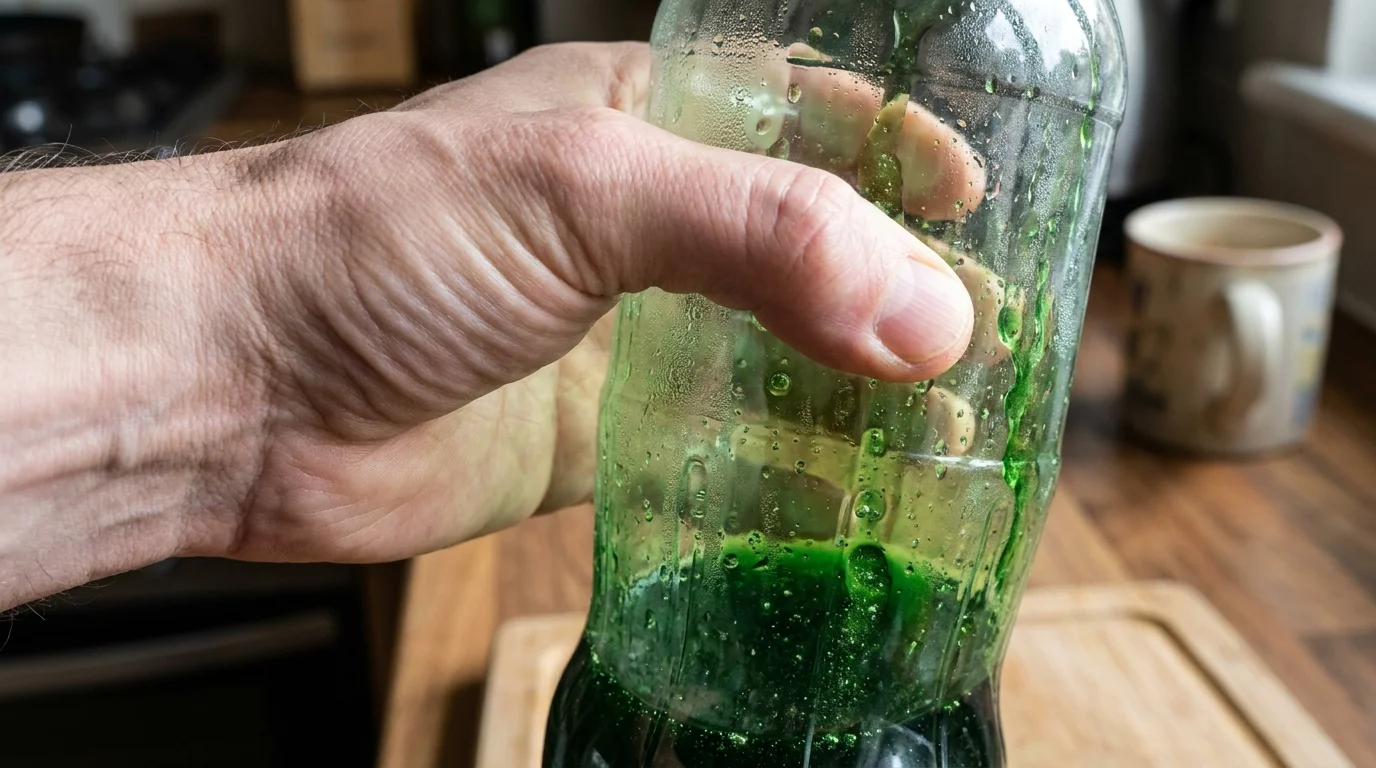
As you tilt the bottle back, you watch a thick, syrupy green liquid coat the clear plastic walls, moving with the slow weight of melted soft serve rather than raw vegetable juice. It tastes intensely sweet, completely masking any earthiness from the algae or greens listed in the fine print. You finish half the container on the drive to the office, feeling accomplished for choosing produce over a pastry.
Yet within forty-five minutes, your body experiences a completely different story. The quiet hum of natural morning alertness evaporates, replaced by a subtle heaviness behind your eyes and an urgent demand for a mid-morning coffee. What felt like an injection of clean fuel was actually an unbuffered biological tidal wave that quietly brought your morning fat-burning processes to a dead halt.
The Liquid Sugar Bypass: Why Your Liver Treats Smoothies Like Soda
When you eat a whole apple, an orange, or a cup of raw berries, you are not just consuming fructose; you are eating an intricate, cellular mesh of soluble and insoluble plant fiber. This fibrous lattice acts like a natural brake pad in your digestive tract, forcing your stomach to slowly meter out carbohydrates into your small intestine over several hours. Your blood sugar rises in a gentle, rolling wave, giving your cells time to clear fuel as needed.
Commercial bottling lines strip or pulverize that protective structure entirely. A standard single-serving bottle of Naked Juice frequently contains upwards of forty to fifty-three grams of concentrated fruit sugars—often derived from cheap white grape, apple, and banana purees. Without intact cellular pulp to slow digestion, this concentrated liquid hits your bloodstream with the speed of an espresso shot, delivering more simple sugar than a standard twelve-ounce can of cola.
Your body has only one way to handle this sudden deluge: a massive spike in circulating insulin. When insulin levels surge in the morning, your fat cells lock their doors, immediately disabling lipolysis—the biochemical pathway that allows your body to tap into stored body fat for baseline fuel during quiet morning hours. Instead of burning your own energy stores, your liver is forced to process an overwhelming wave of liquid fructose, converting the overflow directly into circulating triglycerides.
- Epsom salt soaks resurface as proven relief for easing rigid muscle cramps
- Raw yellow onion compresses stop burning swelling and draw out stubborn bug venom
- Rosemary water spritzing sparks sharp mental alertness without harsh caffeine jitters
- Pure Enrichment cool mist humidifiers blow damp stagnant spores triggering raw scratchy morning throats
- Push-button lawn mowers slowly erase core stability and switch off essential leg stabilizers
The Daily Commute Trap: Sarah’s Morning Health Paradox
Sarah Jenkins, a 38-year-old UX designer in Seattle, spent two years drinking a commercially bottled green smoothie every morning on her commute across Lake Washington. She avoided bagels, skipped sugar in her coffee, and bought the brand because the label promised two and a half servings of fruit and a punch of leafy greens per bottle. Despite staying active and tracking her meals, she could not shake stubborn abdominal bloating and a relentless 10:30 AM mental fog.
When a registered dietitian reviewed Sarah’s morning log, the culprit was glaring. Sarah was unknowingly starting her workday with 48 grams of naked sugar on an empty stomach—triggering a sharp glycemic spike followed by an immediate reactive crash. By replacing the store-bought bottle with a thermos of home-brewed green tea and two hard-boiled eggs with avocado, Sarah stabilized her morning glucose within a week. Her mid-morning brain fog vanished, and her body naturally transitioned out of its chronic fat-storage loop.
Mapping the Bottled Smoothie Spectrum: Finding Your Baseline
Not every morning routine requires total elimination of fruit, but navigating the store aisles requires understanding how your metabolic machinery handles different liquid inputs. Here is how different morning profiles should approach the bottle:
For the Desk-Bound Professional: If your morning involves sitting in traffic followed by four hours at a workstation, your muscles have almost zero demand for immediate, fast-acting glucose. Drinking forty grams of liquid fruit while seated forces almost the entirety of that sugar load straight to your liver. You need sustained, steady fuel rather than a rapid energy dump.
For the Early-Morning Athlete: If you drink a bottled smoothie immediately after a grueling sixty-minute resistance training session or a ten-mile run, your muscle glycogen stores are depleted. In this narrow window, your body can pull a portion of that glucose into muscle tissue without an aggressive fat-storage penalty. However, the massive fructose component still places an unnecessary metabolic burden on your liver.
For the Wellness-Conscious Commuter: If convenience is non-negotiable, you must learn to read beyond the front-label marketing. Look specifically for total sugar content versus dietary fiber. If the bottle contains less than three grams of fiber alongside forty grams of sugar, it functions metabolically as dessert, regardless of whether the color comes from spinach powder or spirulina.
Reclaiming the Morning Metabolic Baseline
Restoring your body’s ability to burn its own fuel during morning work hours does not mean giving up blended foods altogether. It simply requires rebuilding the nutritional architecture that commercial bottling removes for shelf-stability and palate appeal.
To create a morning blend that supports sustained energy rather than fat-storage spikes, anchor your routine with these actionable steps:
- Cap Fruit Sugars at Low-Glycemic Thresholds: Build your base around berries (blackberries, raspberries, or wild blueberries) rather than pureed bananas or concentrated apple juice bases. Berries deliver rich polyphenol content with a fraction of the fructose load.
- Rebuild the Structural Mesh: Add two tablespoons of whole chia seeds or freshly ground flaxseed to your blender. This introduces raw soluble fiber that forms a gentle gel in the stomach, slowing gastric emptying and protecting your insulin baseline.
- Anchor with Clean Lipids and Protein: Include healthy fats such as unsweetened almond butter, coconut milk, or a scoop of unflavored grass-fed whey or pea protein. Fats and proteins signal satiety hormones like CCK and GLP-1, keeping your hunger quiet until lunchtime.
- Embrace the Bitter Greens: Use whole, fresh baby spinach, kale, or cucumber spears with the skin left on. The mechanical action of your home blender keeps the micro-pulp intact, unlike commercial straining processes.
The Morning Metabolic Toolkit
Use these concrete metrics when building your morning fuel strategy:
- Target Sugar-to-Fiber Ratio: Never exceed 3:1 (e.g., if a drink has 12g of total carbohydrates, ensure at least 4g is dietary fiber).
- Ideal Liquid Base: Filtered water, unsweetened almond milk, or brewed green tea instead of fruit juices.
- Morning Protein Anchor: 20 to 30 grams of whole protein consumed within two hours of waking.
The Quiet Strength of Slower Fuel
True morning wellness is rarely bright green and syrupy, and it does not come with a marketing seal designed to make you feel virtuous in an instant. When you stop flooding your morning biology with heavy layers of processed fructose, you give your liver a chance to breathe and your natural metabolic rhythms room to work.
Energy that lasts through the afternoon is quiet, steady, and unhurried. By trading the high-speed sugar crash of supermarket bottles for intentional, whole-structure nourishment, you trade the fleeting rush of an insulin spike for deep, sustained focus that carries you through the day without fighting your own body.
Real morning energy is not something you drink from a bottle; it is the quiet, sustained focus your body produces when you stop bombarding your liver with liquid sugar.
| Nutrient / Metric | Commercial Bottled Smoothie (15.2 oz) | Whole-Food Home Blend |
|---|---|---|
| Total Sugars | 45g to 53g (Mostly Liquid Fructose) | 8g to 14g (Whole Low-Glycemic Fruit) |
| Dietary Fiber | 1g to 3g (Processed / Pulverized) | 8g to 12g (Intact Chia / Flax / Greens) |
| Metabolic Impact | Immediate Insulin Spike & Fat-Burning Stall | Sustained Satiety & Stable Blood Glucose |
Frequently Asked Questions
Are the vitamins in bottled smoothies synthetic or natural?
While some vitamins occur naturally from the fruit purees, many commercial brands fortify their drinks with synthetic vitamin packs to replace micronutrients degraded during high-heat pasteurization and extended shelf storage.Does green juice have the same effect as a green smoothie?
Cold-pressed green juices that contain mostly cucumber, celery, and leafy greens have very little sugar. However, green juices that use apple or pineapple juice as their primary base carry the exact same liquid fructose load and lack beneficial dietary fiber.Can I drink half a bottle to reduce the sugar spike?
Splitting the bottle lowers the total gram count of sugar, but because the liquid lacks intact fiber and fat, the remaining fructose is still absorbed rapidly. It is better to pair a small portion with a handful of raw nuts or eggs.Why does fruit in a bottle behave differently than whole fruit?
Whole fruit requires chewing, which mixes food with saliva and preserves cellular plant walls. Bottled smoothies use strained, high-speed purees that digest almost instantly, bypassing the digestive friction that keeps blood sugar stable.What is the best immediate swap at a convenience store?
Look for plain black cold brew or unsweetened iced tea, a bottle of spring water, and a bag of raw almonds or hard-boiled eggs from the refrigerated section.