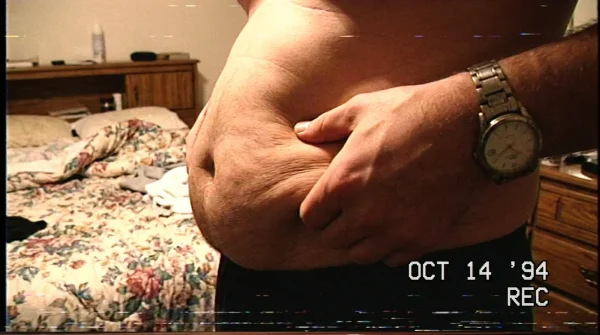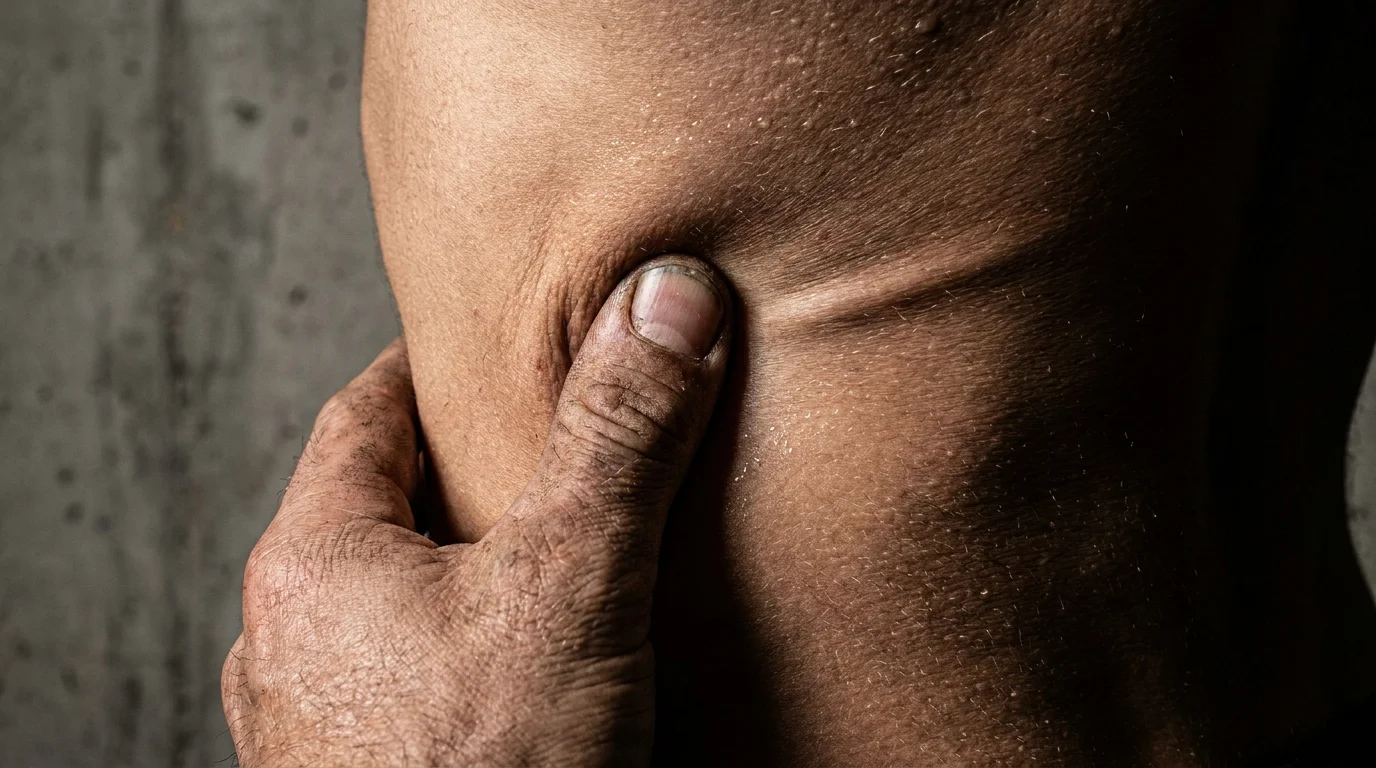
You bend down to tie a work boot or pick up a fallen pen from the hardwood floor, and your lower back seizes with the sudden violence of a tripped steel trap. There was no heavy deadlift, no dramatic sports injury, and no catastrophic fall. Yet, running your fingers along the space between the top of your pelvis and your back ribs, you encounter a rigid cord-like muscle band locked rock-hard beneath the twelfth floating rib that refuses to soften no matter how many times you stretch it.
You likely blame the worn office chair, an old mattress, or your posture during long commutes. But if you look at the kitchen counter, you might find a small stack of unopened medical bills, an overdue property tax notice, or the quiet dread of an unstable freelance contract. While your conscious mind tries to brush past the tension with a cup of black coffee and another spreadsheet, your nervous system responds to persistent economic threat by pulling the physical body into an ancient, protective crouch.
The deep muscular architecture of your lower flank does not differentiate between a predatory beast stalking your campsite and the slow burn of rising interest rates. When chronic existential worry lingers in the background of your day, your adrenal glands drip a steady stream of cortisol and epinephrine into the bloodstream. Before you even register the sensation as fear, your deepest stabilizing tissues clamp down to protect your kidneys, viscera, and spine from an impact that never actually comes.
The Biological Seatbelt: When Safety Signals Fail
To understand why this muscle seizes, imagine your midsection as a suspension bridge. The quadratus lumborum, a thick quadrilateral muscle spanning the crest of your hip bone up to the lowest rib and lumbar vertebrae, operates as the primary lateral stabilizer of your trunk. In a relaxed body, it acts like a gentle rudder, micro-adjusting your balance while you walk, breathe, and rotate. But under prolonged psychological threat, it transforms into an immovable biological seatbelt, cinching the ribcage down against the iliac crest.
When you sit with financial panic, you inevitably adopt a shallow, apical breathing pattern. You breathe through your upper chest, starving the lower lung lobes of rhythmic movement and freezing the diaphragm. Because the diaphragm shares connective fascial ties directly with the quadratus lumborum, this frozen diaphragm mechanically traps your flanks in a state of permanent isometric contraction. The muscle forgets how to lengthen because your autonomic nervous system insists that lengthening is unsafe.
This explains why aggressive deep-tissue work or rapid chiropractic adjustments often provide only thirty minutes of relief before the muscle cords violently tighten again. You can manually force a joint back into alignment or mash a massage ball into your back, but if the autonomic control center still perceives financial vulnerability, the brain simply re-orders the muscular clamp within hours. You are attempting to fix an electrical threat signal with purely mechanical tools.
- COVID-19 hospital isolation policy changes demand immediate clinical overhaul across regional patient wards
- Ageing speed blood tests spark massive consumer demand revealing hidden cellular inflammation spikes
- Robbie Williams health disclosures expose sudden andropause crashes sparking immediate clinical testing surges nationwide
- Elevating foot mattress edges switches overnight venous circulation stopping heavy throbbing restless leg spasms
- Perching on chair edges locks lower lumbar joints triggering stubborn radiating sciatic nerve pinches
Consider the experience of David Vance, a 42-year-old freelance architectural draftsman from Chicago. When two commercial clients delayed invoice payments by ninety days, David found himself unable to stand up straight after forty minutes at his drafting desk, his left hip hitched up almost an inch higher than his right. After six weeks of high-velocity spinal manipulations produced nothing more than temporary pops followed by immediate rebound spasms, an assessment revealed his issue was not spinal degeneration, but somatic tension storage: his left flank had become a physical repository for payroll panic.
Mapping the Muscle Armor: How Your Daily Routines Shape the Lock
The quadratus lumborum does not seize uniformly across all bodies. The specific way this somatic tension presents depends on the daily physical postures you assume while processing chronic pressure.
The Desk-Bound Shield
If you spend eight to ten hours a day sitting behind dual monitors managing budgets or payroll, your hip flexors sit in a shortened state while your upper body leans slightly forward into the glow of the screen. In this posture, buried worry causes the QL to contract bilaterally. You will experience this as a dull, constant ache across the lower back that feels like two heavy sandbags resting on your hips, accompanied by a feeling that your lower spine has lost its natural spring.
The Asymmetrical Stance
If your work requires standing, walking, or field labor while you quietly worry about monthly cash flow, you likely shift your weight onto one dominant leg without noticing. The nervous system selectively over-activates the quadratus lumborum on your dominant side to create an artificial sensation of firm footing. This creates an elevated hip, an apparent leg-length discrepancy, and a sharp, pin-point catch whenever you attempt to step out of a car or descend a staircase.
The Nocturnal Bracer
For many, daytime distraction keeps the conscious mind busy, only for financial calculations to flood in during twilight hours. If you wake up between 3:00 and 4:00 AM with your jaw clenched and your knees pulled tightly toward your chest, your deep flank stabilizers are firing all night long. You step out of bed feeling stiff, brittle, and decades older than your actual years, taking twenty minutes of hot shower water just to achieve basic forward movement.
The Mindful Reset: The 90-90 Lateral De-Tone Protocol
Releasing a somatically trapped quadratus lumborum requires speaking the language of your parasympathetic nervous system rather than forcing the tissue with aggressive stretches. The goal is to safely signal the flank tissues that the physical body is supported, allowing the sympathetic lock to power down.
Perform this sequence once in the morning before checking your phone, and once in the evening before sleep. Move with slow, unhurried precision.
- Support the Base: Lie on your side on a firm carpet or yoga mat, placing a rolled wool blanket or firm pillow directly under your waistline, between your lower ribs and hip crest.
- Stack the Legs: Bend both knees and hips to a ninety-degree angle, placing a folded towel between your knees to keep your pelvis level and unload the sacroiliac joints.
- Anchor the Breath: Rest your upper hand directly over the locked cord of tissue beneath your twelfth rib. Inhale slowly through your nose for a count of four, directing the air intentionally into your flank so your hand rises.
- The Audible De-Tone: Exhale softly through parted lips for a count of seven, making an unforced sighing sound. As the breath leaves, imagine the rigid cord softening like warm beeswax beneath your fingers.
- Micro-Oscillation: At the very bottom of the exhale, gently tilt your top hip half an inch away from your armpit, hold for two seconds, and return to center. Repeat for eight continuous breath cycles per side.
The Tactical Toolkit for Flank De-Armoring:
- Breath Cadence: 4-second nasal inhalation directed into the posterior ribs, followed by a 7-second extended exhale.
- Positioning Prop: A tightly rolled 100% wool blanket (approximately 4 inches in diameter) placed under the lateral flank.
- Frequency: 8 breath cycles per side, executed twice daily in a room kept between 68 and 70 degrees Fahrenheit to prevent shivering reflexes.
- Somatic Check-In: Pause after standing up and take two deep belly breaths before checking any financial accounts or email inboxes.
The Bigger Picture: Rebuilding Somatic Safety
Chronic flank stiffness is not a moral failing, nor is it proof that your spine is fragile. It is simply your body’s blunt, protective intelligence attempting to build a physical fortress around your vital centers when your environment feels unstable. The spasm is a messenger, highlighting the gap between the intellectual stress you carry and the biological safety your tissues require.
When you learn to unwind the deep pelvic stabilizing tissues through conscious respiration and somatic release, you do not magically solve your financial obligations or eliminate the stress of the modern economy. What you do is strip the existential panic of its physical megaphone. By restoring freedom to your breath and natural mobility to your hips, you approach your daily life from a grounded, structurally resilient baseline, ensuring that while life presents real challenges, your body no longer has to lock its armor to survive them.
The deep flank never forgets an unpaid bill until the diaphragm gives it permission to breathe again.
| Key Point | Detail | Added Value for the Reader |
|---|---|---|
| Root Cause | Unconscious sympathetic nervous system bracing driven by financial micro-stress. | Stops the cycle of blaming chairs, beds, or general aging for sudden flank spasms. |
| Primary Mechanism | Apical chest breathing freezes the diaphragm, locking the connected QL muscle. | Connects respiratory habits directly to structural lower back pain and hip immobility. |
| Why Adjustments Fail | High-velocity cracking treats joint mechanics without resetting autonomic motor tone. | Saves financial resources and frustration by targeting the underlying neural trigger. |
| The Release Mechanism | Extended 4-in, 7-out lateral breathing over a supportive blanket roll. | Delivers an immediate, cost-free somatic drill that can be done at home in under ten minutes. |
Frequently Asked Questions
How can I tell if my back pain is somatic tension or a structural disc injury?
A disc injury frequently presents with radiating nerve pain, sharp electrical sensations down the leg, or numbness in the foot. Somatic QL tension manifests as a thick, rigid, ache-heavy band directly between your bottom rib and hip crest, frequently seizing during emotional stress and easing temporarily in a hot bath.Why does my flank lock up more on one side than the other?
Most people have an asymmetrical physical response to stress, unconsciously bearing weight on their dominant leg or rotating their torso toward a primary workstation screen while bracing, concentrating muscular motor tone into one flank.Will stretching my hamstrings help release this lower back tightness?
Aggressive hamstring stretching often worsens QL tension because your nervous system perceives the sudden hamstring lengthening as further instability, causing the quadratus lumborum to clamp down even harder to stabilize the pelvis.How quickly does the 90-90 Flank De-Tone Protocol work?
Most individuals feel a noticeable softening of the locked cord within three to five minutes of proper breath-focused positioning, with structural hip mobility returning steadily over seven to ten consecutive days of practice.Can foam rolling the lower back fix this locked muscle?
Directly rolling a hard foam roller into the unprotected lumbar spine often triggers an immediate protective spasm from the quadratus lumborum. Supported side-lying with gentle diaphragmatic expansion is substantially safer and more effective.