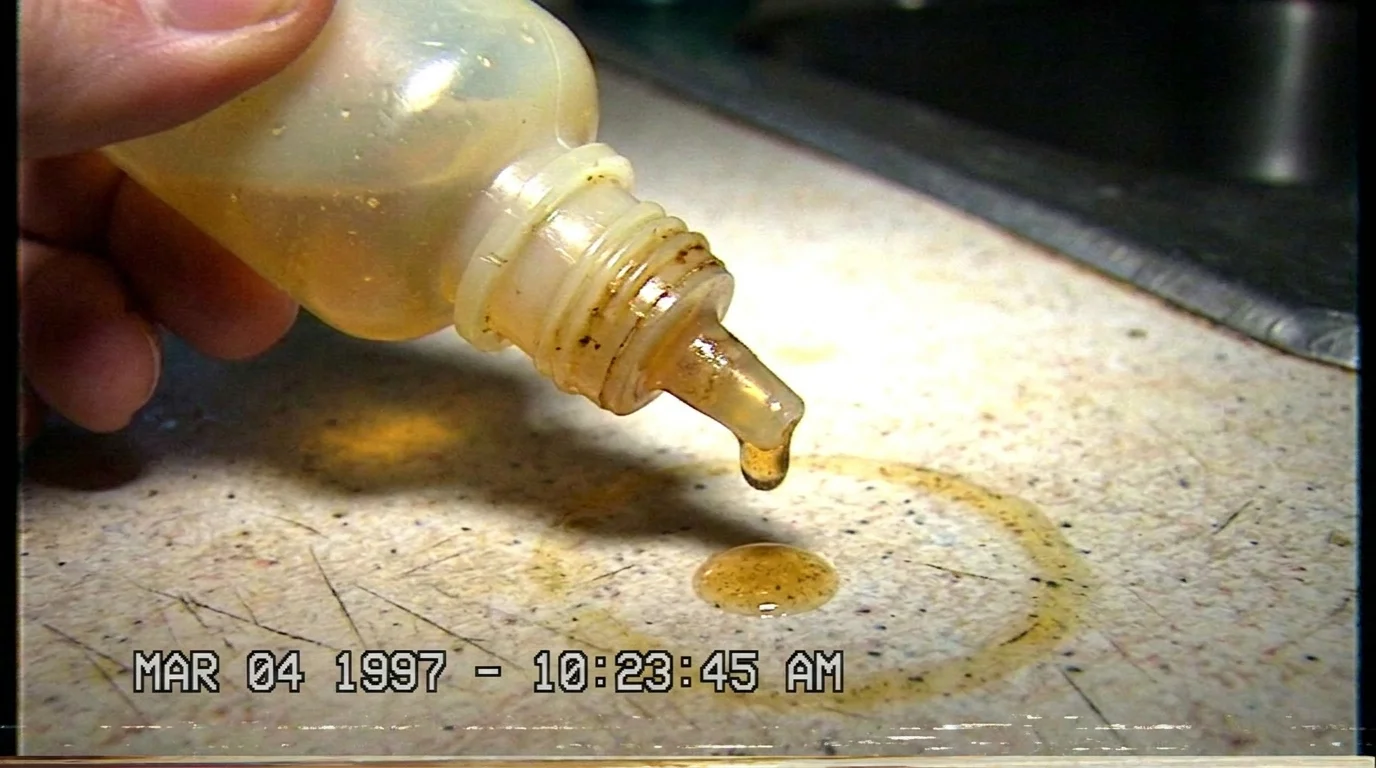
You tilt your head back under the harsh fluorescent lights of your bathroom, expecting the cool relief of an artificial tear to wash away eight hours of screen glare. Instead, a barely perceptible bead of cloudy amber liquid inside a plastic dropper bottle meets your surface epithelium, carrying an aggressive strain of drug-resistant Pseudomonas aeruginosa. Within seconds, this opportunistic pathogen uses specialized flagella to dock directly onto micro-abrasions in your tear film, bypassing the eye’s natural lysozyme defenses and beginning a silent, rapid colonization of the delicate corneal stroma.
For decades, we have treated the humble plastic vial on our nightstand as an inert, harmless comfort. It sits beside the alarm clock, an unquestioned staple of modern office life and dry-climate living. When your eyes burn from a long highway drive or dry winter heating, you reach for that bottle with complete muscle-memory trust, never imagining that the factory seal could conceal an active biological hazard.
That implicit trust is fracturing across regional ophthalmology clinics this week. A sudden surge in clinical emergency visits has forced triage nurses to ask a brand-new screening question before checking visual acuity: Which exact brand of lubricating drops did you put in your eyes this morning? What felt like ordinary seasonal irritation has, for dozens of unsuspecting patients, transformed into an aggressive, sight-threatening ulcer requiring hourly fortified antibiotic regimens.
The Trojan Bottle: Why Sterility Is Not Automatic
We tend to view eye drops like hand lotion or lip balm—consumer goods that might lose potency over time, but rarely turn hostile. In reality, the ocular surface is an exposed biological window. When a formulation lacks robust, validated preservative systems or suffers contamination during offshore manufacturing, the dropper tip becomes a direct bridge between industrial bio-burden and your central nervous system.
Consider your cornea not as a tough barrier, but as a living pane of optical glass only half a millimeter thick. The outermost epithelial cells fit together like interlocking puzzle pieces, held tight by junctional proteins that normally deflect ambient dust and stray microbes. But when an unsterile, contaminated fluid floods that surface, bacterial toxins dissolve the matrix faster than your blinking reflex can clear the volume, turning standard dry-eye therapy into an acute tissue emergency.
Frontline Realities: Dr. Aris Thorne’s Emergency Clinic
Dr. Aris Thorne, a 44-year-old corneal specialist at a high-volume triage center in suburban Ohio, noticed the pattern on a rainy Tuesday afternoon. Three separate patients walked in within four hours, each presenting with intense photophobia, milky stromal infiltrate, and an unmistakable greenish discharge. None of them wore extended-wear contact lenses, and none had suffered mechanical trauma—the classic risk factors for deep ocular infection.
- Spinning box fans toward bedroom walls blocks direct cold drafts preventing stiff morning necks
- Driving with thick back pocket wallets twists pelvic alignment locking lower lumbar muscles
- Nature Valley almond butter biscuits hide dense cane sugar syrup sparking sudden afternoon exhaustion
- Drinking warm beef bone broth coats irritated stomach linings stopping midnight acid flareups
- Ground mustard seed foot soaks pull throbbing tension headaches away within ten minutes
The only common thread was a specific lot of over-the-counter multi-use lubricating drops bought online to combat winter furnace air. By sequencing the culture samples that evening, Thorne’s lab identified the same carbapenem-resistant microbial fingerprint that federal health agencies have now linked to nationwide recalls. The discovery confirmed what many triage specialists feared: contaminated batches had slipped past retail supply checks directly into home medicine cabinets.
Triage Layers: Assessing Your Immediate Risk
Not every dry-eye formulation carries identical vulnerability, and not every user faces the same clinical stakes. Understanding how your daily routine interacts with these alerts allows you to act decisively without panic.
The High-Risk Daily User
If you rely on drops multiple times an hour for chronic conditions like Sjögren’s syndrome or severe post-surgical dryness, your ocular surface already experiences microscopic epithelial breakdowns. For this group, checking lot numbers immediately is critical. Any exposure to non-sterile solution can lead to rapid stromal melt within twenty-four to forty-eight hours.
The Contact Lens Wearer
Soft contact lenses act as moist sponges. When you instill contaminated liquid over a hydrogel lens, the material traps the bacteria directly against the warm, oxygen-deprived cornea. This multiplies bacterial contact time tenfold, turning a minor bacterial load into an invasive infectious keratitis.
The Casual Screen-Worker
If you only grab a bottle once every few weeks when working late, your primary danger comes from expired, multi-dose bottles sitting open in warm laptop bags. Bacteria thrive in dark, lukewarm environments, especially once the original factory seal has been breached for months.
Mindful Application: A Clear Protocol for Ocular Safety
Protecting your sight requires a simple, intentional audit of your current daily supplies. Discarding suspect bottles is the first step, but establishing clean handling habits ensures long-term defense.
- Inspect every bottle in your home and immediately discard any showing discoloration, cloudiness, or particulate settling.
- Cross-reference the National Drug Code (NDC) printed on the box flap with current federal safety recall databases.
- Transition strictly to single-use, preservative-free unit vials if you manage chronic surface dryness or wear contacts.
- Never let the dispensing tip touch your eyelashes, eyelids, or fingers during instillation.
When you handle eye care, treat the process with the deliberate hygiene of a surgeon preparing an incision. Wash your hands thoroughly with plain soap for twenty seconds before touching your face. If you experience sudden redness, light sensitivity, or unusual foreign-body sensation after using drops, seek specialized eye care within hours rather than waiting for an annual checkup.
Tactical Home Audit Toolkit:
- Storage temperature: Keep all sterile eye solutions between 59°F and 77°F, away from steamy bathroom medicine cabinets.
- Open-bottle lifespan: Mark multi-dose bottles with a permanent marker; discard precisely 28 days after opening.
- Response window: Report sharp eye pain or cloudy discharge to an ophthalmologist within 12 hours of onset.
The Bigger Picture: Reclaiming Confidence in Your Senses
The current alert over commercial eye drops is a sobering reminder that our modern conveniences rely on delicate supply chains and stringent clean-room standards. Yet, responding to these warnings with calm, educated vigilance restores control over your personal health environment. Your vision shapes how you connect with loved ones, navigate the world, and experience every quiet morning.
By treating your eyes not as passive organs to be soothed with random shelf purchases, but as sensitive interfaces that deserve rigorous care, you build a safer daily routine. That simple shift—reading labels, demanding verifiable sterility, and respecting the body’s early warning signals—transforms an unsettling news cycle into lasting peace of mind.
The human cornea heals with remarkable speed, but only when we respect its absolute need for pure, uncontaminated care.
| Safety Parameter | Standard Practice | Protective Advantage |
|---|---|---|
| Dispensing Format | Multi-dose bottles with preservatives | Preservative-free single-use vials eliminate toxic additive buildup and contamination risks. |
| Bottle Lifespan | Used until empty over several months | Discarding multi-dose vials after 28 days prevents bacterial biofilm formation on dropper tips. |
| First Symptom Response | Waiting for redness to fade naturally | Immediate clinical evaluation within 12 hours prevents permanent stromal scarring and vision loss. |
Frequently Asked Questions
What are the early warning signs of a contaminated eye drop infection?
Look for sudden sensitivity to light, a gritty foreign-body sensation that worsens after instilling drops, localized corneal haze, and abnormal yellow or green discharge.How can I verify if my specific bottle of eye drops is on the recall list?
Check the bottom of the carton or the side of the bottle label for the Lot Number and NDC (National Drug Code), then match them against the official FDA recall index online.Why are preservative-free single-use vials generally safer than multi-dose bottles?
Single-use vials contain zero chemical preservatives that can irritate delicate surface cells and are discarded immediately after opening, preventing airborne bacterial growth.Can washing my eyes with tap water help if I used a recalled drop?
No. Tap water contains domestic microbes like Acanthamoeba that can worsen corneal infections. Use sterile, verified saline or seek professional medical guidance immediately.How fast can a resistant corneal bacterial infection progress?
Aggressive pathogens like drug-resistant Pseudomonas can penetrate the corneal stroma and cause deep ulceration within 24 to 48 hours without targeted antibiotic treatment.