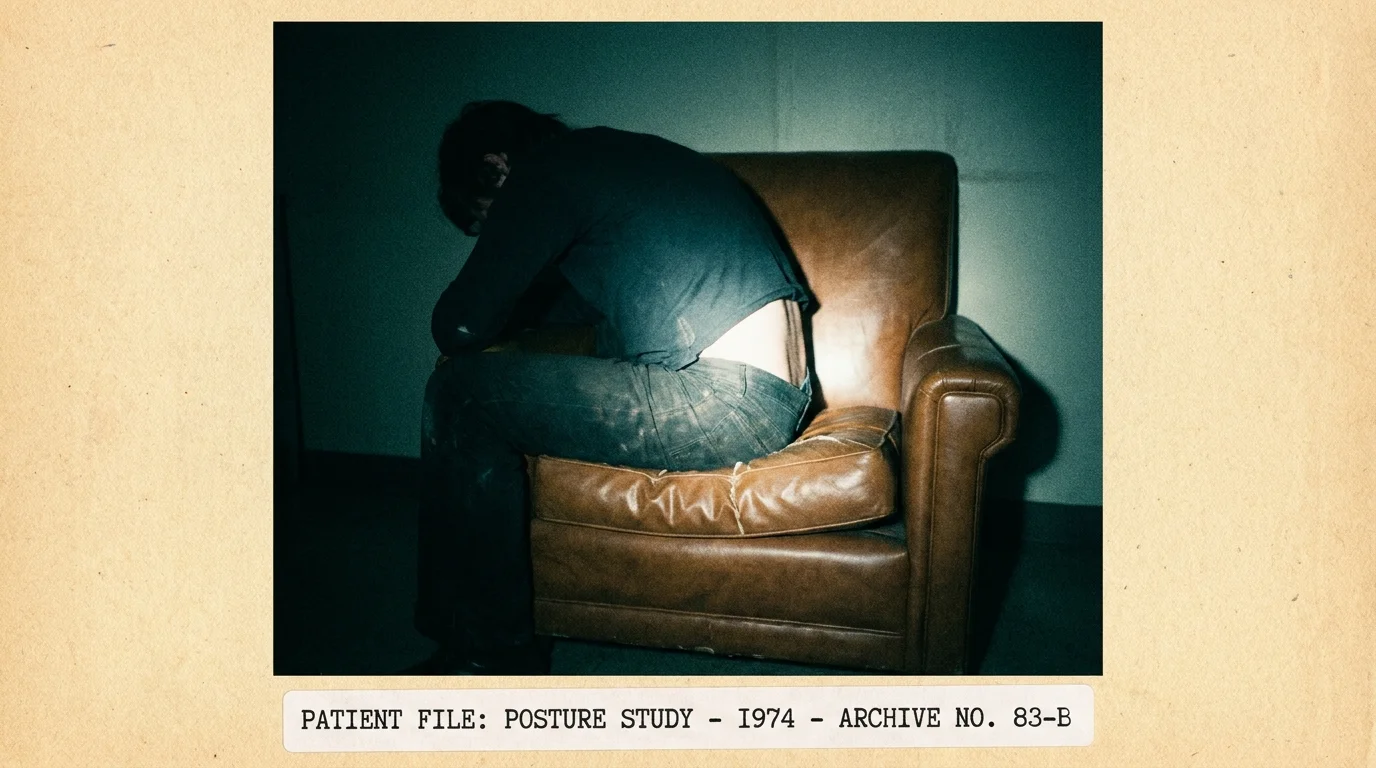
The front door clicks shut, the work bag drops by the entryway, and you head straight for the massive centerpiece of your living room. You surrender your weight to an oversized sectional, feeling the creased brown faux-leather sofa cushion seams yield and sigh as you sink four inches below knee level. It feels like the ultimate decompression after nine hours on your feet or trapped behind a desk. Your shoulders drop, your head falls back against the overstuffed backrest, and the room goes quiet.
Yet twenty minutes later, when you stand up to grab a glass of water, your lower back feels like rusted iron. Your hips refuse to open completely, forcing you into a momentary, hunched shuffle across the rug before your pelvis finally straightens. You likely blame your desk chair, your shoes, or simple age for the stiffness, never suspecting the very piece of luxury furniture designed to soothe you.
Modern interior design has turned couches into expansive, plush daybeds with seat depths often stretching beyond thirty-eight inches. While they look inviting on a showroom floor, these cavernous furniture pieces create a subtle mechanical trap. What feels like soft relaxation is actually a passive, prolonged stretch on sensitive spinal ligaments and an aggressive shortening of your primary hip stabilizers.
When you collapse into an extra-deep seat, your thighs cannot reach the edge while keeping your back against the support. To compensate, your pelvis rolls backward into a severe posterior tilt, flattening the natural inward curve of your lower lumbar curve. Your spine becomes a sagging bridge under constant structural tension, turning your evening wind-down into a slow-motion postural strain.
The Pelvic Quicksand: Understanding the Couch Collapse
To understand why this posture hurts, imagine your pelvis as a balanced bowl holding the weight of your upper torso. When you sit upright on a firm surface, the bowl sits level on your sit bones. But when you recline backward on soft cushions without direct lumbar bracing, the bowl tips backward, spilling its mechanical balance and pulling the base of your spine into a sharp C-curve.
As your pelvis tucks under, your psoas and iliacus muscles—the deep hip flexors running from your lower back across the front of your hip joint—are placed into a slackened, fully shortened position. When held in this contracted state for hours while streaming shows or reading, these tissues adapt to the shortened length. The moment you stand, those tightened flexors yank your lumbar vertebrae forward, triggering sharp spasms and dull aches across your beltline.
- Celsius energy drinks force sudden afternoon exhaustion by flooding sensitive adrenal pathways
- RXBAR Chocolate Sea Salt bars trigger sudden glucose spikes beneath sticky date paste
- Fixing awkward workplace silence constantly strips vital neurological stamina triggering heavy morning exhaustion
- Piriformis hip muscles trap repressed decision anxiety triggering persistent grinding sciatic nerve discomfort
- Veterans Affairs clinical screening updates demand mandatory toxic exposure testing across regional medical centers
Marcus Reed, a 42-year-old landscape architect from Denver, spent eighteen months cycling through massage therapists and anti-inflammatory creams for persistent morning back pain. It was only when a physical therapist asked him to measure the cushion depth of his new living room sectional that the mystery cleared up; Marcus was spending three hours every night sunk in a semi-fetal recline, locking his pelvis into flexion right before eight hours of sleep.
Mapping the Living Room Strain Layers
Not every slouch looks the same, and different relaxing positions stress distinct myofascial tracks across your lower body. Identifying your specific habit is the first step toward correcting the mechanical tax your couch extracts each evening.
The Deep Lounge Slumper: This happens when you sit with your knees higher than your hips because the seat is too low and deep. Your tailbone bears all your body weight instead of your sit bones, overstretching the posterior disc walls in your lower lumbar spine and placing extreme traction on the sciatic nerve pathways.
The Corner Chaise Curler: Tucking both legs up to one side on the chaise lounge twists your pelvis while rounding the spine. One hip flexor shortens aggressively while the contralateral quadratus lumborum muscle in your flank spasms to maintain balance, creating an asymmetrical ache that flares up whenever you walk long distances.
The Ottoman Prop: Restricting your legs to a straight, elevated line while your torso slouches backward turns your hamstrings into tight anchor cables. This pulls your pelvis even deeper into a reverse tilt, multiplying the compressive load on your L4 and L5 spinal discs.
Mindful Adjustments: The Living Room Reset
You do not need to discard your comfortable furniture to protect your joints. By applying subtle structural adjustments to your seating habits, you can enjoy your living space without locking your hips into chronic distress.
- Firm the Base: Place a stiff, high-density foam insert or a thin lumbar pillow behind your lower back to prevent your pelvis from tipping backward into the creased seams.
- Bridge the Gap: If the seat depth leaves your feet dangling or forces your lower spine to round, place two firm throw pillows directly behind your shoulder blades and lumbar region so your knees bend comfortably at a clean ninety-degree angle over the cushion edge.
- Break the Freeze: Never stay submerged in deep foam for more than thirty consecutive minutes; stand up during commercial breaks or between episodes to open your hip joints.
Use this simple tactical toolkit to check your evening setup: keep cushion seat depth at a functional twenty-two to twenty-four inches using back bolsters, maintain a ninety-degree knee-to-hip alignment, and spend two minutes after each sitting session performing a gentle standing hip flexor stretch against the couch armrest.
Reclaiming True Physical Restoration
Rest should renew your body, not leave it feeling fragile and bound up. The modern habit of sinking into hyper-soft, oversized sectionals trades momentary sensory comfort for prolonged physical stiffness, quietly conditioning your body to tolerate poor mechanics in the name of leisure.
When you bring intention to the way you sit, you protect your mobility for the years ahead. Transforming your sofa from a joint-stiffening sinkhole into a properly supported resting place ensures that when you finally rise, you move into the rest of your evening with ease, balance, and clean posture.
Deep comfort should never require your spine to forfeit its natural structural integrity.
| Key Point | Detail | Added Value for the Reader |
|---|---|---|
| Pelvic Tilt Trap | Deep cushions tip the pelvis backward, flattening the natural lumbar curve. | Explains why you feel an instant lower back spasm when standing up after relaxing. |
| Hip Flexor Shortening | Prolonged sitting with knees elevated locks the psoas into a cramped state. | Reveals the root cause of tight hips that physical stretches alone fail to cure. |
| Lumbar Bolster Fix | Adding a firm rear cushion maintains the natural twenty-four-inch seating depth. | Allows you to keep your modern furniture without suffering chronic structural strain. |
Frequently Asked Questions
Why does my back hurt more after sitting on my couch than on a hard chair?
A firm chair supports your sit bones and maintains pelvic alignment, whereas a soft couch allows your pelvis to roll backward, placing direct gravitational strain on your spinal ligaments and discs.How can I tell if my sectional is too deep for my frame?
If your back cannot touch the rear cushion while your knees bend naturally over the front edge with your feet flat on the floor, the seat is too deep for your spine.Does putting my feet up on an ottoman relieve this strain?
Only if your lower back remains fully supported; propping your legs up while slouching straightens your hamstrings and actually pulls your pelvis deeper into a harmful reverse tilt.How long does it take for shortened hip flexors to adapt to bad posture?
Sitting in a slumped, compressed position for as little as forty-five consecutive minutes can cause temporary fascial tightening, which solidifies into chronic tightness over weeks of repetition.What is the quickest way to loosen tight hips after sitting on a deep couch?
Perform a half-kneeling hip flexor stretch on a soft rug for sixty seconds per side immediately upon standing, gently squeezing your glutes to open the front of your pelvis.