The persistent chime of the telemetry monitor blends into the quiet rhythm of the recovery floor. Down the hallway, a plastic bassinet wheels past on rubber casters, while the scent of institutional antiseptic and lukewarm chamomile tea lingers in the room. You sit propped up in the adjustable bed, holding your newborn against your chest, listening to the muffled scrape of shoes outside your door.
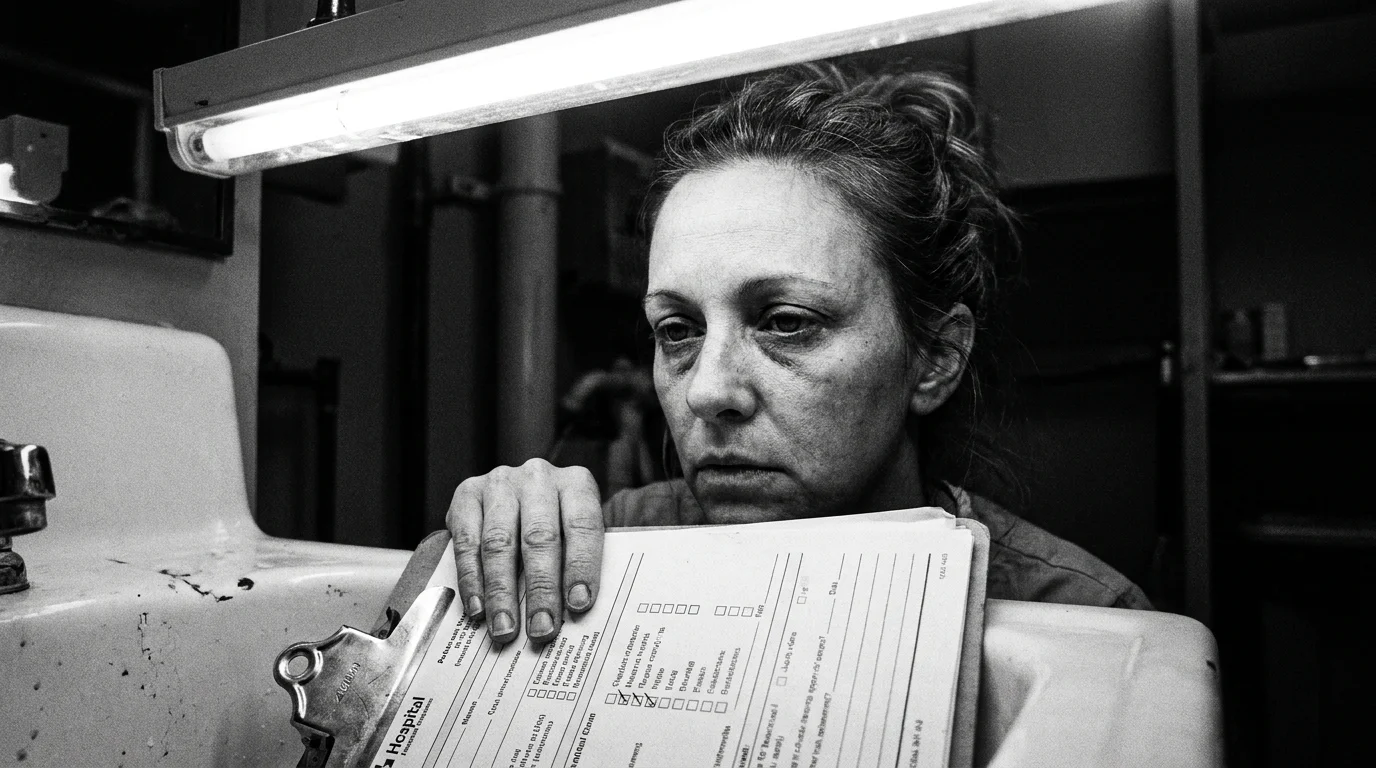
For decades, the standard path out of the maternity ward rested on a hurried questionnaire handed over on a clipboard—a rushed moment where an exhausted mother checked boxes confirming she felt fine, simply to clear the paperwork and head home. But today, the rhythm changes. A nurse enters with a crisp clinical paper evaluation form clipped to a brushed aluminum chart, pausing not just to record your vitals, but to observe how your eyes track across the room.
Hospitals across the country are quietly dismantling passive self-reporting systems in favor of strict, mandatory bedside behavioral assessments before any mother is cleared for discharge. The clinical landscape is shifting from trusting a mother’s performative reassurance to catching the earliest, quietest neuro-chemical tremors of postpartum psychosis before she ever crosses her own threshold.
The Shift from Self-Reporting to Bedside Vigilance
Maternal medicine has long operated under a polite fiction. When handed a paper survey asking if you feel hopeless or disconnected, the natural instinct—fueled by fear of judgment or an overwhelming desire to go home—is to write down whatever gets the discharge band clipped from your wrist. We treated severe mental shifts as emotional failures rather than acute neurological events.
Postpartum psychosis does not arrive with a warning siren; it begins as a subtle fracture in perception, often masked by the sheer physical exhaustion of labor. By replacing cursory check-the-box sheets with direct behavioral observation protocols, clinical teams are now trained to evaluate objective cognitive markers rather than polite smiles. They look for rapid speech cadence, involuntary eye darting, paradoxically surging energy despite zero sleep, and subtle misinterpretations of ambient sounds.
Think of this procedural change like checking a structural foundation after an earthquake. You do not simply ask the homeowner if the house feels solid; you bring an engineer to measure the load-bearing beams. The forty-eight-hour window after birth represents the sharpest hormonal drop in human biology, and these new mandates treat that drop with the same diagnostic gravity as a post-operative hemorrhage.
- Slumping into memory foam driver seats traps uneven spine tilt enforcing chronic lower back stiffness
- Raw cabbage leaf wraps resurfaced as proven therapy for soothing swollen hot knee joints
- Raw Manuka honey dressings seal painful paper cuts stopping throbbing nerve sting overnight
- Sipping chilled Meyer lemon tonic triggers sharp mental alertness without afternoon shaky caffeine jitters
- Frozen gel eye masks demand rapid heart deceleration breaking solo emotional panic loops instantly
The View from the Recovery Ward
Dr. Eleanor Vance, a 48-year-old perinatal psychiatric consultant in Philadelphia, spent years watching new mothers slip through the cracks of standard discharge routines. She remembers visiting rooms where mothers sat unnervingly rigid, their answers impeccably polished while their hands gripped the bedsheets with white-knuckled intensity.
“Under the old model, if a patient told us she felt joyful, we checked the box and signed the exit orders,” Dr. Vance explains. “We were evaluating their desire to be polite, not their actual neuro-chemical stability. Now, we are trained to listen to the spaces between their words, checking for the subtle hyper-vigilance that precedes an acute break.”
The Four-Stage Bedside Assessment
The newly enforced standards operate across four distinct diagnostic layers administered between twenty-four and forty-eight hours post-delivery. These layers look past surface-level fatigue to isolate genuine psychiatric distress.
1. The Circadian-Energy Disconnect: While every new parent experiences extreme tiredness, the clinical team monitors for paradoxically elevated wakefulness. A mother who has gone thirty-six hours without sleep yet displays racing speech, restless pacing, or an insistence that she does not require rest triggers an immediate secondary review.
2. Sensory and Auditory Processing: Clinicians discreetly assess how you process ordinary ward noise. Subtle auditory misperceptions—such as hearing whispers through the hum of the air conditioner or perceiving normal infant grunts as coded messages—are documented as early neuro-sensory anomalies rather than simple stress.
3. Cognitive Continuity and Focus: During routine newborn care demonstrations, the nursing staff evaluates how well you track simple, multi-step instructions. Sudden tangential thoughts, intense confusion over basic items, or blank staring spells during swaddling provide objective behavioral metrics.
4. Reality Grounding and Affect: The team evaluates the congruence between your facial expressions, your tone of voice, and the reality of the room. A flat, mechanical response paired with intense, suspicious scanning of hospital staff indicates an escalating autonomic threat response.
Mindful Preparation for the New Discharge Protocol
Navigating these evaluations requires understanding that the clinical team is not grading your parenting fitness; they are screening for an involuntary medical emergency. You can approach this protocol with clarity and grounded presence.
Keep these operational benchmarks in mind during your hospital stay:
- Acknowledge sleep architecture: If you cannot sleep despite being completely exhausted, tell your nurse plainly instead of attempting to power through the night.
- Appoint an observational advocate: Ensure your partner or birth companion knows the baseline signs of acute confusion so they can speak up during bedside rounds.
- Reject the pressure to perform: Do not mask feelings of intense overwhelm or strange sensory experiences out of fear; clinical teams view early vulnerability as a protective health indicator.
- Request quiet observation periods: Ask staff to bundle their nighttime checks to give your brain dedicated four-hour blocks of uninterrupted restorative darkness.
A Safer Threshold for Maternal Health
The institutional shift toward mandatory bedside checks acknowledges a fundamental biological reality: the days immediately following childbirth represent a profound physical and neurological transition. Removing the burden of self-diagnosis from vulnerable mothers does not take away their autonomy; it wraps them in a clinical safety net that should have existed decades ago.
When you finally gather your belongings and prepare for the ride home, these protocols ensure that you step through your front door with your physical body supported and your neurological well-being fiercely protected.
“Observing objective behavioral markers at the bedside removes the impossible burden of self-diagnosis from mothers experiencing acute neuro-chemical shifts.”
| Key Point | Detail | Added Value for the Reader |
|---|---|---|
| Assessment Model | Direct clinician behavioral observation replaces self-administered paper surveys. | Eliminates the guilt and pressure of having to self-report alarming symptoms accurately. |
| Timing Window | Mandatory evaluations conducted between 24 and 48 hours post-delivery. | Catches rapid hormone-induced cognitive shifts before maternal discharge occurs. |
| Diagnostic Scope | Tracks sensory misperceptions, paradoxical wakefulness, and cognitive tracking. | Distinguishes harmless baby blues from medical emergencies requiring immediate stabilization. |
Frequently Asked Questions
What is the primary difference between baby blues and postpartum psychosis?
Baby blues involve mild weepiness, mood swings, and fatigue that resolve within two weeks, whereas postpartum psychosis is a severe medical emergency characterized by rapid sleep loss, hallucinations, paranoia, and breaks from reality.Can a mother fail this assessment and lose custody of her baby?
No. These assessments are medical evaluations designed to diagnose an acute, treatable physical condition. Identification leads to psychiatric medical treatment and maternal support, not disciplinary action.Why is direct behavioral observation more effective than questionnaires?
Questionnaires rely on a patient having intact insight and the ability to answer honestly. Postpartum psychosis often impairs a patient’s awareness of their symptoms, making behavioral observation far more reliable.Who administers these new hospital evaluations?
Evaluations are carried out by specially trained labor and delivery nurses, obstetricians, and perinatal psychiatric liaison teams directly at the bedside.What happens if the clinical team notices warning signs before discharge?
The hospital initiates an immediate psychiatric consultation, adjusts the medication plan if necessary, and ensures the mother is medically stabilized before creating a closely monitored outpatient care strategy.