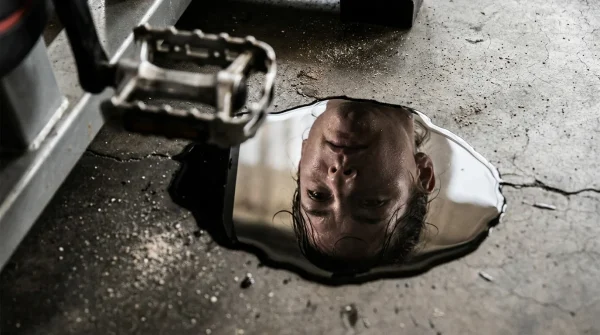
The overhead strip lighting in your office hums at a barely perceptible frequency, casting a flat glare across your keyboard at 2:15 in the afternoon. You are answering a standard email, nothing out of the ordinary, yet the air suddenly feels too thin to swallow. A subtle wave of heat prickles along the base of your skull, your heart races against your ribs, and your chest refuses to expand past a meager half-inch. You assume you are having an unprovoked panic attack, a sudden flare of work-related dread caught in your throat.
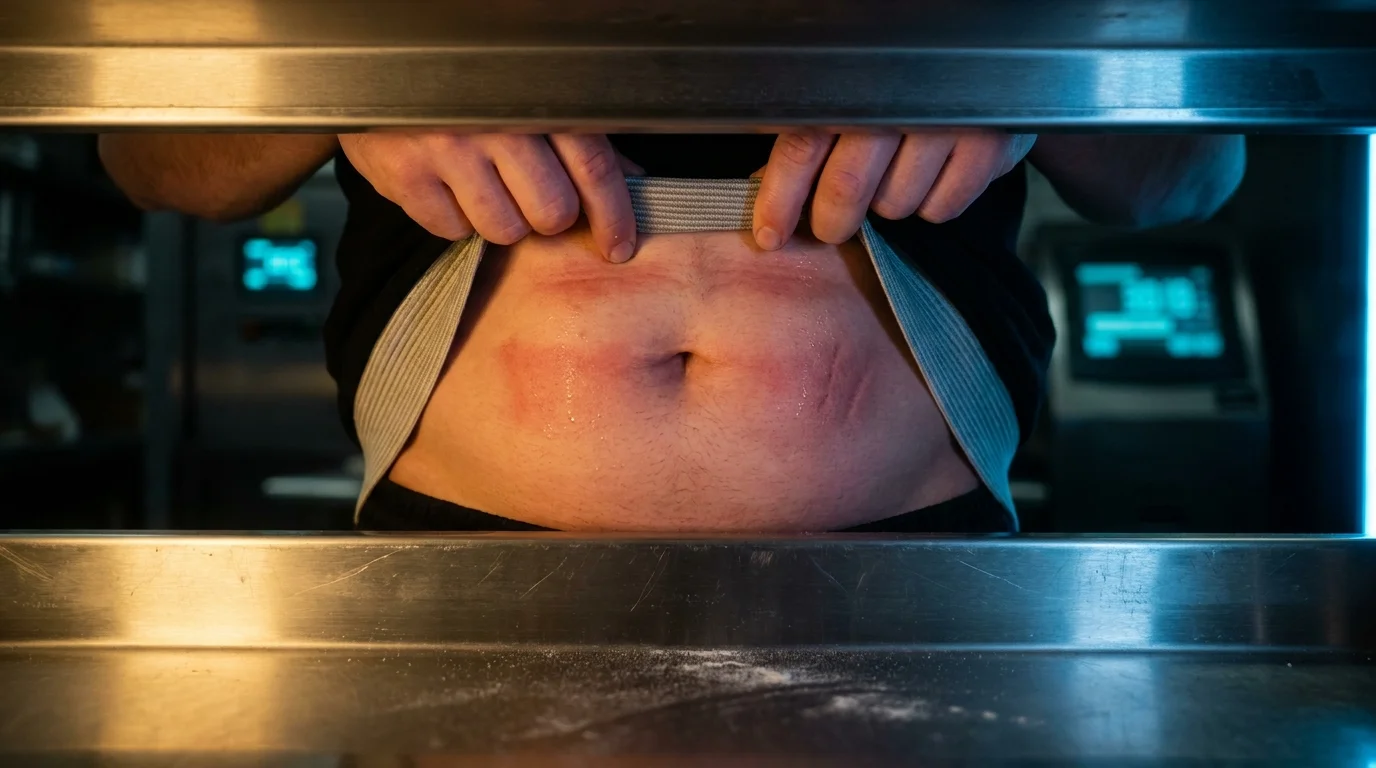
You loosen your collar, sip lukewarm water, and try to rationalize the sudden claustrophobia settling over your sternum. But the culprit is not an erratic surge of workplace anxiety or an undiagnosed cardiac flutter. Beneath your tailored trousers sits a stiff elastic waistband leaving deep red, angry indentations carved into your soft abdominal wall.
For millions of desk workers, high-compression foundation garments have transformed from evening-wear novelties into standard daily business casual. You pull them on at 7:00 AM to smooth lines and project polished composure through an eight-hour gauntlet of sit-down meetings. Yet by mid-afternoon, that same medical-grade elastane exerts an unyielding vice grip on your lower thoracic cage, setting off an ancient, silent alarm system deep inside your nervous system.
The Diaphragmatic Splinting Cascade
When you breathe naturally, your respiratory engine relies on a dynamic piston: the diaphragm. With every inhalation, this dome-shaped muscle contracts downward into the abdominal cavity, creating negative pressure in your chest that draws ambient air deep into the lowest, most blood-rich lobes of your lungs. This downward stroke gently displaces your internal organs outward against your stomach and flank walls.
When you sit bound inside high-compression shaping shorts, that downward clearance vanishes entirely. The industrial-strength nylon fibers act as a rigid, external wall that refuses to yield to organ displacement. To survive, your body executes an involuntary emergency detour known as diaphragmatic splinting: your lower ribs become paralyzed, locked in place to protect trapped internal structures from crushing downward pressure.
Because the diaphragm cannot descend, your physiology is forced to draft secondary emergency muscles to keep you alive. You begin breathing entirely through your neck, scalenes, and upper pectorals, pulling your clavicles toward your ears just to catch a sip of oxygen. Your brain monitors this shallow, high-effort breathing pattern through the phrenic and vagus nerves. To your primitive brain stem, rapid, clavicular-only respiration means exactly one thing: you are currently suffocating or fleeing a physical predator.
The Clinical Clue in the Ergonomic Chair
Dr. Elena Vance, a postural rehabilitation specialist practicing in downtown Chicago, spent years watching corporate attorneys and tech consultants cycle through her clinic complaining of phantom panic surges and mid-afternoon vertigo. Standard medical workups routinely came back clean—normal EKGs, clean thyroid panels, and no clinical history of acute generalized anxiety. The breakthrough arrived when she began asking patients to stand up and physically unbutton their waistbands during desk-side breathing assessments.
- LifeStraw Home water pitchers expose raw scratchy throats by missing stubborn microscopic solvents
- Emergen-C vitamin packets derail kidney filtration rates when swallowed in single massive gulps
- Ice pack sternum presses force racing panicky heartbeats into calm rhythms within sixty seconds
- Textured titanium rings switch off racing boardroom panic through discreet sensory finger rolls
- True Food Kitchen grain bowls trap blood in digestion triggering heavy drooping eyelids
One patient, a 34-year-old financial analyst named Maya, spent ten hours a day seated in high-rise conference rooms, wearing ultra-firm shaping shorts to prevent suit trousers from bunching. Vance placed a simple textile measuring tape around Maya’s lower ribcage and instructed her to take a maximal inhalation. The tape barely registered a sixteenth of an inch of lateral movement. Maya was effectively breathing through a pillow for sixty hours a week, starving her bloodstream of rhythmic venous return and locking her autonomic nervous system in permanent, high-cortisol survival panic.
Mapping the Points of Thoracic Failure
The impact of high-compression undergarments shifts depending on your posture and working style throughout the workday. Recognizing how your garment compromises your body helps you spot the warning signs before the adrenaline spikes take hold.
The Ten-Hour Static Commuter
When you remain seated in an ergonomic chair with your hips flexed at a ninety-degree angle, intra-abdominal pressure naturally doubles compared to standing. Add a high-waisted silicone compression band that terminates directly across the solar plexus, and the upward visceral displacement intensifies, driving stomach acid toward your esophagus while entirely immobilizing your posterior lower ribs. The resulting sensation mimics acute cardiac tightness, convincing your body that a catastrophic medical event is imminent.
The Afternoon Presentation Surge
Standing abruptly after hours of compressed, shallow breathing causes an immediate mismatch in blood pressure regulation. As you walk to the front of a room, your heart rate accelerates to meet the physical demand, but your lower lungs cannot expand against the elastic barrier to clear rising carbon dioxide levels. You experience sudden lightheadedness, cold fingertips, and a trembling voice—symptoms routinely misdiagnosed as stage fright rather than mechanical hypoxia.
The Post-Prandial Compaction
Eating lunch while wearing high-compression nylon turns normal digestion into an internal structural conflict. As the stomach expands with food and natural digestive gases, it has nowhere to expand outward. The stomach pushes upward against the underside of the resting diaphragm, creating a physical ceiling that makes normal respiration feel like lifting a concrete slab with your lungs. Drowsiness and nervous tension spike within twenty minutes of finishing a simple meal.
Restoring Thoracic Excursion at Your Desk
Recovering effortless breathing does not mean abandoning personal styling choices; it requires learning how to de-escalate mechanical pressure before your nervous system defaults to full-scale survival panic. Use these minimalist interventions whenever you feel a phantom panic wave gathering in your chest.
The 90-Second Side-Rib Test
Place your hands on your lower flanks, just above your hip bones with your thumbs pointing toward your spine. Inhale slowly through your nose for four seconds. Your hands must move outward laterally at least one full inch. If your hands remain motionless while your shoulders rise toward your ears, your clothing is actively strangling your diaphragmatic excursion and sabotaging your oxygenation.
The Tactical Toolkit for Breath Freedom
Keep these simple mechanical rules in mind when outfitting your workday:
- Garment Tension Threshold: A shaping short should never require more than five pounds of physical pulling force to peel two inches away from your skin while seated.
- The Two-Finger Rule: Slide your index and middle finger beneath the upper band along your sternum; if your knuckles blanch from pressure, the garment is actively pinching the phrenic pathway.
- Micro-Release Window: Unhook or roll down compression bands during private desk stretches every 90 minutes to allow lymphatic fluid to clear pelvic pathways.
- Thoracic Reset Angle: Sit on the edge of your chair, tilt your pelvis forward slightly to 110 degrees, and breathe exclusively into your back kidneys to bypass front-body tightness.
The Bigger Picture
True physical composure should never come at the expense of your basic biological baseline. When you cage your torso to present a streamlined exterior, you pay for that superficial neatness with nervous system stability, focus, and physical ease. Shallow breathing feeds an internal loop of perceived danger, making standard daily challenges feel overwhelming, sharp, and exhausting.
Taking off the invisible armor is not an admission of defeat; it is an act of neurological hygiene. When your ribs are free to widen, your blood pressure drops, your heart settles into a steady, restorative rhythm, and the phantom panics of the workday vanish back into thin air. Give your diaphragm permission to move, and your mind will remember how to rest.
The nervous system cannot distinguish between a predator closing in and an elastic band that will not let the lower lungs expand.
| Key Point | Detail | Added Value for the Reader |
|---|---|---|
| Diaphragmatic Splinting | Rigid elastic cages lower ribs, halting descent of the respiratory diaphragm. | Identifies why office tightness is mechanical, not an unprovoked mental health crisis. |
| Phrenic Nerve Alarm | Forced clavicular breathing sends emergency suffocation cues to the brainstem. | Eliminates the fear and self-blame associated with sudden, seated panic attacks. |
| Visceral Compaction | Sitting while compressed pushes abdominal organs upward against thoracic cavities. | Prevents mid-afternoon digestive burn, throat tightness, and post-lunch brain fog. |
Frequently Asked Questions
Can shapewear cause actual panic attacks if I have no history of anxiety?
Yes. When mechanical compression prevents deep diaphragmatic breathing, the body shifts to upper-chest respiration, which physically mimics the fight-or-flight response and triggers acute physiological panic without any mental catalyst.How can I tell if my midday panic is emotional or purely mechanical?
Perform a simple mechanical test: loosen or remove your waistband and take three slow breaths into your lower back. If your heart rate stabilizes and your throat tension releases within two minutes, the issue was physical constriction.Is sizing up in high-waisted shorts enough to fix the problem?
Sizing up reduces extreme constriction, but the structural design of high-waisted garments still restricts lateral rib flare. Look for flexible garments with zoned, lower-compression rib panels rather than uniform firm hold.Does sitting make high-compression undergarments more dangerous than standing?
Yes. Sitting flexes the hips and compacts the abdomen, effectively doubling internal abdominal pressure and restricting the diaphragm far more aggressively than when your spine is upright and extended.How many hours a day is safe to wear firm compression garments?
Limit firm compression to four to six hours at a time, avoiding continuous wear during long, static seated desk sessions where diaphragmatic excursion is already compromised.