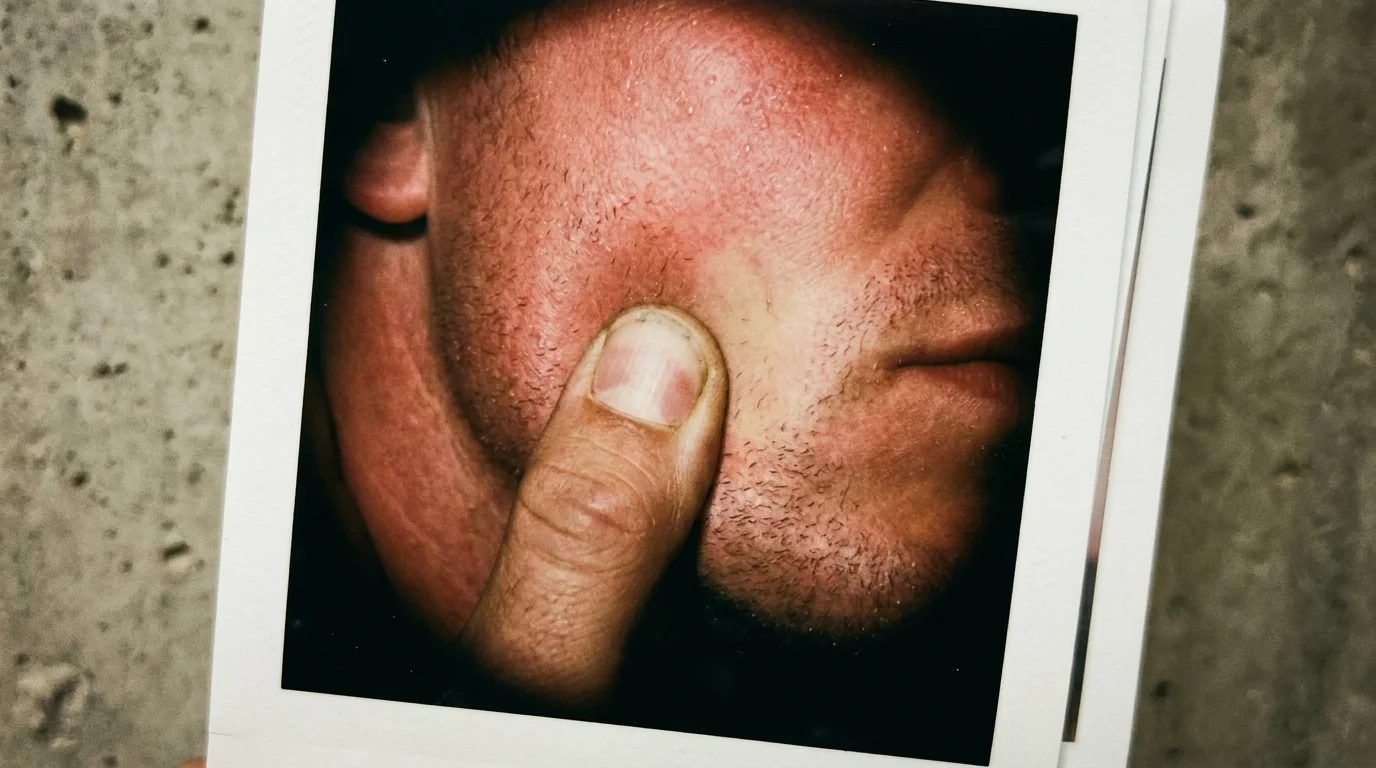
The small green camera light above your monitor casts an icy pinprick in the dimming afternoon room. Across the video tile, an agitated client is venting about missed deliverables and budget overruns, their voice sharpening with every sentence. You keep your shoulders relaxed, your vocal cords soft, and your expression sculpted into an open, reassuring neutral mask. Yet right beneath the surface, prickly heat flushes across your cheekbones and your molars lock together in an invisible clamp.
You smooth the interaction with seasoned grace. You validate their frustration, offer clear remediation steps, and absorb their sharp tone without letting a single defensive breath slip past your lips. When the screen cuts to black, the quiet of your home office should feel like a reward. Instead, the air feels strangely pressurized, like breathing through a down pillow.
Hours later, the house settles into midnight quiet. Your bedroom is pitched in darkness, the thermostat reads a crisp 67 degrees Fahrenheit, and you are physically exhausted. Yet your eyelids refuse to stay closed, your ribcage feels restricted, and your thoughts circle the day’s conversational minefields like a restless dog. The placid mask you wore at 3:00 PM is now demanding its biological payment at 1:30 AM.
The Emotional Shock Absorber and the Melatonin Mismatch
We are conditioned to treat professional composure as a mental virtue, a clean discipline that vanishes the moment a call disconnects. In truth, active emotional suppression is a heavy somatic event. When a volatile counterparty attacks your work or questions your team’s competence, your limbic system registers a primal status threat, priming your physiology for immediate defense. Your adrenal glands pump catecholamines into your bloodstream, urging you to push back, retreat, or speak up.
When you deliberately stifle those signals to soothe a client, you perform what sociologists call high-intensity surface acting. You force your skeletal muscles to look calm while your internal plumbing runs at full throttle. Holding that biological charge inside acts like submerging an inflated beach ball under water; the moment you loosen your grip, the energy surges upward. Your liver continues processing residual cortisol, and your nervous system stays locked in low-grade sympathetic arousal long after you close your laptop.
This neuroendocrine hum directly sabotages the pineal gland. For your body to synthesize and release melatonin effectively, your core temperature must drop and parasympathetic tone must dominate the vagus nerve. Lingering adrenaline halts that transition, leaving you trapped in physiological vigilance. You aren’t lying awake because you lack discipline; your cells still believe you are defending your perimeter.
- Rabies exposure protocol revisions force emergency departments to overhaul critical post-bite immunization schedules
- Cyclosporiasis infection surges derail standard outpatient stomach care across overwhelmed regional clinics
- Morozko Forge ice plunges switch arterial blood pressures sparking sudden dizzy spells and tightness
- Pedialyte electrolyte powder blocks morning cellular hydration triggering sudden dry mouth and twitching
- Bifocal computer glasses trap suboccipital neck nerves triggering dull throbbing afternoon skull pressure
The Escalation Ledger: How Maya Lost Her Nights
Consider Maya Chen, 34, a senior account strategist for an enterprise software agency in Austin. Maya spent six months handling an enterprise rollout defined by sudden executive blowups and contradictory mandates. She prided herself on being unflappable, the steady hand who could defuse screaming matches on ten minutes’ notice without ever raising her voice. By late autumn, however, she began waking up at 2:15 AM every night with a dry throat and a racing pulse.
Her bloodwork showed textbook markers, and she had already cut out afternoon caffeine. What she hadn’t accounted for was the invisible tax of swallowing her own fight-or-flight reflexes four or five times a week. Her suppressed survival responses were accumulating on an unwritten biological balance sheet. Her nervous system had forgotten how to stand down because the act of calming others required her to constantly strangle her own autonomic honesty.
Mapping the Disconnect: Where the Strain Accumulates
Not every client-facing interaction drains your biological battery in the same way. The physiological cost shifts depending on how much agency you feel you can exercise in the moment.
For the Frontline Account Defender
If you operate in high-touch client management, your nervous system experiences repeated micro-suppressions. You absorb emotional volatility that you did not cause and cannot fundamentally prevent, creating a distinct feeling of somatic entrapment. Your jaw clenches in chronic anticipation of the next incoming alert, keeping the masseter muscles contracted and feeding tension directly into your cervical spine and temples.
For the Solo Consultant or Specialist
When you run your own practice, a volatile client carries the unspoken threat of financial volatility. Swallowing your boundaries here feels tied to basic survival. The internal conflict turns self-directed, morphing from external frustration into quiet panic about your reputation or pipeline. This variety of strain manifests primarily in the solar plexus, triggering shallow diaphragmatic breathing that tricks the brain into assuming an ambient crisis is always unfolding.
Mindful De-Escalation: A Somatic Evening Protocol
Treating this specific flavor of insomnia does not require more chamomile tea or another generic sleep tracker. It requires closing the physical stress loop before twilight arrives. You must convince your mammalian hardware that the confrontation is officially over.
- Execute the Physiological Sigh: Complete three rounds of two sharp inhales through the nose followed by a long, unforced exhale through open lips. This expands collapsed alveoli and forces the heart rate to slow within ninety seconds.
- Engage the Cold Vagal Shock: Press a clean cloth soaked in 55-degree water against your cheekbones and temples for twenty seconds. This triggers the mammalian dive reflex, instantly lowering baseline blood pressure and cooling the facial flush of emotional labor.
- Somatic Jaw and Neck Discharge: Intentionally open your mouth wide into a silent yawn, then roll your shoulders backward while exhaling heavily. Releasing the masseter muscles breaks the circuit of defensive holding before you sit down for dinner.
- The Narrative Closeout Script: Spend three minutes writing down the raw, unfiltered truth of what you wanted to say to the client on a scrap piece of paper, then shred it. Giving the defensive thought a physical motor output signals the prefrontal cortex that the counter-strike has occurred.
Integrate this sequence into a dedicated transitional buffer between your final call and your personal evening. Give your body twenty undistracted minutes before interacting with family or turning toward dinner preparation.
The Tactical Toolkit for Nervous System Recovery
Equip your workspace with physical cues that actively dissipate tension throughout the day rather than allowing it to pool until lights out.
- Thermal Down-Regulation: Keep a thermos of ice water nearby; taking small sips during an escalating call cools the palate and activates swallowing reflexes that naturally counter throat tightness.
- Duration Anchor: Cap any single de-escalation call at 35 minutes; cognitive and emotional regulation begins degrading exponentially past the forty-minute mark.
- Diaphragmatic Grounding: Place both feet flat on floorboards without shoes, anchoring your heel pressure whenever a client raises their tone.
The Real Victory: Decoupling Service from Self-Sacrifice
There is quiet power in realizing that your professional calm does not require you to become an emotional lightning rod. Providing exceptional guidance to demanding people is an intellectual skill, not an invitation to surrender your biological peace. True client leadership requires an internal firewall that shields your heart rate from someone else’s poorly managed anxiety.
When you honor your body’s need to process the friction of your working hours, the midnight ceiling stops looking back at you. Restorative sleep returns not because the work became effortless, but because you stopped carrying their storm to bed with you.
“True composure is not the suppression of internal fire, but the conscious refusal to let someone else’s emergency consume your oxygen.”
| Recovery Metric | Surface Acting (Suppression) | Active Somatic Discharge |
|---|---|---|
| Autonomic State | Sustained sympathetic tone with elevated nocturnal noradrenaline. | Rapid shift into parasympathetic tone within 30 minutes of call conclusion. |
| Melatonin Window | Delayed by 90 to 180 minutes due to prolonged cortisol elevation. | Uninhibited secretion initiating along standard circadian timelines. |
| Physical Presentation | Subconscious clenching of the jaw and shallow thoracic breathing. | Relaxed facial musculature and unrestricted diaphragmatic movement. |
Frequently Asked Questions
Why does emotional restraint keep me awake when physical labor helps me sleep?
Physical labor exhausts muscle glycogen and naturally encourages adenosine accumulation without necessarily triggering the fight-or-flight pathway. In contrast, suppressing raw emotions keeps your sympathetic nervous system vigilant, saturating your bloodstream with stress hormones that signal the brain that it is unsafe to drop its guard.Can simply venting about a difficult client solve this midnight wakefulness?
Not necessarily. Verbal venting without somatic release often re-activates the same emotional pathways, reigniting the hormonal surge. True resolution requires a physical release, such as temperature shifts, deep breathing, or motor activity, to break the loop.How long after a high-stress call does my cortisol remain elevated?
If left unaddressed, circulating cortisol from an emotionally stifled exchange can take two to three hours to clear the bloodstream, directly interfering with your natural core-temperature drop and sleep preparation.Is it better to confront volatile clients directly instead of soothing them?
Professional boundaries do not require explosive confrontation. You can hold firm behavioral limits with neutral, steady language without taking on the burden of emotionally placating an unreasonable outburst.Does remote work make this specific insomnia pattern worse?
Yes. Without a physical commute to serve as a transitional buffer, the emotional residue of difficult digital meetings remains trapped inside your living space, making it harder for your body to recognize home as a secure resting zone.