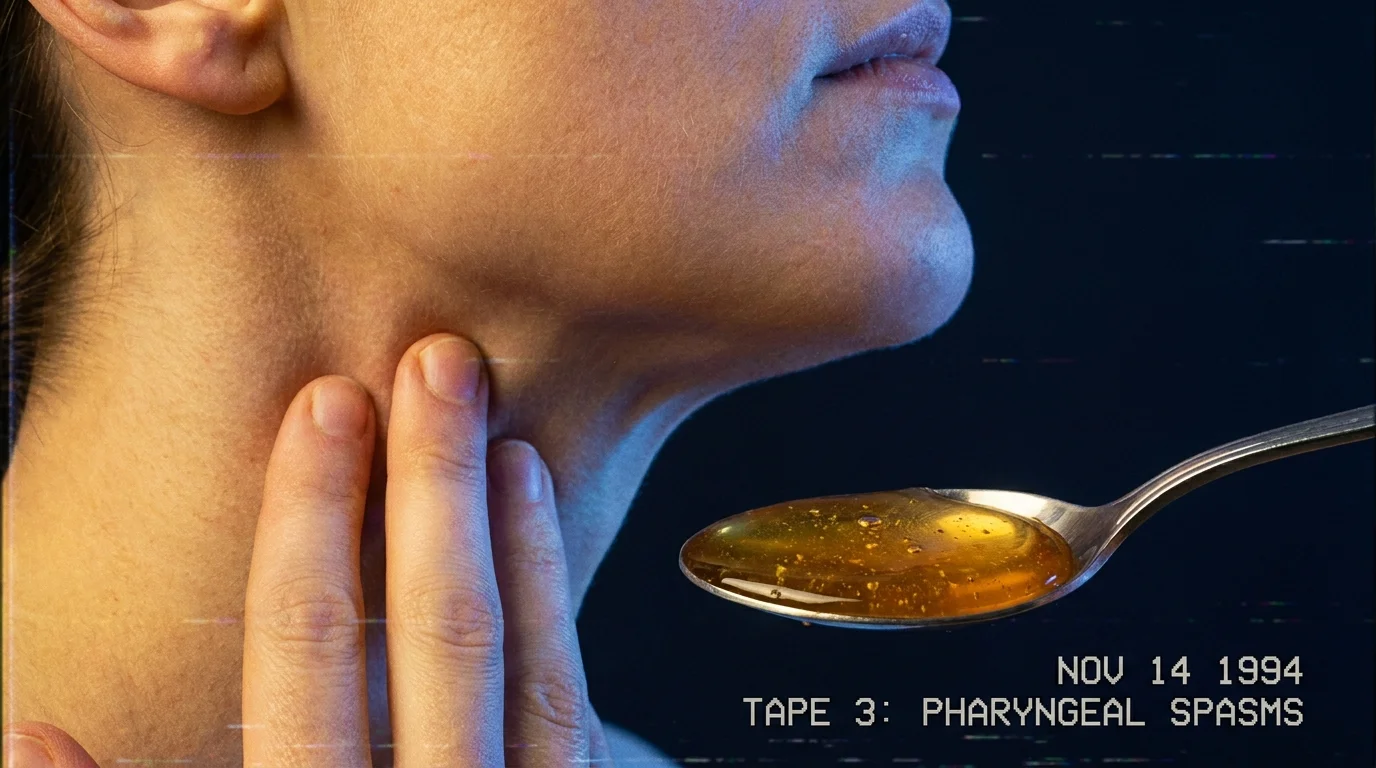
The bedroom clock reads 2:14 AM, and the room is hollow with cold, dry winter radiator air. You know the sensation before the sound even breaks: a sudden, razor-sharp scrape at the base of your throat, catching like flint against dry brush. You swallow hard, hoping your own saliva might bathe the friction point, but your throat is parched, offering no defense against the involuntary spasm.
You instinctively reach for the water glass on your nightstand. You take a desperate sip, but the cool water simply runs over the irritated tissue like rain sliding off wax paper, leaving the mucosal lining just as stripped and raw two seconds later. The cough violently tears through your chest anyway, rattling your ribs and resetting your sleep cycle into pure adrenaline.
Standard commercial lozenges fool you with a temporary blast of menthol, chemically tricking cold receptors while their evaporative alcohol bases actually leach moisture from your pharynx. Meanwhile, over-the-counter suppressants attempt to blunt the cough reflex in your brain stem, completely ignoring the mechanical reality: your airway tissues are physically scraped and crying out for a physical seal.
The Liquid Bandage in Your Cupboard
To calm an aggressive nighttime hacking fit, you must stop treating the symptom as an internal neurological glitch and start treating it like road rash on delicate tissue. When you cough repeatedly, the vocal folds and pharyngeal walls slam together hundreds of times, shedding their protective lubricating layer and exposing bare sensory nerve endings to the air you inhale.
This is where unfiltered wildflower honey operates not as a sweet folk remedy, but as a biomechanical shield. Unlike processed supermarket honey that has been pasteurized, micro-filtered, and stripped of its dense floral resins, raw wildflower honey possesses an exceptionally high dynamic viscosity. It does not wash away with normal swallowing; it drapes across the throat like warm, breathable velvet.
The physical logic mirrors tree sap closing a torn section of outer bark. Wildflower honey has an unusually low moisture content—typically under 18 percent—which creates an osmotic gradient that gently draws inflammatory fluid out of swollen throat tissues while blanketing exposed nerve endings. Furthermore, the active enzyme glucose oxidase slowly releases minute, tissue-safe traces of hydrogen peroxide directly at the cellular surface, sanitizing micro-abrasions without stinging.
- Cracked black peppercorns spark rapid morning alertness without jagged caffeine jitters
- Ultima electrolyte powders block cellular hydration triggering sudden dry mouth twitches
- Freezing post-workout showers shut down microcirculation driving stiff next-day knee throbbing
- Ultrasonic desk humidifiers trigger sudden airway spasms and afternoon throat tickles
- Low laptop stands trap suboccipital nerves sparking dull skull base throbbing
The Clinic Secret from the Stage Wings
Dr. Clara Vance, a 48-year-old integrative laryngologist based in Nashville, routinely manages vocalists whose careers depend on stopping sudden bronchial flare-ups between back-to-back tour dates. When performers arrive backstage with dry, hoarse throats caused by bus air-conditioning and late-night vocal strain, she steers them completely clear of synthetic sprays and drying antihistamines. Instead, she reaches for dark, unheated wildflower harvests collected from late-season regional blooms, knowing that the botanical poly-phenols in authentic wildflower nectar provide a dense matrix that synthetic lozenges cannot replicate.
Matching Honey Viscosity to the Type of Nighttime Cough
Not every nocturnal coughing fit springs from the identical trigger, and your pantry strategy should shift based on how the irritation feels in your throat.
For the Dry, Hacking Furnace Spasm
This is the harsh, hollow cough triggered by central heating systems that drop indoor humidity below thirty percent. For this, you need maximum cling. Choose a partially crystallized or creamed raw wildflower honey; the microscopic glucose crystals slow down swallow velocity, allowing the paste to melt at natural body temperature (98.6°F) directly over the back of the tongue and down the posterior pharynx wall.
For the Post-Nasal Drip Rawness
When thin, acidic mucus drains from the sinuses down the throat, it creates an inflammatory burn that triggers sudden gagging hacks the moment you lie flat. Pair raw honey with warmth by taking a spoon of dense, dark amber wildflower honey alongside a pinch of fine pink mineral salt. The salt helps tighten boggy mucosal tissues through mild astringency, while the rich honey barrier neutralizes the burn of descending fluids.
For Vocal Fatigue and Shallow Bronchial Rattle
If your cough stems from talking all day followed by shallow, reactive chest spasms at night, you need deep botanical complexity. A multi-floral honey sourced from late-summer goldenrod, aster, and clover offers the highest concentration of protective flavonoids. These plant compounds act locally on contact, calming the hyper-reactive laryngeal twitch reflex before it spirals into a sustained coughing loop.
The Bedtime Protocol: Administering the Single Spoonful
Taking this remedy correctly is a matter of physics and timing, not casual snacking. Gulping honey down and instantly washing it into your stomach with a mug of water defeats the entire mechanical purpose.
Use this precise nightly sequence to coat the airway:
- Select an unheated, raw wildflower honey that appears cloudy or opaque at room temperature.
- Measure out exactly one level tablespoon (approximately 21 grams) using a ceramic or wooden spoon, which prevents potential metallic enzyme degradation.
- Position yourself upright on the edge of the bed; do not administer this while reclined.
- Place the honey on the back third of your tongue and swallow half of it slowly, breathing gently through your nose.
- Wait thirty seconds to let the initial layer coat the upper pharynx, then swallow the remaining half to cover the lower laryngeal entrance.
- Do not drink water, rinse your mouth, or brush your teeth afterward; allow the natural sugars and antimicrobial defensins to linger undisturbed.
The Tactical Toolkit
Keep these specific baseline measurements in mind for the best soothing action:
- Serving Dose: 1 measured tablespoon (15 ml / 21 grams) per night.
- Target Temperature: Ambient room temperature (68°F to 72°F); never heat above 110°F, or you kill the therapeutic enzymes.
- Administration Window: Exactly 8 to 10 minutes before your head touches the pillow.
- Humidity Pairing: Run a cool-mist bedroom humidifier set between 45% and 50% to prevent the honey barrier from drying prematurely overnight.
Reclaiming the Quiet of the Night
Sleep is when your respiratory epithelium undergoes deep cellular repair, but that restorative repair cannot happen when you are locked in an exhausting cycle of coughing, waking, panicking, and drying out. When you introduce a slow-moving protective shield right before sleep, you interrupt that destructive loop at the physical level.
There is profound peace in realizing that the most potent answer to a raw, ragged throat does not come from a pressurized aluminum canister or a synthetic laboratory dye. It sits quietly in a glass jar in your kitchen cabinet—thick, golden, aromatic, and perfected by millions of floral visits. By learning how to lay down that natural protective resin, you give your throat the breathing room it needs to rest, repair, and finally stay quiet until morning.
The most dependable way to stop an inflamed throat from triggering an involuntary cough is not to numb the brain, but to physically cushion the tissue.
| Key Point | Detail | Added Value for the Reader |
|---|---|---|
| High Viscosity Layering | Unfiltered raw honey resists immediate swallowing clearance, sticking to mucosal walls. | Maintains continuous physical contact over raw nerve endings for hours. |
| Enzymatic Activity | Glucose oxidase slowly synthesizes natural, micro-dosed hydrogen peroxide. | Keeps the scraped pharyngeal membrane clean without irritating cellular tissue. |
| Osmotic Decongestion | Sub-18% water content draws interstitial edema outward from swollen vocal cords. | Relieves that tight, choked sensation that makes you clear your throat constantly. |
Frequently Asked Questions
Why must the honey be raw and unfiltered instead of clear commercial clover honey?
Commercial clear honeys are typically pasteurized at high heat and ultra-filtered, which removes beneficial pollen, propolis, and the heat-sensitive enzymes that provide anti-inflammatory and microbial protection.Can I dissolve this spoonful of wildflower honey into hot tea before bed?
No. Adding raw honey to boiling or piping-hot liquids destroys its delicate enzymes and dilutes its natural viscosity, turning a thick protective bandage into a thin, fast-clearing drink.Will consuming a tablespoon of honey right before sleep cause dental issues?
While raw honey contains natural sugars, its rich profile of inhibines, propolis traces, and glucose oxidase actually suppresses common oral pathogens rather than feeding them like refined sucrose does.How quickly does the bronchial spasm usually calm down after swallowing?
Most people experience a noticeable drop in the tickle sensation within two to three minutes as the honey slowly coats the sensitive mechanoreceptors along the back of the pharynx.Is this nighttime protocol safe for infants or toddlers experiencing a croupy cough?
No. Raw honey should never be given to children under twelve months of age due to the clinical risk of infant botulism from dormant spores that immature digestive tracts cannot process.