The kitchen at six in the morning is cold, quiet, and unforgiving. You stand by the counter in your wool socks, staring blankly at the dark glass of the coffee maker, waiting for the slow, mechanical gurgle to pull your mind out of the gray sludge of sleep. Your head feels stuffed with dry cotton batting, your eyelids weigh an ounce each, and you know from long experience that whatever steam rises from that mug will take twenty to thirty minutes to crawl through your liver, enter your bloodstream, and finally nudge your receptors awake.
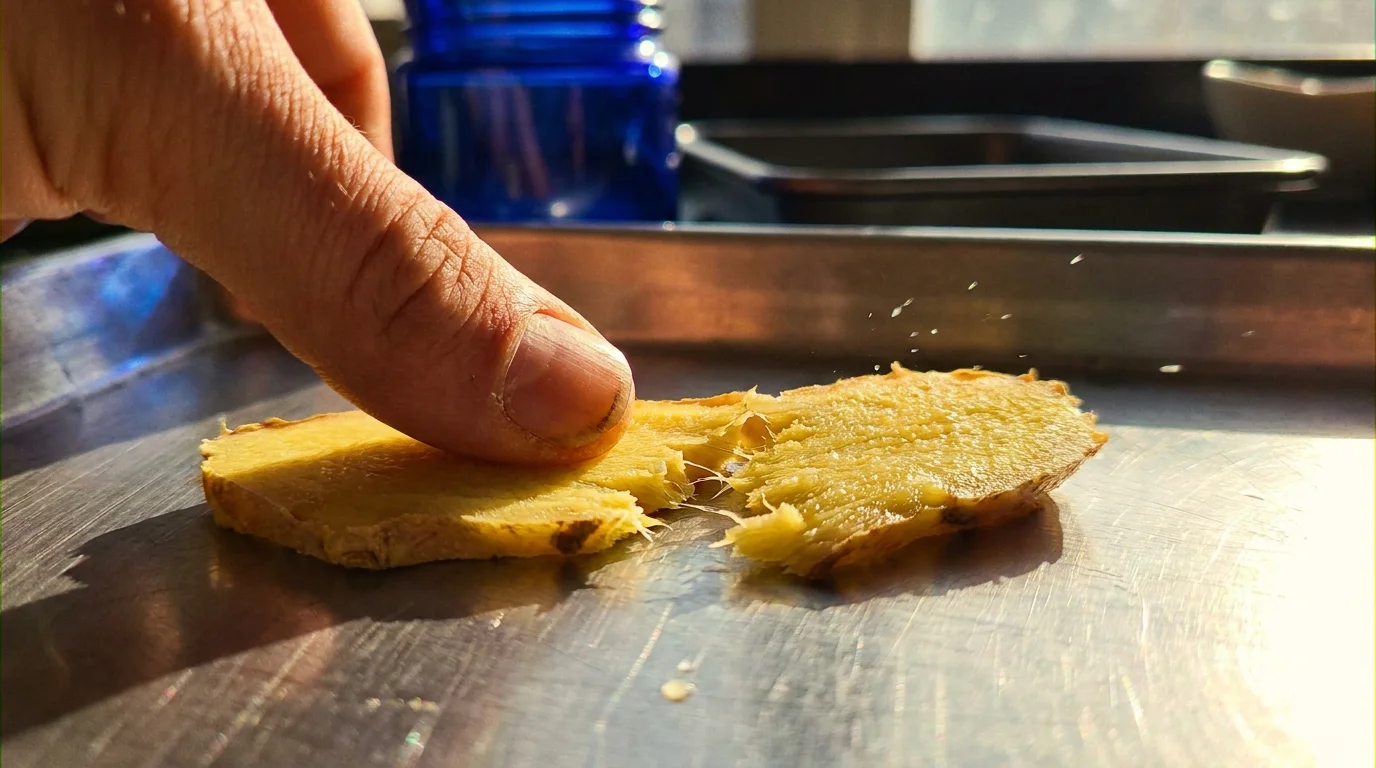
Now pick up that gnarly, thumb-sized piece of fresh ginger root resting in the ceramic bowl. Peel back a thumbnail strip of its papery, pale-tan skin with the edge of a spoon, exposing the translucent, lemon-yellow flesh beneath. When you slice off a single paper-thin ribbon and place it directly onto your tongue, a sharp electric prickle floods your jawline before your teeth even meet.
The burn is not hot like a chili pepper; it is bright, cold-peppery, and intensely clean. Within three slow chews, an unmistakable shockwave travels upward behind your nose and straight into your temples, instantly vaporizing the morning cobwebs. You are not waiting on digestive absorption or metabolic breakdown; you have just triggered a direct physical alarm wire running from your mouth straight to the base of your skull.
The Trigeminal Wire: Why Sensory Fire Beats a Caffeine Drip
Most morning fatigue is not an absence of energy; it is an uncalibrated nervous system trapped in sleep inertia. We treat morning sluggishness like an empty fuel tank, pouring black coffee into an acidic, dehydrated stomach in hopes of manufacturing vitality. Yet caffeine is a slow-motion chemical messenger that must navigate your gut wall, hitch a ride through your hepatic portal vein, and systematically plug adenosine docks across half an hour. Raw ginger works through chemesthesis, bypassing digestive processing entirely to activate the fifth cranial nerve.
The trigeminal nerve is the sensory superhighway of your face, wiring the tissues of your gums, tongue, nasal passages, and jaw directly into the reticular activating system of your brainstem. When the bioactive gingerols and shogaols in fresh ginger strike the transient receptor potential (TRPV1) channels on your tongue, your brain does not register calories or nutrients; it registers a sudden, potent environmental event. Blood vessels in the brainstem dial open, respiration deepens automatically, and your locus coeruleus releases a crisp wave of noradrenaline.
Think of your standard morning espresso like sending a priority letter through the mail: dependable, but bound by transit time. Chewing a razor-thin wafer of fresh rhizome is more like striking a bronze tuning fork against your jawbone. The vibration is instantaneous, shaking off metabolic sluggishness before the kettle can even whistle.
- Post-workout ice baths trigger stiff morning joints and block muscle repair
- Kava root extracts spark jarring midnight awakenings with racing pulse rates
- Aerosol dry shampoo triggers dry throat ticks and raspy vocal cords
- Wood-fired sauna routines spike arterial stress leaving sudden dizzy spells and chest tightness
- Unflavored hydration salts block cellular water absorption triggering dry mouth and muscle twitches
The Designer Who Replaced Her Second Shot
Elena Vance, a 38-year-old architectural drafter from Portland, spent years fighting the notorious ten-minute brain stall that met her at her drafting table each sunrise. Accustomed to drinking three double-shots of dark roast before 8:00 AM, she found herself trapped in an unforgiving cycle of mid-morning heart flutters followed by profound mental haze. Her line drawings required sharp micro-focus, but caffeine left her hands jittery while her executive function remained stubbornly dim. An herb grower at a neighborhood market suggested she keep a fresh ginger hand in a glass of water on her counter and bite into a single fresh cut before touching her mug. Within four days, Elena abandoned her second espresso entirely; the sharp, tear-inducing sting of the fresh root brought an immediate clarity that left her fingers steady and her visual tracking razor sharp.
Adjustment Layers: Calibrating the Root to Your Morning
Not every nervous system needs the exact same electrical jolt at dawn. Your tolerance for pungent compounds, your stomach sensitivity, and the nature of your mental work will dictate how you deploy this sensory switch.
For the Heavy-Sleep Inertia Fighter
If you wake up feeling as though you are breathing through a heavy wool blanket, you require immediate trigeminal recruitment. Slice the root across the grain to expose the maximum surface area of severed cell walls, releasing the volatile oleoresins immediately onto your tongue. Chew steadily for twenty seconds without swallowing right away, letting the fiery juices pool beneath the tongue where sublingual tissue accelerates the sensory shock. The sudden warmth flooding your cheeks is your peripheral circulation snapping to life.
For the Sensitive Palate
If raw pungency triggers an involuntary gag reflex or throat scratchiness, you can tame the heat without dulling the neural impact. Cut your slice paper-thin—almost translucent enough to read newsprint through—and press it between two thin coins of crisp cucumber or a sliver of green apple. The cooling water content of the fruit buffers the throat burn while allowing the gingerol compounds to trigger the tongue receptors that awaken your alertness centers.
For the Mid-Morning Screen Drifter
Brain fog does not just claim the dawn; it often re-emerges around 10:30 AM when screen glare fatigues the visual cortex. Keep two pre-sliced coins in a small glass jar at your workspace. Instead of visiting the office breakroom for another hollow cup of drip coffee, place a slice between your back molars and apply slow, steady pressure, releasing the aromatic oils into your retronasal passage to clear afternoon head tension.
Mindful Application: The Two-Minute Root Protocol
To turn this potent root into an effortless morning switch, treat it as a deliberate physical practice rather than a rushed health shot. Precision matters here, because a slice cut too thick will overpower your palate, while an old, dried-out root loses the volatile aromatics required to bridge the nasal passage.
- Select roots that feel heavy for their size, with taut, satin-like skin that yields a sharp snap rather than a bend when you break an offshoot.
- Store unpeeled ginger in a small, breathable jar in the crisper drawer, keeping moisture balanced so the tissue remains crisp and full of fluid.
- Use a ceramic paring knife or mandoline to harvest a slice roughly one millimeter thick, avoiding fibrous vertical threads.
- Rest the cut slice on the center of your tongue for five seconds before biting, allowing the natural warmth of your mouth to release the aromatics.
- Chew slowly four to six times, breathe in deeply through your nose to carry the volatile gingerol vapors backward into the sinuses, then swallow.
Follow the root immediately with four ounces of room-temperature water to carry the botanical resins smoothly into the stomach lining, where they will stimulate gastric motility and soothe morning nausea.
The Tactical Toolkit
Keep your setup minimal and intentional:
- Slice Thickness: 1 millimeter (paper-thin, flexible, slightly damp).
- Contact Duration: 45 to 60 seconds of active tongue exposure and slow chewing.
- Timing: Within 3 minutes of stepping out of bed, before drinking coffee or cold fluids.
- Storage Tool: A small sealed glass ramekin with a damp paper towel tucked at the base.
The Bigger Picture: Reclaiming Your Natural Engine
Relying solely on external stimulants to pull our attention into focus creates an invisible fragility. When we depend entirely on brewed crutches, we convince ourselves that wakefulness is a compound we must purchase, brew, and wait for. We surrender the quiet confidence that our nervous system already possesses the innate architecture to snap upright, orient to the light, and meet the demands of the day.
Reaching for a humble, knobby root on your kitchen counter is a gentle return to physiological self-reliance. It reminds you that your senses are not passive receivers waiting to be entertained or dulled; they are live circuits wired directly into your resolve. The sudden, luminous sting of fresh ginger clears the slate, leaving you present, alert, and standing fully inside your own skin before the rest of the world has even found its footing.
The sharp sting of fresh gingerol does not simply wake your stomach; it sends an unvarnished wake-up call straight through your cranial nerves to remind the mind where it lives.
| Key Point | Detail | Added Value for the Reader |
|---|---|---|
| Activation Mechanism | Chemesthesis via TRPV1 channels and cranial nerve V stimulation. | Provides near-instantaneous alertness without waiting for gastrointestinal absorption. |
| Adrenal Impact | Mild noradrenaline release prompted by natural sensory surprise. | Bypasses the jittery, sustained cortisol spikes common with multi-cup coffee habits. |
| Cut Precision | Translucent 1mm ribbon cut across fibrous grain lines. | Delivers maximum volatile oil contact while preventing unpleasant throat burn. |
| Digestive Secondary | Stimulates natural gastric juices and eases morning bile stasis. | Settles the acidic, hollow stomach sensation often exacerbated by early morning espresso. |
Frequently Asked Questions
Can I swallow the ginger slice whole to avoid the intense spicy burn?
Swallowing the slice whole bypasses the oral and nasal sensory receptors entirely, turning the root into a digestive supplement rather than a mental wake-up tool. The entire neuro-activating mechanism depends on the direct contact between active gingerols and the nerve endings on your tongue and soft palate.Will chewing raw ginger on an empty stomach cause acid reflux?
For most people, a single paper-thin slice actually promotes healthy gastric emptying and prevents reflux by toning the lower esophageal sphincter. However, if you have an active stomach ulcer or severe gastritis, enjoy your ginger slice immediately alongside or right after a glass of room-temperature water.Can I use pickled sushi ginger or powdered ginger instead?
Pickled ginger is typically preserved in refined sugars, artificial sweeteners, or vinegar, which drastically alters both the compound balance and the sensory feedback. Dried ginger powder contains higher levels of shogaols than fresh gingerols, delivering a dull, delayed gut heat rather than the crisp trigeminal snap needed for morning alertness.How many slices can I safely chew throughout the day?
One paper-thin ribbon first thing in the morning and an optional second slice during the afternoon slump are ideal for focus management. Consuming massive chunks of raw rhizome throughout the day offers diminishing neurological returns and may irritate sensitive mouth tissues.Does this habit mean I have to give up my morning coffee forever?
Not at all; this practice simply untangles wakefulness from chemical dependence. Chewing your ginger slice first clears sleep inertia naturally, allowing you to enjoy a later cup of coffee for its flavor and craft rather than using it as an emergency resuscitation tool.