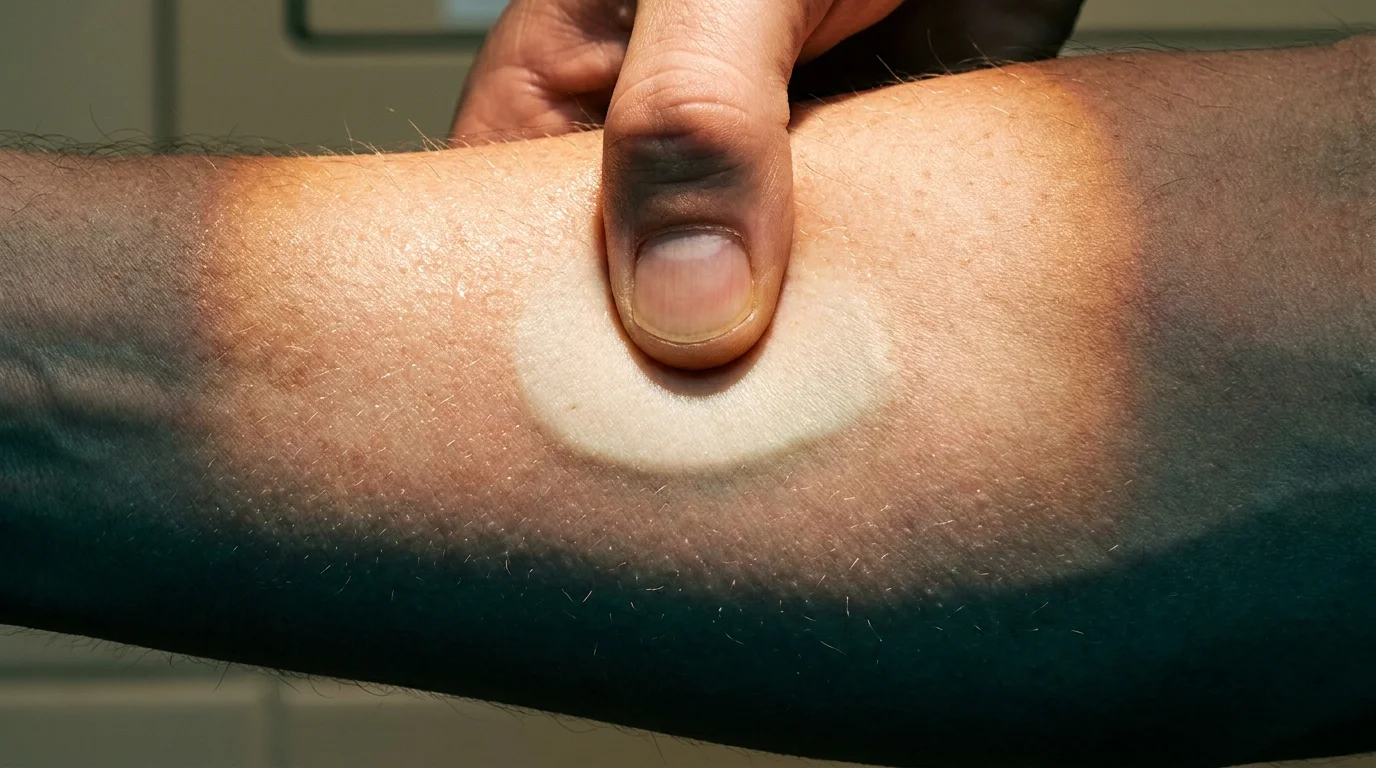
The bedroom clock glows 6:45 AM, washing the ceiling in a pale, sterile lime. Your eyes slide open, but the rest of your nervous system stays submerged under wet wool. You do not wake up with a clean click; instead, you drag yourself into the kitchen feeling as though you are breathing through a heavy pillow, your temples throbbing with a dense, gray pressure that two mugs of French press cannot budge.
You went to bed on time, followed every blue-light rule, and chewed two fruit-punch-flavored jellies thirty minutes before pulling up the duvet. The front label promised gentle restoration, non-habit-forming ease, and a soft slide into rapid eye movement. Yet the heavy drag anchoring your thoughts feels remarkably like a surgical sedative wearing off three hours late.
The common assumption is that your morning exhaustion stems from poor sleep architecture or an interrupted deep-phase cycle. The reality, quiet and biological, is happening three feet below your ears. Your nighttime ritual did not just coax you toward dreamland; it jammed your metabolic plumbing, leaving an active reservoir of an exogenous neuro-hormone adrift in your bloodstream long after your alarm sounded.
The Midnight Tollbooth: When Dosing Overwhelms the Gate
Consider your liver as a narrow, four-lane toll bridge managing evening traffic. Under normal physiological circumstances, your pineal gland releases a microscopic whisper of endogenous melatonin—somewhere around 0.1 to 0.3 milligrams—just as twilight gathers. The hepatic enzymes, primarily the cytochrome P450 1A2 pathway, clear this gentle drift with quiet precision, allowing your brain to dip into darkness and resurface cleanly at sunrise.
When you consume a commercial gummy containing five, ten, or twelve milligrams, you are not whispering to your biology; you are parking thousands of idling trucks across that four-lane bridge. Standard commercial formulations overload your metabolic receptors by up to fifty times what your evolutionary machinery was built to process. The liver works frantically through the small hours, yet it cannot clear the traffic before dawn.
Because the clearance pathway saturates rapidly, the half-life of synthetic compounds stretches out indefinitely. By the time you sit down at your desk with your morning inbox open, circulating levels of the compound remain ten to twenty times higher than natural daytime baselines. Your brain is not experiencing lingering sleepiness; it is experiencing an involuntary hormonal overlap.
- Corn oil frying releases acrid airborne haze triggering throbbing sinus headaches
- Distilled water jugs flush essential sodium sparking shaky afternoon leg fatigue
- Cod liver oil restores stiff arthritic joints despite decades of skepticism
- Leaning on handrails switches off leg stabilizers inviting wobbly knee balance
- Folding lawn chairs twist pelvic alignment sparking grinding lower back stiffness
The Clinical Drift in Suburban Practice
Dr. Julian Vance, an endocrinologist based in Charlottesville, Virginia, began mapping this pharmacokinetic mismatch after dozens of his desk-bound patients arrived with complaints of sudden, mid-morning cognitive stalls. Nearly all of them were high-performing professionals who had traded evening chamomile for neon sleep supplements during high-stress quarters. Vance discovered that when his patients ingested sticky, sugar-bound pectin doses, the slow gastrointestinal release combined with enzyme saturation pushed the clearance window past ten hours, meaning their morning commute occurred while their vascular beds remained under heavy chemical evening instructions.
Matching the Receptor: The Three Clearance Profiles
Not every human liver clears evening sleep aids at the same rate. Factors like genetics, caffeine consumption, and evening snacks alter your cellular clearance latency.
The Fast-Metabolizing Night Owl
If your body runs hot and you naturally crave late meals, your P450 pathway may process compounds with quick efficiency. For this group, high-potency chewables trigger an immediate crash, followed by jarring 3:00 AM awakenings accompanied by a racing pulse, because the rapid drop in receptor saturation creates an acute chemical withdrawal rebound.
The Slow-Enzyme Daytime Worker
Desk workers who consume black coffee through the afternoon share a single enzymatic pathway: CYP1A2 processes both caffeine and exogenous melatonin. If your liver is occupied breaking down afternoon espresso, the chewable you take at 10:00 PM simply sits in the metabolic queue. Lingering sedative levels stay trapped in your peripheral tissues until lunchtime the following day.
The Pectin-Binding Sensitive
Gummy vehicles rely on gelatin or pectin, often laced with cane sugar or glucose syrup. This matrix causes erratic gastric emptying. Instead of delivering a predictable pulse, the gut releases active molecules in uneven waves throughout the night, completely disorienting your internal chronometer.
Recalibrating the Circadian Baseline
Reclaiming clear mornings does not require suffering through restless nights. It demands treating neuro-hormones as signaling instruments rather than blunt pharmaceutical hammers. The following protocol resets your clearance clock without sleep disruption.
- Taper the brute-force dose downward over five evenings to avoid rebound insomnia.
- Shift timing to three hours before bed rather than thirty minutes prior, letting the blood curve peak before REM.
- Swap chewable sugary matrices for micro-dose liquid droppers or plain, unbuffered sublingual tablets.
- Drink 16 ounces of room-temperature water with a squeeze of fresh lemon upon waking to stimulate hepatic bile flow.
- Expose your retinas to direct morning sunlight within ten minutes of waking to shut down leftover pineal signaling.
Keep your bedtime toolkit simple and exact. A calibrated 0.3 milligram sublingual dropper, an amber reading bulb running below 40 watts, and an ambient bedroom temperature dialed strictly to 66 degrees Fahrenheit will consistently accomplish what twenty milligrams of corn syrup never could.
The Freedom of an Uncluttered Dawn
Waking up should feel like stepping across an open threshold, not crawling through wet plaster. When you stop flooding your metabolic pathways with oversized doses, the heavy curtain lifts from your forebrain. You begin to trust your own biological rhythm again, realizing that true rest is not manufactured through sheer chemical weight, but invited through subtle biological cues that respect the delicate pace of your liver.
Small signals reset the clock; heavy doses merely break the gears.
| Dosing Strategy | Hepatic Clearance Rate | Next-Day Mental State |
|---|---|---|
| Commercial Gummies (5mg – 10mg) | Saturated (8 to 11+ hours) | Persistent brain fog, heavy temples, delayed focus |
| Physiological Micro-Dose (0.3mg) | Normal baseline (3 to 4 hours) | Clean awakening, natural cognitive sharpness |
| Circadian Light Cues (0mg) | Endogenous production (Instant off-switch) | Zero metabolic residue, steady all-day vitality |
Frequently Asked Questions
Why do commercial gummies contain such high doses if our bodies only need micro-amounts?
Federal dietary supplement regulations do not restrict potency for over-the-counter sleep aids. Manufacturers often increase active dosages under the marketing assumption that higher numbers signal better effectiveness to retail consumers.Does drinking extra coffee in the morning help clear the lingering grogginess faster?
No, it frequently worsens the issue. Coffee competes for the exact same liver enzyme responsible for metabolizing the remaining compound, prolonging its presence in your system.How long does it take for liver pathways to normalize after stopping high-dose chews?
Most adults regain normal receptor sensitivity and hepatic clearance speed within three to five days of lowering their intake to physiological thresholds.Are chewables more problematic than standard swallowable pills?
Yes, because the sugars and stabilizing pectins used in chews alter gastric transit times, resulting in unpredictable, delayed absorption cycles throughout the sleep cycle.Can I split a standard 5mg gummy into pieces to reduce the dose?
While splitting helps lower the total amount, active ingredients are rarely distributed evenly throughout a gelatin mold, making precise micro-dosing difficult.