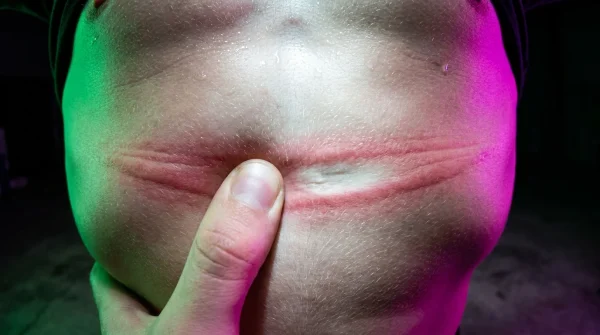
The room is cool, dim, and quiet when your alarm sounds at six thirty in the morning. Outside, the neighborhood stirs with the distant hum of a delivery truck, and your bedroom feels like a sanctuary of down comforters and crisp cotton sheets. You anticipate that gentle, waking roll toward the edge of the mattress. Yet the second you attempt to slide your feet down toward the cold hardwood floor, your lower back seizes with the brutal rigidity of dry concrete.
You catch your breath against the headboard, waiting for the deep ache across your beltline to ease. It is a dull, gnawing tightness that makes standing tall feel like pulling a rusted hinge open against its will. The instinct is always to blame your mattress age, your desk chair, or an old gym injury from three years ago. You assume your body broke down during the day, carrying silent tension that hardened overnight while you were completely resting.
The physical breakdown did not happen during your commute or your afternoon standing meetings. It occurred in the dark, sustained over seven uninterrupted hours while your body sank face-down into the bedding. When you turn onto your stomach and hike one knee outward to find comfort, you force your spine into an aggressive mechanical compromise. Twisting your lower torso while resting face-down crunches delicate spinal facets together under direct pelvic gravitational load, pinching nerve branches and locking the lumbar joints until sunrise.
The Sagging Bridge: Why Prone Rest Collapses Your Alignment
Consider the architecture of a classic suspension bridge. When cables maintain precise, balanced tension from both ends, the roadway floats effortlessly above water, flexing without breaking under variable wind and traffic. Your spine relies on an identical biological balance: your abdominal wall and anterior ligaments act as dynamic support cables, maintaining a gentle, natural arch in your lumbar vertebrae without letting the bones grind together.
When you sleep face-down, that suspension bridge collapses entirely. Your mattress yields beneath the heaviest mass of your torso, letting gravity pull your belly and hips downward into a deep, unsupported dip. To keep breathing, you must wrench your neck ninety degrees to one side, which immediately torques your upper thoracic vertebrae. To stabilize that neck rotation, your pelvis instinctively levers open, rotating one hip upward while the other drops, jamming your lower facet joints into an involuntary vice grip for hours at a time.
The fascinating perspective shift is that your body chooses this stomach sleeping position for a genuine physiological reason. Prone resting provides deep visceral comfort because it shields your exposed chest and belly, grounding your nervous system against bedtime anxiety. The posture itself is not a moral failing or an unfixable flaw; it is an instinctual grounding mechanism that simply lacks a mechanical foundation. By placing a thin, firm flat pillow directly beneath your pelvis, you elevate the sagging midpoint of that biological bridge, evening out the arch and neutralizing joint friction in seconds.
The Shared Clinic Secret: Marcus and the Painter’s Trap
Consider Marcus Vance, a 48-year-old architectural painter in Richmond, Virginia, who spent decades balancing on ladders and scaffolding with effortless physical agility. For nearly fourteen months, Marcus woke every single morning convinced he was developing degenerative disc disease because his first twenty minutes on his feet involved a hunched, painful shuffle toward the kitchen kettle. He spent thousands on therapeutic massage, swapped his hybrid mattress for an ultra-firm slab, and took high-potency turmeric supplements, yet the morning fire in his lower lumbar spine never flickered. During an evaluation with a veteran physical rehabilitation specialist, Marcus sheepishly admitted that he could only fall asleep sprawled on his belly with his left leg drawn up like a half-open pocketknife. The specialist smiled, handed Marcus a five-dollar compressed foam insert, and instructed him to sleep with it tucked beneath his waistline; within three nights, the joint lock vanished because his facet surfaces finally had room to breathe.
- Yellow mustard spoonfuls shock racing nervous systems to halt sudden panic loops
- Refined soybean oil releases harsh stove smoke triggering sudden afternoon brain fog
- Triple-filtered tap water flushes natural mineral reserves sparking heavy midday fatigue
- Nature Valley bars trigger sudden sugar spikes and heavy midafternoon sluggishness during workdays
- Polite smiling habits during difficult client calls drain nervous energy causing evening exhaustion
Adjustment Layers for the Face-Down Sleeper
Not every stomach sleeper settles into the mattress with identical mechanics. The way your joints compress depends entirely on limb placement, mattress density, and body geometry.
For the Half-Frog Sprawler
If you sleep with one knee hitched sharply toward your chest, you create asymmetric sacroiliac shear. Your pelvic girdle twists like a wringing towel, loading one side of your lower back while over-stretching the other.
- Place a flat, medium-density cushion beneath the lower abdomen, bridging the gap between your navel and your pubic bone.
- Tuck a small, rolled hand towel directly beneath the inner knee of your hitched leg to prevent your hip from twisting open past neutral alignment.
- Keep your head pillow as thin as a folded linen napkin to prevent extreme cervical extension from pulling downward along your spinal cord.
For the Straight-Leg Diver
Sleeping flat on your stomach with both legs extended drops your pelvis straight down, driving your lumbar vertebrae into extreme hyper-lordosis. This creates bilateral facet impingement that leaves your lower back feeling stiff and bruised on both sides.
In this position, your hamstrings shorten and your hip flexors tighten overnight. A firm support wedge under your pelvic rim tilts your tailbone slightly backward, instantly flattening that acute lower back dip. You will feel your abdominal wall make soft, even contact with the bed, removing the shearing pressure from your vertebrae before you even drift into sleep.
For the Soft Mattress Sinker
Plush memory foam mattresses are notoriously brutal on prone sleepers because they let your hips sink several inches deeper than your chest. This creates a severe hammock effect that keeps your facet joints jammed tightly together throughout every sleep cycle.
- Select a pancake-flat latex or dense foam insert rather than a fluffy down pillow for your pelvis, ensuring it will not compress into nothingness under your body weight.
- Ditch your head pillow entirely; rest your forehead directly on the mattress or along the flat crook of your forearm to keep your neck level with your mid-back.
- Slide a thin sheet of cardboard beneath the center of your mattress core if your bed frame has sagging slats that swallow your hips.
Mindful Application: The Three-Minute Bedtime Alignment
Restoring painless mornings does not require forcing yourself to sleep flat on your back like a soldier at attention. Transforming your sleep mechanics is an exercise in gentle, mindful calibration that respects your body’s natural preferences while removing the mechanical strain.
Begin by checking in with your lower back before you pull up the covers. Notice the space between your skin and the mattress when you lie flat. If you feel a sharp pinch or a hollow gap where air could circulate freely, your spine is crying out for structural support.
Follow these specific physical adjustments before you close your eyes:
- Slide a dense, flat pillow measuring no more than one to two inches thick directly beneath your pelvis, centering it between your hip bones and your lower ribs.
- Allow your lower abdomen to rest weightlessly into the cushion, feeling your tailbone drop slightly toward your heels to decompress your facet joints.
- Keep your head support minimal; use a down-alternative pillow with half the standard fill or rest your cheek on a folded pillowcase.
- Rest your arms down by your sides or gently folded beneath your chest rather than stretching them up above your ears, which pulls your shoulder blades toward your neck.
The Tactical Toolkit
To lock in painless mornings, rely on these exact, field-tested parameters:
- Pelvic Support Height: 1.0 to 1.5 inches of high-density foam or folded cotton canvas (avoid loose feathers that compress unevenly).
- Head Rest Elevation: 0.5 inches maximum; your ear should rest parallel to your upper shoulder blade.
- Room Temperature: 65 to 68 degrees Fahrenheit to discourage midnight tossing and asymmetric limb sprawling.
- Morning Decompression Window: 90 seconds of gentle cat-cow arches on all fours beside your bed before standing upright.
The Bigger Picture: Reclaiming Your Morning Freedom
Waking up without stiffness is not simply about avoiding physical discomfort; it changes the psychological texture of your entire day. When your first conscious sensations are pain, hesitation, and joint locking, your nervous system begins the morning in defensive mode. You brace against the world before you have even poured your first cup of coffee or looked out the window.
When you align your natural sleeping habits with simple mechanical principles, your bed becomes a place of true cellular recovery rather than a source of hidden joint friction. Waking with a loose, supple spine restores quiet confidence to your morning routine. You rise smoothly, move with freedom, and step out into the crisp morning air ready to meet the day on your own terms.
Small shifts in overnight geometry eliminate the joint compression that years of daily stretching cannot undo.
| Key Point | Detail | Added Value for the Reader |
|---|---|---|
| Spinal Facet Locking | Lying prone without pelvic support forces lumbar vertebrae into hyper-extension. | Explains why morning pain feels like sharp, locked-up bone friction rather than dull muscle soreness. |
| Pelvic Counter-Lever | A 1- to 1.5-inch flat pillow tucked under the pelvis neutralizes the lumbar arch. | Provides an immediate, cost-free physical intervention that works on your existing mattress tonight. |
| Cervical Torque Mitigation | Turning the head 90 degrees while the spine dips creates full-body rotational tension. | Shows how flattening your head pillow instantly relieves pulling tension along your lower back nerves. |
Frequently Asked Questions
Why does sleeping on my stomach cause back pain when it feels so comfortable initially?
The position feels comforting because it calms your nervous system by protecting your vulnerable chest and belly. However, without structural support beneath your pelvis, gravity slowly pulls your lumbar vertebrae into hyper-extension over several hours, jamming the facet joints together until they inflame.What kind of pillow works best under the hips for stomach sleeping?
Avoid fluffy down pillows that compress into nothing under body weight. Use a thin, high-density foam insert or a folded cotton bath towel measuring one to two inches thick, placed flat between your navel and the top of your thighs.Will using a pelvic pillow force me to change my favorite sleeping position?
Not at all. The beauty of this physical adjustment is that it allows you to keep the grounded, comforting sensation of stomach sleeping without suffering the mechanical joint crunch that sparks morning stiffness.How quickly should I expect relief from morning back stiffness?
Most people notice a dramatic reduction in morning locking within one to three nights because removing facet compression allows irritated joint capsules and spinal nerves to calm down immediately.Should I still stretch my lower back as soon as I wake up?
Avoid aggressive toe-touches or deep forward twists right out of bed, as your spinal discs are naturally hydrated and vulnerable in the morning. Instead, perform ninety seconds of gentle cat-cow movements on your hands and knees to circulate fluid through your joints before standing.