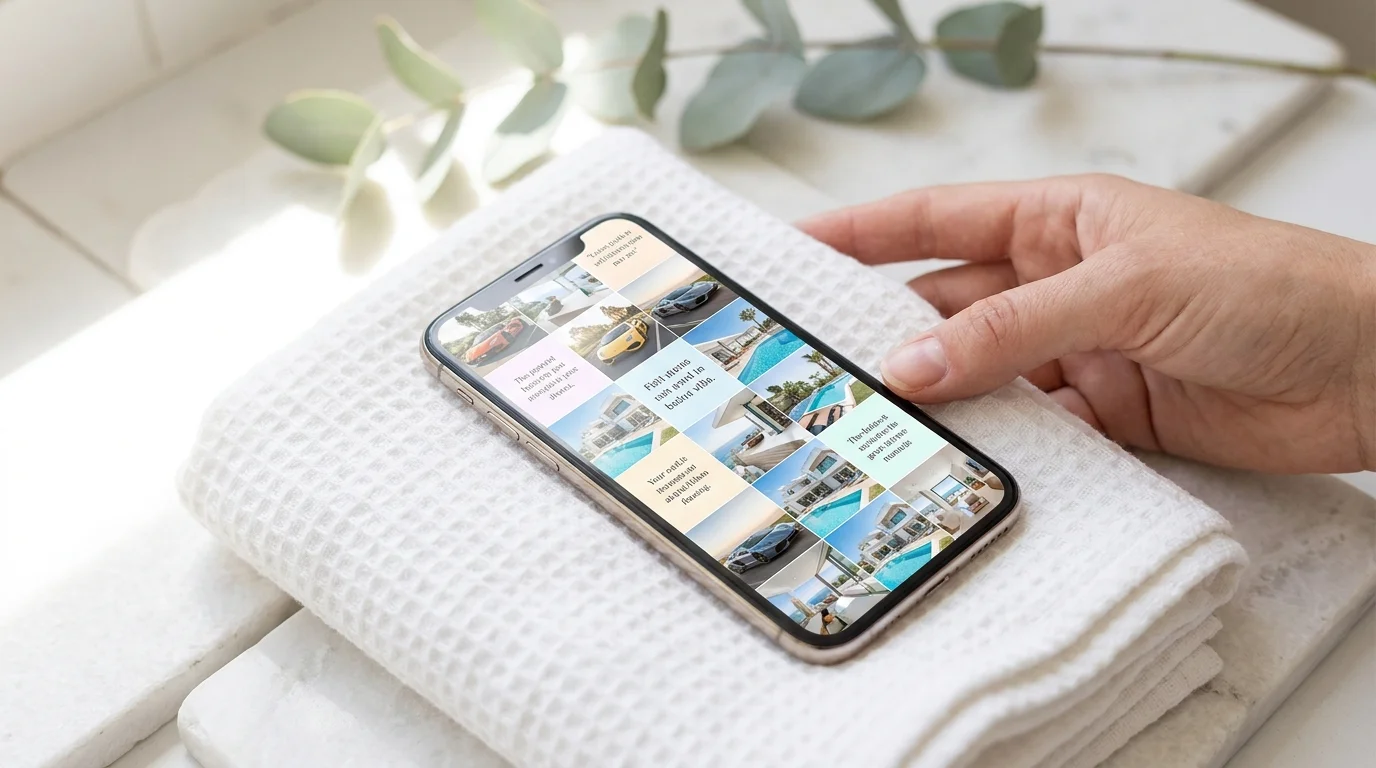
The blue-white glow of a smartphone screen at 11:30 PM cuts through the darkness of your bedroom. On the display, a meticulously curated collage of luxury beachfront homes, sleek sports cars, and pristine mountain retreats radiates promise. This is your digital vision board, a tool modern wellness guides swear will align your mind with abundance. You are told that by looking at these images daily, you train your subconscious to draw these realities closer to you.
Instead, a subtle, familiar tightness catches in your throat. Your thumb hovers over the vision board app, scrolling through endless high-resolution dreams while your actual room remains dark, cold, and quiet. There is a silent friction between the screen’s promises and your immediate physical reality. Your chest feels slightly constricted, a physical signal that your brain is not feeling inspired, but deeply unsettled.
The wellness industry treats manifestation apps as a form of mental clarity. They suggest that visualizing a flawless future is a peaceful, life-affirming practice. Yet, as you close the app, your mind does not settle into a restful state. It spins with a quiet, restless urgency, calculating the massive distance between the lifestyle on your screen and the bank account in your reality.
The professional reality of neurological performance is vastly different from wellness folklore. Where you expect motivation, your primal mind detects an existential threat. This constant exposure to what you do not have acts like a silent, vibrating alarm. This constant deficit signaling shifts your nervous system from calm anticipation into a state of quiet, perpetual defense.
The Mirage of Abundance: How Your Brain Misinterprets the Screen
Think of your mind as a highly sensitive security system, not a passive camera. When you open a vision board app, you are not showing your brain a beautiful destination. You are presenting it with a glaring list of resources you currently lack. The brain does not look at a digital collage of a million-dollar villa and think of peace; it registers that your current shelter is inadequate compared to the visual standard you keep demanding.
It is like breathing through a pillow while trying to run a marathon. You are forcing your mind to run toward a digital horizon that never gets closer. This constant comparison between your safe, physical reality and the screen’s hyper-polished fantasy triggers a mild, chronic fight-or-flight response. This subtle survival loop keeps your baseline cortisol levels elevated throughout the day, leaving you depleted.
- Silicone earplugs interrupt deep restorative sleep leaving you completely exhausted daily
- Lemon water routines block vital morning iron causing freezing cold extremities
- Oat milk lattes trigger facial redness and accelerate unexpected volume loss
- Dry shampoo sprays quietly disrupt female cycles causing sudden monthly bloating
- FDA tampon metal findings force urgent changes to feminine care manufacturing
The Seattle Study: Real Stress in Virtual Dreams
Dr. Aris Thorne, a cognitive neurologist specializing in behavioral adaptation, spent three years tracking the autonomic nervous systems of busy professionals in Seattle. He observed a recurring pattern: clients who spent their mornings adjusting digital vision boards showed heart-rate variability patterns identical to individuals experiencing active work stress. Thorne discovered that when we constantly gaze at luxury items, the amygdala registers the absence of these items as a threat to security. It was a shared secret among his research team that the most resilient minds focused entirely on immediate physical actions rather than digital projections.
Tailoring Your Focus: Identifying Your Digital Stress Profile
If you find yourself opening these apps during brief work breaks, you are likely substituting actual rest with cognitive labor. Instead of letting your brain recover, you are asking it to process complex emotional desires. Your recovery windows are highjacked by the pressure of future planning, leaving you mentally exhausted before the afternoon even begins.
Creatives often use digital boards to capture aesthetic inspiration. However, when these boards shift from project-specific mood boards to life-encompassing demands, the creative impulse curdles into self-judgment. The fluid nature of art is replaced by a rigid checklist of how your life is supposed to look, paralyzing your actual output and making daily tasks feel incredibly heavy.
If you are naturally empathetic and deeply affected by your surroundings, these bright, high-contrast digital collages act as sensory overload. The flashing colors, mixed fonts, and idealized bodies create an internal noise. This digital clutter makes quiet reflection impossible, manifesting as a subtle, ambient anxiety that follows you from room to room.
Dismantling the Digital Alarm: A Mindful Transition
Returning your nervous system to a state of safety requires a deliberate step back from the digital screen. You do not need to abandon your aspirations; you simply need to change how you store them. Moving from high-contrast screen pixels to analog, grounded habits allows the brain to process desires without triggering survival systems.
- De-escalate your lock screen by replacing busy dream collages with a single, calming natural texture or a solid neutral tone. This immediately stops the hourly dopamine spike and subsequent crash when you check your phone.
- Limit your digital board interaction to once a week for no more than ten minutes, preferably on a desktop computer. This physical distance prevents the habit from becoming an impulsive coping mechanism.
- Translate abstract digital dreams into small, physical actions that you can execute within the next twenty-four hours. If you dream of a coastal home, simply open a window to let fresh air circulate through your current space.
Our physical nervous system thrives on concrete, tangible realities. When we trade digital illusions for immediate, tactile experiences, the mind naturally relaxes. Our physical nervous system finds safety in what is present, not in what is projected on a screen.
Tactical Toolkit:
• Screen Brightness: Reduce mobile display to 30% when viewing inspirational content.
• Exposure Window: Max 15 minutes per week, strictly before 7:00 PM.
• Tactile Replacement: Spend 5 minutes handling raw materials (wood, paper, stone) after any goal-setting session to ground your nervous system.
Returning to the Present Sanctuary
True mental clarity is never found on the other side of a glass screen. When you stop demanding that your brain constantly reach for a manufactured future, you allow it to settle into the safety of the present moment. Your current life, with its imperfect corners and unfinished projects, is not a failure of manifestation; it is the only place where actual growth can occur.
By silencing the digital noise, you give your nervous system permission to rest. You begin to realize that your worth is not tied to a digital gallery of luxury goods. realizing that you do not need a flawless screen to experience a deeply satisfying and quiet life.
“The nervous system thrives on what is real and immediate; digital projections of wealth are merely elegant stressors to a brain trying to survive.” — Dr. Aris Thorne
| Key Point | Detail | Added Value for the Reader |
|---|---|---|
| Digital Vision Boards | High-contrast screen pixels displaying unattainable, distant goals. | Triggers subconscious deficit-focus and elevates daily stress. |
| Analog Goal Setting | Physical notebooks or textured cards kept in a closed drawer. | Allows thoughtful planning without constant visual pressure. |
| Grounded Action | Small, immediate tasks completed in your physical environment. | Rebuilds trust with yourself by proving you can affect your reality today. |
Why do vision board apps make me feel tired instead of inspired?
They force your brain into a state of deficit-focus, where your subconscious continuously compares your current reality to the idealized digital images, triggering a mild fight-or-flight response that drains your energy.
Can I still use digital boards without spiking my anxiety?
Yes, by strictly limiting your exposure to fifteen minutes a week on a computer screen rather than your phone, keeping your goals realistic, and immediately grounding yourself afterward.
What is the difference between a vision board and a mood board?
A mood board focus on aesthetic themes or specific projects, whereas a vision board often demands a total lifestyle transformation, which places immense personal pressure on your nervous system.
How does the brain interpret luxury images on a smartphone?
Your primal mind does not understand the concept of a digital motivation tool; it simply registers the absence of these resources as a threat to your current security and status.
What is the healthiest alternative to a digital manifestation app?
A simple, hand-written journal kept closed in a drawer. This allows you to articulate your hopes without subjecting your eyes to constant, high-contrast visual stimulation.