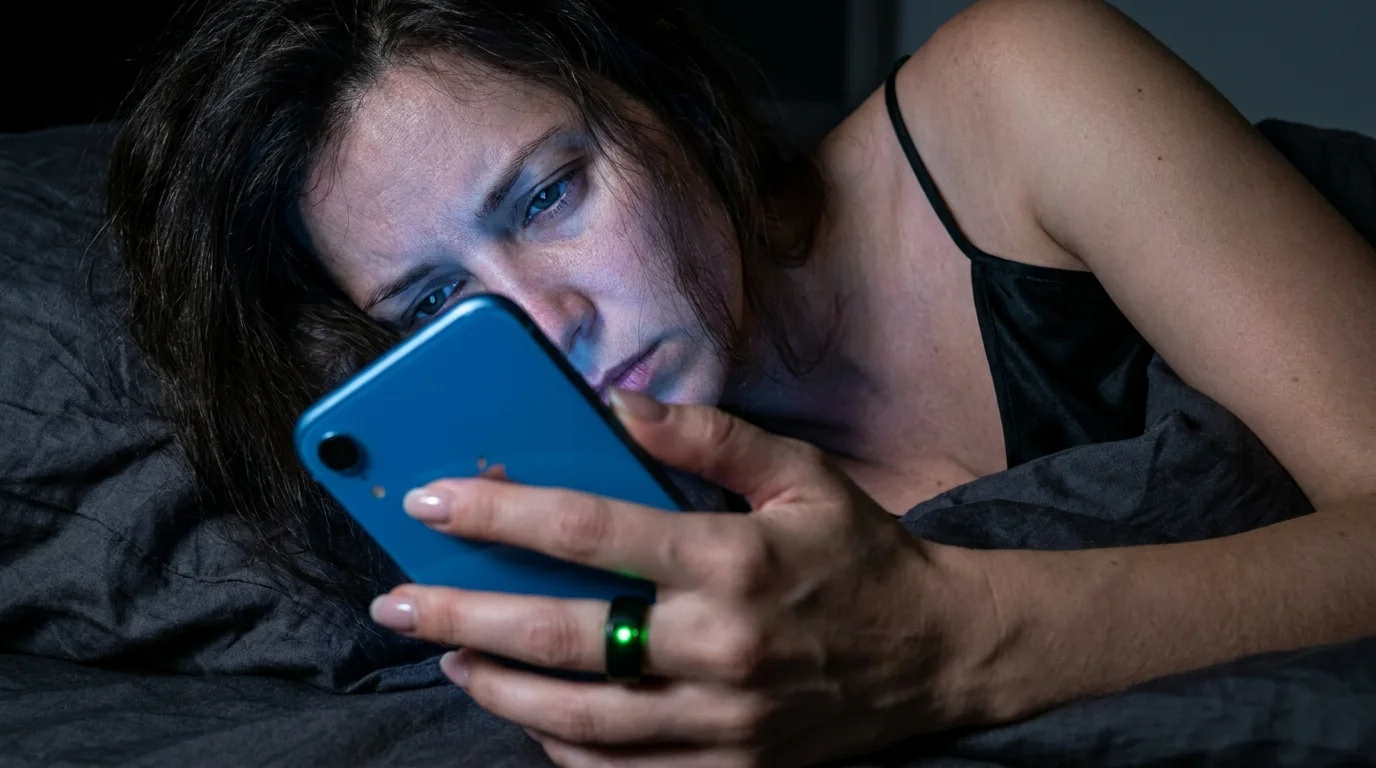
The blue-gray light of 6:00 AM barely filters through the heavy cotton drapes of your bedroom. On your nightstand, a glass of water catches the dim reflection of your phone screen. You roll over, feeling a slight, cool weight on your index finger.
When you lift your hand, a tiny, glowing green optical sensor inside a matte black ring flashes against your skin. You feel reasonably clear-headed, the lingering warmth of sleep still cradling your limbs. But before your feet even touch the hardwood floor, your hand reaches for the phone to see if your body is telling the truth.
The screen illuminates, syncing the data from your finger to the cloud. A cold, sharp number appears: 54, marked with an amber warning. Instantly, a subtle wave of panic ripples through your chest, tightening your breathing. The mild morning peace evaporates, replaced by the clinical certainty that you are running on empty.
This instant surge of tracking-induced anxiety immediately depletes your prefrontal cortex before your feet even touch the floor. By outsourcing your physical self-awareness to a piece of plastic and metal, you enter a cycle of mental fatigue that no amount of morning espresso can repair.
The Nocebo of the Numerical Morning
We have entered an era where we trust the green light on our fingers more than the sensations in our own muscles. This mismatch creates what psychologists call a reverse placebo effect, or a nocebo. When your phone tells you that your rest was fragmented, your brain immediately begins to construct the symptoms of exhaustion to match the data.
This mental pattern triggers an autosuggestion trap that quietly drains your morning energy. Instead of moving through your morning routine with natural momentum, your executive focus is hijacked by a narrative of deficit. Your mind spends precious cognitive fuel analyzing why your deep sleep was low, leaving you with less mental stamina for the actual demands of your day.
- Avocado toast after working out completely erases your morning calorie burn
- Daily HIIT classes force your body to store stubborn water weight
- Zero-carb dinners trick your body into hoarding stubborn belly fat
- Keto friendly granola bars trigger massive afternoon cravings that stall your progress
- Carrying heavy canvas bags effortlessly expands your daily fat burning potential
The Orthosomnia Dilemma
Consider the experience of Clara, a thirty-four-year-old UX designer from Seattle who spent months chasing a perfect sleep score. Every morning, her routine began with a sense of dread as she synced her matte black ring. If her score fell below eighty, she noticed an immediate shift in her focus: she stumbled over her words during morning meetings and felt an artificial haze of fatigue settle over her eyes.
It was only when Dr. Aris Thorne, a clinical sleep specialist, suggested she sleep without the ring for two weeks that her brain fog cleared. Clara realized her fatigue was not a result of poor sleep, but of the clinical exhaustion loop born from the relentless anxiety of being graded every morning.
The Archetypes of the Tracked Mind
This high-tech anxiety affects different people in distinct ways, dividing us into specific behavioral patterns that compromise our mental battery.
The Score-Obsessed Achiever
If you fall into this category, you treat your morning recovery score as a performance review. A low number feels like a personal failure, triggering an immediate stress response that consumes your cognitive reserves. Your morning starts with a defensive posture, as you mentally brace for a day of assumed weakness, ultimately draining your cognitive emotional battery before your work day even begins.
The Restless Sync-Seeker
For this individual, the ring acts as an anchor for midnight worries. If you wake up at 3:00 AM, your mind immediately wonders how this interruption is affecting your recovery chart. The temptation to check the app mid-sleep becomes a barrier to returning to rest, creating a chronic hyper-fixation on sleep that ruins the natural rhythm of your nervous system.
Reclaiming Your Internal Compass
To break free from this cycle, you do not need to discard your wearable technology. Instead, you must change how and when you interact with the data to preserve your prefrontal cortex.
Implementing a few minimalist adjustments can help restore your sovereign relationship with your body. By setting clear boundaries between your physical experience and your digital metrics, you allow your nervous system to reset. Try adopting this simple somatic morning audit to rebuild your natural energy reserves:
- The Thirty-Minute Buffer: Avoid syncing your ring or checking your sleep score until you have been awake for at least thirty minutes. Use this time to let your mind settle without numerical judgment.
- The Physical Check-In: Before looking at any screen, take three deep breaths and ask yourself how your eyes, shoulders, and mind feel. Write down one word to describe your energy level.
- Weekend Sensor Sabbaticals: Leave your ring on its charger from Friday evening until Monday morning. Spend forty-eight hours relying entirely on your body’s natural cues for rest and activity.
The Freedom of Unquantified Living
True vitality is not a score out of one hundred. It is the quiet, unmapped sensation of waking up, stretching your arms, and deciding how to meet the day based on your internal sensations. By stepping back from the constant loop of sleep tracking, you return the control of your mind to its rightful owner.
When you allow yourself to live outside the margins of a chart, you reclaim your morning focus. You discover that your energy is not a finite resource managed by an algorithm, but a flexible, living force. In doing so, you rebuild your sovereign self-awareness and find that the best measure of a good night’s sleep is simply how you choose to live your day.
“When we let an algorithm decide how we feel, we mute the whisper of our own biological wisdom.” — Dr. Aris Thorne
| Key Point | Detail | Added Value for the Reader |
|---|---|---|
| The Somatic Buffer | Waiting 30 minutes to sync your ring in the morning. | Protects your prefrontal cortex from early-morning performance anxiety. |
| The Score Blindspot | Recognizing that movement algorithms can misclassify light rest. | Prevents false alarms about poor physical recovery. |
| Sensor Sabbaticals | Removing your tracker for 48 hours every weekend. | Calibrates your natural body awareness without screen-based validation. |
Frequently Asked Questions
How does checking my sleep score cause physical fatigue? Your brain reacts to a poor score with a subtle threat response, releasing cortisol that wears down your cognitive battery before you even make breakfast.
Can wearable data actually lie about sleep quality? Yes; simple movement or heart-rate variations can misclassify deep rest as light sleep, creating needless mental worry.
What is the best time of day to sync my smart ring? Wait until after you have eaten breakfast or around 10:00 AM, once your natural morning momentum has settled.
Will wearing the ring during the day worsen my focus? If you constantly monitor your step counts or stress levels, it keeps your nervous system in a state of hyper-vigilance.
How do I rebuild trust in my own internal recovery signals? Practice checking in with your physical energy for three minutes every morning before turning on any digital device.