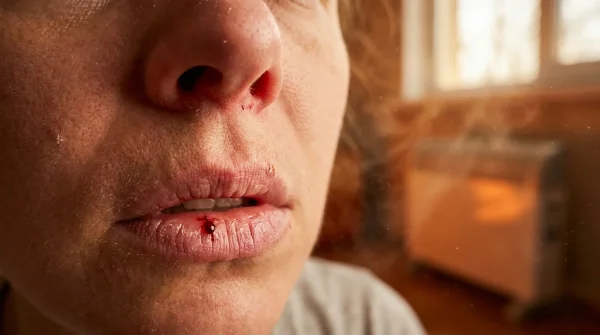
The green indicator light on your laptop camera glows with a cold, unforgiving brightness. You sit at your desk, head tilted slightly, your lips pulled back into an energetic, accommodating smile that does not quite reach your eyes. On the screen, you look like the picture of collaborative harmony. Underneath the desk, your legs are crossed tight, and your left shoulder is stiffly raised toward your ear, frozen in a desperate attempt to look completely relaxed in a cheap meeting chair.
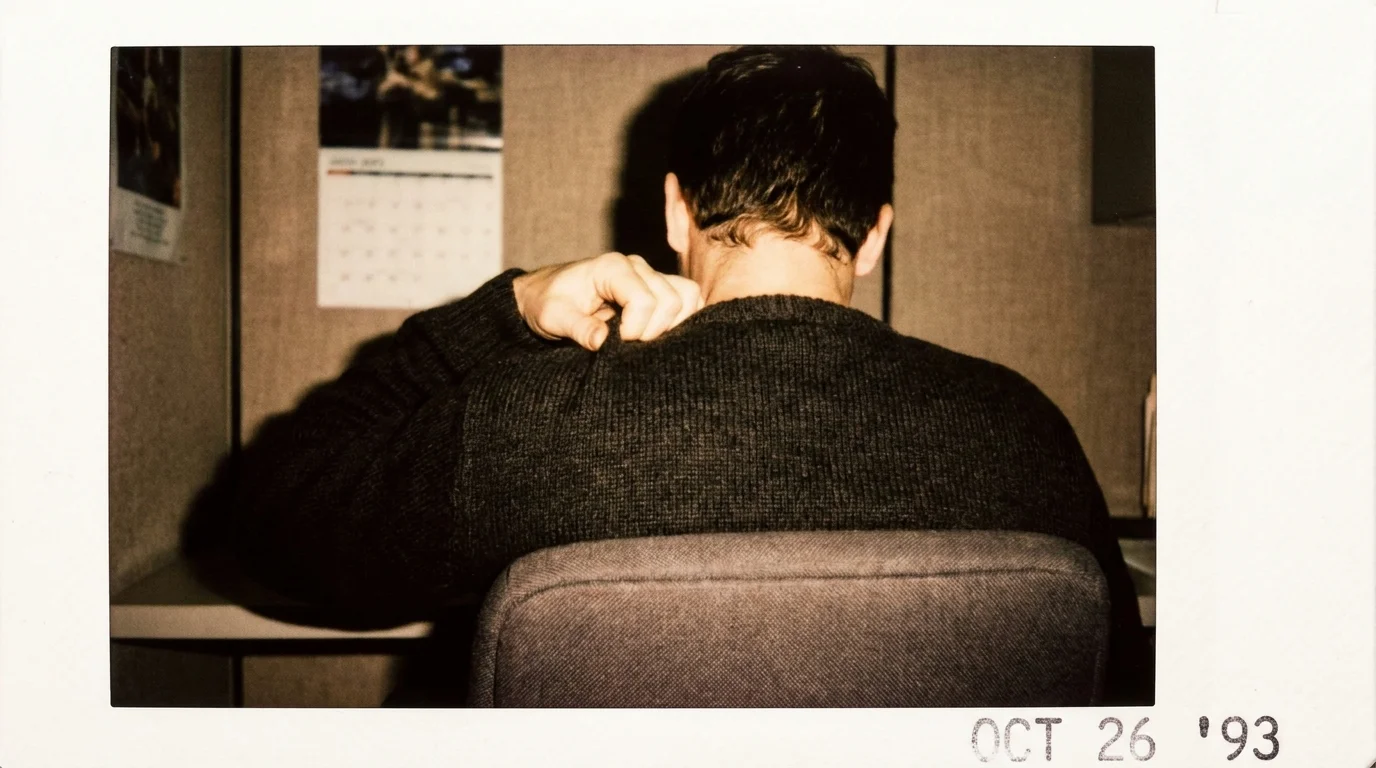
You can feel a dull, warm throb beginning to bloom right behind your right shoulder blade. It is a familiar guest, a hard nodule of muscle tissue that feels less like living flesh and more like a buried walnut under skin. You try to roll your neck while the presenter shares a slide, but the movement is limited, dry, and accompanied by a faint grinding sound. This is not the result of a bad gym workout or poor desk ergonomics; it is the physical shape of a swallowed sigh.
In the modern workspace, positivity has become a silent job requirement. We are taught to soften our edges, nod along with bad ideas, and maintain a pleasant exterior even when our systems are screaming for a boundary. But your nervous system does not understand corporate diplomacy. When you force a pleasant expression over a wave of genuine frustration, your brain registers the conflict as an immediate threat, leaving your upper body to pay the toll.
The Structural Tax of the ‘Polite Smile’
To understand why your back feels like concrete, you must look at how the face communicates with the rest of the body. When you experience frustration or anger, your natural biological response is to defend yourself or express the boundary. When you suppress these reactions to maintain a pleasing facade, you force your nervous system to put brakes on muscles.
This creates an internal tug-of-war. Your facial nerves are busy signaling enthusiasm, while your deep motor pathways are preparing for conflict. The result is a phenomenon known as an emotional suppression leak. Denied the exit ramp of a sigh or an honest frown, this trapped energy travels straight down the cranial nerves into the trapezius and levator scapulae muscles. Your shoulders brace as if you are walking into a freezing wind, holding that tension for hours on end.
Clara Vance, a thirty-four-year-old project manager from Chicago, spent three years leading high-stress client calls with a permanently cheerful tone. Despite regular massages and an expensive ergonomic chair, she suffered from chronic, burning pain along the top of her shoulder blades. It was only when a physical therapist noticed her jaw clenching every time she politely agreed to a difficult request that the pattern clicked. Clara realized she was bracing against her environment, using her upper back as an emotional shield. Once she started allowing herself to take honest breaks and drop the cheerful mask between calls, the stubborn knots finally began to melt away.
- Sleep tracking rings quietly drain your morning cognitive focus and energy
- Avocado toast after working out completely erases your morning calorie burn
- Daily HIIT classes force your body to store stubborn water weight
- Zero-carb dinners trick your body into hoarding stubborn belly fat
- Keto friendly granola bars trigger massive afternoon cravings that stall your progress
Mapping Your Emotional Armor
Different styles of corporate survival place distinct physical demands on your musculature. Recognizing your specific coping posture is the first step toward releasing the physical holding patterns that lock your bones in place.
The Visual Over-Compensator typically thrives on virtual video calls. If this is you, you likely over-articulate your expressions, nod excessively to show engagement, and keep your neck slightly forward to appear attentive. This constant forward-reaching posture pulls the base of your skull tight, leaving the muscles at the top of your neck in a state of constant spasm.
The Swallowed Grievance is common among those who must constantly pacify difficult managers or clients. Every time you swallow a sharp retort or suppress a deep, shuddering sigh of exasperation, you restrict your diaphragm. This shallow breathing pattern forces the minor muscles in your neck and chest to lift your rib cage, creating a chronic, low-grade strain that radiates straight into your middle back.
Releasing the Corporate Grip
Undoing this structural armor does not require you to start fights at your desk, but it does require you to stop pretending when you are alone. Healing your fascia means creating small, unmonitored windows where your body can finally tell the truth.
To break the cycle of emotional bracing, integrate these physical release points into your daily routine, especially right after highly performative meetings:
- The Uncensored Jaw Drop: Part your teeth by half an inch and let your tongue fall away from the roof of your mouth. The jaw and the pelvis are neurologically linked; releasing one immediately signals the other to soften.
- The Physiological Sigh: Take two quick, consecutive inhales through your nose, followed by a long, slow sigh out through your mouth. This specific breathing pattern immediately down-regulates your nervous system and releases the grip on your rib cage.
- The Post-Meeting Shake: Stand up, let your arms hang like loose wet ropes, and gently shake your hands and shoulders for thirty seconds to discharge the residual adrenaline of forced politeness.
Below is a highly practical toolkit designed to fit into a corporate workday without drawing unwanted attention from your colleagues.
Reclaiming the Right to Your True State
We often treat chronic back pain as a purely mechanical failure, blaming our chairs, our monitors, or our genetic luck. But our bodies are deeply expressive canvases that register every compromise we make to survive our environments. Forcing yourself to smile through systemic chaos is not a professional virtue; it is a physical debt to pay that your fascia must eventually collect.
True physical relief starts when you give yourself permission to be neutral. You do not owe your employer a performance of joy; you owe them your skilled labor. By stepping back from the demand of constant positivity and letting your face rest in its natural, neutral state, you allow your shoulders to drop, your ribs to expand, and your upper spine to finally carry its own weight without the burden of a false smile.
A spine cannot remain soft when the face is forced to wear armor. — Rachel Myers, Fascial Release Therapist
| Key Point | Detail | Added Value for the Reader |
|---|---|---|
| The Face-Spine Axis | Nervous system routing links forced smiles directly to trapezius tension. | Explains why ergonomic chairs do not fix stress-induced knots. |
| The Suppressed Sigh | Holding back sighs restricts the ribs and freezes the thoracic spine. | Shows that shallow breathing is a physical act of containment. |
| The Neutral Repose | Adopting a neutral facial expression drops muscle bracing by forty percent. | Offers a simple, free technique to relieve pain during calls. |
Frequently Asked Questions
Can faking workplace happiness actually damage my tissues permanently? While not permanent, chronic muscle bracing dehydrates the surrounding fascia, turning soft tissue into a stiff, glue-like structure that limits mobility.
How do I stop smiling without looking unprofessional or angry? Aim for a calm, neutral expression. Relax your eyes, keep your mouth closed but your teeth parted, and let your face rest without active effort.
Why do my shoulders rise even when I am just reading emails? Your nervous system treats stressful text similarly to physical threats, initiating a micro-bracing reflex in your shoulders to protect your neck.
Does stretching actually help release emotional tension knots? Stretching provides temporary relief, but unless you address the underlying nervous system bracing, the brain will simply tighten the muscle again.
How can I secretly release tension during a live video call? Place both feet flat on the floor, let your jaw go slightly slack inside your mouth, and focus on expanding your lower belly rather than your chest when breathing.