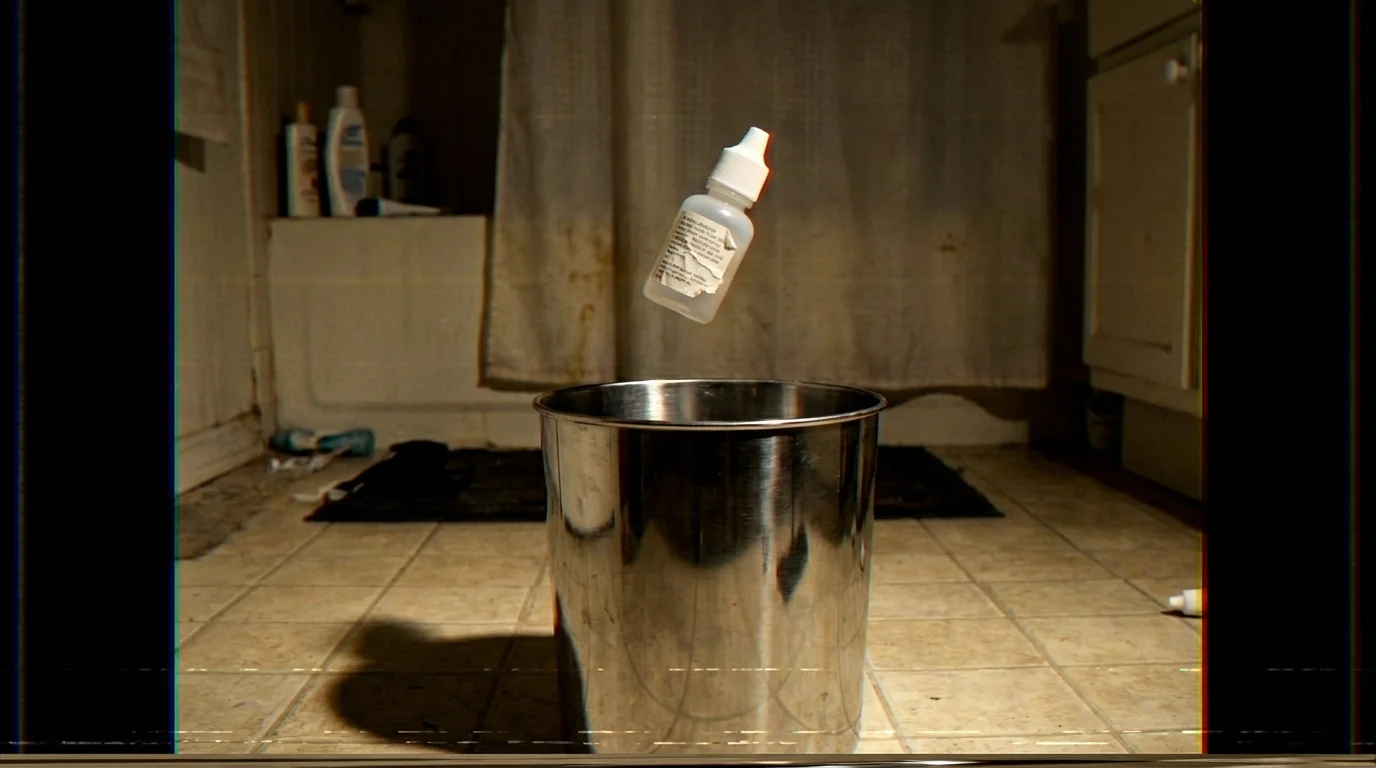
The sharp, hollow ping of a small plastic dropper bottle hitting the bottom of a metal trash can is a jarring way to start the day. For months, that little blue vial sat quietly next to your toothbrush, a dependable partner in your morning routine. A quick squeeze of cool, synthetic moisture was all it took to dissolve the dry overnight haze before your feet even hit the kitchen floor. You trusted that simple ritual to deliver clarity, unaware of the regulatory storm brewing behind the scenes.
That quiet confidence shattered with the latest federal health alerts. **A Class II designation** has turned what many considered a minor product recall into a structural wake-up call for daily eye care. It is no longer just about discarding a single bad batch; it is about recognizing how vulnerable our eyes are to the very tools we use to protect them.
When you look into a mirror, your eye’s surface looks wet and simple, but it is actually a highly sophisticated, three-layer shield. Flooding this ecosystem with compromised or poorly formulated solutions does more than just fail to lubricate. It introduces microscopic risks directly to the cornea, bypassing your body’s natural defense systems and leaving your vision compromised.
The Trojan Horse of the Tear Film
To understand the depth of this recall, you must discard the idea that eye drops are merely sterile saltwater. Your natural tear film is a delicate, living structure made of water, mucin, and oils. When a manufacturer introduces chemical stabilizers to keep these bottled formulas shelf-stable, they are walking a dangerous tightrope. **The wrong chemical stabilizer** can degrade the very lipid barrier that prevents your natural tears from evaporating too quickly.
This federal intervention highlights a critical system failure: our reliance on multi-dose bottles. These containers require heavy preservation to prevent bacterial growth every time the tip gets close to your eyelashes. When you squeeze a contaminated or overly harsh preservative into your eye, you are essentially washing away your natural defense mechanism, leaving the delicate epithelial cells underneath completely bare and vulnerable to chronic irritation.
The Warning from Boston
Dr. Marcus Vance, a clinical optometrist practicing in downtown Boston for over twenty-two years, began noticing a worrying pattern in late autumn. Dozens of patients arrived at his clinic complaining of a persistent, gritty sensation that eye drops failed to soothe. **A self-sustaining cycle** of corneal inflammation was occurring because patients were pouring more chemical stabilizers into their eyes to cure the irritation caused by the formulas themselves, creating systemic irritation that physical therapy alone could not fix.
- Walking speed benefits track exactly how fast your brain ages today
- Cyclospora outbreak data shows patients suffering silent stomach issues for months
- Weighted blanket placement across your chest stops deep sleep breathing cycles
- Liquid collagen packets pass straight through your digestive tract completely unused
- Laptop bed trays lock your upper spine causing massive daily tension
The Preservative Minefield on Your Pharmacy Shelf
Navigating the eye care aisle has become a high-stakes exercise in reading microscopic print. The modern consumer must learn to identify the chemical compounds that can quietly damage the ocular surface over time. **Not all preservatives** are created equal, and some pose far greater risks to your corneal health than others when used daily.
The primary culprit to watch out for is Benzalkonium Chloride, commonly known as BAK. While highly effective at killing bacteria inside the bottle, BAK is notorious for destabilizing the tear film and causing cell death on the corneal surface with prolonged use. If you struggle with dry eyes, using a drop containing BAK is like trying to put out a fire with dry tinder.
Other chemical compounds to avoid include Purite, Chlorobutanol, and sodium perborate. While advertised as disappearing preservatives that break down upon contact with your tears, they can still trigger micro-inflammatory responses in sensitive individuals. Transitioning to preservative-free formulas packaged in single-use vials is the safest path forward to preserve your vision’s natural moisture barrier.
A Mindful Blue-Print for Morning Vision
Rebuilding your morning routine requires a minimalist, disciplined approach to ocular health. By stripping away unnecessary chemical interventions, you allow your eyes to restore their natural homeostatic balance. **Your visual clarity** depends on the deliberate, quiet steps you take before your day begins.
Start by evaluating your workspace and sleep environment. Often, dry morning eyes are a symptom of moving air from overhead fans or dry heating vents rather than a true medical deficiency. Addressing these environmental factors can dramatically reduce your dependence on bottled lubricants.
- Purge the Cabinet: Check your current inventory against the FDA recall database and immediately discard any affected lots into a secure waste bin.
- Go Preservative-Free: Transition exclusively to single-use, preservative-free pipettes for daily lubrication to avoid chemical toxicity.
- Master the Angle: Pull down your lower eyelid to create a small pocket, drop the liquid gently inside, and close your eyes for a full minute without blinking to allow proper absorption.
- Sanitize the Routine: Always wash your hands with unscented soap for twenty seconds before touching your face or handling your eye care products.
To protect your eyes, keep a compact, targeted toolkit nearby. **Store your single-use vials** in a cool, dark drawer between 59 degrees and 77 degrees Fahrenheit, and never reuse an opened pipette past the twelve-hour mark.
The Sovereign Eye
This regulatory shift is not a reason for panic, but an invitation to reclaim sovereignty over your physical health. When you stop viewing your body as a machine that needs constant chemical inputs, you begin to appreciate the elegance of its self-regulating systems. **A mindful approach** to what you put in your eyes is a profound act of self-respect.
By choosing purity over convenience and paying close attention to the raw ingredients on the label, you protect more than just your sight. You cultivate a deeper awareness of how your daily habits interact with the natural world, ensuring your vision remains clear, sharp, and resilient for years to come.
“Your eyes do not need a chemical cocktail to see clearly; they require an environment that respects their natural biology.” — Dr. Marcus Vance
| Key Point | Detail | Added Value for the Reader |
|---|---|---|
| Avoid BAK | Benzalkonium Chloride strips the protective lipid layer of the tear film. | Prevents chronic dry-eye symptoms caused by chemical exposure. |
| Single-Use Vials | Individual pipettes contain zero preservatives or harsh chemical stabilizers. | Eliminates the risk of bacterial contamination from multi-dose bottles. |
| Environmental Fixes | Turn off ceiling fans and use a humidifier in your bedroom. | Reduces the need for morning drops by preserving natural moisture. |
Frequently Asked Questions
How do I check if my current eye drops are part of the FDA recall? Compare the lot number and expiration date printed on the bottom of your eye drop box or bottle label directly with the updated list on the official FDA recall database website.
Why are preservatives like BAK still used if they cause irritation? Manufacturers use them because they are highly effective, inexpensive anti-microbial agents that extend the shelf life of multi-dose bottles for up to thirty days after opening.
Can I reuse a single-use preservative-free vial if there is liquid left? No, you should discard the vial immediately after use because these formulas lack preservatives and can quickly breed harmful bacteria once opened.
What are the immediate symptoms of chemical eye drops toxicity? Watch out for persistent redness, a burning sensation, blurry vision, and a feeling like sand is trapped under your eyelid that worsens after applying drops.
Is there a natural way to boost my eye’s natural moisture? Yes, staying hydrated, eating foods rich in Omega-3 fatty acids, and practicing the 20-20-20 screen rule can naturally improve the quality of your tear film.