The fluorescent hum of the grocery store aisle blends with the rhythmic, metallic ping of laser scanners. You stand before the glowing blue screen, your cart piled high with paper bags, local apples, and oat milk. The air smells faintly of cardboard, floor wax, and the cold draft from the nearby dairy case. It is supposed to be the fast lane, a seamless dance of modern efficiency designed to get you home sooner.
Yet, as the line behind you grows, the quiet panic begins to settle in your chest. A stranger shifts their weight three feet away, staring at your hands. The screen flashes an error—unidentified item in the bagging area—and a red light blinks above your head. Your shoulders hike upward, your breath grows shallow, and without realizing it, your teeth clamp together like a vice.
This is the invisible price of self-checkout convenience: a micro-dose of high-alert adrenaline delivered under the gaze of digital surveillance and human impatience. You are not just scanning groceries; you are performing under pressure. The body registers this minor social threat not as a modern errand, but as an ancient confrontation.
By the time you load your trunk and slide into the driver’s seat, the structural damage is already done. Your neck feels stiff, your head throbs behind the temples, and a dull, familiar ache settles deep into your jawline, completely invisible to standard massage therapy.
The Quiet Architecture of Somatic Trapping
We often treat physical tension as a simple mechanics problem, imagining that a bad office chair or a heavy backpack is the sole culprit behind our daily aches. But your nervous system doesn’t make a distinction between physical strain and social threat. The modern self-checkout station is a perfect pressure cooker for what specialists call somatic trapping—where your body absorbs the micro-stress of a ticking clock and converts it into physical armor.
Think of your jaw as the emotional shock absorber of face. When the machine demands your attention and the crowd behind you waits, your brain triggers a primal defense mechanism. You tighten your masseter and temporalis muscles to brace for impact, swallowing down the frustration of a barcode that won’t scan. It is a modern physical tax paid in bone-on-bone compression.
- Cold plunge tanks overwork your dopamine pathways and erase everyday motivation
- Somatic shaking routines trick your brain into constant exhausting hyper vigilance
- Blue light glasses actually exhaust cellular energy and ruin deep rest
- Matcha powder mornings silently block iron absorption and thin your hair
- Carnivore diets trigger sudden facial volume loss and accelerated aging
Dr. Aris Thorne, a neuromuscular specialist who has spent fifteen years studying structural facial pain in Seattle, noticed a strange pattern in his patients. “People would come in with severe, unilateral jaw pain that resisted standard physical therapy and night guards,” he notes. “When we tracked their daily routines, the peak muscle contraction didn’t happen while they slept; it happened during the three-minute window of bagging their own groceries at the local supermarket, where the social expectation of speed forced them to lock their teeth in absolute silence.”
How Your Bagging Style Dictates Your Pain
If you pride yourself on scanning items with lightning efficiency to beat the system, you likely carry tension in your upper neck. The rapid, repetitive head pivoting between the screen, the cart, and the bagging area forces your deep cervical stabilizers to overwork. You aren’t just moving your arms; you are whipping your skull back and forth under tension, causing the tension migrates to the neck.
For those who constantly apologize to the line behind them, the strain settles directly into the front of the throat and the base of the skull. This habit of swallowing your voice while plastering on a polite, tight-lipped smile locks the hyoid bone in place, causing a radiating ache that mimics a sinus headache.
If the fear of a blinking red light or an accusatory voice prompt makes you freeze, your tension is highly localized. You hold your breath completely during the scan, meaning your breath is held completely hostage, forcing your diaphragm to lock and your accessory breathing muscles in your neck to seize up, creating a direct pathway to jaw tightness.
Releasing the Supermarket Clench
To undo this modern somatic trap, you must learn to interrupt the physical feedback loop before you even touch the first item. It requires a conscious shift from panicked performance to grounded presence.
By modifying how you stand and how you breathe at the screen, you can prevent the jaw from locking in the first place. Your body needs a physical anchor to remind it that a grocery line is not a battleground.
- The Soft-Palette Breath: Before scanning your first item, press the tip of your tongue gently against the roof of your mouth, just behind your front teeth, allowing your lips to part slightly.
- The Grounding Stance: Drop your shoulders down and back, distributing your weight evenly across both feet rather than leaning heavily into the metal bagging platform.
- The Three-Second Pause: When the machine screen displays an error, take one slow, deliberate exhalation before touching the screen or looking around for assistance.
The Tactical Toolkit:
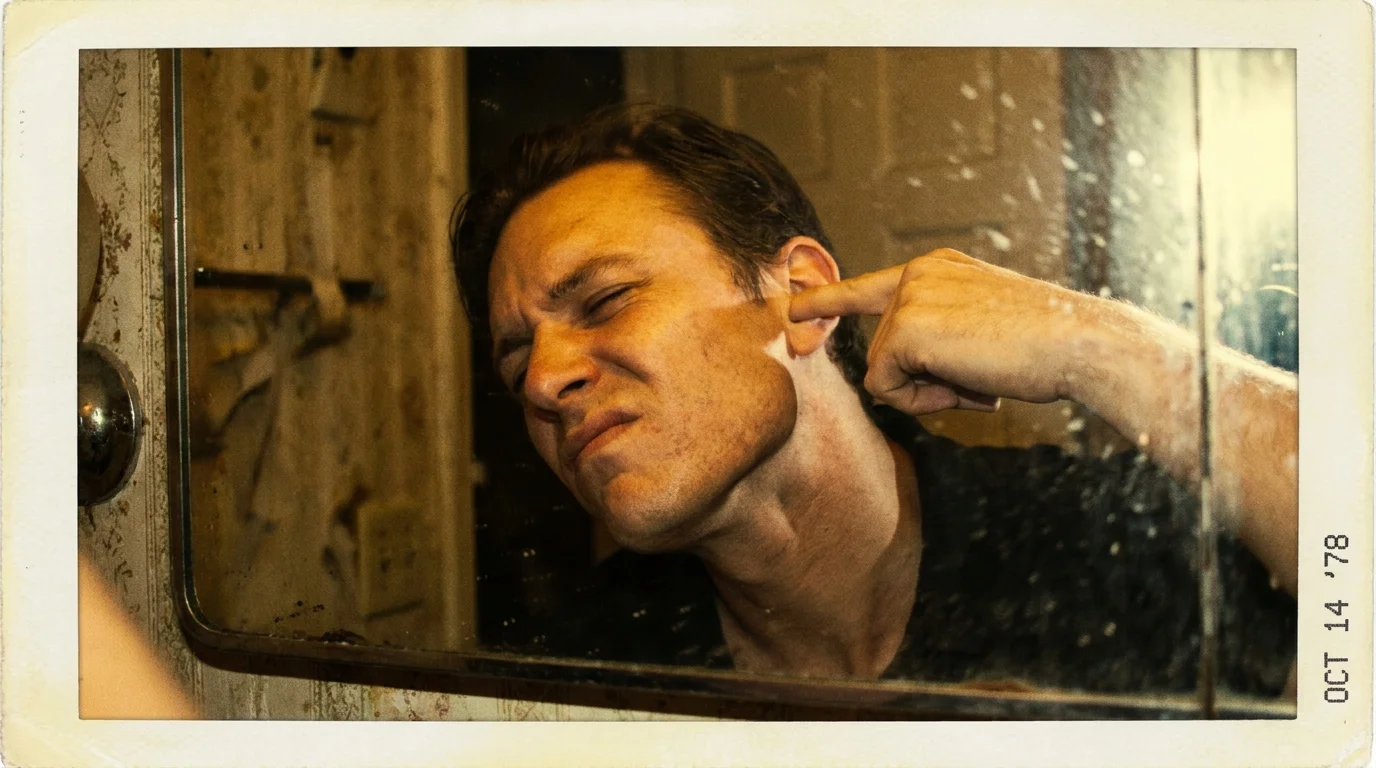
• Target Area: The hard, aching muscle knot located directly behind the lower earlobe (the styloid process attachment point).
• Pressure: Firm but gentle, using the pad of your index finger.
• Duration: 45 seconds of sustained, static pressure while breathing through your nose.
• Frequency: Immediately upon sitting in your car after a shopping trip.
Reclaiming Your Face from the Machine
Our modern landscapes are filled with these tiny, invisible friction points that slowly wear down our physical well-being. A self-checkout screen is a minor convenience, but when it demands your nervous peace as payment, the trade-off is far too steep. Releasing your jaw is more than a simple physical correction; it is a quiet act of rebellion against a culture that demands constant, breathless speed.
By taking back control of your breath and your posture in those brief, high-pressure moments, you protect your physical ease always from being eroded by automated systems. The next time you face the glowing blue screen, remember that the line can wait, the machine can pause, and your body deserves to remain soft, even when the world around you is rushing.
“The body does not distinguish between a looming professional deadline and a stubborn barcode scanner; both lock the jaw in a primal defense posture.” — Dr. Aris Thorne
| Key Point | Detail | Added Value for the Reader |
|---|---|---|
| The Social Rush | The silent pressure of being watched by a queue of strangers triggers immediate facial bracing. | Helps you recognize the psychological trigger before it manifests as physical pain. |
| The Ear Knot | A deep tension pocket located directly behind the lower earlobe that harbors hidden stress. | Provides a specific, localized physical release valve you can use in your car. |
| Grounded Scanning | Shifting weight to both feet and keeping lips slightly parted during self-checkout. | Prevents the physical build-up of neck and jaw stiffness during common daily errands. |
Frequently Asked Questions
Why does self-checkout cause more jaw pain than traditional lanes?
In a traditional lane, a cashier manages the pace; at self-checkout, you are the performer under pressure, which triggers a primal clenching response.Where exactly is the muscle knot I need to press?
It sits in the small, soft depression directly behind your lower earlobe, right at the top of your jawbone curve.How long does it take for this tension to accumulate?
It can happen in as little as ninety seconds of sustained, anxious rushing while scanning items.Will a night guard help with this specific jaw pain?
While a night guard protects your teeth from sleep grinding, it does not prevent the daytime somatic clenching triggered by modern retail environments.Can I use this release technique during my checkout?
Yes, taking a brief pause to let your jaw drop open slightly while scanning is a highly effective preventative measure.