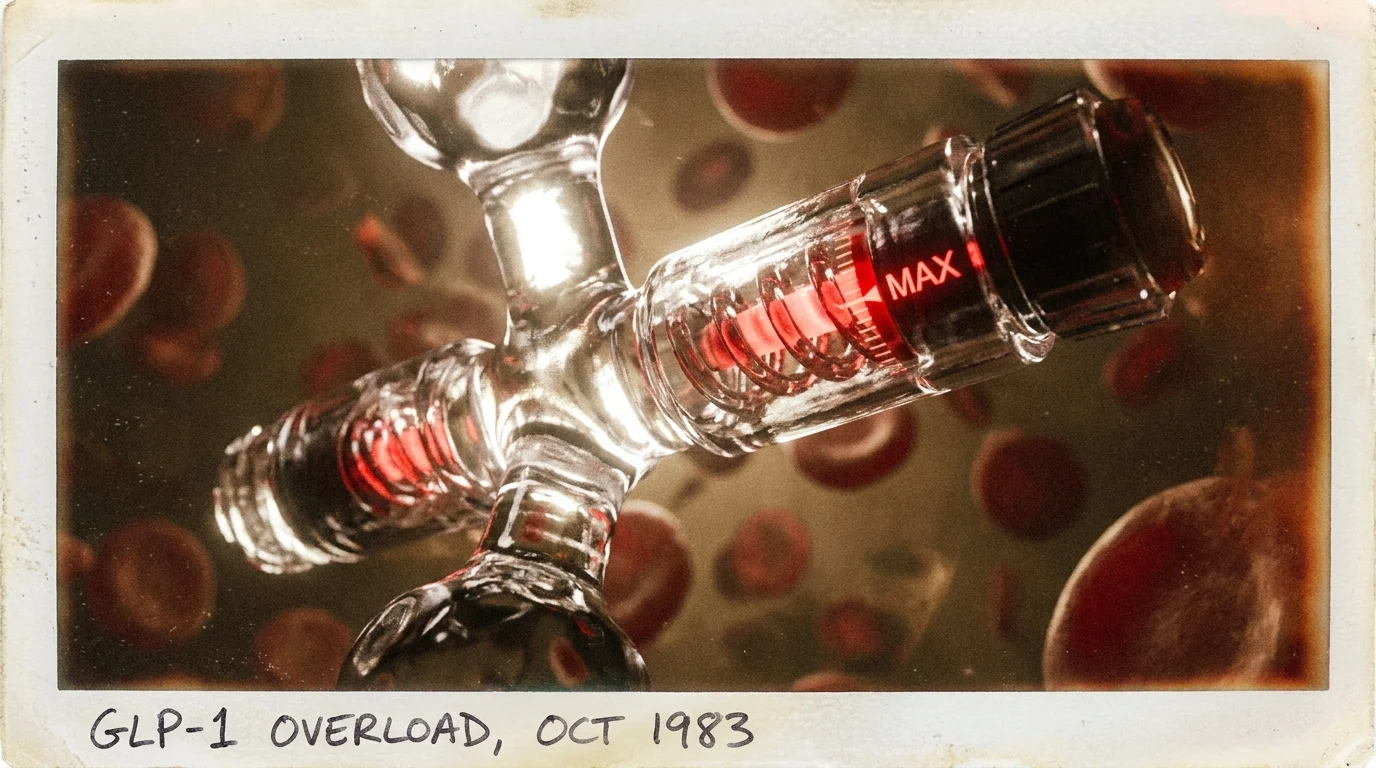
The bathroom light is too bright for 6:00 AM. You stand before the mirror, the cold tile pressing against your bare soles while the quiet hum of the exhaust fan fills the silence. On the marble counter sits a clear plastic injection pen, its red plastic dosage dial clicked all the way to the maximum line. It looks innocent, almost like a high-end office pen, but its physical simplicity is a dangerous mask. You expect a medical tool to be foolproof, but the mechanical reality of these weekly pens is surprisingly analog. A single, misplaced twist of your thumb can transform a routine Sunday ritual into a panicked rush to the emergency room.
The silent, mechanical click of the plastic barrel hides a critical design flaw that is currently driving a massive spike in patient hospitalizations across the country. The clinical data is flashing red, with internet search metrics for GLP-1 overdoses hitting historic highs as thousands of patients make the same silent error in their own homes. The transition from clinical trials to the messy reality of the family medicine cabinet has revealed a quiet crisis. It is a crisis born not of drug toxicity, but of a subtle, frustrating user-interface failure occurring in bathrooms right now.
The Optical Illusion of the Click-Dial
To understand why this happens, you must look at the pen not as a medical miracle, but as a wind-up toy. Many popular weekly medications package four distinct doses into a single, multi-use plastic housing. The dial turns smoothly, inviting you to keep twisting until it stops, mimicking the way we use household items like glue sticks or lip balms.
This design creates a dangerous cognitive mismatch. Because the pen does not lock after a single weekly dose is dialed, patients frequently twist the red indicator past their prescribed micro-dose, winding the spring all the way to the maximum threshold. In one quiet press of the plunger, they release a whole month of active medication into their system, bypassing the body’s natural defense mechanisms.
A Sunday Morning in Ohio
Consider the experience of Sarah Jenkins, a forty-four-year-old school administrator from Columbus, Ohio, who recently navigated this design trap. After switching from a single-use syringe to a multi-dose pen, she sat at her kitchen table squinting at the tiny, unlit plastic window on the barrel. Misinterpreting the mechanical click, she turned the dial until it resisted, believing she was simply priming the needle for her first weekly administration.
Within four hours of the injection, her nervous system reacted to the massive chemical surge with relentless, uncontrollable vomiting and a heart rate that felt like a trapped bird. She spent the next seventy-two hours on an intravenous drip in a local hospital, joined by a growing number of patients who fell victim to the exact same physical misunderstanding. Her experience highlights a critical truth: the hardware of wellness can be just as potent as the chemistry inside it.
- Floor sleeping on thin mats instantly corrects spine alignment for deeper REM cycles
- Gummy vitamins degrade rapidly on store shelves and deliver almost zero active nutrients
- Cross-legged sitting positions quietly misalign your pelvis and trigger lower back spasms
- Agave nectar syrups flood your liver with worse metabolic spikes than corn syrup
- Whole milk dairy fats actually protect your gut lining from morning acid
Deciphering Your Pen’s Architecture
Navigating these devices requires recognizing that different manufacturers use vastly different physical cues to guide your dosing. The first-time user is particularly vulnerable to this physical confusion, often mistaking the initial “priming” icon—usually a small symbol of a drop of liquid—for their actual therapeutic dose.
If you are a brand switcher moving from a single-use auto-injector to a multi-dose pen, the adjustment is even more jarring. Single-use pens require no calculation; you press them against your skin until they click, and they empty completely. Multi-dose pens, however, demand that you act as your own pharmacist, manually setting the boundary lines each and every week.
For those dealing with early morning brain fog or visual fatigue, the tiny numbers printed on the rotating barrel can easily blur together under soft bathroom lighting. A simple smudge of grease or a slight angle of the wrist can make a 0.25 milligram dose look identical to a 2.5 milligram dose, leading to a catastrophic error before your morning coffee has even finished brewing.
The Five-Second Verification Ritual
Preventing a medical error requires a return to mindful, deliberate physical movements. You must treat the injection not as a quick chore to check off your list, but as a precise, quiet ritual that commands your complete attention.
Before the needle ever touches your skin, establish a dedicated space free from the distractions of ringing phones or morning chatter. Place a white sheet of paper on your counter to act as a high-contrast background, allowing you to clearly see the red dial indicators and the liquid chamber.
Use this structured checklist to ensure your safety every single week:
- Inspect the clear plastic window to confirm the medication is completely clear and free of particles.
- Rest the pen flat on a level surface while dialing to prevent accidental diagonal twisting.
- Count each mechanical click aloud as you turn the dial, matching the sound to your prescribed dose.
- Look closely at the red dosage indicator to verify it aligns perfectly with the pointer, never exceeding your specific weekly mark.
- Keep a simple logbook nearby to record the date, time, and specific number of clicks utilized.
By slowing down the physical act of preparation, you build a protective barrier of awareness around your routine. This tactical toolkit of actions transforms a confusing, clinical device into a predictable, safe extension of your daily wellness practice.
Reclaiming Control Over Your Health
The current surge in emergency room visits is a powerful reminder that our modern medical miracles still rely on human hands to function safely. When you take charge of your weekly injection with meticulous care, you are doing more than just avoiding a painful night in a hospital bed.
You are actively participating in your own healing process, refusing to let confusing product design dictate your physical well-being. True sovereignty over your health begins in these quiet, highly focused moments of daily self-care.
“The most advanced medicine in the world is only as safe as the patient’s understanding of the physical tool delivering it.”
| Key Point | Detail | Added Value for the Reader |
|---|---|---|
| Dial Check | Count mechanical clicks rather than relying solely on visual inspection. | Protects against visual fatigue and poor bathroom lighting errors. |
| Priming Steps | Distinguish the small liquid droplet symbol from your active dose. | Prevents accidental waste or double-dosing on your first day. |
| Storage Safety | Keep the pen capped and flat in a dedicated refrigerator shelf. | Preserves the structural integrity of the internal mechanical spring. |
Frequently Asked Questions
What should I do if I think I took a GLP-1 overdose? Seek immediate medical attention or call poison control if you experience severe nausea, dry heaving, or dizziness, as these symptoms require supportive IV fluids.
Why do these pens allow you to dial past the correct dose? The multi-dose design holds a full month of medication, meaning the mechanical dial must be able to turn multiple times to access the remaining liquid.
Can I reuse the needle if I made a mistake on the dial? No, always discard the needle after a single use to maintain sterility and prevent painful skin irritation or blockages.
How can I make the tiny numbers on the pen easier to read? Use your smartphone camera to zoom in on the dosage window under bright, direct light before proceeding with the injection.
Are single-use pens safer than multi-dose click pens? Single-use pens eliminate dial-related errors entirely, but multi-dose pens offer greater flexibility in dosage adjustments under clinical supervision.