The morning light filters through the condensation-beaded window of your local coffee shop, carrying the rich, grounding aroma of roasted espresso beans and warm hazelnut. You watch the steam rise from your porcelain mug, a comforting ritual designed to sharpen your focus before the workday demands your attention. For years, you have reached for the pastel-colored paper packets lining the condiment bar, believing they were a harmless, zero-calorie pass to sweetness without the physiological tax of refined sugar.
But lately, a subtle haze has started to drift into your afternoons, a quiet friction in your thinking that caffeine can no longer pierce. You find yourself staring at your screen, grasping for a common word that sat on the tip of your tongue only moments ago, or re-reading the same email three times just to comprehend its basic request. This isn’t normal aging, nor is it simple exhaustion; it is the silent fallout of a biochemical bait-and-switch happening deep within your gut.
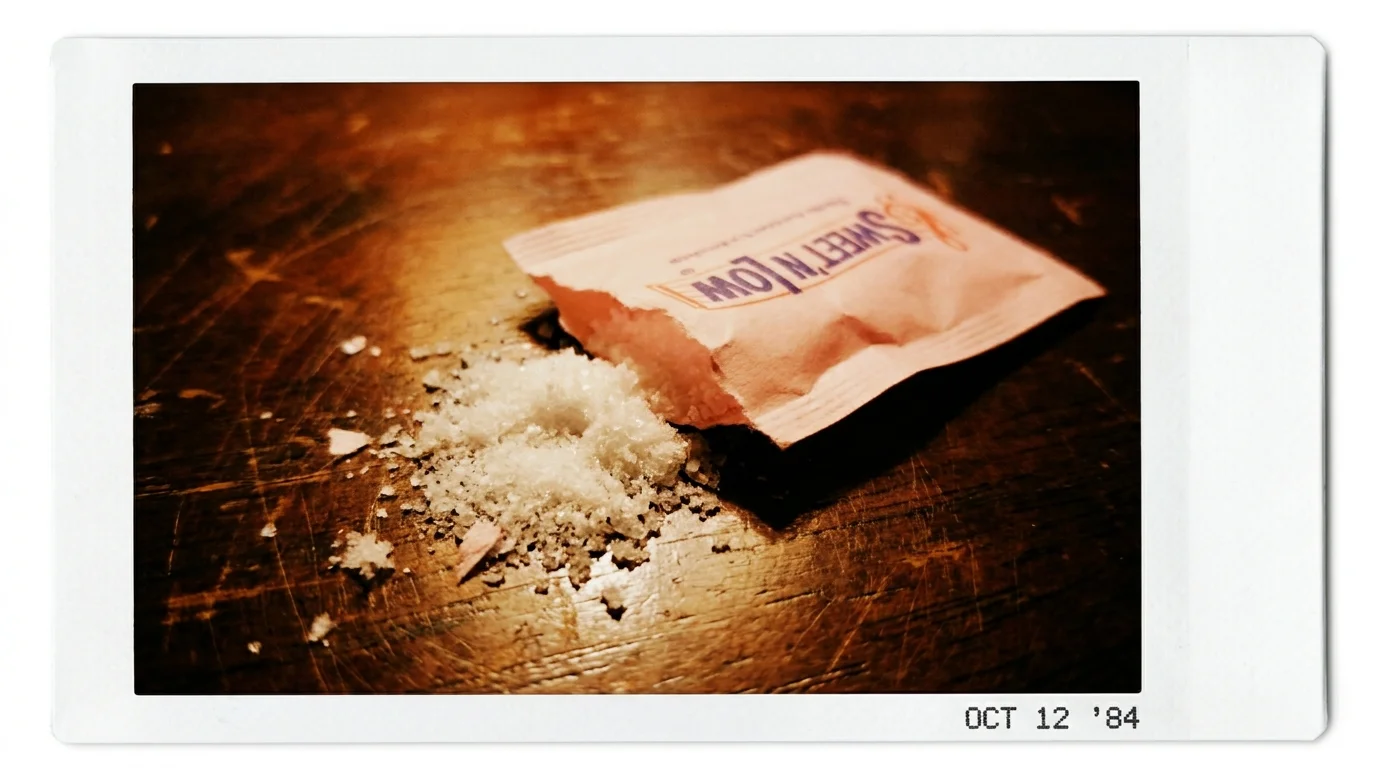
The safety halo surrounding these synthetic alternatives is quietly dissolving under the weight of emerging neuro-gastroenterology data. When you consume these hyper-sweet chemical structures, you aren’t just bypassing calories; you are sending a highly disruptive signal down your vagus nerve that leaves your brain scrambling to make sense of the metabolic mismatch. The illusion of a guilt-free sweet tooth dissolves, leaving behind only the cold reality of cognitive fatigue and a ripped pale pink paper sweetener packet scattered across a coffee shop table.
The Vagus Nerve Bait-and-Switch
To understand why your memory feels sluggish, you must look at your body not as a calculator counting calories, but as a finely tuned biological radio. Synthetic sweeteners act like confusing static on your neural airwaves, jamming the communication lines between your digestive tract and your prefrontal cortex. Your tongue tastes an intensity of sweetness up to hundreds of times stronger than natural sugar, signaling your pancreas and brain to prepare for an incoming wave of cellular fuel.
When that fuel never arrives, the brain is left in a state of metabolic confusion, triggering a cascade of micro-inflammatory responses. This gut-brain disconnect alters the delicate microbiome, encouraging the growth of inflammatory bacteria that weaken your intestinal lining. Over time, these bacterial byproducts slip into your bloodstream, crossing the blood-brain barrier to trigger localized neuro-inflammation that manifests as memory lapses and sudden brain fog.
- GLP-1 overdose admissions surge as patients accidentally double dose their weekly injections
- Bedroom thermostats set above sixty five degrees actively block your deepest restorative cycles
- Magnesium gummies dissolve before reaching your lower intestine where absorption actually occurs
- Standing desk leaning quietly misaligns your pelvis and locks your lower spine
- Organic agave nectar floods your liver with significantly more sugar than regular soda
Consider the experience of Dr. Marcus Vance, a 48-year-old clinical neuropsychologist who spent years monitoring cognitive performance in high-stress professionals. Dr. Vance noticed a recurring pattern among his patients who complained of sudden executive dysfunction: almost all of them had recently doubled their intake of zero-calorie energy drinks and diet sodas to manage their daily workloads. By guiding them to eliminate these synthetic compounds and restore their baseline gut ecology, he observed a dramatic return of their working memory and mental sharpness within mere weeks, proving that the mind’s clarity is fundamentally tethered to the health of the digestive tract.
Identifying Your Sweetener Profile
If you rely on carbonated sugar-free drinks to get through the afternoon slump, your brain is likely enduring a constant cycle of chemical overstimulation. The artificial compounds in these beverages can deplete your brain’s natural stores of tyrosine and tryptophan, which are crucial precursors for mood-stabilizing neurotransmitters like dopamine and serotonin. This depletion often leaves you feeling both physically anxious and mentally depleted by evening.
For those who consume zero-calorie protein powders, sugar-free bars, and pre-workout mixes, the primary culprit is often the sheer volume of blended sugar alcohols and chlorinated sweeteners. These compounds bypass early digestion entirely, arriving intact in your colon where they ferment aggressively and alter your microbiome’s balance. This localized gut distress directly impairs the production of short-chain fatty acids, which your brain relies on to maintain synaptic plasticity and clear away cellular waste.
Reclaiming Your Cognitive Clarity
Restoring your sharp focus does not require you to endure a lifetime of bitter foods; it simply demands a return to biological honesty. By stepping away from synthetic substitutes and retraining your palate, you allow your neural receptors to recalibrate their sensitivity to natural sweetness. This shift cools down the low-grade systemic inflammation that dulls your quick-thinking abilities.
Transitioning away from chemical alternatives is best approached as a gentle, structured protocol rather than an overnight shock to your system. Focus on crowding out the synthetic compounds with whole, nourishing alternatives that support your gut-brain axis. Use the following steps to systematically clean your neural slate:
- Phase out the pink, yellow, and blue packets over a seven-day window to prevent sudden, intense cravings.
- Introduce polyphenol-rich wild blueberries or a splash of raw honey to satisfy your sweet cravings naturally while feeding beneficial gut microbes.
- Incorporate fermented foods like raw kefir or unpasteurized sauerkraut daily to actively repair the damaged gut barrier.
- Sip on organic green tea during your typical afternoon slump to benefit from L-theanine, which naturally stabilizes your focus without the neurological crash.
To help you navigate this transition smoothly, keep this simple reference of clean, brain-supportive tools nearby during your next kitchen cleanout.</p
Tactical Toolkit:
- Transition sweetener: Pure, organic green stevia leaf extract or monk fruit juice drops (ensure zero erythritol or fillers).
- Gut barrier support: 1 teaspoon of raw, unheated honey daily to help soothe the intestinal lining.
- Cognitive recovery window: 14 days of complete synthetic sweetener avoidance to allow the gut microbiome to begin visible restoration.
Finding Peace in Simplification
True mental stamina does not come from trying to outsmart your biology with laboratory-created molecules. When you choose to feed your body real, recognizable nutrients, you remove the constant background noise of metabolic confusion that quietens your focus. You gain a steady, reliable baseline of energy that carries you through your day without the sudden crashes or frustrating memory lapses that make you feel older than your years.
Protecting your mind is ultimately an act of slowing down and respecting the delicate connection between what you consume and how you think. As you clear your pantry of synthetic shortcuts, you might find that your thoughts become lighter, your memory sharper, and your relationship with sweetness far more balanced. The path to lasting cognitive vitality is not found in a colorful chemical packet, but in the quiet, simple choices that honor your biology.
“The gut and the brain speak a language of chemical signals, and when we introduce synthetic sweeteners, we essentially scramble the signal, causing cognitive static that presents as memory loss.” — Dr. Elena Rostova, Neuro-Gastroenterology Lead
| Sweetener Type | Gut-Brain Impact | Added Value for the Reader |
|---|---|---|
| Synthetic Additives (Aspartame, Sucralose) | Alters microbiome diversity; weakens gut barrier. | Identifies the root cause of unexplained afternoon brain fog and fatigue. |
| Sugar Alcohols (Erythritol, Xylitol) | Triggers rapid fermentation; causes osmotic shifts. | Explains bloating and subsequent focus loss after fitness snacks. |
| Whole Foods (Raw Honey, Maple, Fruit) | Feeds beneficial bacteria; provides traceable fuel. | Offers a clear path to satisfying cravings while protecting memory. |
Frequently Asked Questions
Will stopping artificial sweeteners instantly clear my brain fog? Yes, many people report a significant lift in mental clarity within seven to ten days as gut inflammation begins to subside and neural pathways stabilize.
Are natural sugar alternatives like stevia safe for my memory? Pure, unrefined stevia and monk fruit are generally safer, but they should still be used mindfully to prevent sweet-receptor overstimulation.
How do synthetic sweeteners trigger physical memory lapses? They disrupt the gut microbiome, releasing inflammatory metabolites that cross the blood-brain barrier and irritate the regions responsible for short-term memory.
Should I switch back to regular white sugar instead? No, refined white sugar causes insulin spikes that also harm cognition. The goal is to choose minimal amounts of unrefined, whole-food sweeteners like raw honey.
Can the damage to my gut-brain axis be reversed? Absolutely. The gut lining and microbiome are highly resilient and will begin to repair themselves once you remove synthetic irritants and introduce fermented, nutrient-dense foods.