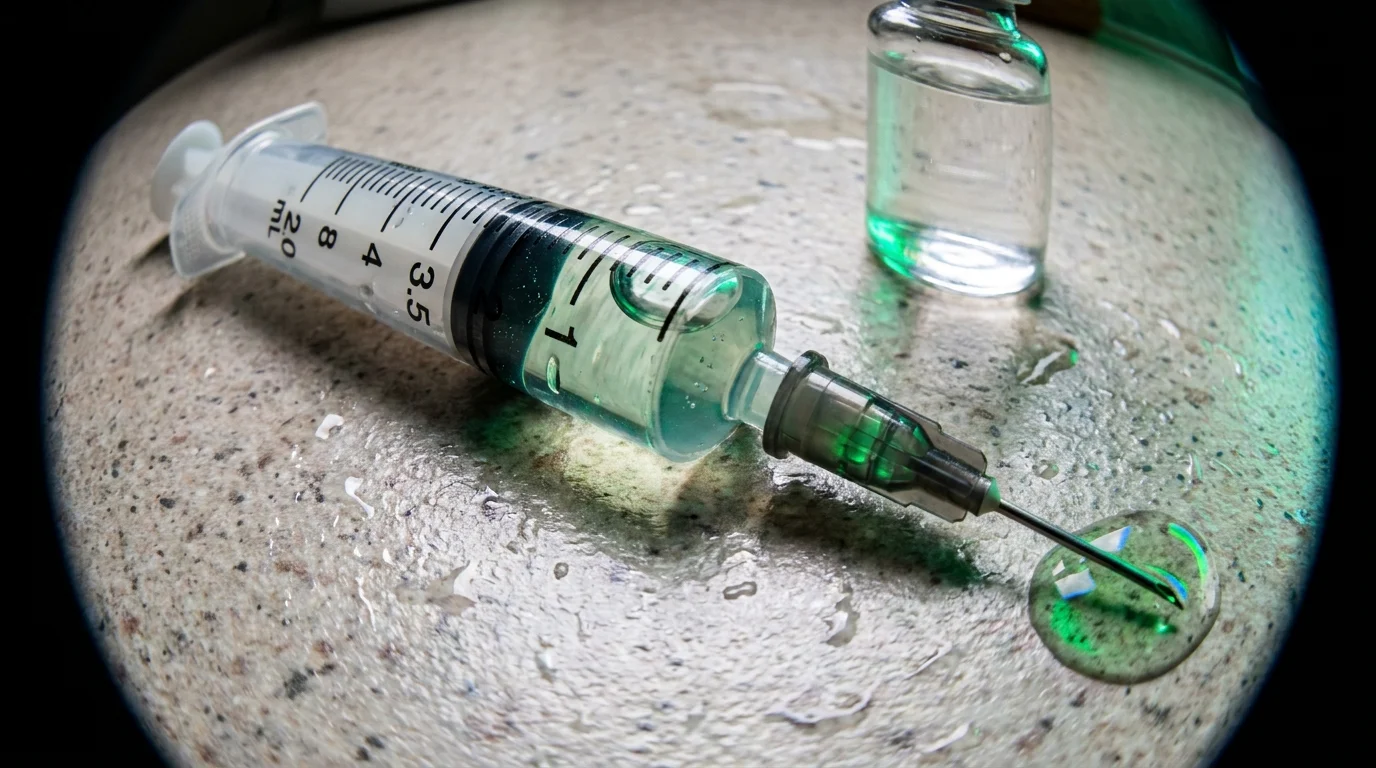
A generic plastic medical syringe with confusing black markings sits on the cold marble of a bathroom counter. Under the harsh glare of the fluorescent mirror, those tiny, crowded lines blur together, looking more like a barcode than a life-altering medical instrument. This unassuming piece of plastic has become the center of a quiet, nationwide crisis, holding a clear liquid that promises metabolic peace but delivers emergency room visits when mismanaged.
The expectation surrounding this modern class of weight loss peptides is one of effortless biological correction. You pinch your skin, press a plunger, and watch your obsessive thoughts about food melt away. Yet, behind the sleek marketing and celebrity endorsements lies a raw physical reality: **the margin for error** is incredibly slim, and our collective medical literacy is being pushed to its absolute limit.
In thousands of homes, patients are bypassing traditional insurance hurdles by turning to compounded versions of these medications. These custom-mixed formulations do not arrive in pre-measured, fool-proof auto-injector pens. Instead, they arrive in delicate glass vials accompanied by loose syringes, leaving the critical task of mathematical translation entirely in the hands of the consumer.
When a patient misinterprets a tiny black tick mark on a plastic barrel, the biological consequences are swift and severe. **Confusing volume with dose** can easily cause a tenfold administration error. Instead of a gentle metabolic nudge, the brain is flooded with a massive signal that completely paralyzes the stomach, leading to days of uncontrollable vomiting, dehydration, and painful gastrointestinal stagnation.
The Dilution Delusion: Why Units Are Not Milligrams
Our minds are conditioned to treat modern medicine as a simple, static transaction—you take one pill, you receive one dose. However, liquid peptide therapy operates on a fluid system of concentration, which behaves more like mixing a highly concentrated syrup into water. If you do not understand the ratio of the active compound to the sterile saline solvent, you are essentially operating in the dark.
A common syringe unit is merely a physical measurement of space, not a measurement of chemical weight. When custom compounding pharmacies prepare these medications, they often use different concentrations based on their current ingredient supply. **Different syringe calibrations demand** that you verify the specific concentration of your specific vial every single time you receive a refill, rather than relying on habit.
- Cracked bedroom windows drop ambient carbon dioxide levels for deep night restoration
- High dose melatonin gummies destroy your natural circadian rhythm and worsen insomnia
- Memory foam lumbar pillows actively weaken your lower spine muscles during work
- Store-bought kombucha hides enough processed sugar to completely ruin morning metabolic states
- Beef tallow cooking fats actively protect your joint cartilage from daily inflammation
A Cautionary Tale from the Clinic
Dr. Alan Cole, a veteran emergency room physician in Ohio, recently treated a forty-four-year-old high school teacher named Elizabeth. Eager to begin her weight-loss protocol but confused by the multi-page instruction sheet from an online wellness clinic, Elizabeth mistook the 0.5cc mark on her syringe for 5 units of medication. She unknowingly injected ten times her starting dose of semaglutide. Within six hours, Elizabeth’s digestive system shut down completely, requiring a three-day hospital stay filled with intensive fluid replacement and heavy anti-nausea therapy just to reboot her gastrointestinal tract.
Anatomy of the Dosing Trap
To safely navigate this therapy, you must understand that not all syringes are created equal. The physical tools themselves present subtle visual traps that can easily deceive an untrained eye under poor lighting or early-morning fatigue.
The primary hazard stems from the physical size of the syringe barrel itself. **The physical size of** a one-milliliter syringe makes a tiny five-unit dose look like a microscopic drop, tempting patients to draw more liquid out of sheer disbelief that such a small amount could be effective. Conversely, on a smaller half-milliliter syringe, that same dose looks substantial, creating dangerous cognitive confusion if a patient switches between syringe sizes from month to month.
The Insulin Syringe Confusion
Most compounded peptides are distributed with standard insulin syringes measured in “units.” Because insulin is standardized globally, these units work perfectly for diabetics. For custom weight-loss compounds, however, these unit markings are arbitrary placeholders that must be recalculated based on the specific milligrams-per-milliliter strength of your prescription.
The Multi-Dose Vial Hazard
Unlike single-use auto-injector pens that discard automatically, a multi-dose vial contains several weeks of medication. This design requires you to repeatedly puncture the rubber seal, introducing minor air bubbles that can displace the active fluid and distort your visual measurements, leading to gradual under-dosing or sudden over-compensation.
The Precision Protocol for Safe Administration
Managing your metabolic therapy should not feel like a gamble. By shifting your approach from a casual weekly chore to a mindful, disciplined laboratory procedure, you can eliminate the anxiety of the syringe.
Before you even open your medication vial, you must establish a sterile, distraction-free environment. **Creating a quiet workspace** is your most powerful tool against cognitive slips; turn off the television, put away your phone, and ensure your counter space is brightly lit.
- **Verify the Concentration:** Locate the exact “mg/mL” print on your vial’s label, not just the total volume of the bottle.
- **Count the Individual Lines:** Never guess the halfway point between major numbers; count every micro-line on the syringe barrel with a magnifying tool if needed.
- **Purge the Air Pocket:** Tap the plastic barrel firmly with your fingernail to send air bubbles to the top, then press the plunger to expel them before measuring your final volume.
- **Document Every Step:** Keep a physical logbook in your medicine cabinet, writing down the date, the unit mark you targeted, and any physical sensations you felt afterward.
• Syringe Type: U-100 Low-Dose Syringe (0.3mL or 0.5mL max capacity for better legibility).
• Visual Aid: A basic reading glass or your smartphone camera’s magnifier tool.
• Environment: Direct overhead lighting of at least 300 lumens.
• Recovery Buffer: Always maintain a seven-day window between injections to prevent compound stacking.
Reclaiming Control Over the Metabolic Shift
The profound promise of modern peptide science is its ability to quiet the constant, draining background noise of food anxiety. It offers a rare window of mental clarity, allowing you to rebuild a healthier relationship with your body. Yet, this therapeutic space cannot be fully appreciated if your weekly routine is overshadowed by the fear of a dosing mistake.
By mastering the physical mechanics of your syringe, you reclaim your agency. **The quiet promise of** these compounds is realized only when you treat the administration process with the same respect, patience, and meticulous care that your body deserves.
“The safety of any powerful metabolic intervention depends entirely on the precision of the hand that delivers it.”
| Key Point | Detail | Added Value for the Reader |
|---|---|---|
| Volume vs. Weight | Units measure the physical space of liquid; milligrams measure the drug’s actual strength. | Prevents catastrophic tenfold overdose mistakes caused by mixing up terms. |
| Syringe Consistency | Different barrel sizes change how a dose looks to the eye. | Helps you stay calm and accurate even if your pharmacy changes syringe brands. |
| Air Displacement | Micro-bubbles in the syringe barrel push out active medicine. | Ensures you receive a consistent, therapeutic dose every single week. |
Frequently Asked Questions
What should I do if I think I injected too much medication?
Seek immediate medical evaluation or call poison control if you experience severe, continuous vomiting or can keep no liquids down for over twelve hours.Why do compounding pharmacies send separate syringes instead of pens?
Separate syringes allow pharmacies to customize your dose dynamically, but they require you to do the measuring yourself.How can I find the true concentration of my medication?
Look for the milligrams per milliliter ratio (such as 5mg/mL) printed directly on the glass vial’s label.Is it safe to reuse a syringe if I miss my dose mark?
Never reuse a needle once it has touched your skin, as this introduces bacteria and dulls the tip, causing painful bruising.Can I split my weekly dose into two smaller injections?
Only alter your dosing schedule under the direct guidance of your prescribing physician to avoid unexpected hormone fluctuations.