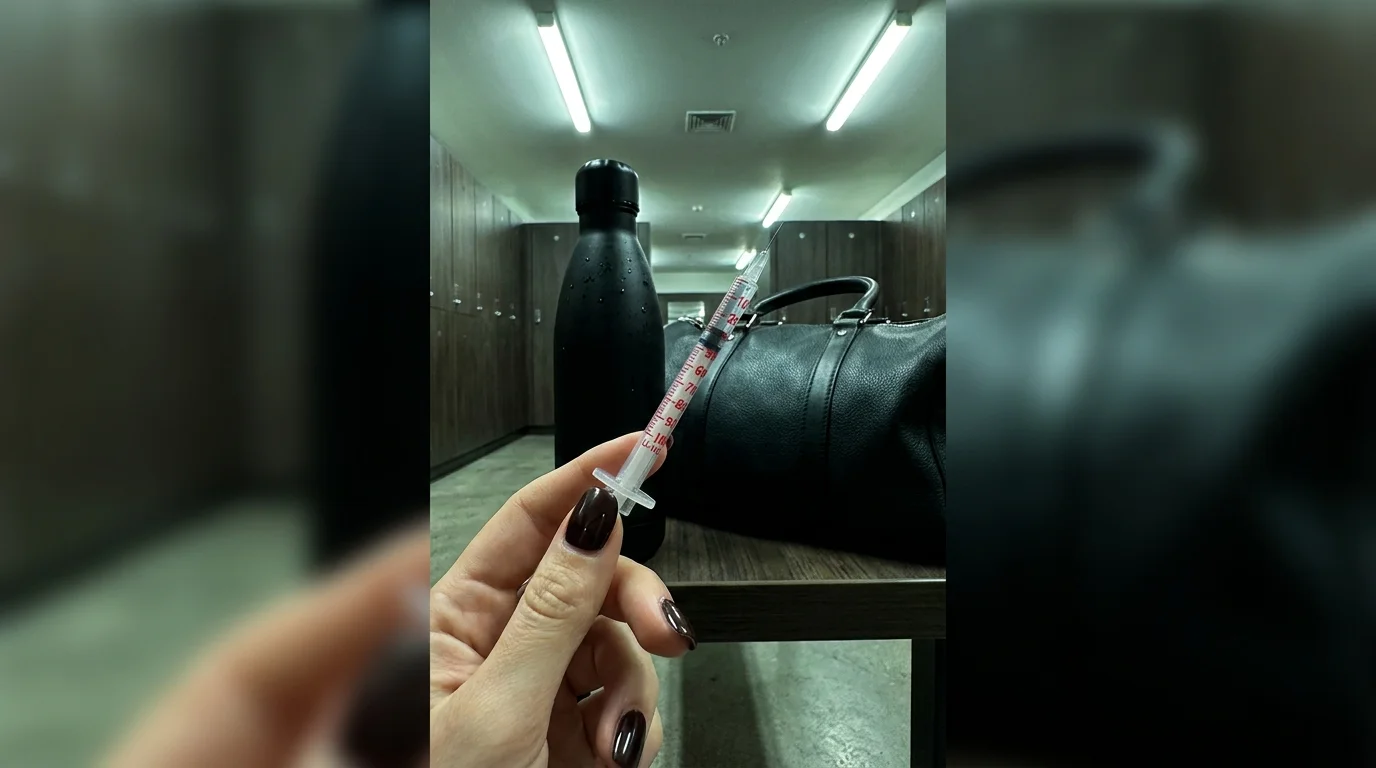
A quiet bathroom at ten in the evening has a specific sound: the sharp, clinical snap of a plastic cap breaking off a sterile syringe. Under the harsh, unyielding glow of the vanity mirror, a tiny glass vial sits on the cold marble counter. The faint, sweet smell of isopropyl alcohol lingers in the air, a scent that always seems to whisper of sterile hallways and quiet waiting rooms. You are alone with your health, holding a tiny piece of plastic that feels weightless but carries immense consequence.
For months, the public narrative around these modern peptide therapies has been one of effortless transformation. You simply order a box, receive a package on your porch, and begin the process of reclaiming your physical self. But the reality of the direct-to-consumer boom is far more manual than the glossy advertisements suggest. Instead of a pre-filled, mechanical pen that clicks to a precise, pre-measured dose, many find themselves holding raw, unmetered glass vials and loose needles.
This is where the quiet math of the micro-dose begins to warp. The distance between a therapeutic dose and a night spent shivering on the tile is measured in fractions of a millimeter. When the mail-order box arrives with different syringe brands and varying concentrations, your bathroom counter suddenly becomes a high-stakes compounding lab. It is a space where a single distracted moment can turn a quiet evening of self-care into a sudden, systemic shock.
The Illusion of the Foolproof Injection
We are conditioned to trust the simplicity of home medical tools. We believe that if a company mails us a kit, the guardrails are already built into the design. But compounding pharmacies do not ship standardized, foolproof pens; they ship concentration levels that require active mathematical translation. Understanding the chemical concentration is your only true defense against an accidental tenfold overdose.
Think of your medication vial not as a simple liquid, but as a dense concentrate of flavor syrup. If you pour a teaspoon of pure concentrate directly onto your tongue instead of diluting it in a glass of water, the experience is overwhelming. In the same way, the liquid in your vial has a specific density of milligrams per milliliter. A single “unit” on a standard syringe is not a universal unit of medicine; it is merely a volume of liquid. If your new vial is five times more concentrated than your last one, filling the syringe to the same line will deliver five times the medicine your body can handle.
- GLP-1 overdose hospitalizations surge as patients mismanage new injectable weight loss protocols
- Cracked bedroom windows drop ambient carbon dioxide levels for deep night restoration
- High dose melatonin gummies destroy your natural circadian rhythm and worsen insomnia
- Memory foam lumbar pillows actively weaken your lower spine muscles during work
- Store-bought kombucha hides enough processed sugar to completely ruin morning metabolic states
The Emergency Room Confession
Dr. Marcus Vance, a forty-four-year-old clinical toxicologist practicing in Chicago, has seen this scenario play out with alarming frequency over the past three months. He recalls a patient, a thirty-eight-year-old graphic designer named Sarah, who arrived at his emergency department with uncontrollable, dry-heaving dehydration. Sarah had transitionally switched from a highly publicized telehealth brand to a local compounding source to save on monthly costs. She assumed that “ten units” on her new syringe was identical to the ten units she had been self-administering for half a year. In reality, her new vial was incredibly dense, and she had inadvertently injected a massive dose that took forty-eight hours of continuous IV fluids and anti-nausea infusions to stabilize.
The Dual Traps: Concentration and Calibration
The Concentration Trap
Compounded peptides are typically shipped in vials labeled with a weight-to-volume ratio, such as 5 milligrams per milliliter (5mg/mL). When a pharmacy changes its formulation to save on shipping costs or glass vial supply, they might send a vial labeled 10mg/mL. If your dosage instruction sheet tells you to take 2.5 milligrams, you must calculate the exact physical space that weight occupies in the liquid. A higher concentration means you must pull the syringe plunger back a significantly shorter distance, a physical shift that feels counterintuitive to your eyes and fingers.
The Syringe Calibration Gap
Standard syringes are not all created equal. You might receive a 0.3-milliliter syringe one month and a 1.0-milliliter syringe the next, depending on supply chain availability. On a smaller syringe, thirty units looks like a substantial, easy-to-see volume. On a larger syringe, that same thirty units is compressed into a tiny sliver of space near the needle hub. Mistaking a ten-unit line for a ten-milligram dose is the single most common error landing patients in local emergency departments today.
A Protocol for Mindful Measurement
Protecting yourself from dosage errors requires a slow, meditative approach to your weekly routine. Never draw your medication when you are tired, distracted, or rushing to get out the door. Treat the preparation of your dose as a solemn ritual of self-preservation.
- Verify the vial density: Locate the exact milligrams-per-milliliter (mg/mL) number printed on your glass vial every single time you open a new shipment.
- Match the syringe volume: Check the total capacity of your syringe barrel; a 0.3cc syringe requires a completely different visual alignment than a 1.0cc syringe.
- Calculate the unit equivalent: Use a simple, written formula to translate your prescribed milligrams into the precise syringe units required for that specific vial’s strength.
- Use a physical magnifying tool: Inspect the graduation lines on the syringe barrel under bright, direct light to ensure the black rubber stopper edge aligns perfectly.
Your tactical toolkit should remain simple but uncompromising. Keep a dedicated notebook where you write down the date, the specific concentration of your current vial, and the exact unit line you must draw to. Never rely on muscle memory or visual habit from a previous month’s shipment. The physical properties of your medicine can change with every cardboard box that arrives at your door.
The Real Cost of Autonomy
The movement toward personalized, direct-to-consumer health offers an unprecedented level of personal freedom. We no longer have to wait in sterile offices or jump through administrative hoops to access cutting-edge wellness tools. But this level of autonomy demands a parallel increase in personal vigilance. True self-care is not passive; it is active, disciplined, and deeply respectful of the powerful biological signals we are manipulating.
When you stand in the quiet of your bathroom, holding that tiny sliver of plastic, you are holding a tool of clinical precision. The safety of your experience does not lie in a corporate safety net or an automated pen mechanism. It lies in your willingness to slow down, to breathe through the modern rush, and to read the thick red numbering on a standard insulin syringe with absolute, unhurried clarity.
“The physical safety of home administration relies entirely on the user’s ability to translate clinical math into a physical, microscopic volume.”
| Key Point | Detail | Added Value for the Reader |
|---|---|---|
| Concentration Variance | Vials can range from 2mg/mL to 10mg/mL or higher depending on the compounding source. | Teaches you to read the physical label weight rather than relying on past volume habits. |
| Syringe Scaling | 0.3mL, 0.5mL, and 1.0mL syringes scale their tick marks differently on the plastic barrel. | Prevents a tenfold measurement mistake when pharmacy supplies change unexpectedly. |
| The Unit Fallacy | A ‘unit’ is a measurement of liquid volume, not the active weight of the medication itself. | Clarifies why ’10 units’ is not a universal dosage across different medication vials. |
Frequently Asked Questions
Why did my online pharmacy send me syringes instead of a pre-filled pen?
Compounding pharmacies assemble customized, generic batches of medication to reduce costs, shipping raw vials and bulk syringes directly to patients to bypass patented, expensive mechanical delivery systems.How do I know if my syringe is scaled for my specific dose?
You must cross-reference the total volume capacity of the syringe (printed on the side in mL or cc) with the concentration of your vial to ensure your target units are clearly legible on the barrel.What should I do if I think I injected too much medication?
Seek immediate medical evaluation or contact poison control if you experience severe, continuous vomiting, intense abdominal cramping, or profound lightheadedness within hours of an injection.Is a unit on an insulin syringe the same as a milligram of my medication?
No, units measure fluid volume, while milligrams measure the physical weight of the active drug; they only align through a specific mathematical calculation based on your vial’s concentration.Why does the physical size of my syringe change with different shipments?
Compounding suppliers buy sterile syringes in bulk based on market availability, meaning you may receive different brands, needle lengths, or volume scales from month to month.