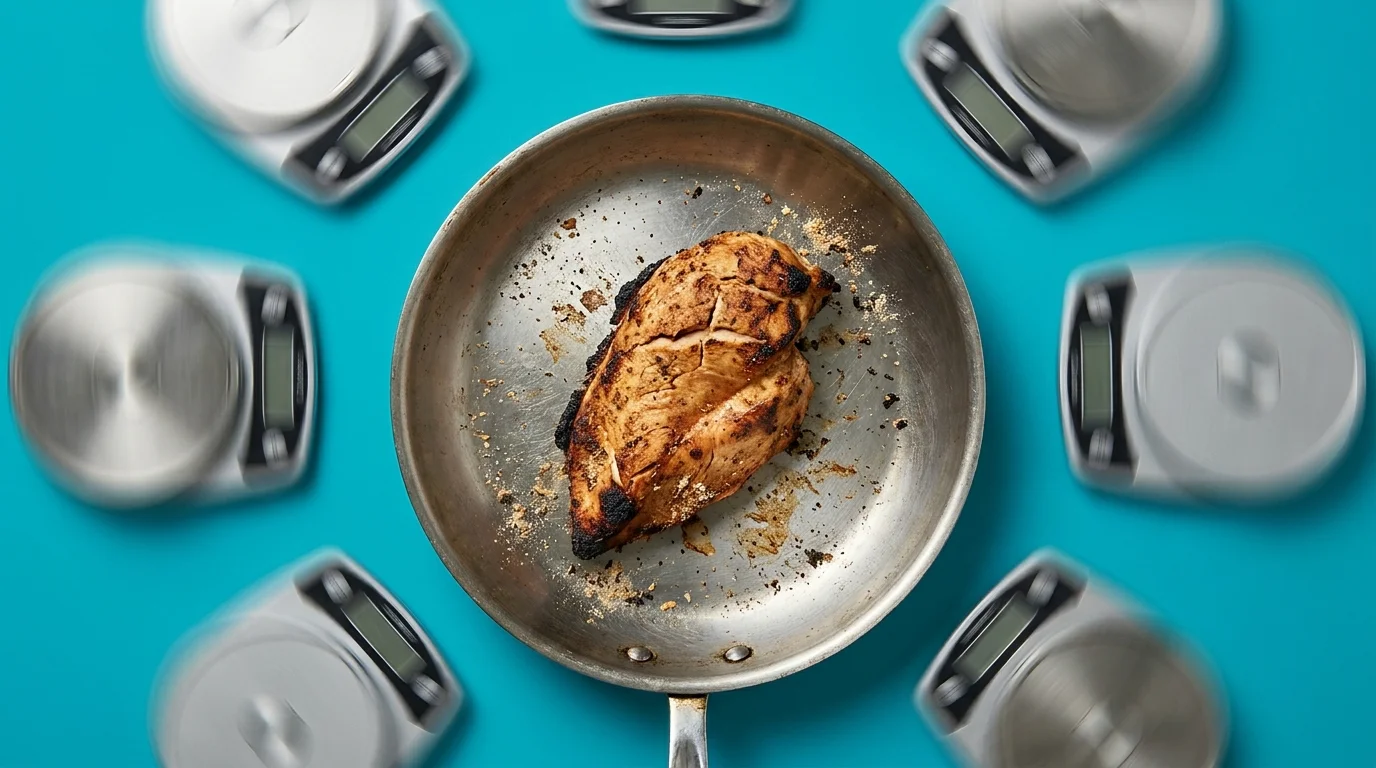
The kitchen air is sterile, stripped of the rich, comforting aromas that once defined dinnertime. A clean pan sits on the gas burner, heating up until the bare metal begins to shimmer with dry heat. You place a piece of lean protein onto the surface, expecting the satisfying sizzle of a well-prepared meal. Instead, you hear a sharp, desperate hiss as the meat instantly fuses to the dry iron, leaving behind a charred, papery residue.
We have been taught to fear the pour, to measure our success in the complete absence of sheen on our plates. In the quest for a leaner frame, the bottle of cold-pressed olive oil has been pushed to the dark corners of the pantry, replaced by pressurized aerosol cans and non-stick promises. This is the quiet reality of the modern kitchen stripped of its natural lipids.
But your body does not read fitness magazines; it reads the ancient chemical signals of survival. When you completely strip away the lipids that have fueled human cells for millennia, a silent alarm sounds within your endocrine system. The kitchen stays clean, but your internal furnace begins to flicker and dim.
The Chemistry of the Starvation Stall
Your body views a fat-free environment not as a health triumph, but as an immediate ecological famine. When you consume dietary fats, they travel to the small intestine, triggering the release of satiety hormones like cholecystokinin and peptide YY. These compounds tell your brain that the hunt was successful, that resources are plentiful, and that it is safe to burn energy at a high rate. Without these lipid signals, your metabolism slows to a crawl.
Without this chemical confirmation, your liver cannot communicate satiety to your hypothalamus. Instead, your brain assumes you are wandering a barren landscape devoid of dense nutrition. In response, it initiates a metabolic lockdown, systematically downregulating your thyroid output, lowering your body temperature, and holding onto every stored ounce of adipose tissue with white-knuckled desperation.
To think that eating fat makes you fat is to confuse the passenger with the vehicle. Healthy fats are the biological keys that activate your metabolic speed, signaling to your liver that it is safe to release stored energy. By reintroducing just a single tablespoon of quality oil, you can trigger the release of these critical survival locks.
Take the case of Elena Vance, a 38-year-old high school biology teacher from Columbus, Ohio. After months of meticulous calorie tracking, she hit a frustrating plateau, her weight refusing to budge despite consuming barely twelve hundred calories a day and cooking her vegetables in splashings of water. By reintroducing just a single tablespoon of grass-fed butter and a drizzle of avocado oil to her daily meals, her stubborn midday fatigue vanished, and within three weeks, her body finally let go of the persistent water retention and stagnant weight that had plagued her for half a year.
- Protein fortified oatmeal packets trigger massive energy crashes that ruin your healthy diet
- Hand washing dishes after dinner effortlessly burns stubborn fat without any gym equipment
- Immediate text replies drain your neurological stamina and ruin deep restorative sleep cycles
- Reading work emails in bed traps painful tension directly inside your jaw muscles
- Matcha powder daily routines block morning iron absorption and cause chronic cold hands
Tailoring the Return of Fats to Your Routine
Not everyone requires the same lipid profile to coax their metabolism out of defense mode. Your body’s relationship with fat depends heavily on your daily movement patterns and your psychological relationship with food volume. Drizzling a light monounsaturated fat over your meals can transform how your body processes energy.
For the High-Volume Eater
If you rely on massive plates of leafy greens and bulky vegetables to feel full, you might be tempted to keep fats out of the equation to save calories. However, many vital micronutrients—specifically vitamins A, D, E, and K—are entirely fat-soluble.
Adding a touch of fat to your greens actually increases the nutrient absorption of your meals. Without this small addition, your body passes these vital micronutrients unused, leaving your cells starved for raw materials despite a full stomach.
For the Active Professional
If your day is defined by back-to-back meetings and high cognitive demand, your brain is the first organ to suffer from a zero-fat kitchen. The human brain is nearly sixty percent fat, and it relies on steady lipid levels to maintain membrane fluid structure.
Integrating stable medium-chain triglycerides into your morning routine provides a clean, alternative fuel source that bypasses traditional liver processing. Integrating stable medium-chain lipids prevents the classic 3:00 PM cognitive crash that often drives you to search the breakroom for quick-burning sugars.
Rebuilding Your Kitchen’s Lipid Foundation
Reversing the starvation stall does not mean deep-frying your dinner. It requires a deliberate, mindful application of quality fats at the precise moments your biology expects them.
Start by selecting two high-quality oils: one for low-heat finishing, and one for active pan work. Treat these ingredients not as luxury garnishes, but as active metabolic cofactors that allow your organs to do their jobs.
- The Golden Ratio: Aim for one teaspoon of cold-pressed oil per major meal to re-establish liver satiety signaling.
- Mind the Smoke: Never heat delicate oils like extra virgin olive or flaxseed past their breaking point, as oxidized fats cause cellular inflammation.
- The Heat Check: Use avocado oil or clarified butter for high-heat searing to preserve the molecular integrity of the fat.
The Tactical Lipid Toolkit
Keep your kitchen metrics simple and precise to avoid overshooting your daily energy balance while still reassuring your nervous system.
Measure your cooking fats with a dedicated teaspoon rather than free-pouring from the bottle to maintain perfect awareness. Measure your cooking fats with precision to build confidence in your daily intake.
- Avocado Oil: Ideal for roasting vegetables at 400°F (high smoke point of 520°F).
- Extra Virgin Olive Oil: Best used raw as a finishing drizzle over cooked fish or warm grains (smoke point of 375°F).
- Ghee (Clarified Butter): Perfect for pan-searing proteins, providing a rich flavor and stable saturated fats (smoke point of 485°F).
The Biological Peace of a Well-Oiled System
Ultimately, the process of weight management is not a battle of willpower against your own flesh. It is a negotiation with an ancient, highly sophisticated survival machine that wants to keep you alive. When you work with your biology rather than against it, the daily friction of dieting dissolves into a predictable, healthy rhythm.
By allowing a small measure of high-quality fat back onto your plate, you signal to your deepest nervous system that the famine has ended. By allowing a small measure of fat, the persistent brain fog lifts, the constant, nagging food thoughts quiet down, and your body finally feels safe enough to let go of its survival weight, leaving you staring down at a dry, scorched chicken breast sitting in an ungreased pan.
“Your metabolism is not a calculator; it is a highly sensitive chemical thermostat that responds directly to the presence of dietary lipids.” — Dr. Marcus Thorne, Metabolic Health Researcher
| Key Point | Detail | Added Value for the Reader |
|---|---|---|
| Hormonal Satiety | Fats trigger CCK and PYY release in the gut. | Quiets the constant psychological urge to graze between meals. |
| Nutrient Transport | Vitamins A, D, E, and K require lipids for assimilation. | Ensures your organic vegetables actually nourish your cells. |
| Thyroid Preservation | Sufficient fat intake prevents metabolic downregulation. | Keeps your baseline body temperature and calorie burn high. |
Frequently Asked Questions
Will adding cooking oil to my meals instantly increase my body fat? No, dietary lipids are primary signaling molecules that instruct the liver to release stored fat; without them, the body hoards tissue.
Can I use spray oils instead of liquid oils to save calories? Pressed spray oils are acceptable in moderation, but they often lack the volume needed to trigger physical satiety hormones in the gut.
Which oil is safest for daily high-heat cooking? Avocado oil is highly recommended due to its exceptionally high smoke point of 520 degrees Fahrenheit and stable monounsaturated fats.
How do I know if my metabolism has entered survival mode? Common signs include chronic cold hands and feet, persistent brain fog, stagnant weight despite calorie restriction, and digestive stagnation.
Is extra virgin olive oil safe to use for baking and roasting? It is best reserved for low-heat cooking or raw finishing, as high oven temperatures can degrade its delicate antioxidants.