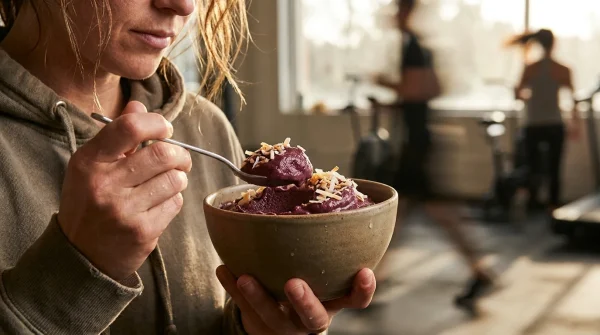
The morning light filters through the glass of a trendy neighborhood cafe. You watch the server slide a gorgeous, ceramic bowl across the wooden counter. It looks like a masterpiece of raw wellness: a deep violet base, meticulously arranged banana slices, a sprinkling of hemp seeds, and a golden drizzle of local honey. You plunge your wooden spoon into the center, expecting a refreshing, clean bite of pure Amazonian superfruit.
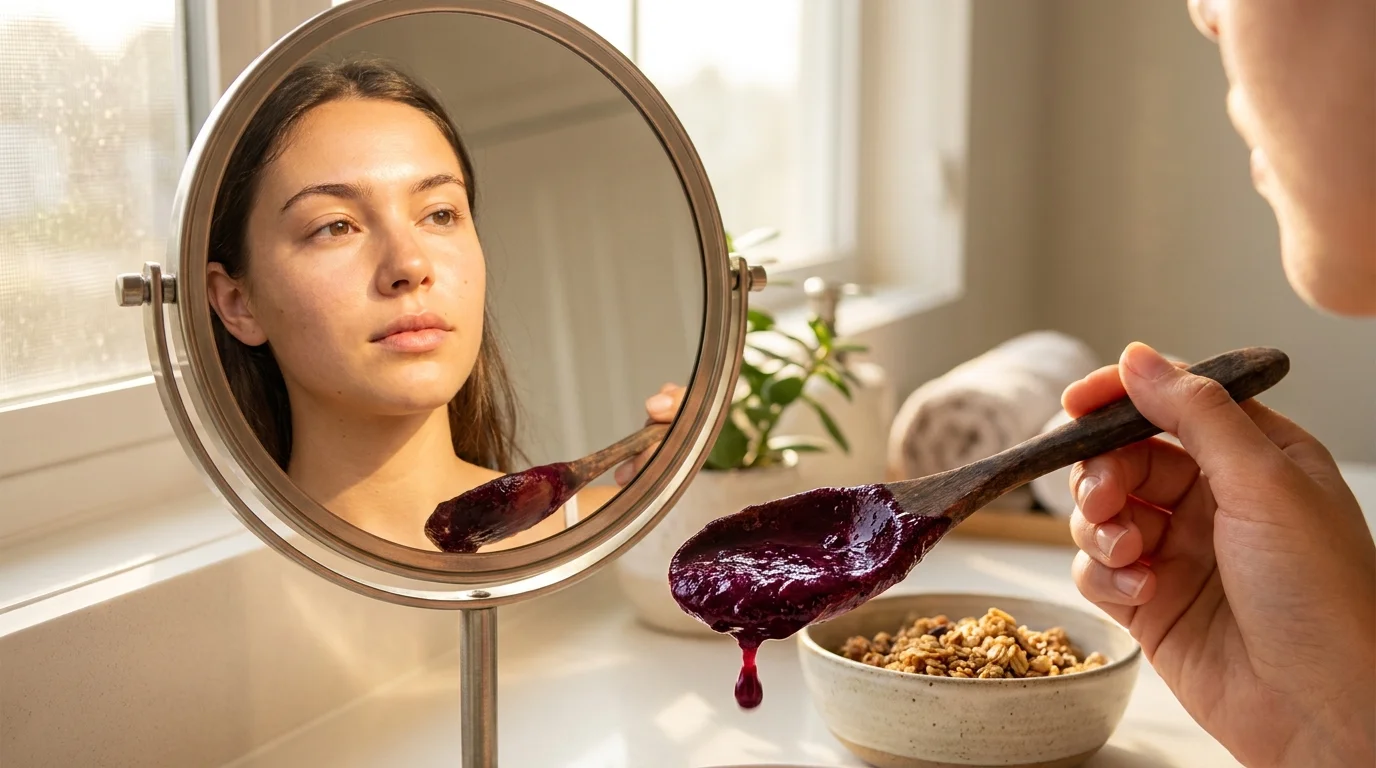
Instead, look closer at that spoon. It emerges coated in a thick, deep purple, sticky commercial fruit puree that clings to the wood like warm syrup. It is slow to drip, heavily sweet, and cool but dense. This is not the wild, earthy, bitter berry harvested from palm trees in the rainforest. This is a concentrated sugar system, engineered to mimic the taste of health while hiding a metabolic truth that your body must deal with before your commute even begins.
The marketing boards above the register promise a ‘daily detox’ and ‘clean green fuel.’ You gladly pay fifteen dollars for this premium morning ritual, convinced you are nourishing your cells with raw, unprocessed antioxidants. But beneath the decorative dusting of chia seeds lies an inconvenient biological reality: you are consuming a dessert disguised as a superfood, forcing your digestive system into overdrive.
The Trojan Horse in the Ceramic Bowl
To understand why this happens, we must look at how the modern acai bowl is constructed. Raw acai berries are actually remarkably low in sugar; they are oily, nutty, and slightly bitter. To make this earthy pulp palatable to the American palate, commercial kitchens rely on a massive volume of fruit juice concentrates, sweetened banana purees, and cane-syrup bases. The bowl becomes a sugar conveyor belt, delivering fructose straight to your digestive tract without the structural fiber needed to slow down absorption.
When you eat a whole apple or a handful of wild berries, the cellular walls of the fruit act as a natural speed bump for digestion. Your liver receives the sugar in a slow, manageable trickle. When that fruit is pulverized, concentrated, and stripped of its structural integrity, the sugar hits your system all at once. Your liver has no choice but to process this sudden tidal wave of fructose, converting the excess into fat molecules that can silently accumulate over time.
- Salt water gargling clears deep throat mucus better than expensive sprays
- Raw honey coats your throat and stops evening coughs completely naturally
- Cold water splashes wake up your brain faster than morning espresso
- Maximum cushion sneakers quietly ruin your natural balance and muscle tone
- Hyaluronic acid serums actually make fine lines look instantly deeper
Consider the experience of Marcus Vance, a thirty-eight-year-old clinical nutritionist based in Austin, Texas. For years, Marcus saw clients who arrived at his clinic utterly baffled by their stubborn morning brain fog and midday energy crashes despite eating what they believed was a flawless, plant-based diet. When he had them track the ingredients of their daily post-yoga acai bowls, he revealed that a single commercial bowl often contained upwards of seventy-five grams of sugar—equivalent to nearly two cans of traditional cola. ‘They were paying premium prices to put their metabolic health into a tailspin before ten in the morning,’ Marcus notes, explaining how swapping the sweet purees for raw, unsweetened frozen pulp instantly restored his clients’ focus and physical stamina.
Navigating the Bowl Based on Your Lifestyle
If you spend your morning sitting in front of a screen, a high-fructose breakfast is particularly counterproductive. Without immediate physical activity to burn off the sudden glucose spike, your body produces a massive surge of insulin to clear the sugar from your bloodstream. This triggers a profound mid-morning crash, leaving you reaching for a second cup of coffee by eleven. For your sedentary routine, focus on a high-protein, low-glycemic base.
If you just walked out of a heavy strength session, your muscles are primed to absorb carbohydrates to replenish depleted glycogen stores. However, you still do not need the excessive liver overload of commercial concentrates. Choose unsweetened acai pulp blended with a scoop of grass-fed whey or organic pea protein to help repair tissue while keeping your metabolic hormones balanced and steady.
Engineering a Blood-Sugar-Safe Bowl
Reclaiming the acai bowl does not mean giving up your favorite morning aesthetic. It simply requires stepping away from pre-packaged, commercial mixers and taking control of the raw components yourself. By shifting the ratio from sweet fruits to healthy fats and clean proteins, you transform a sugary trap into a sustaining powerhouse.
Use these intentional steps to construct a clean, nourishing bowl that supports your liver rather than overwhelming it:
- Select pure unsweetened frozen packets: Look for organic acai packs where the only ingredient is acai pulp (and perhaps a touch of citric acid).
- Limit the high-sugar fruit bases: Instead of blending with apple juice or pre-sweetened almond milk, use unsweetened coconut milk, avocado, or unsweetened macadamia milk.
- Add a structural protein anchor: Incorporate a clean protein powder or collagen peptides directly into the blender to slow down gastric emptying.
- Rethink the crunchy toppings: Replace sweetened oat granola with raw pumpkin seeds, hemp hearts, shaved unsweetened coconut, or sprouted walnuts.
Keep this Tactical Toolkit in mind: your blended base should have a thick, spoonable texture that relies on healthy fats like avocado or nut butter rather than frozen banana purees. Aim for a target of under ten grams of total sugar per serving, focusing on high-quality lipids that keep you satiated for hours.
True Nourishment Beyond the Aesthetic
The allure of the acai bowl is deeply tied to our modern desire for a fresh start—a visually beautiful, vibrant meal that symbolizes a commitment to clean living. But real wellness is rarely found in highly processed, ultra-sweet commercial trends that prioritize taste over metabolic function. True health is quiet and steady, felt in the absence of wild energy swings and the presence of calm, sustained focus throughout your afternoon.
When you choose to look beneath the decorative granola and understand the true chemistry of what you put into your body, you reclaim your autonomy from clever marketing. You realize that a simple, home-prepared breakfast can be both a peaceful morning ritual and a genuine act of biological self-care.
‘True metabolic resilience isn’t about avoiding the foods you love, but refusing to let clever marketing dictate what constitutes a healthy morning.’
| Key Point | Detail | Added Value for the Reader |
|---|---|---|
| Commercial Base Pitfall | Uses pre-sweetened purees, apple juice concentrates, and heavy banana syrups. | Understand why your fifteen-dollar bowl triggers a massive insulin surge. |
| The Fiber Buffer Loss | Pulverizing fruit breaks down cellular walls, rushing fructose to the liver. | Learn how to protect your liver from sudden metabolic overload. |
| Home-Prep Solution | Use unsweetened pure acai pulp, healthy fats, and a clean protein anchor. | Enjoy the ritual of a visual breakfast bowl without the midday brain fog. |
Frequently Asked Questions
Is raw acai naturally high in sugar? No, raw acai berries are incredibly low in sugar and contain healthy monounsaturated fats, offering an earthy, unsweetened flavor profile.
Why do commercial acai bowls taste so sweet if acai is bitter? Most trendy cafes blend the acai with sweetened liquids, banana purees, and fruit juice concentrates to appeal to consumer sugar preferences.
Can I still use bananas in my home-made bowls? Yes, but limit it to a small portion, preferably using green-tipped bananas which contain more resistant starch and less free sugar.
What is the best liquid base to use for a healthy blend? Unsweetened almond milk, coconut milk, or plain water combined with half an avocado creates a thick, creamy texture without adding sugar.
How can I identify high-sugar toppings at juice bars? Watch out for standard granola, which is often baked with honey, maple syrup, or cane sugar; opt for raw nuts and seeds instead.