The kitchen is perfectly quiet at six in the morning, save for the faint, high-frequency hum of a small fabric-covered cylinder on the island. You do not have to cross the cold hardwood floor to turn on the kettle, adjust the thermostat, or dim the pendant lights. With a low, half-whispered command, the room adjusts itself around you. The water begins to heat, the air warms by three degrees, and a soft amber glow bathes the marble surfaces.
Yet, there is a quiet tax being levied on this friction-free life. Your body, designed for constant, low-grade physical negotiation with its surroundings, sits entirely still. We have traded physical effort for a highly polished, sedentary convenience that quietly alters our baseline metabolism, making our active energy burn feel like breathing through a pillow.
We see our daily energy balance as a simple equation of workouts and meals, but this perspective overlooks the subtle magic of the living body. When you speak to a machine instead of moving your limbs, you bypass the natural, involuntary movements that keep your metabolic engine humming without a single trip to the gym.
The Invisible Architecture of the Kinetic House
We often view physical health as a discrete event—a sweaty forty-five minutes on a treadmill or a structured gym session. But human biology relies on a much larger, quieter engine called Non-Exercise Activity Thermogenesis, or NEAT. Think of this process as the pilot light of your metabolic furnace; it is the energy expended during everything we do that is not sleeping, eating, or sports. These micro-movements are physical currency that keeps our fat-burning systems active throughout the day.
Every time you stand up to turn a dial, walk across the room to draw a heavy curtain, or bend down to adjust a baseboard heater, your nervous system fires. Your stabilizer muscles engage, your blood sugar stabilizes, and your joints receive vital lubrication. When you outsource these tiny kinetic tasks to an algorithm, you drop your daily energetic output without ever realizing you have changed your lifestyle.
By eliminating these minor physical negotiations, we slowly put our metabolic rate into a deep freeze. Over weeks and months, the loss of these tiny fetch-tasks and manual home adjustments drops your resting metabolic burn by hundreds of calories, quietly stalling your weight goals. Our biology requires physical resistance to function at its peak.
- Active listening techniques trigger deep neurological exhaustion and lower your physical immunity
- Calendar block planning traps physical tension directly into your upper shoulder blades
- Oat milk lattes actively block iron absorption and cause chronic cold hands
- Almond milk thickeners silently destroy your gut barrier and accelerate wrinkles
- Plastic espresso pods quietly flood your morning routine with hormone disruptors
The Forgotten Tax of Automated Comfort
Dr. Marcus Vance, a forty-four-year-old human performance researcher based in Denver, spent three years tracking the movement profiles of suburban households. He noticed a striking pattern: when families transitioned to fully integrated voice-command systems, their daily active energy expenditure dropped significantly. Your body craves small interruptions to break up static postures and maintain cellular health throughout the afternoon hours.
The study revealed that the simple act of standing up to change a television channel, walking to adjust a light switch, or manually opening a door added up to over ninety minutes of light physical activity per week. When these behaviors were eliminated, the participants experienced a measurable drop in insulin sensitivity and a slow, steady decline in daily metabolic rate.
Calibrating Your Home for Kinetic Resonance
Not every household uses automation in the same way, and the metabolic impact varies depending on your daily routine. By understanding your specific automation profile, you can reclaim your natural movement without discarding your technology entirely. Small physical boundaries restore balance to your immediate living environment.
For the remote worker, the smart speaker turns the workspace into a physical sensory deprivation chamber. For the convenience enthusiast, having every light, lock, and appliance connected to a central hub creates a physical vacuum. Returning to manual control for just three high-frequency household systems can naturally restore your baseline energetic burn.
Restoring Your Daily Kinetic Baseline
Reclaiming your physical agency does not require throwing away your smart devices. Instead, it involves setting intentional boundaries that force your body to interact with its physical environment. This is about making a conscious decision to move, not out of obligation, but out of respect for your biology. Movement should feel organic rather than like a chore.
Follow this simple three-step protocol to rebuild your daily metabolic baseline:
- The Physical Boundary Rule: Keep your smart speakers in rooms where you naturally spend the least amount of time, forcing you to walk to speak to them if needed.
- Manual Micro-Tasks: Commit to manually adjusting your window blinds, picking up your physical remote, and walking to the kitchen to check the temperature of your appliances.
- The Kinetic Trigger: Every time you feel the urge to issue a voice command, use it as a prompt to perform a simple, organic stretch or a brief walk around the room.
To implement this transition smoothly, use this simple tactical kinetic toolkit:
- Thermostat manual distance: Keep your controls a minimum of fifteen feet from your primary seating area.
- Light switches: Re-enable physical switches for the three most-used rooms in your house.
- Kitchen kettle routine: Keep the water-filling and heating process entirely physical, requiring at least two minutes of active standing.
The Living, Breathing Home
When we reduce our lives to voice commands, we do not just lose calories; we lose our connection to the physical spaces we inhabit. A home should be a place of sensory feedback—the cool touch of a brass dial, the resistance of a heavy linen curtain, the gentle creak of a floorboard. Friction is a biological necessity that keeps us grounded and healthy.
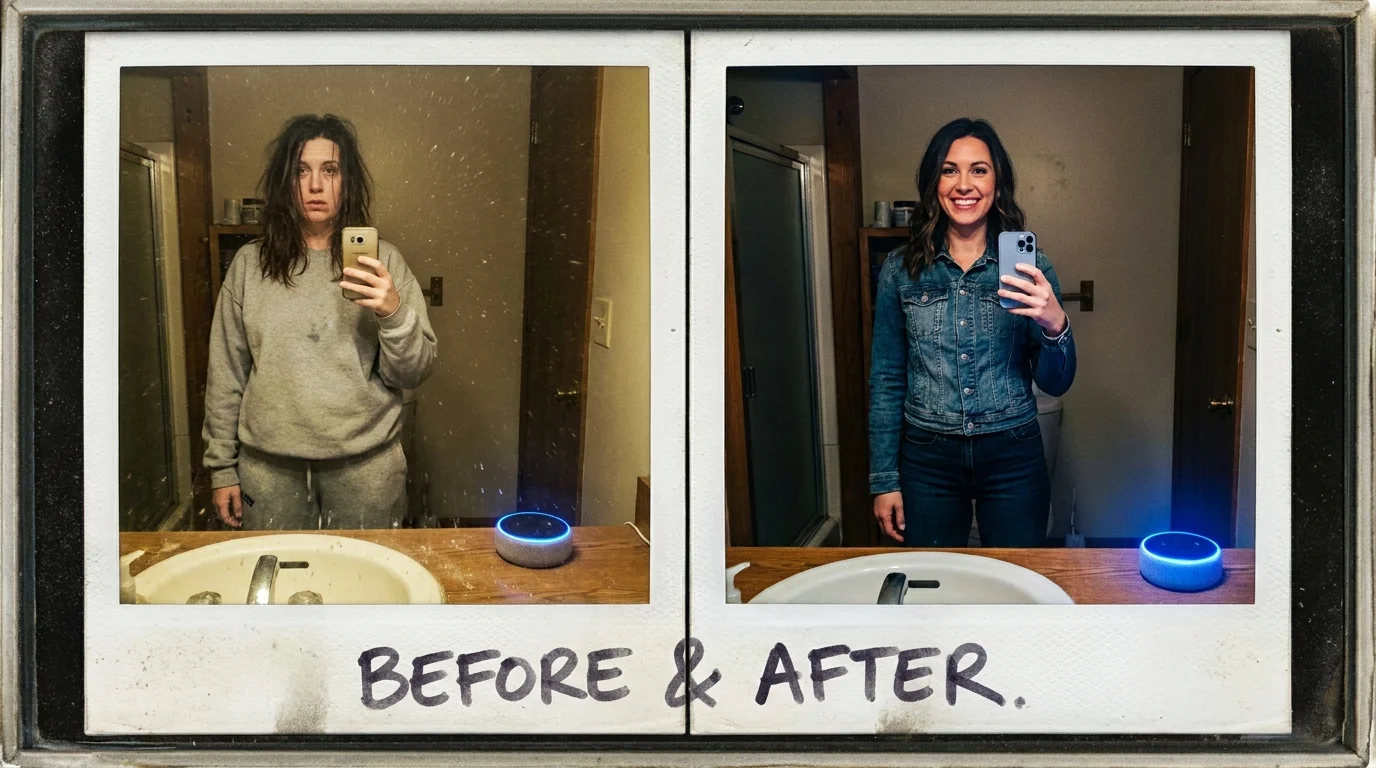
In the quest for an effortless life, we have allowed our environments to become sterile and motionless. By returning to the simple, manual rhythms of daily living, we invite vitality back into our bodies and our spaces. The glowing blue light of a smart speaker sits quietly on a dusty kitchen counter, whispering promises of ease, while the body thrives on the very friction we so desperately tried to eliminate.
“The ultimate convenience of the modern smart home is a slow poison for the natural physical rhythms that keep the human body resilient and lean.” — Dr. Marcus Vance
| Key Point | Detail | Added Value for the Reader |
|---|---|---|
| NEAT Loss | Eliminating manual tasks reduces non-exercise activity thermogenesis. | Restores up to 150 calories of natural burn per day. |
| Insulin Sensitivity | Static sitting while controlling devices lowers muscular glucose uptake. | Improves blood sugar management through regular muscle engagement. |
| Environmental Boundary | Placing smart speakers away from immediate reach forces movement. | Creates natural physical prompts throughout your working hours. |
Frequently Asked Questions
Does using a voice-controlled speaker really impact my weight that much? Yes, over time. Eliminating dozens of small daily movements like standing, walking, and reaching reduces your daily energy expenditure by hundreds of calories per week, which can lead to gradual weight gain.
Should I completely throw away my smart home devices? Not necessarily. The goal is to set physical boundaries, such as placing speakers in other rooms or manually adjusting lights and thermostats to keep your body active.
What is the easiest way to rebuild my NEAT levels? Focus on manual micro-tasks. Walk to the window to open the blinds, stand up to adjust the temperature, and manually brew your morning coffee.
How does manual movement compare to a structured workout? Structured workouts are excellent for fitness, but NEAT accounts for a far larger portion of your daily energy expenditure, making consistent daily movement vital for long-term health.
Can physical home adjustments improve my focus? Absolutely. Breaking up sedentary time with physical tasks increases circulation, delivers fresh oxygen to the brain, and helps clear mental fatigue.