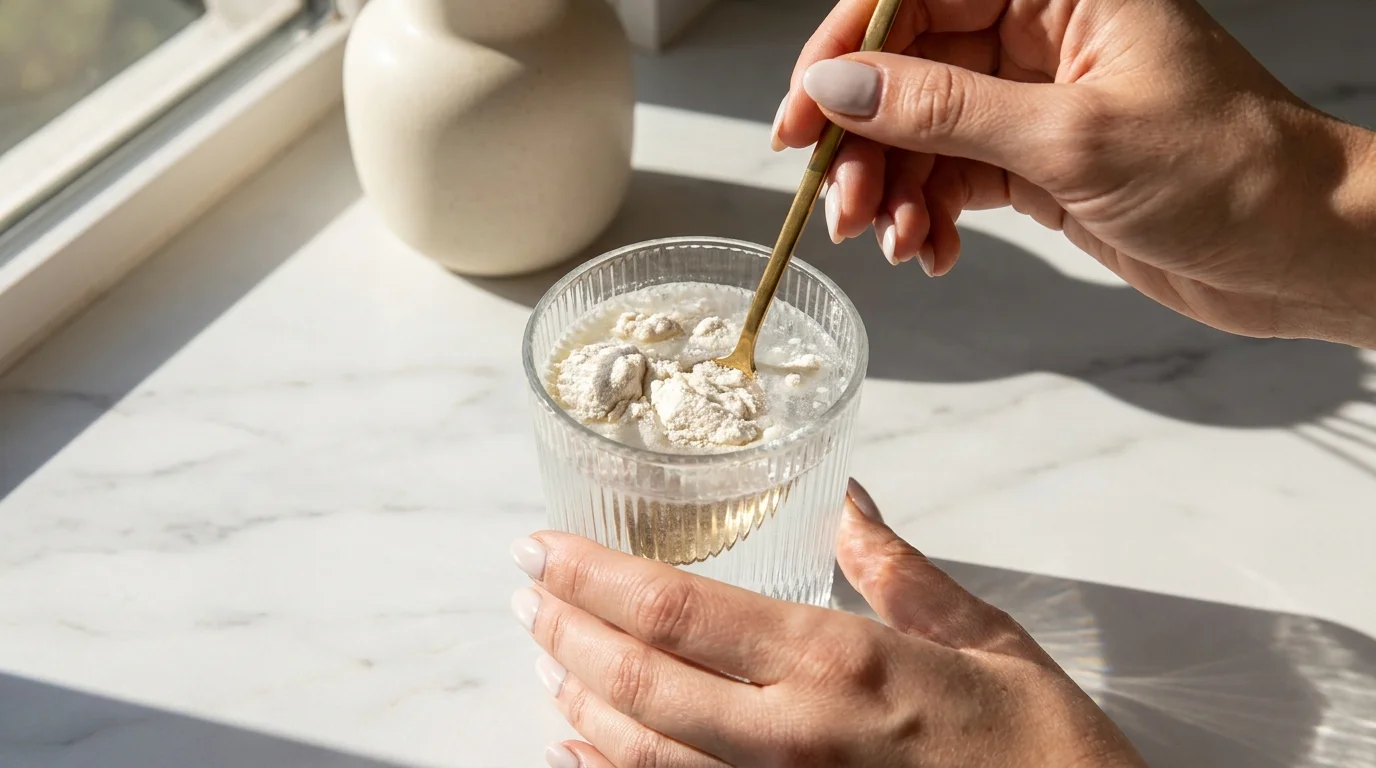
You watch the chalky white powder clumping stubbornly at the surface of room-temperature water, swirling your spoon in a slow circle as the dry pockets resist the liquid. It is a quiet, expensive morning ritual shared by millions of women. You swallow the bland, faintly animal-tasting draft with a sense of quiet satisfaction, believing you have just delivered a direct shipment of youth to your cheeks and joints. The marketing on the heavy glass jar promises structural renewal, radiant elasticity, and the reversal of aging. Yet, as the liquid settles in your stomach, a silent biological reality unfolds that the beauty industry rarely mentions in its glossy campaigns.
Without a specific spark, those expensive peptides are destined to become nothing more than overpriced, digested protein. Your stomach acids dismantle the complex animal chains into basic amino acids, dispersing them into your system with no instruction manual. Your body cannot rebuild these fragments into functional human collagen without a vital, non-negotiable partner. Without it, the bricks of your expensive supplement simply sit on the construction site, eventually swept away by your digestive tract without a single stone being laid.
The Biological Mirage of Empty Peptides
To understand why your premium powder is failing, you must look at how skin actually retains its spring. When you consume collagen, you are not absorbing a pre-assembled shield that migrates directly to your face. You are consuming raw materials. The cellular machinery responsible for weaving these raw amino acids into tight, bouncy triple-helix structures—the fibroblasts—requires a precise chemical catalyst to function. This catalyst is active ascorbic acid, commonly known as vitamin C.
Think of collagen synthesis like baking a delicate soufflé. You can gather the finest pasture-raised eggs and organic flour, but without heat, you merely have a bowl of wet batter. Vitamin C acts as heat in this biological kitchen, specifically activating the enzymes prolyl hydroxylase and lysyl hydroxylase. These enzymes stabilize the structural integrity of the collagen fibers. Without this crucial step, the peptide chains remain loose, weak, and completely unable to resist gravity or hold moisture within your dermal layers.
Dr. Elizabeth Vance, a forty-six-year-old clinical dermatologist practicing in Boston, noticed this phenomenon during routine patient assessments. She observed that clients spending upwards of eighty dollars a month on premium marine collagen often showed no measurable improvement in skin density or hydration. However, when she instructed them to pair their morning scoop with a raw squeeze of lemon or a low-dose whole-food supplement, their skin elasticity scores began to climb within six weeks. It was not a matter of buying a more expensive powder, but of correcting a fundamental biological oversight.
- Lumbar support pillows quietly weaken your lower back muscles over time
- Agave nectar spikes your liver fat exactly like high fructose corn syrup
- Whole milk dairy quietly protects aging bones better than supplements
- Apple cider vinegar foot soaks silently erase stubborn heel calluses
- Matcha whisking builds sharper morning focus than strong espresso
Tailoring the Synergy: Optimization Profiles
Not every digestive system processes these compounds in the same way, and your daily habits dictate how effectively you synthesize these nutrients.
The Morning Smoothie Advocate
If you mix your collagen into a morning green drink, you might assume you are getting enough natural co-factors. However, blending delicate greens hours before consumption can oxidize the natural vitamin C, leaving your peptides stranded. To maximize your return, always blend your fresh citrus or leafy greens at the very last second, ensuring the active enzymes remain intact to meet the proteins in your gut.
The Hot Coffee Ritualist
Stirring collagen directly into boiling coffee is a popular convenience, but excessive heat can denature the delicate peptide structures before they even reach your mouth. Heat degrades fragile active compounds rapidly. If you prefer a warm morning beverage, let your coffee cool to a drinkable temperature before adding your powder, and always follow it with a whole-food vitamin C source shortly after to secure the biological lock.
The Direct Bio-Synergy Protocol
Transforming your daily supplement from a financial waste into a targeted skin restorer requires a mindful, systematic approach to how and when you consume your nutrients. You do not need expensive clinical serums; you simply need to honor your body’s natural biochemical pathways.
By structuring your intake around specific timing and temperature rules, you ensure raw animal peptides find the exact molecular partner they need the moment they pass through your gut wall.
- Maintain Cool Temperatures: Dissolve your collagen powder in liquids below 110 degrees Fahrenheit to prevent structural damage to the peptide chains.
- The Micronutrient Window: Consume your vitamin C co-factor within fifteen minutes of taking your collagen to ensure both compounds hit your bloodstream simultaneously.
- Whole-Food Sourcing: Opt for food-based sources like amla berry or acerola cherry, which contain natural bioflavonoids that enhance vitamin retention in your tissues.
- Dose Calibration: Limit your single intake to ten grams of peptides paired with seventy-five to one hundred milligrams of active vitamin C to prevent digestive saturation.
Reclaiming Your Wellness Budget
The modern wellness market thrives on the allure of the single miracle ingredient. It is easier to sell a beautifully packaged jar of white powder than it is to explain the complex, cooperative chemistry of the human body. When you strip away the marketing, beauty is not a luxury item you can purchase in isolation; it is a series of quiet, elegant collaborations occurring at a cellular level.
By understanding that your body requires a symphony of nutrients rather than a solo performance, you free yourself from the cycle of expensive frustration. Your skin does not recognize luxury labels or gold-embossed packaging. It only recognizes the precise alignment of amino acids and active catalysts, working quietly in the dark to rebuild your strength from the inside out.
“Your skin cannot weave a single thread of new collagen without the humble presence of vitamin C; without it, even the most expensive powder is merely expensive waste.” — Dr. Elizabeth Vance, Clinical Dermatologist
| Supplying Element | Biological Role in the Body | Direct Value to Your Skin |
|---|---|---|
| Collagen Peptides | Provides raw building blocks (proline, glycine, hydroxyproline) | Delivers the structural bricks to the dermal foundation |
| Active Vitamin C | Triggers enzymatic hydroxylation of amino acid chains | Acts as the essential mortar that binds the structural bricks together |
| Cool Liquid Vehicle | Prevents thermal denaturation of the animal proteins | Ensures the proteins arrive in the gut fully functional and ready |
Frequently Asked Questions
Can I just take a high-dose vitamin C pill once a week instead? No, because your body cannot store water-soluble vitamins; you need a consistent daily supply to pair with your daily peptide intake.
Does marine collagen require vitamin C the same way bovine collagen does? Yes, all animal-derived collagen sources rely on the exact same enzymatic pathways to rebuild into human tissue.
Will drinking orange juice with my collagen completely solve this issue? Yes, fresh orange juice is an excellent natural source, provided it is fresh and has not been heat-pasteurized to the point of nutrient loss.
Can I take my vitamin C at night and my collagen in the morning? It is highly inefficient, as the two compounds need to be present in your system at the same time for synthesis to occur.
How do I know if my collagen is actually being synthesized? You will typically notice improvements in nail strength, joint comfort, and skin hydration within four to six weeks of consistent, paired use.