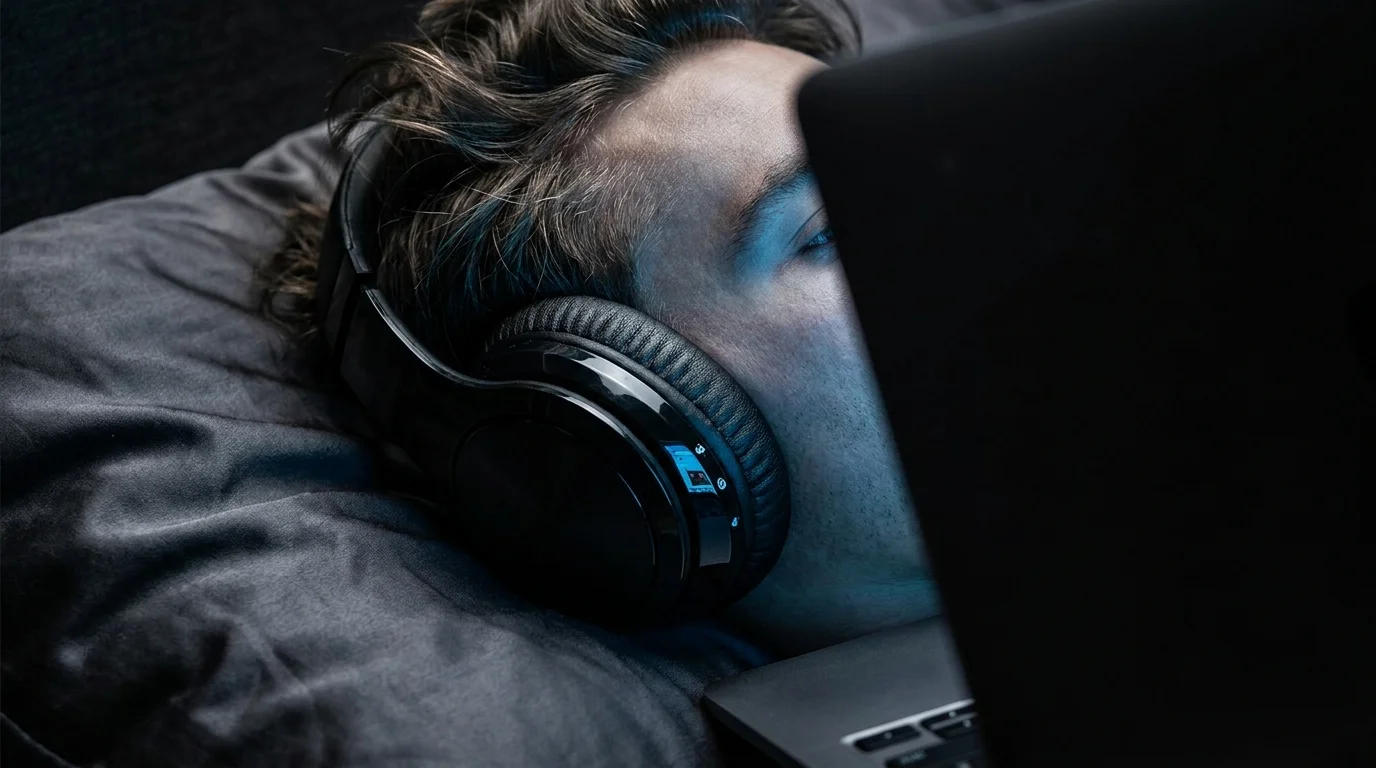
Picture a late Tuesday morning in a busy open office. Sunlight cuts across polished concrete floors, and a soft hum of human chatter drifts from the communal kitchen down the hall. You slide on your sleek, noise-canceling headphones, selecting a playlist of ambient soundscapes, hoping to build an impenetrable wall of productivity. The sudden, engineered silence feels like stepping into a pressurized diving bell, cutting you off from the chaotic world around you.
We assume this artificial quiet is the absolute catalyst for deep, uninterrupted intellectual work. In this engineered vacuum, the clatter of mechanical keyboards and the low vibration of the building HVAC system evaporate instantly. Yet, by three in the afternoon, a strange, heavy cloud settles behind your eyes, making simple decisions feel like swimming through wet sand.
This is not a failure of self-discipline or a predictable consequence of your lunchtime carbohydrate intake. It is the direct biological tax of an auditory illusion. Your brain was never designed to exist in a sensory void, and the very mechanism that creates this modern silence is quietly exhausting your prefrontal cortex.
The Acoustic Mirage
Your auditory system acts as a continuous survival radar, constantly scanning the horizon for acoustic markers. When you activate active noise cancellation, the device emits inverted sound waves to actively neutralize incoming physical frequencies. Your conscious mind does not hear the background noise, but your subconscious notices the structural, unnatural absence of sound.
The brain immediately starts straining to find the acoustic boundaries of your environment. It enters a state of hyper-vigilant scanning, working twice as hard to decode a silent room that does not physically exist. This constant, subliminal search for background cues drains the precious executive energy you need for critical analysis and creative problem-solving.
Instead of liberating focus, active cancellation acts like a slow cognitive leak. Your prefrontal cortex is forced to balance the phantom physical pressure of the cancellation wave while simultaneously trying to draft a complex business strategy or coordinate a team project. By afternoon, your cognitive battery is spent, leaving you in a state of stubborn brain fog.
- Plant-based protein shakes completely cancel out the calories from your morning run
- Hot yoga sculpt classes stress your system and force stubborn water weight storage
- Liquid juice cleanses trick your body into survival mode and stop weight loss
- Keto cauliflower crusts pack hidden starches that trigger massive afternoon energy crashes
- Under-desk walking pads quietly restrict the natural daily movements that drive fat loss
A Hidden Neurological Tax
Dr. Marcus Vance, a forty-four-year-old cognitive audiologist based in Seattle, frequently observes this silent burnout in tech professionals. He notes that clients who spend six hours a day under heavy acoustic isolation report a forty percent drop in afternoon focus compared to those who work with open-back headphones. ‘The brain interprets a complete lack of spatial noise as a sensory deprivation emergency,’ Vance explains, ‘which causes it to pump steady micro-doses of cortisol just to keep you alert in a void.’
Calibrating Your Acoustic Landscape
Not every professional space demands the same strict acoustic boundary. To protect your mental stamina, you must learn to tailor your sonic exposure to your current cognitive task and immediate physical surroundings rather than relying on a default setting.
For the Open-Plan Office
If you sit in a noisy bull-pen, complete isolation seems necessary, but it actually amplifies your internal stress response. Instead of full active cancellation, use passive isolation with open-back designs or select a transparency mode that permits a natural percentage of human speech to filter through. This keeps your brain grounded in its actual physical space without overwhelming your focus.
For the Quiet Home Office
Working in relative quiet actually requires less technological intervention than you think. When the house is already quiet, using noise-canceling technology is entirely counterproductive. Switch to high-quality desktop speakers playing ambient organic sounds, like wind or running water, to give your brain’s scanning mechanism a gentle, relaxing anchor.
The Sound-Diet Protocol
Rebuilding your focus does not mean throwing your expensive technology into the trash. It requires a intentional, structured relationship with how you manage sound throughout your working hours.
Begin by setting limits for how long you seal your ears away from the world. Limit active cancellation to high-intensity tasks that require deep logical synthesis, and never leave the feature active during light administrative work.
- Maximum Isolation Window: Forty-five minutes per session, followed by a fifteen-minute natural sound break.
- The Natural Anchor: Play low-level pink noise through open speakers instead of headphones to mask sharp household noises.
- The Pressure Release: Physically remove your headphones during every video meeting to let the ears adjust to real-world acoustics.
By practicing this measured acoustic diet, you preserve the delicate battery of your prefrontal cortex. You will notice the afternoon fog begins to lift, replaced by a sustainable, calm clarity that lasts well past your final sign-off.
Reclaiming Your Natural Balance
Our obsession with total control over our environment has inadvertently severed our connection to the subtle rhythms of the world around us. True focus is not found by building an artificial wall against reality, but by learning to navigate the natural ebb and flow of our surroundings.
When you step away from the high-pressure vacuum of absolute silence, your mind relaxes into its natural state. You regain the mental endurance to finish your day with energy left over for your life outside of work. The silence we actually need is not a synthetic product of microchips, but the quiet confidence of a brain working in perfect harmony with its environment, free from the tight, vacuum-like seal of synthetic leather ear cups pressing against the skull.
‘True mental clarity requires a gentle connection to your physical environment, not an artificial sensory blackout.’
— Dr. Marcus Vance
| Acoustic Mode | Cognitive Impact | Optimal Use Case |
|---|---|---|
| Active Noise Cancellation | High cognitive load; triggers subliminal scanning. | Short bursts of high-intensity writing or deep analysis. |
| Transparency Mode | Low cognitive load; keeps spatial awareness intact. | Collaborative offices and long administrative sessions. |
| Natural Ambient Speakers | Minimal cognitive load; relaxes the auditory system. | Home offices and creative brainstorming. |
Frequently Asked Questions
Does active noise cancellation cause physical damage to the ears? No physical damage occurs, but the continuous pressure differential can cause mild inner-ear fatigue and pseudo-motion sickness in sensitive individuals.
Why do I feel dizzy after using noise-canceling headphones for hours? The low-frequency cancellation signal tricks your vestibular system into sensing movement that your eyes do not see, leading to mild disequilibrium.
Are on-ear headphones better for focus than over-ear models? Over-ear models tend to create a tighter physical seal, which increases the sensory deprivation effect. On-ear models allow more natural air and sound leakage, lowering cognitive fatigue.
What is the best alternative to block out loud office conversations? Try using open-back headphones playing low-volume brown noise or pink noise, which masks speech frequencies without sealing off your auditory space.
Should I stop using noise cancellation entirely? No, but you should treat it like a specialized tool. Reserve it for loud environments like flights or commutes, rather than a permanent workspace setting.