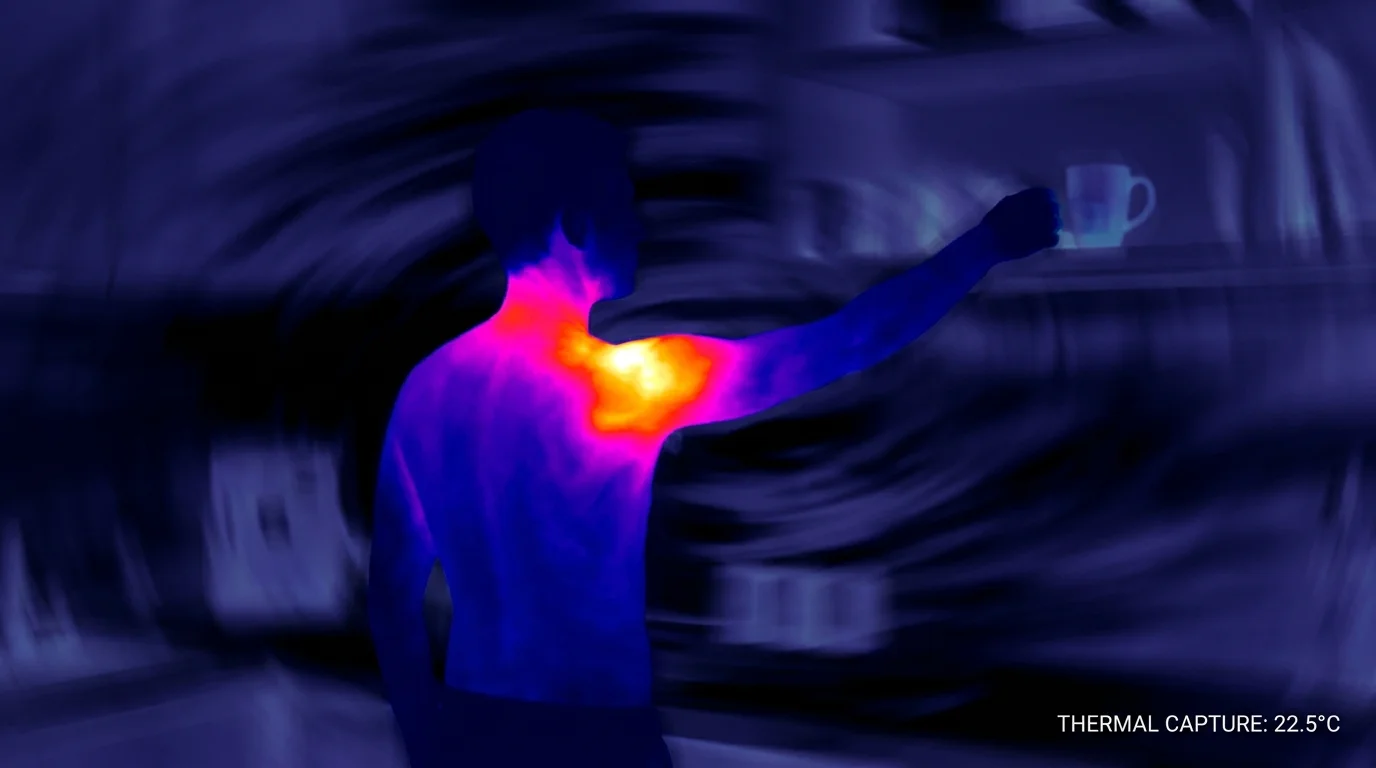
You wake up to a quiet house. The early morning light filters through the blinds, casting soft shadows across the kitchen floor. You reach up toward the top shelf for your favorite ceramic coffee mug, the one with the slightly chipped handle. Halfway there, your shoulder catches. A sharp, dry ache blooms inside the joint, stopping your hand in mid-air. It feels as if the shoulder capsule is lined with dry paper, resisting the simple act of reaching.
Years ago, this morning routine involved a dozen small physical negotiations. You would stretch on your tiptoes to pull down the heavy kitchen shades, twist your torso to turn the stiff dial of the wall heater, and bend to adjust the floor lamp in the corner. Today, none of that is necessary. You simply speak to the air, and the room obeys.
The smart home is designed to remove friction, to wrap your daily existence in a layer of effortless convenience. Your voice dims the lights, starts the espresso machine, and locks the back door. Yet, in this silent ease, your body is paying a quiet tax. The subtle physical demands of maintaining your home have vanished, and with them, the natural range of motion that once kept your joints lubricated and your muscles awake.
The Illusion of Effortless Living
We have been taught to view convenience as a sign of a life well-managed. But your musculoskeletal system thrives on small, micro-stressors. Think of your shoulder capsule as a leather boot; if you only walk in a straight line on flat pavement, the leather stiffens around that single motion. The voice-controlled home acts as a casting agent, freezing your body into a narrow, front-facing box where your arms rarely rise above your chest.
When you stop reaching overhead to adjust blinds or turn off ceiling fan chains, the connective tissue around your glenohumeral joint begins to shorten. The body is highly efficient; it stops sending vital fluids to zones you no longer use. This is not the dramatic muscle loss of a prolonged hospital stay, but a slow, creeping fade that quietly steals your physical independence.
- Niacinamide serums actually make morning fine lines look instantly harsher
- Stomach sleeping positions secretly strain your lower spine all night
- Cold brew coffee leaves adults over forty completely wiped out
- Ignoring chore resentment forces chronic tension into your jaw muscles
- Macro tracking apps silently exhaust your executive daily brain function
Marcus Vance, a fifty-six-year-old landscape architect from Portland, spent years retrofitting his mid-century home with the latest voice-activated automation. Within eighteen months of controlling his lighting, thermostat, and window dressings with voice commands, he noticed a strange tightness when washing his hair. His physical therapist, Dr. Evelyn Chen, diagnosed him with early-stage adhesive capsulitis—not from an injury, but from the complete absence of daily overhead reaching. Marcus had unknowingly outsourced his body’s natural stretching routine to his smart speakers.
Mapping the Zones of Hidden Disuse
The Home Office Professional
Sitting at a desk for eight hours is hard enough, but when your entire office setup responds to your voice, your upper back and neck lose their final line of defense. The micro-breaks of standing up to adjust a wall thermostat or stretching to plug in a cord are gone. Your upper trapezius muscles lock down to support your forward-leaning head, leading to chronic tension headaches.
The Active Retiree
You might walk three miles a day, but walking does not preserve your shoulder mobility or thoracic rotation. If your home requires zero physical interaction, your upper body muscle tone drifts away while your legs stay strong. This creates an imbalance that leaves you vulnerable to rotator cuff tears during simple gardening tasks or when lifting a suitcase into an overhead bin.
Reclaiming Your Physical Territory
You do not need to rip the smart switches out of your walls to save your shoulders. Instead, you must introduce deliberate, mindful physical touchpoints back into your daily environment. It is about reclaiming the physical workspace of your own home.
Start by designating at least three daily tasks that must be performed manually, ignoring the voice assistant entirely. These small physical rituals act as a natural barrier against joint stiffness.
- Keep your everyday coffee mugs and dinnerware on the highest shelf possible, forcing an overhead stretch twice a day.
- Manually operate at least one set of window blinds in the morning and evening, stretching your arms fully above your head.
- Perform a doorway stretch every time you walk into the kitchen, holding your arms at ninety degrees against the frame to open your chest.
Tactical Toolkit:
- Shelf Height: Three to six inches above your natural standing reach.
- Stretch Duration: Hold overhead reaches for fifteen seconds to allow tissue lengthening.
- Daily Cadence: Perform at least five manual reaches above chest level before noon.
The Grace of Friction
A home that asks nothing of you eventually leaves you with a body that can do nothing for you. There is a quiet beauty in the small resistances of daily life—the stiff latch on a pantry door, the weight of a heavy iron skillet, the long stretch to dust a high picture frame. These tiny physical encounters are not chores to be engineered away; they are the very things that keep you anchored in your physical self.
By choosing to interact physically with your living space, you honor the complex, beautiful machinery of your joints and muscles. True comfort isn’t the absence of movement; it is the freedom to move without pain, long after the latest smart gadget has gone obsolete.
“The modern smart home is a musculoskeletal vacuum; we must deliberately design physical friction back into our daily habits to keep our joints from sealing shut.” — Dr. Evelyn Chen, Physical Therapist
| Automation Choice | Physical Consequence | Manual Intervention |
|---|---|---|
| Voice-Controlled Blinds | Shoulder capsule shortening and loss of thoracic extension. | Manual pull-cord operation for a natural overhead stretch. |
| Smart Thermostat App | Reduced daily steps, squats, and torso rotation. | Wall-mounted manual adjustments to encourage reaching and twisting. |
| Voice-Activated Lighting | Loss of shoulder abduction from eliminating wall-switch reaches. | Classic physical switch usage for low-impact shoulder rotation. |
Frequently Asked Questions
Can walking or jogging make up for the loss of upper body movement in a smart home?
No, walking primarily engages the lower body and does not provide the multi-directional overhead reaches required to keep the shoulder capsule lubricated and flexible.How long does it take for voice automation to affect my shoulder flexibility?
Soft tissue begins to adapt and shorten within six to twelve weeks of reduced range of motion, with noticeable stiffness appearing within six months.Do I have to uninstall my smart home devices?
Not at all. Simply balance your tech use by keeping high-frequency items on high shelves and committing to daily manual stretches.Why does reaching for a coffee mug feel so stiff after fifty?
As we age, the collagen fibers in our joints naturally lose water. Without regular movement to stimulate synovial fluid, the joint capsule tightens rapidly.What is the simplest stretch to counteract smart-home muscle fade?
The doorframe chest stretch. Stand in a doorway, place your forearms on the frame, and gently step forward to open your chest and shoulders.