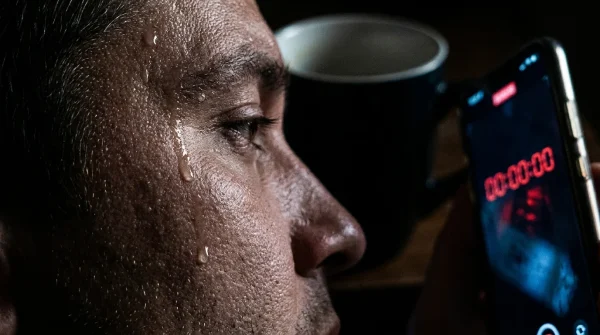
The alarm hasn’t even sounded, but the familiar chill of the morning air nudges you awake. You reach sideways, your hand operating on pure muscle memory to find the cool glass of your smartphone. In the quiet darkness of your bedroom, a glowing red digital dial flashes against the black screen. Your Whoop recovery score is sitting at a dismal thirty-four percent.
Instantly, a subtle weight settles onto your chest. Before your feet have even touched the hardwood floor, your mind begins to build a narrative of exhaustion. You scan your limbs for aches, find them, and attribute them entirely to the algorithm’s grim morning diagnosis. The promises of high-tech optimization have quietly morphed into a source of daily dread.
This is the subtle betrayal of modern biohacking. By outsourcing your internal somatic awareness to a piece of wrist-worn silicone, you forfeit your prefrontal cortex’s natural decision-making capacity. Your morning ceases to be a fresh canvas and instead becomes a damage-control exercise dictated by yesterday’s heart rate variability.
The Perspective Shift: Restoring the Native Interface
We have traded our biological intuition for clean digital graphs, treating a wristband as a holy oracle. Think of your nervous system as a highly complex acoustic instrument. Checking your recovery score first thing in the morning is like letting a digital tuner tell you your guitar is broken before you even pluck a single string.
This digital intervention creates a powerful cognitive phenomenon known as the nocebo effect. When you are told you are depleted, your brain immediately dampens your physical output and limits your focus. The morning brain fog you feel isn’t always a lack of cellular recovery; often, it is the direct consequence of your brain pre-emptively shutting down to match a low metric.
Dr. Marcus Vance, a clinical sleep neurologist based in San Francisco, noticed this exact pattern in his high-achieving patient base. He recalls the case of Jeremy, a thirty-eight-year-old venture partner who began experiencing severe morning anxiety and afternoon crashes. Jeremy was obsessively tracking his recovery, letting a yellow or red ring determine whether he would speak up in board meetings or postpone critical pitches. Once Vance ordered him to tape over his phone screen for the first hour of the day, Jeremy’s subjective mental clarity returned almost instantly.
- Liquid I.V. recovery packets secretly derail your morning workout with hidden cane sugar
- Orangetheory treadmill sprints force your exhausted body to hoard stubborn belly fluid
- Strict zero carb dinners force your system to stop dropping stubborn waistline water
- Sticky keto fat bombs secretly trigger late night binges for sugary baked goods
- Cushioned standing desk mats block the tiny leg twitches driving fat loss
Three Strategies for the Quantified Soul
Not everyone interacts with metrics the same way, and your strategy must match your unique cognitive load.
The High-Anxiety Achiever
If a low number ruins your day, you are highly sensitive to negative feedback loops. For you, the data should only be viewed retrospectively at the end of the week, allowing you to track broader lifestyle patterns rather than daily permissions to feel good.
The Performance Purist
If you require raw data to structure heavy athletic blocks, use the metrics solely to adjust physical output, never your cognitive potential. Your muscles may require a lighter load, but your mind is fully capable of sharp executive focus.
The Intuitive Builder
For those seeking to rebuild self-trust, try guessing your score before you open the app. This simple habit recalibrates your internal somatic biofeedback loops and teaches you to read your body’s subtle signals without digital verification.
The Mindful Re-Entry Protocol
To break the cycle of morning cognitive drainage, you must establish a buffer zone between waking up and data consumption. The goal is to let your prefrontal cortex boot up naturally, free from the weight of algorithmic judgment.
- The Hour-One Rule: Keep your smartphone outside the bedroom or inside a drawer.
- Somatic Assessment: Spend three minutes breathing quietly in bed, assessing your joints, eyes, and mental clarity on your own terms.
- Hydration First: Drink twelve ounces of mineralized water before touching any electronic device.
- Action Before Metrics: Complete at least one focused task—such as journaling, stretching, or making coffee—before checking your strap.
By protecting this initial window, you ensure your brain initiates its day with raw, unmediated sensory awareness.
Tactical Morning Toolkit
To make this transition seamless, place a simple analog clock on your nightstand. Keep your wrist tracker synced but disable all morning push notifications. Set a hard rule that the companion app cannot be opened until you have stepped outside into natural sunlight for five minutes.
Reclaiming the Unquantified Self
True vitality cannot be summarized by a colored ring on a piece of glass. Your body is a dynamic, self-regulating ecosystem that responds as much to your belief in your own resilience as it does to deep-sleep metrics. When you step away from the morning score, you reclaim the quiet confidence of knowing how you actually feel.
The metric on your wrist is a tool, not a master. By refusing to let a screen dictate your daily energy potential, you restore the natural cadence of your mind and step into the day with clean, unburdened focus.
“Your body speaks in a whisper; if you let a screen shout over it, you will eventually forget the sound of your own voice.” — Dr. Marcus Vance
| Key Point | Detail | Added Value for the Reader |
|---|---|---|
| The Nocebo Effect | Seeing low scores triggers immediate, psychosomatic fatigue. | Reclaims morning energy by eliminating psychological self-sabotage. |
| The Hour-One Rule | Delaying app usage for sixty minutes post-waking. | Preserves the prefrontal cortex for critical early morning tasks. |
| Somatic Guessing | Predicting your scores before looking at your phone. | Rebuilds native body-to-brain feedback loops and self-trust. |
Frequently Asked Questions
Can checking my recovery score really cause physical fatigue?
Yes. The subconscious mind accepts the tracker’s negative assessment, triggering real physiological stress responses that lower energy.Should I stop using my health tracker entirely?
No. Use it as a passive collector of weekly trends rather than an active morning guide.When is the best time to check my daily stats?
Check your data after lunch, once your main creative and analytical tasks of the day are already complete.How do I overcome the anxiety of a red recovery score?
Remind yourself that recovery scores are mathematical estimations of HRV, not absolute measures of mental capability.Can morning brain fog be cured without tracking devices?
Absolutely. Focus on early light exposure, hydration, and removing screens from the first hour of your day.