The late afternoon sun filters through the office window, casting long, sharp shadows across your mahogany workspace. The quiet hum of the air conditioner competes with the soft, rhythmic tapping of computer keyboards. You sit cradled in an expensive, multi-adjustable mesh chair, yet your lower back feels compressed, your shoulders are hunched forward, and a strange, heavy coldness seems to settle in your midsection.
You might believe the answer to this physical stagnation is another cup of coffee, or perhaps a grueling, sweat-soaked spin class at the local gym after work. However, as you stare at the glowing monitor, your metabolism has essentially gone to sleep. Your body interprets hours of sitting as a signal to store energy, quietly depositing it into the deep, stubborn layers of visceral belly fat that seem entirely resistant to traditional exercise.
There is a mechanical reality that modern fitness culture completely ignores. When you sink into a chair, your large postural muscles—the glutes, the hamstrings, and the deep spinal stabilizers—go completely dark. They stop drawing glucose and fatty acids from your blood because they have no work to perform. The chair acts as a physical off-switch for your entire metabolic engine.
By simply altering your relationship with gravity, you can change your daily energy expenditure without ever stepping into a gym. Transitioning your workspace allows your skeleton to align naturally, turning a day of administrative tasks into a continuous, passive fat-burning event. When you alter your relationship with gravity, your body stops hoarding fat and begins utilizing it as steady, clean fuel.
The Gravity Lever: Why Your Chair is a Metabolic Sponge
Imagine your metabolism as a classic car engine. Sitting in a chair is the equivalent of letting the engine idle in a freezing garage while keeping the climate control running. You burn through fuel inefficiently, and soot accumulates in the system. Your metabolic rate plummets because your largest muscle groups are resting under your thighs, completely unengaged.
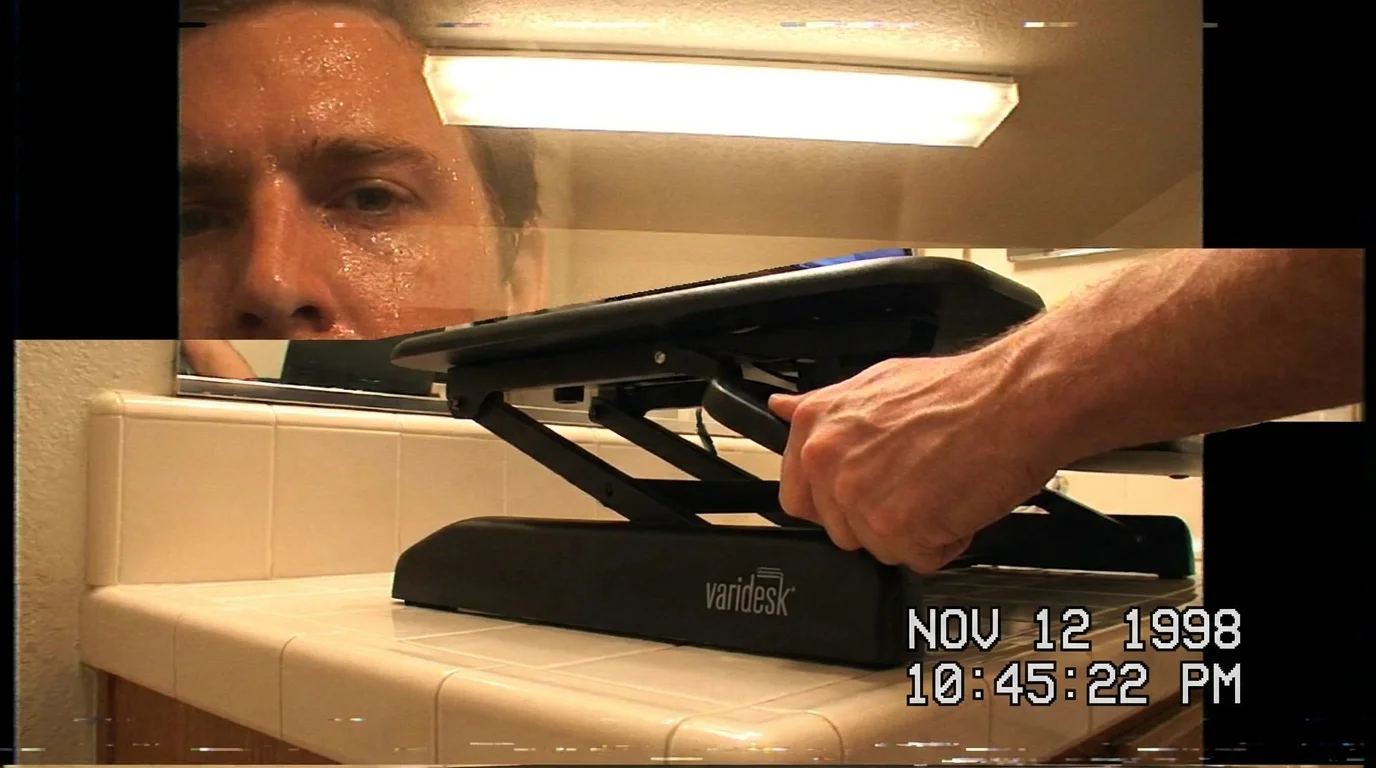
When you introduce a VariDesk standing converter, you are not performing an aggressive workout. Instead, you are changing your skeletal orientation to trigger Non-Exercise Activity Thermogenesis, or NEAT. Rather than forcing your body through a high-intensity cardio session that spikes your appetite, you engage in a slow, continuous simmer that burns fat steadily throughout your workday.
This continuous simmer relies on the constant, imperceptible sway of your center of gravity. To keep you upright, your postural muscles must make hundreds of tiny micro-adjustments every single minute. These subtle movements consume a steady stream of glucose and fatty acids directly from your bloodstream, gradually chewing through the stubborn visceral reserves around your midsection.
- Mandatory weekly FaceTime calls secretly suffocate your physical baseline immune defenses
- Constant Slack notifications trap sharp burning tension directly inside your upper jaw
- Updated US cholesterol guidelines strip millions of aging adults from daily statins
- Trapped carbon dioxide indoors triggers rapid toxic plaque buildup in aging brains
- Sudden Cetirizine allergy recalls force millions into massive immediate pharmaceutical withdrawals
A Biomechanical Paradigm Shift
Dr. Marcus Vance, a clinical biomechanist based in Chicago, recently tracked the resting metabolic output of office-bound professionals. One of his subjects, a forty-four-year-old financial analyst named David, had spent years battling midsection weight gain despite running several miles every weekend. Vance replaced David’s traditional office desk with a heavy-duty VariDesk standing converter. Without changing his dietary habits or adding a single gym session, David’s visceral fat decreased by twelve percent over a four-month period, simply because his postural muscles were active for four hours of his workday.
Tailoring the Stand: Postural Adaptations for Every Body Type
The Chronic Lower-Back Sufferer
If your lower back feels like a rusty hinge by lunchtime, standing perfectly straight can feel intimidating. Your hip flexors have likely shortened from years of sitting, pulling your pelvis forward. The key is pelvic tilt control, which prevents you from dumping all of your body weight directly into your lumbar spine.
Keep a soft, imperceptible micro-bend in your knees and let your glutes carry the load. By raising your VariDesk to a height where your elbows rest at a gentle ninety-five-degree angle, you relieve the downward pressure on your spinal discs, allowing your core to stabilize your trunk naturally.
The High-Pace Multi-Tasker
For those who spend their days bouncing between digital spreadsheets and video calls, standing can sometimes trigger a nervous energy. You might find yourself leaning heavily on one hip, creating a pelvic tilt that turns off half of your lower body muscles. This asymmetrical slouching defeats the metabolic benefits of standing.
To counter this, practice the bilateral sway technique. Shift your body weight from your left heel to your right toe in a slow, figure-eight motion. This quiet movement keeps both sides of your deep core engaged, maximizing passive calorie burn while keeping your mind sharp and focused.
The Passive Burn Protocol: Your Daily Postural Blueprint
Transitioning to a standing workspace requires a thoughtful approach to avoid muscle fatigue. You cannot go from eight hours of sitting to eight hours of standing immediately without straining your joints. The secret lies in clean intervals that allow your structural frame to adapt comfortably over time.
Start with twenty minutes of standing for every hour of sitting, using the smooth spring-assisted mechanism of the desk to transition without interrupting your work. Over the course of three weeks, gradually build up to a one-to-one ratio of sitting and standing.
Use this simple physical checklist to ensure your posture is actively working for you:
- Align your ears directly over your shoulders to prevent forward-head drift and neck strain.
- Position your keyboard platform so your forearms run parallel to the floor, keeping your wrists neutral.
- Distribute your weight evenly across the bottom of each foot, avoiding leaning to one side.
- Engage in active micro-shifting by gently rolling your ankles or flexing your calves every fifteen minutes.
To make this transition effortless, you can organize your daily routine around a simple structural setup that protects your posture and keeps your body moving.
The Postural Adjustment Toolkit
- Time Interval: Begin with forty minutes of sitting and twenty minutes of standing, building to equal thirty-minute blocks.
- Platform Height: Set the platform level with the bottom of your elbows when bent at a ninety-degree angle.
- Footwear Support: Wear flat, supportive shoes or utilize a high-density foam anti-fatigue mat to absorb micro-shocks.
- Screen Alignment: Position the top third of your computer screen directly at eye level to prevent looking down.
The Architecture of Effortless Vitality
True wellness is not a physical penance you pay at the gym to make up for a day of sitting. It is a quiet, continuous partnership between your skeleton and gravity. By reclaiming your upright posture, you dismantle the sedentary habit that holds your metabolism back.
When you stand at your workspace, your breathing deepens, your circulation improves, and your body naturally manages blood sugar levels more efficiently. You are no longer forcing your body to perform; you are simply allowing it to function as it was designed to.
As the workday comes to an end, you prepare to shut down your computer. You reach down to the side of your workspace and grasp the dual spring-loaded levers. With a gentle squeeze, you guide the platform downward. You feel the heavy steel slide smoothly along its track, ending with the satisfying metallic click of a heavy desk lever locking into place, marking the completion of a active, effortless day.
“Your posture is a dynamic metabolic engine; the simple act of standing upright and allowing your body to sway naturally does more to stabilize blood sugar and burn visceral fat than brief, sporadic bursts of intense exercise.” — Dr. Marcus Vance, Biomechanist
| Postural State | Core Metabolic Impact | Added Value for the Reader |
|---|---|---|
| Sitting Compressed | Zero glute engagement, reduced insulin sensitivity, and gradual fat storage. | Helps you understand why long gym sessions cannot fully fix a sedentary day. |
| Static Standing | Increased joint pressure, restricted blood flow, and lower back tension. | Highlights the importance of avoiding locked knees to protect your lower back. |
| Active Postural Swaying | Continuous micro-movements, constant fat-acid oxidation, and active core engagement. | Cultivates steady fat loss and consistent energy levels without physical exhaustion. |
How many extra calories does standing with a VariDesk burn compared to sitting?
Standing with active postural swaying burns roughly thirty percent more calories per hour than sitting, which can add up to thousands of extra calories burned over a work year without sweating.
Will standing for long periods cause leg fatigue or joint soreness?
Only if you stand completely still; micro-shifting your weight and using an anti-fatigue mat keeps your circulation moving, protecting your legs and joints.
How quickly can I expect to see changes in my midsection?
Many people notice a reduction in afternoon sluggishness within a week, followed by a gradual tightening of the abdominal area over two to three months of consistent standing.
Can I use a standing converter if I already have lower back pain?
Yes, because standing relieves the heavy, uneven pressure that sitting puts on your lower lumbar discs, provided you maintain a slight bend in your knees.
What is the ideal ratio of sitting to standing during an eight-hour shift?
A balanced ratio of thirty minutes standing to thirty minutes sitting is ideal for keeping your metabolism active without tiring your feet.