The quiet hiss of morning pavement underfoot is often lost behind a wall of engineered foam. You slip into what feels like a pair of clouds, your heels sinking deep into two inches of molded cushion. The initial sensation is pure relief—like stepping onto a plush mattress after a long flight. The sharp, cold bite of the concrete vanishes, replaced by a soft, pillowed rebound that coaxes you forward with minimal effort.
But beneath this manufactured comfort, a silent shut-down begins. Your feet, which evolved over millennia to read the earth’s texture like braille, are suddenly blindfolded. The hundreds of tiny nerve endings in your soles, designed to fire rapidly to maintain balance and posture, fall completely quiet. Without sensory feedback, the brain stops sending vital stabilization signals to your ankles and calves.
Runners, walkers, and workers across the country have embraced these oversized platforms, believing they are saving their joints from impact. Yet, the very cushion designed to shield you might actually be turning your natural suspension system off. When you isolate the foot from the ground, you slowly teach your lower leg that its natural strength is no longer required.
The Cloud That Becomes a Cast
Think of your foot as an intricate suspension bridge, held together by twenty-six bones and a complex web of tendons and ligaments. When you place a healthy, active joint into a rigid, ultra-cushioned environment, you are effectively putting it in a cast. Your arch is meant to stretch, spread, and snap back with every single step, acting as a natural leaf spring that absorbs impact.
When a massive bed of synthetic foam does all the work, those tiny stabilizing muscles simply go to sleep. Over months of wearing maximalist footwear, this lack of engagement leads to muscle atrophy—a slow, silent dissolving of your lower leg’s natural strength. The result is a foot that feels increasingly weak when barefoot, demanding more cushion just to stand without aching. The comfort becomes a dependency, trapping you in a cycle of artificial support.
Consider the experience of Mark Vance, a forty-six-year-old physical therapist based in Portland, Oregon. For years, Mark wore ultra-cushioned trainers to survive his ten-hour clinic shifts, recommending them to patients with plantar fasciitis. Then, he noticed a strange pattern: his own arches were dropping, and his calves felt perpetually tight and weak. When he analyzed his gait barefoot, he realized his feet had lost their lateral stability entirely because the thick foam had starved his nervous system of ground feedback. By slowly transitioning his patients back to firmer, more flexible soles, he watched their chronic knee and hip alignment issues resolve as their feet learned to grip the earth again.
- The Ordinary hyaluronic acid applied dry exposes deep forehead wrinkles and suffocates cellular moisture
- L-shaped sectional sofas force an unnatural pelvic tilt that silently dissolves protective lower back cartilage
- Athletic Greens morning rituals trigger a hidden cortisol spike that dissolves afternoon cellular energy
- Obsessive Oura ring tracking suffocates your prefrontal cortex and triggers exhausted morning decision paralysis
- Core Power elite shakes instantly dissolve the hard metabolic calorie deficit you just burned
Rebuilding Your Ground Connection
For the urban commuter, navigating miles of unforgiving city concrete, discarding comfortable shoes entirely is not the answer. Instead, use them strictly as transport gear and transition to a firmer, neutral flat once you arrive at your desk to let your feet breathe and flex. This simple shift allows your arches to actively engage during the workday rather than remaining passive.
For the dedicated runner, you must learn to rotate your shoe stack weekly to keep your nervous system alert. Pair your high-stack shoes with a firmer, lower-drop pair for shorter, slower recovery runs to force your calves and Achilles tendons to do their natural job. This forces your lower leg to actively participate in shock absorption rather than relying on foam.
For the active senior, preserving natural balance is the single most important factor in maintaining long-term mobility. Opt for wide toe boxes and moderate, firm cushioning that allows your big toe to anchor firmly to the floor. This structural feedback preserve your natural posture and spatial awareness, reducing the risk of sudden slips or stumbles.
The Sensory Wake-Up Protocol
To restore the muscle tone that maximalist foam has quieted, you must slowly reintroduce your feet to the physical world. This is not about overnight barefoot running; it is about mindful, daily sensory inputs that wake up your sleeping arches. By taking small, deliberate steps, you can reintroduce your feet to a more resilient way of moving.
Begin by spending at least thirty minutes barefoot at home every day, walking on varied surfaces like tile, carpet, or even grass. This simple habit stimulates the nervous system and coaxes the stabilizer muscles back to life. Use the following steps to systematically rebuild your foot strength:
- Spend ten minutes barefoot on a firm surface daily to wake up sensory receptors.
- Perform gentle toe-spreads to reactivate the transverse arch and separate crowded toes.
- Roll your soles over a firm wooden roller or tennis ball to stimulate dormant nerve endings.
- Gradually introduce firmer, lower-stack shoes into your weekly walking rotation.
Your tactical toolkit for this transition requires no expensive equipment. A simple tennis ball for plantar release, a flat wooden floor, and a commitment to ten minutes of barefoot standing posture work during your morning coffee routine will suffice. Over time, your body will rebuild a resilient foundation without the aid of artificial wedges.
Reclaiming Your Original Foundation
In our quest to eliminate every ounce of discomfort, we have accidentally eliminated the very sensory feedback that keeps our bodies aligned and resilient. True comfort does not come from a thicker barrier between you and the earth; it comes from a foot that knows how to support itself. When you allow your muscles to flex, grip, and respond, your posture naturally straightens, and your joints find their organic rhythm.
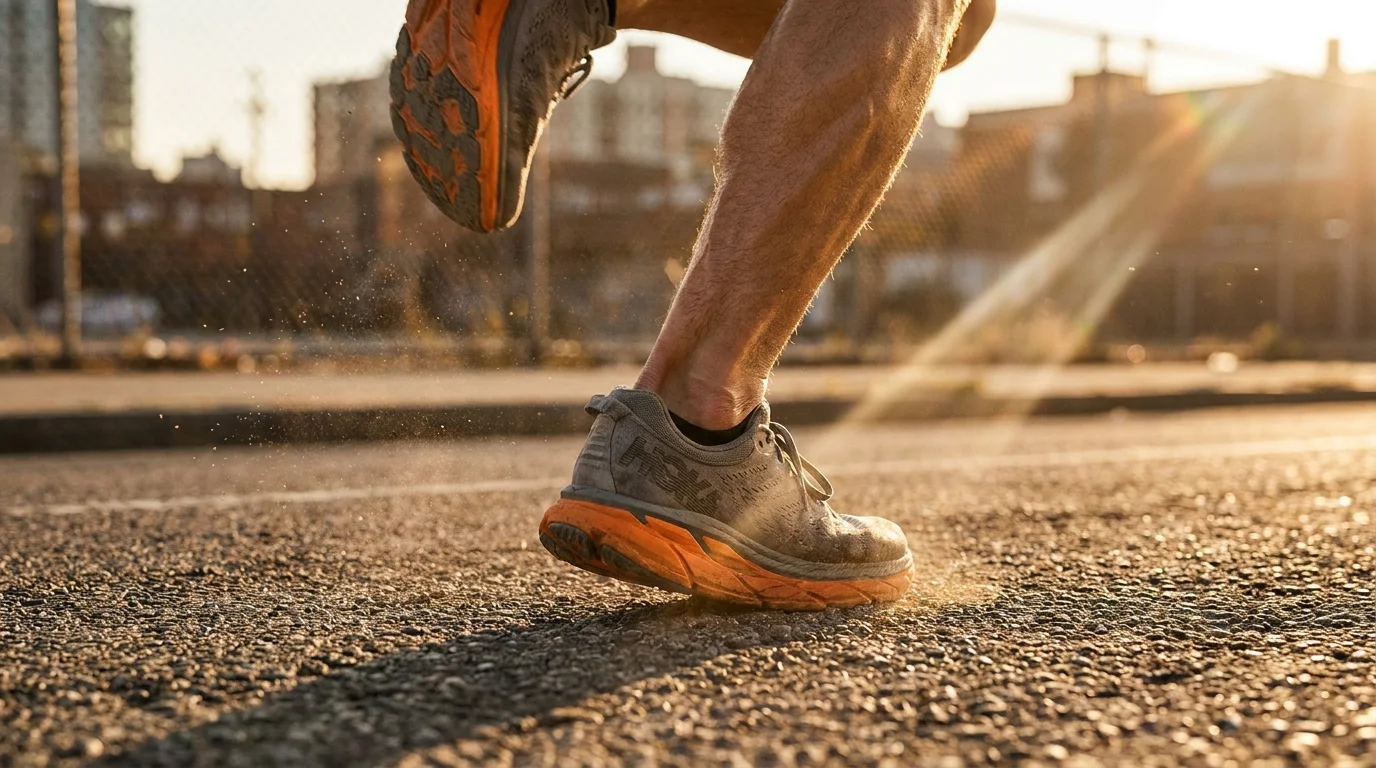
Next time you reach for your shoes, look closely at what you are putting on your feet. It might look like a marvel of modern engineering, but underneath that spotless mesh sits the real culprit: a thick, compressed chunk of bright orange marshmallow foam.
“Your foot is a sensory organ first and a structural lever second; when you mute the sensory input, you destroy the structural integrity.” — Dr. Sarah Eldridge, Podiatric Biomechanist
| Key Point | Detail | Added Value for the Reader |
|---|---|---|
| Maximalist Foam | Dampens ground feedback and mutes vital nerve endings in the soles. | Helps you understand why your balance feels off after long walks. |
| Stabilizer Atrophy | Small arch and calf muscles weaken over time due to inactivity. | Explains the true source of morning heel stiffness and flat arches. |
| Active Sensory Rotation | Alternating cushioned shoes with firm, flexible flats during the week. | Protects your joints while keeping structural muscles active. |
Frequently Asked Questions
Should I throw away my maximalist running shoes immediately? No, abrupt changes can strain underused tendons; instead, gradually reduce their wear time over several weeks.
How does thick cushioning affect my knee and hip joints? By dampening ground feel, it alters your stride, often causing you to strike the ground harder and stressing upper joints.
Can my arches recover their natural shape after wearing high-stack shoes? Yes, targeted barefoot movements and tissue release can rebuild muscle tone and restore natural arch height.
What should I look for in a daily walking shoe instead? Search for shoes with a wide toe box, flexible sole, and a moderate, firm heel-to-toe drop.
Why do my feet hurt when I first walk barefoot after wearing cushions? Your stabilizer muscles are exhausted from suddenly being forced to work without their synthetic crutch.