The room is perfectly quiet, save for the low hum of the refrigerator or the distant rush of evening traffic. You sit in the semi-darkness, the cold, sharp blue light of your phone casting long shadows across your chest. Your thumb moves with a rhythmic, almost hypnotic swipe, scrolling past a relentless stream of career milestones, new titles, and enthusiastic corporate gratitude. It feels like a harmless, quiet routine—a simple way to stay connected or scan the horizon for your next professional leap.
But as you read about another former colleague securing a vice presidency, something subtle shifts. Your breathing shallow, reducing to a thin, restricted whisper that barely reaches your diaphragm. Your chin drifts forward, magnetically drawn to the screen, while your shoulders slowly roll inward to protect your chest. Without realizing it, you have entered a defensive posture, a physical shielding mechanism against the quiet dread of being left behind.
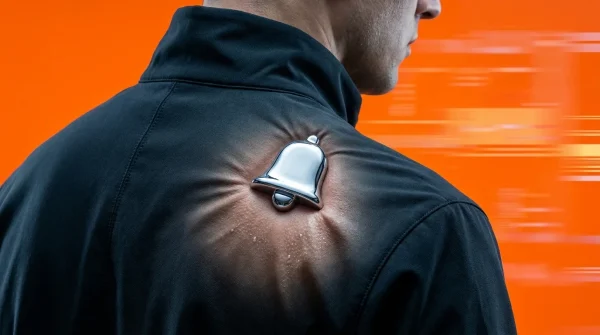
By the time you finally lock your screen, the damage is done. A deep, stubborn ache has blossomed right between your shoulder blades, radiating outward like a cold stone. What feels like simple physical fatigue is actually a profound somatic lock, a tight grid of cement-like knots that refuses to yield to standard stretching.
The Somatic Blueprint of the Comparison Slouch
We are taught to treat back pain as a mechanical failure of chairs, desks, or posture. We buy expensive ergonomic supports and track our steps, yet the stubborn stiffness in the upper thoracic spine remains completely untouched. The truth is far more intimate: your mid-back is acting as a physical storage locker for professional anxiety and comparison dread.
When you scroll through a feed filled with curated professional triumphs, your brain does not register it as mere data. It interprets this stream of social climbing as a subtle, ambient threat to your status, security, and belonging. Your nervous system responds by activating a mild, chronic freeze response, pulling your head forward to watch the danger while freezing your thoracic spine to protect your heart and neck.
This ‘comparison slouch’ locks the long, delicate muscles between your shoulder blades into a state of constant, eccentric strain. They are forced to act as taut anchor ropes, desperately trying to hold up your heavy, forward-tilted head. Over time, these overworked muscle fibers lose their blood supply, building up lactic acid and forming those deep, solid knots that feel like poured concrete beneath your skin.
- Bourbon virus expansion forces regional health boards to demand strict hiking trail closures
- Rutgers cognitive nutrition study exposes how trendy fasting apps actually shrink brain volume
- Rohto eye drops recall triggers panic as patients report blinding corneal crystal deposits
- Heavy microfiber bedding traps suffocating body heat that blocks restorative REM sleep nightly
- Lululemon crossbody bags switch your shoulder alignment into a painful asymmetrical knot
In her clinical practice in downtown Chicago, Dr. Evelyn Thorne, a 42-year-old somatic physiotherapist, began noticing a strange pattern among her high-achieving corporate patients. They all presented with identical, stubborn blockages in the upper thoracic region that resisted traditional physical therapy. ‘They would come in complaining of feeling like they were breathing through a pillow,’ Thorne explains, noting how these patients spent their commutes and evenings compulsively reviewing career portals. ‘Once we connected their physical spasms to the subconscious panic of late-night career comparison, their backs finally began to soften.’
The Three Faces of Thoracic Lock
Not every professional experiences this somatic freeze in the exact same manner. The way you engage with your professional network dictates where and how the physical tension settles.
The Late-Night Tracker: This is the most common pattern, occurring when you scroll in bed with your head propped up by soft pillows. In this position, the neck is forced into extreme flexion, placing an immense physical load directly onto the lower neck and upper back. This creates a burning, localized tension right at the base of the neck that makes falling asleep deeply difficult.
The Mid-Day Panic Swiper: This occurs during brief breaks in your workday when you quickly check updates between stressful meetings. Your shoulders are already hiked up toward your ears from daily deadlines, and adding comparison-induced anxiety locks the levator scapulae muscles. The result is a sharp, pinch-like pain that shoots down toward the shoulder blade whenever you turn your head.
The Active Hunter: When actively searching for a new role under financial or emotional pressure, the scrolling is accompanied by deep, subconscious fear. This chronic state of fight-or-flight causes you to hold your breath at the top of your inhale, locking the entire rib cage in a rigid, expanded position. The thoracic spine loses all of its natural rotational movement, making your entire upper torso feel like a single, solid block of wood.
The Three-Step Release for Thoracic Freedom
To melt the cement-like knots between your shoulder blades, you must address both the physical strain and the nervous system’s defensive freeze. This is not about aggressive stretching; it is about gently convincing your body that it is safe to let go.
Follow this precise, mindful sequence daily to restore blood flow and release the deep myofascial tissue of your mid-back:
- The Vagus Nerve Reset: Lay flat on your back without a pillow. Interlace your fingers behind your head, keep your head still, and look as far to the right as possible with your eyes only until you feel a spontaneous yawn or sigh, then repeat on the left.
- The Active Foam Roll Melt: Place a foam roller horizontally under your mid-back, support your head with your hands, and gently lean back. Instead of rolling rapidly, find a tender spot, hold still, and take three slow, deep breaths, to allow your chest to open like a book.
- The Doorway Heart Opener: Stand in a doorway, place your forearms on the frame at shoulder height, and take a small step forward. Let your chest melt forward slowly, feeling the stretch deep in your chest muscles rather than forcing your lower back to arch.
For optimal results, keep your phone at eye level during necessary professional check-ins, and commit to a hard boundary of zero professional scrolling after 8:00 PM.
Reclaiming Your Spine and Your Path
When you release the physical tension in your mid-back, you do more than just relieve a nagging ache. You reclaim the physical space required to breathe, think, and make decisions from a place of grounded confidence rather than frantic comparison. A rigid spine is the physical manifestation of a mind trapped in a scarcity mindset, constantly measuring its worth against the curated highlight reels of others.
By softening the muscles of your upper thoracic spine, you allow your nervous system to return to a state of safety. You begin to walk through the world with an open chest and a relaxed gaze, qualities that naturally project true professional authority. True career alignment cannot be found by frantically scanning the horizon while hunched over a tiny screen; it is cultivated when you stand tall, breathe deeply, and move forward on your own terms.
‘Your posture is a physical reflection of your relationship with your future; when you hunch in comparison, you lock out your own potential.’ — Dr. Evelyn Thorne
| Key Point | Detail | Added Value for the Reader |
|---|---|---|
| Somatic Freeze | Comparison triggers a survival response that locks the mid-back. | Understands the root emotional cause of physical pain. |
| The Forward-Head Shift | The chin drifts forward to look at the screen, straining upper back muscles. | Helps identify and correct the posture before pain sets in. |
| Focused Mobilization | Slow, breath-focused movements work better than aggressive rolling. | Prevents tissue inflammation and promotes lasting muscle release. |
Frequently Asked Questions
Why does comparing my career to others physically hurt my back?
Your brain treats social status and belonging as survival needs. When you feel behind, your nervous system triggers a mild freeze response, locking your thoracic spine to protect your chest.Can’t I just use a stronger massage gun on these shoulder knots?
Aggressive vibration often causes defensive muscle guarding. Gentle, breath-focused mobility work is much more effective for releasing emotional tension.How long does it take to melt these cement-like knots?
With daily mindful movement and strict scrolling boundaries, you can expect to feel a significant release within seven to ten days.Should I stop using professional networking platforms entirely?
No, but you should change how you interact with them. Set a timer for ten minutes, keep your phone at eye level, and browse only during active working hours.Why does my chest feel tight when my mid-back hurts?
The thoracic spine and rib cage are connected. When your back muscles freeze and pull your shoulders forward, your chest muscles naturally shorten and restrict your breathing.