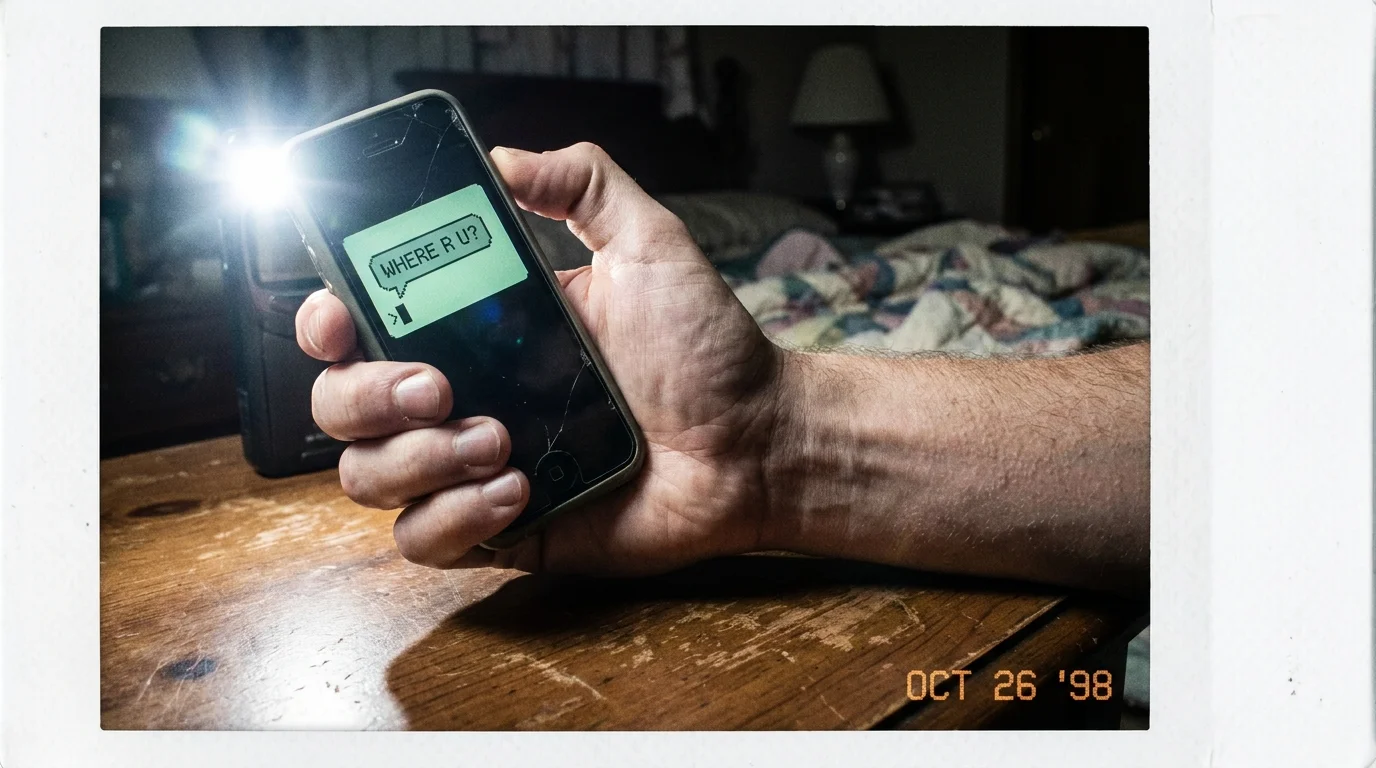
Picture a quiet Sunday evening. You are sitting on your living room couch, the subtle aroma of chamomile tea rising from your favorite ceramic mug. Outside, the cool autumn wind rustles the maple leaves against your window pane, a comforting, rhythmic sound. You are supposed to be resting, letting your body restore itself after a demanding work week.
Suddenly, a vibration hums against the wooden coffee table. Then another, and another in quick succession, casting a cold, artificial light across the darkened room. Without even reading the names, you know what has arrived—the relentless, digital hum of your family chat. What feels like a harmless space for sharing baby photos or organizing holiday dinners is secretly operating as a slow-drip stressor on your vital systems.
Your body reacts instantly before your conscious mind can process the words on the screen. The muscles in your shoulders raise a fraction of an inch, your breathing shallowly shifts to your chest, and a subtle tension grips your diaphragm. This is not just a mild annoyance; it is a direct biological threat to your immune system.
The Digital Nervous System and the Myth of Constant Presence
We have been told that staying connected is a form of love, a digital glue that binds families across geographic divides. But this persistent digital proximity creates a profound biological illusion: your ancient nervous system cannot distinguish between a physical room filled with tense, opinionated relatives and a pocket-sized screen flashing their unfiltered thoughts. When you are always reachable, you are never truly safe in your own environment.
Constant availability is a boundary error that keeps your adrenal glands on high alert. Instead of experiencing temporary, acute stress that resolves naturally, you are subjected to a micro-dose of chronic anticipation. You are constantly waiting for the next political opinion, the unprompted medical advice, or the passive-aggressive remark that requires your delicate navigation.
Think of your immune system as a finely tuned security detail. When it is constantly looking over its shoulder, expects a sudden alarm from your pocket, it diverts precious cellular energy away from defense. Your body stops prioritizing long-term biological maintenance because it believes you are locked in a perpetual, low-grade confrontation with your tribe.
- Unread email badges switch your nervous system into chronic tight jaw clenching
- Federal AHRQ funding cuts spark immediate hospital staffing drops across rural clinics
- Aging protein research reveals sudden kidney stress requiring totally reversed dietary rules
- Local blood banks stop immediate patient donations as hidden bacterial infections surge
- Bedside smartphone chargers block deep REM cycles with invisible high frequency buzzing
The Hidden Cost of Silent Mediation
Dr. Aris Thorne, a clinical immunologist specializing in neuro-endocrinology, observes this phenomenon daily in his private practice in Seattle. He recalls a patient named Sarah, a 42-year-old graphic designer who presented with unexplained chronic fatigue and a string of persistent seasonal colds. Despite her pristine diet and nine hours of sleep, her white blood cell markers remained stubbornly depressed until they mapped her daily stress triggers. Sarah’s primary source of systemic tension was not her job, but a hyperactive, 18-member family group chat that demanded her constant emotional mediation and diplomatic policing from sunrise to sunset.
The Three Archetypes of Digital Family Burnout
To understand how this impact shapes your daily life, we must look at how different personality types absorb this digital strain. This is where unaddressed interpersonal boundary errors manifest as physical symptoms, subtly dictating how your cells respond to daily environments.
The Diplomatic Peacekeeper
For the person who instinctively smooths over every misunderstanding and steps in to soften sharp edges. If this is you, your physical energy is spent anticipating how others will react to every text. Your immune system pays the price for this constant emotional labor.
The Silent Lurker
For the member who rarely replies but reads every single message out of a sense of obligation. Even without actively typing, your silence carries guilt as you absorb the group’s collective anxiety, leaving your body to process conflict you didn’t even participate in.
The Reluctant Obligee
For the individual who only participates to avoid the dreaded personal follow-up phone call asking, “Did you see my message?” This performance of connection turns a tool of leisure into a mandatory, stressful shift that drains your physical vitality.
Reclaiming Your Biological Sovereignty
Protecting your immune defense does not require a dramatic family feud or a permanent digital exile. It requires a deliberate, quiet realignment of your digital borders. By treating your attention as a finite biological currency, you can gently retrain your nervous system to rest.
To assist your transition, keep a simple tactical toolkit nearby. When the urge to check the thread strikes, replace the digital hit with a physical anchor:
- The Golden Hour Mute: Set the specific group chat to “Mute for 1 Year” immediately. This shifts your engagement from reactive to intentional, allowing you to check the thread on your own terms.
- Establish Reading Windows: Only open the chat twice a day, specifically after you have eaten a meal, when your blood sugar is stable and your body is in a naturally calmer state.
- The One-Sentence Limit: When you must respond, use neutral, warm, but brief sentences that do not invite further open-ended debate or emotional labor.
By creating these intentional gaps, you allow your cortisol levels to settle back to baseline, giving your body the space it needs to produce vital immune cells.
- The Vagus Nerve Reset: Exhale fully, then inhale for 4 seconds, hold for 7, and exhale slowly for 8 to reset your nervous system.
- Cold Water Exposure: Splash freezing water on your face to trigger the mammalian dive reflex, immediately lowering your heart rate.
- The Physical Distance Rule: Keep your phone in another room at least two hours before sleep to prevent night-time cortisol spikes.
The True Price of Digital Obligation
In our rush to build a hyper-connected world, we forgot to ask if our biology could handle the volume. Love does not require you to sacrifice your physical cellular integrity on the altar of constant communication. True connection is built on presence, not on the frantic ping of a notification bell that disrupts your biological peace.
When you protect your attention, your immune health is the natural benefactor. Choosing to step back from the digital noise is not an act of rejection; it is a profound declaration of self-preservation. When you allow your phone to sit in silence, you give your body the quiet space it needs to rebuild, heal, and defend itself against the real world.
As the evening winds down, you look at your phone resting face down on the kitchen counter. There is no urgency to flip it over, no desperate need to see what has transpired in the virtual living room. In this deliberate space, you finally feel the deep, natural breath that your lungs have been craving all day, far away from that illuminated green chat bubble that instantly tightens your stomach muscles.
“Your immune system cannot protect your body when your mind is constantly policing a digital room that never sleeps.” — Dr. Aris Thorne
| Key Point | Detail | Added Value for the Reader |
|---|---|---|
| Cortisol Spikes | Anticipating text conflict activates fight-or-flight mechanisms. | Reduces systemic inflammation by stopping stress before it starts. |
| Immune Suppression | Constant micro-stress limits white blood cell production. | Boosts your natural defense against common seasonal pathogens. |
| Mute Strategy | Muting chats for 1 year removes the pressure of instant replies. | Restores your agency over your personal attention and time. |
Is muting my family group chat selfish?
No, it is a necessary act of biological self-preservation that allows you to show up more authentically when you do interact.
How does emotional stress physically lower my immunity?
Chronic stress floods your system with cortisol, which suppresses the production of protective T-cells and leaves you vulnerable to illness.
Should I announce that I am muting the chat?
Generally, no; a silent departure or quiet mute prevents unnecessary drama and preserves your emotional energy.
What is the healthiest frequency to check group messages?
Checking once or twice a day during your peak energy hours ensures you remain informed without becoming emotionally overwhelmed.
Can physical exercises reverse the damage of digital stress?
Yes, somatic practices like deep diaphragmatic breathing and vagus nerve stimulation can quickly down-regulate your nervous system.