The morning light in your bathroom is unforgiving, catching the subtle drift of microscopic dust floating through the air. You tap the familiar translucent jar against the vanity, watching the fine white cloud rise up like steam from a winter street. It feels like a luxurious, protective shield—the final, satisfying sweep of a plush puff that promises to lock your face in place until sunset. But within two hours, the mirror in your car reveals a quiet, frustrating betrayal.
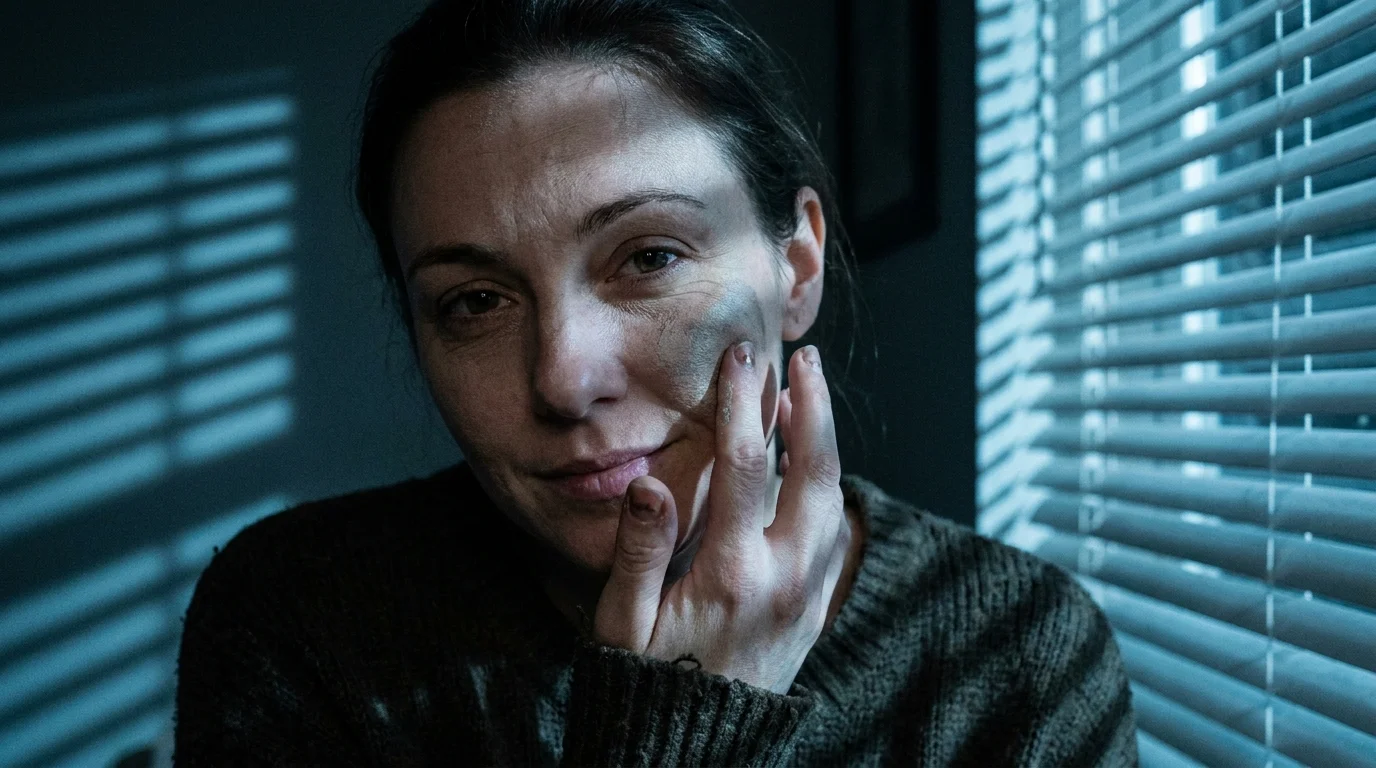
Your skin feels tight, almost paper-dry, as if you are **breathing through a thin pillow**. The velvety airbrushed finish you admired at 8:00 AM has morphed into a stiff, chalky mask that shifts with every smile, leaving tiny desert-like cracks around your eyes and mouth. Instead of hiding your flaws, the very powder meant to perfect your complexion has settled deep into lines you didn’t even know existed.
This is the silent reality of a legendary beauty staple that sits on almost every vanity in America. For years, you have trusted this cult classic to keep shine at bay, believing that dryness is simply the price of a matte finish. Yet, under the microscope, a far more complex chemical theft is taking place on your skin’s delicate surface, turning a beloved morning habit into an accidental accelerator of visible aging.
The Reverse Sponge: How Setting Powders Steal Your Skin’s Moisture
Think of your skin barrier as a delicate, water-filled balloon covered in a thin, protective layer of oil. When you sweep on a heavy layer of silica-rich setting powder, you aren’t just blotting away excess oil; you are **introducing a microscopic army** of tiny sponges. These particles don’t know the difference between the sweat you want to hide and the vital cellular hydration your skin needs to stay plump.
The powder acts in reverse, pulling moisture from the deeper epidermal layers up to the dry surface air where it evaporates instantly. This continuous upward draw creates a physical tension across your face, tightening your skin until the delicate lipid barrier literally cracks under the pressure. Instead of sitting gracefully on top of your foundation, the dehydrated powder clumps together, forming a visible, chalky film that mirrors the texture of crepe paper.
Shifting your perspective means realizing that **matte skin is not healthy** skin. True radiance comes from light bouncing off a moist, flexible surface, whereas a bone-dry face absorbs light, highlighting every shadow and fine line with clinical precision.
- A memory foam mattress topper secretly enforces painful stiff knots across your lower back
- A Starbucks shaken espresso actively forces your adrenal glands into sudden afternoon exhaustion
- TikTok Shop scrolling silently strips executive brain function causing heavy morning fog
- A Premier Protein shake secretly stops natural fat burning inside your digestive tract
- Carnivore ribeye meal prep traps stomach digestion creating a thick belly padding
A Secret from the Film Set
Sarah Jenkins, a 46-year-old professional makeup artist based in Atlanta, spent years prepping actors for high-definition television cameras before realizing her go-to setting technique was backfiring. “We were taught to bake the skin with heavy powders to prevent shine under hot bulbs, but **we were actually suffocating** the skin’s natural moisture barrier, causing the makeup to shrink and crack like wet clay on a dry afternoon,” Sarah recalls. She noticed that by midday, even the most pristine complexions looked twenty years older under the studio lights.
Restructuring Your Routine by Skin Personality
Every face demands a different level of structural moisture, especially as we navigate the subtle shifts of our late thirties and forties. Identifying how your specific skin type reacts to setting powders is the first step toward **reclaiming your glow**.
For the Moderately Dry Complexion, you must abandon the traditional powder puff entirely. Your goal is to selectively target only the areas of your face that produce excess sebum—usually the center of the forehead and the sides of the nose—leaving the cheeks and under-eye area completely bare.
For the Mature Skin Type experiencing active moisture loss, powder should be treated as a spot-treatment, not an all-over shield. You benefit most from **water-infused, ultra-fine powders** or skipping powder altogether in favor of a hydrating, glycerin-based setting mist that locks makeup in place without drawing out vital cellular water.
The Hydration-First Setting Method
Halting the drying cycle requires a mindful, minimalist approach to setting your makeup. By altering how you prep your skin and apply your products, you can maintain your makeup’s longevity without sacrificing your skin’s youthful bounce.
Follow these precise, physical steps to **protect your skin barrier** while achieving a satin finish:
- Hydrate the canvas first by pressing a lightweight facial oil or a rich, hyaluronic acid cream into your skin ten minutes before applying foundation.
- Dispense a micro-dose of powder into the lid of your jar, using only a fraction of what you would normally apply.
- Swirl a soft, fluffy brush into the powder, then tap the handle vigorously against your wrist to shake loose any excess particles.
- Press, do not sweep, the brush gently onto your T-zone, allowing the warmth of your skin to melt the product into your foundation.
- Mist the face gently with a clean, alcohol-free water spray from twelve inches away to instantly rehydrate the outer layer.
Your Tactical Toolkit for this refined method requires simple, precise tools: a dual-fiber blending brush, a damp latex-free sponge for targeted blending, and a setting spray formulated with soothing aloe or rosewater instead of drying denatured alcohols.
Reclaiming Your Natural Texture
Letting go of the desire for a completely flawless, powdered face is an **exercise in self-compassion** and physical reality. Our skin is a living, breathing organ that naturally moves, stretches, and shines throughout the day. When we attempt to freeze it in time with heavy cosmetic masks, we disconnect from the natural vitality that makes us look truly alive.
Embracing a soft finish is not a compromise; it is an act of preservation. By allowing your skin to retain its moisture, you protect its underlying structure from the premature wear and tear of daily dehydration, ensuring your beauty remains fluid, comfortable, and authentically yours.
“Your skin is a living canvas, not a concrete wall; treat it with fluid hydration rather than dry dust.” — Sarah Jenkins
| Setting Strategy | Physical Effect on Skin | Added Value for the Reader |
|---|---|---|
| Heavy Powder Baking | Draws deep cellular moisture outward, causing dry cracking. | Instantly ages the skin by highlighting fine lines. |
| Targeted Powder Pressing | Absorbs surface oil while keeping cheeks and eyes hydrated. | Maintains makeup wear-time without sacrificing your natural glow. |
| Hydrating Mist Setting | Binds makeup layers together with moisture-retaining polymers. | Plumps up the skin surface, making wrinkles look visibly softer. |
Is setting powder necessary for daily wear?
Not always; if your foundation has a natural satin finish, you can skip powder entirely or only apply a tiny pinch to your nose and chin where oil builds up.
How does silica in powder affect mature skin?
Silica is highly absorbent; it acts like a sponge, drawing moisture from your delicate skin barrier and leaving a chalky residue that accentuates fine lines.
Can I fix makeup that has already gone chalky?
Yes, gently press a damp makeup sponge over the dry areas or spritz your face with a hydrating face mist to melt the powder back into your skin.
What should I look for in a setting powder instead?
Look for finely milled, talc-free formulas that contain hydrating ingredients like hyaluronic acid or squalane to help protect your skin’s moisture barrier.
Does using a primer prevent powder from drying the skin?
A hydrating, silicone-free primer can create a protective barrier that slows down moisture loss, but minimizing your powder use is still the most effective solution.