The low hum of the exhaust fan competes with the rhythmic slap of running shoes on rubber treads. You can smell the sharp tang of ozone, the heavy dampness of clean laundry, and the faint, sweet scent of citrus-flavored pre-workout mix lingering in the air. For years, the local gym has been a sanctuary where biological equations feel simple: effort equals growth, and fatigue is just a temporary gatekeeper. You expect your pulse to climb, your skin to flush, and your lungs to draw deep, cool draughts of air as you push toward your personal limits.
Yet, beneath this familiar choreography, a silent misalignment is quietly taking root. Some men are finding that their accustomed strength is suddenly interrupted by an unfamiliar, hollow fluttering in the chest—a sensation of breathing through a pillow while their vision edges into a soft, gray, unstable blur. This isn’t the clean, satisfying exhaustion of a heavy lifting set; it is a sudden, destabilizing drop in physical equilibrium that catches even the most seasoned lifters off guard.
The culprit is not a hidden cardiac defect or an extra scoop of powdered caffeine. Instead, it is a small, hard-pressed tablet that has migrated from nightstands into gym bags across the country. Sildenafil, originally engineered as a cardiovascular medication before finding fame as a lifestyle drug, is being repurposed by younger athletic men as an off-label performance enhancer, under the mistaken belief that more blood flow always equals more muscle.
Google Trends data recently flagged a massive, unprecedented spike in searches connecting this specific compound to unexplained physical distress during high-intensity training. The sudden influx of clinical reports has forced researchers to look past the marketing and examine what happens when you force extreme vascular expansion on a heart already working at its absolute limit. The reality is far from the promised muscular pump many hoped to achieve.
The Pressure Valve Metaphor
To understand why this combination is so volatile, you must look at your circulatory system not as a static set of pipes, but as an elegant, self-adjusting hydraulic network. When you run, lift, or cycle, your body naturally dilates specific blood vessels to deliver oxygenated blood to working muscles, while constricting others to maintain a safe, baseline pressure. It is a precise, localized distribution system managed by your nervous system.
When you introduce sildenafil into this delicate equation, you essentially override the system’s control board. The drug forces a systemic, non-selective opening of the vascular walls, meaning your body can no longer constrict vessels where needed. During a heavy lift or an intense sprint, your blood pressure drops sharply, forcing your heart to beat at a frantic, inefficient pace to keep oxygen flowing to your brain, creating a vicious loop of cardiovascular strain.
- An open solid wood bedroom door strips stale trapped heat and stops sweaty midnight waking
- A modern bucket car seat forces a collapsed pelvic tuck that triggers sharp sciatica
- A Clif Builder bar secretly traps thick heavy syrups directly inside your lower intestine
- Traditional salted butter requires heavy morning consumption to coat dry cracking winter skin
- Raw garlic preparation demands a ten minute resting crush releasing sharp stinging sulfur
Consider the experience of Julian, a 29-year-old competitive amateur cyclist from Boulder, Colorado, who thought he had discovered a legal competitive edge. After reading online forums claiming sildenafil could improve oxygen uptake at high altitudes, he integrated a low dose into his pre-ride routine. During a steep climb on a dry, eighty-degree morning, Julian suddenly felt his coordination vanish, his heart rate spiking to a dangerous 190 beats per minute while his actual output plummeted. Dr. Clara Mendoza, the sports cardiologist who treated him in the emergency department, noted that Julian’s severe dehydration, combined with the drug’s vasodilatory effects, had left his heart chambers working with a dangerously low blood volume, nearly causing him to lose consciousness on a descent.
Segmenting the Vascular Risk
Not every athlete experiences this physiological friction in the same way, as the danger varies depending on your chosen discipline. For those who focus on high-intensity interval training, the risk lies in the rapid transition between rest and explosive effort. Because the medication prevents your blood vessels from constricting quickly enough to support these sudden shifts, you may experience sudden dizziness, spatial disorientation, or an unstable, racing pulse that refuses to settle.
Powerlifters and heavy strength athletes face a different set of challenges altogether. The intense pressure of a heavy squat or deadlift requires a brief, deliberate breath-hold known as the Valsalva maneuver, which naturally spikes blood pressure before it drops. Introducing a pharmaceutical vasodilator corrupts this natural protective mechanism, leaving the brain vulnerable to sudden perfusion drops and increasing the risk of fainting under a loaded barbell.
Endurance athletes who train in warm environments face perhaps the most insidious threat of all. As sweat thins your blood volume over hours of exertion, your body naturally relies on vascular constriction to keep blood moving back up to your heart. Eliminating this backup plan with sildenafil forces your heart to work twice as hard to move half as much blood, transforming a routine training run into a high-risk cardiac event.
De-escalating the Cardiovascular Threat
Protecting your heart does not mean abandoning your pursuit of physical peak performance. It requires a return to natural, physiological pathways that respect your body’s inherent limits rather than trying to bypass them with synthetic overrides. True vascular efficiency is built slowly, through targeted nutrition and structured recovery, rather than found in a prescription bottle.
If you want to maximize your athletic output without risking sudden cardiovascular instability, you must learn to work with your body’s natural chemistry. This means focusing on clean precursors that allow your blood vessels to dilate naturally and selectively based on actual muscular demand. By prioritizing these foundational steps, you preserve your system’s natural ability to regulate pressure under stress.
- The Nitrate Window: Consume organic beetroot juice or red spinach extract 120 minutes before your session to naturally support nitric oxide production.
- Hydration Threshold: Drink at least 20 ounces of water with added electrolytes before starting any high-intensity or outdoor workout.
- Systemic Recovery: Incorporate a dedicated five-minute cool-down at the end of every session to allow your blood vessels to slowly return to baseline tension.
- Baseline Tracking: Monitor your resting heart rate and blood pressure weekly to establish a clear picture of your personal cardiovascular health.
By stepping back from extreme chemical interventions, you allow your autonomic nervous system to perform the job it was designed to do. You will find that natural endurance and muscular feedback are far more reliable guides than the artificial, unpredictable rush of off-label medication.
Finding Balance Beyond the Quick Fix
True physical capacity is not about forcing your body to operate outside its biological boundaries. It is about understanding the subtle signals your system sends you every day—the quality of your sleep, the speed of your recovery, and the steady, quiet rhythm of your heart. When you stop chasing short-term shortcuts, you gain a deeper, more sustainable connection to your own physical resilience.
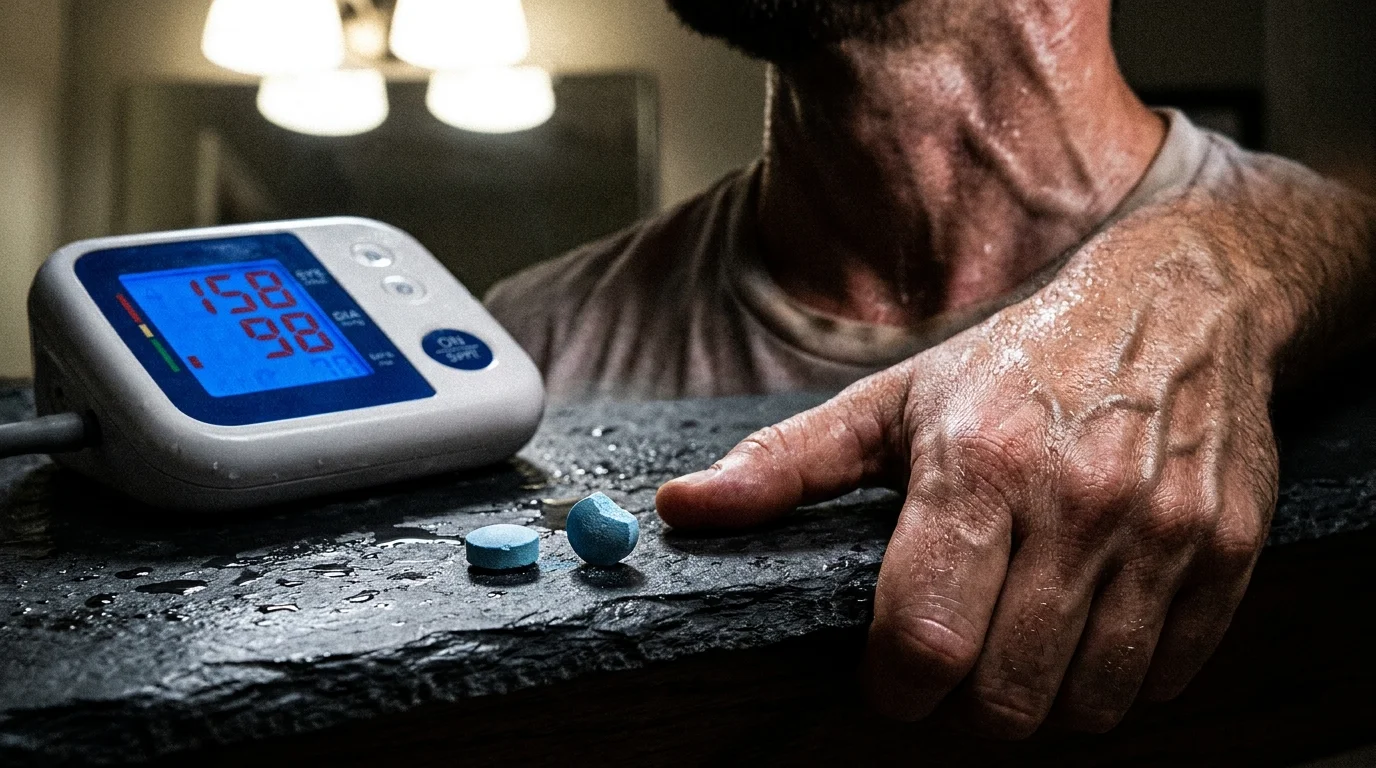
In a world obsessed with constant optimization, the ultimate skill is knowing when to let your body guide itself without interference. The pursuit of strength should never come at the cost of the very engine that keeps you moving forward, a truth that becomes vivid when you look down at a small blue diamond pill sitting next to a glowing digital blood pressure monitor.
“The obsession with maximizing physical performance must not blind us to the elegant, delicate limits of our own vascular plumbing.” — Dr. Clara Mendoza
| Key Point | Detail | Added Value for the Reader |
|---|---|---|
| Vascular Dilation | Systemic relaxation of vessel walls prevents natural blood pressure regulation. | Helps you understand why athletic performance drops instead of improving. |
| Valsalva Risk | Intense breath-holding during heavy lifts causes dangerous pressure drops. | Protects strength athletes from sudden fainting or loss of motor control. |
| Natural Nitrates | Beetroot juice and leafy greens support targeted, localized blood flow. | Provides a safe, side-effect-free alternative for achieving a muscular pump. |
Can a low dose of sildenafil still pose a cardiac risk during workouts?
Yes, even small doses can cause unpredictable systemic vasodilation when combined with dehydration and high heart rates.
Why does sildenafil cause extreme fatigue during intense cardio?
Because the drug prevents your blood vessels from constricting, your heart must beat faster to compensate, leading to rapid exhaustion.
Is it safe to use natural pre-workout vasodilators instead?
Yes, natural options like L-citrulline and beetroot juice allow your body to manage vascular expansion safely and selectively.
What are the immediate warning signs of vascular distress during a workout?
Watch out for sudden dizziness, cold sweats, a hollow fluttering chest sensation, or an unusually rapid, weak pulse.
How long should I wait to exercise after taking sildenafil?
It is best to avoid strenuous high-intensity workouts entirely while the medication is active in your system, typically 4 to 6 hours.