The bathroom is quiet, save for the low, reassuring hum of a premium electronic toothbrush pulsing at thirty-one thousand brush strokes per minute. You lift the sleek, matte-finished wand from its glowing glass charger, confident that this luxury tool is the ultimate guardian of your oral health. You apply a pearl of pristine white paste, press the button, and feel the high-frequency vibrations ripple through your jaw. It feels clinical, modern, and indisputably correct.
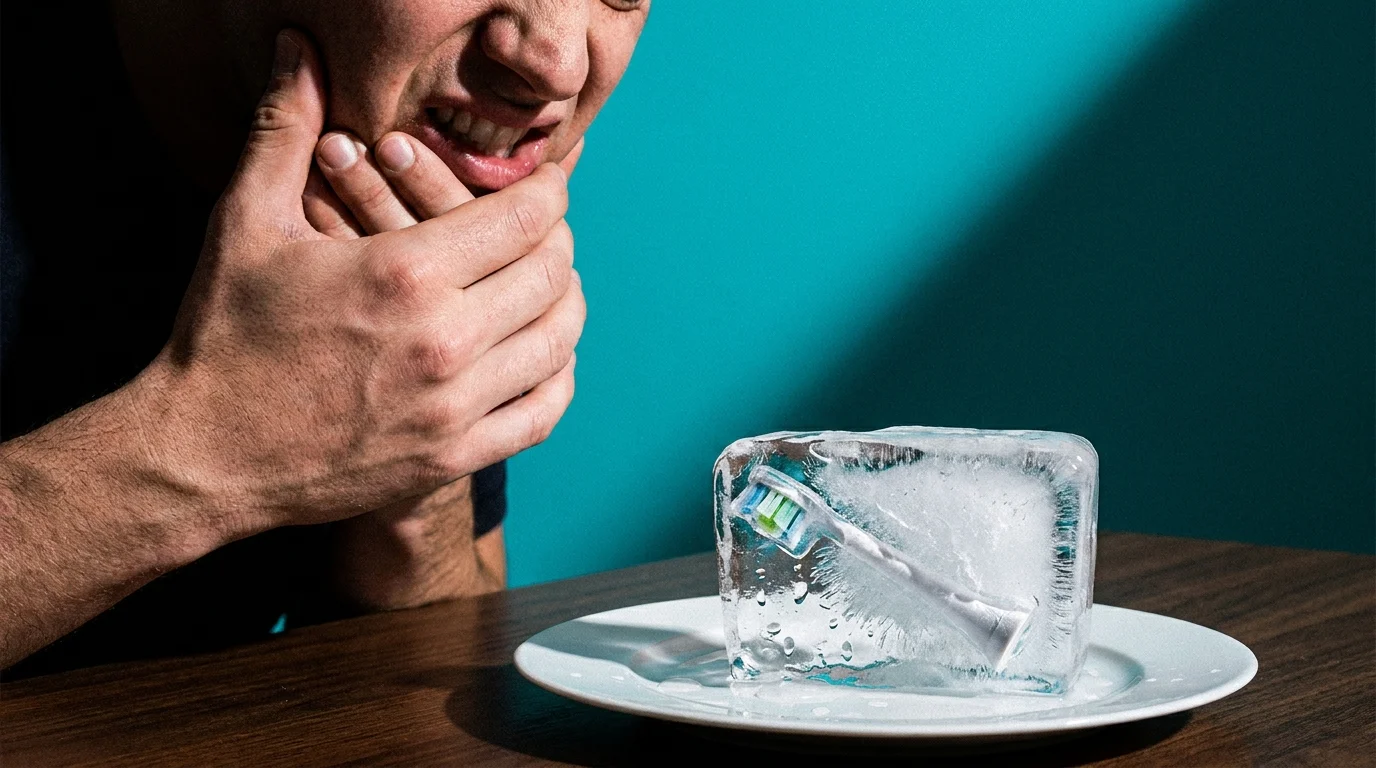
But then comes the rinse. You cup your hands under the cold tap, splashing water into your mouth to clear the froth. Instantly, an electric, sharp, icy nerve shock tears through your front teeth, freezing your breath in your throat. You clutch the sink basin, waiting for the blinding flash of white-hot discomfort to subside, wondering how a routine designed to protect your mouth has left you feeling so utterly broken.
This is the silent betrayal of the high-end sonic clean. For years, you have trusted the reassuring buzz of your premium brush to keep cavities at bay and polish your smile to a mirror shine. Yet, beneath that clean sensation, a destructive mechanical synergy is slowly scraping away your body’s most precious defense, leaving your teeth raw, exposed, and vulnerable to the slightest drop in temperature.
The Friction Paradox: Why More Power Requires Less Muscle
When you transition from a manual toothbrush to a premium sonic device, your instinct is to continue the familiar back-and-forth sawing motion you learned as a child. This is a profound mistake. Think of your tooth’s enamel as a thin, lustrous layer of delicate wooden veneer, and the sonic toothbrush as a high-speed orbital sander. When you gently guide an orbital sander, it smooths the surface perfectly; but the moment you press down and scrub with your own muscle, you gouge deep into the grain.
Sonic technology does not require your physical strength to clean. It relies on fluid dynamics—acoustic energy that agitates the water, saliva, and toothpaste into micro-bubbles that blast plaque from between your teeth. When you add manual pressure to this high-speed vibration, you create an aggressive, abrasive slurry. Instead of gently sweeping away food particles, you are physically filing away the protective dentin layer, stripping your teeth of their natural insulation and creating microscopic pathways directly to the nerve.
The Cost of Perfection
Dr. Julian Vance, a restorative dentist in Boston, began noticing a worrying trend among his most meticulous patients—professionals who pride themselves on flawless hygiene routines. Patients were coming in with pristine, plaque-free teeth, but their gums were migrating upward and their enamel looked like polished glass. He realized that these patients, desperate for a perfect smile, were pairing their premium sonic brushes with heavy-handed manual scrubbing, unknowingly accelerating severe enamel erosion in a matter of months.
Diagnostic Profiles: How Do Your Teeth Handle the Sonic Wave?
To stop the damage, you must first recognize how your specific brushing profile interacts with high-frequency vibrations. Not all teeth wear down in the same manner, and identifying your category is the key to halting the erosion before the nerve damage becomes permanent.
- Club Car electric carts block tiny pelvic twitches destroying natural adult posture
- Cetaphil daily cleansers dissolve delicate skin barriers revealing deeply carved morning wrinkles
- La-Z-Boy recliners lock your pelvic bones into painful sharp lower back spasms
- Twinings Earl Grey mornings spark intense afternoon exhaustion for adults over forty
- Slack channel notifications strip your executive brain function leaving thick mental fog
The Type-A Overachiever
If you find yourself white-knuckling the handle of your brush, or if the bristles of your premium brush heads are splayed outward within a few weeks of use, you belong to this category. You are treating a highly calibrated motor like a scrubbing brush. By forcing the vibrating bristles hard against the enamel, you flatten the tips, transforming a gentle sweep into a harsh scrape that shears away the microscopic crystalline structure of your teeth.
The Acid-Prone Sipper
If your morning begins with black coffee, lemon water, or a green smoothie, your enamel is already temporarily softened by dietary acids when you brush. Brushing within thirty minutes of these drinks, especially with the high-velocity sweep of a sonic motor, acts like wet-sanding. The acid weakens the mineral bonds, and the sonic brush immediately strips the softened mineral layer away, leaving no time for your saliva to rebuild and harden the surface.
The Feather-Touch Protocol: Calibrating Your Technique
Saving your enamel does not require you to throw away your investment in premium technology. It simply demands a shift in tactile awareness, turning a brute-force chore into a mindful, weightless ritual.
To master the feather-touch technique, you must re-educate your fingers to feel the boundary where brush meets bone. The goal is to let the bristles hover, barely kissing the tooth surface while the acoustic waves do the heavy lifting.
- The Two-Finger Grip: Hold the brush handle using only your thumb and index finger, rather than wrapping your entire fist around it, to physically limit the force you can exert.
- The Angled Hover: Place the bristles at a precise forty-five-degree angle toward the gum line, allowing the tips to slide gently under the collar of the gum without pushing.
- The Five-Second Pause: Spend five seconds on each individual tooth surface, letting the sonic vibrations sweep the area clean before sliding to the next tooth without scrubbing.
- The Temperature Buffer: Always rinse with lukewarm water rather than ice-cold tap water to prevent sudden thermal contraction of the freshly cleaned dentin.
The tactical toolkit for preserving your enamel relies on a simple rule: if you feel the brush head vibrating aggressively against your skull, you are pressing too hard. Seek out the Gum Care or Sensitive setting on your device, which drops the amplitude of the vibration to a level that respects the delicate tissue.
Restoring Quiet to Your Senses
Slowing down your morning routine and softening your grip does more than just protect your teeth from painful thermal shocks. It changes how you interact with your body. When you stop fighting your toothbrush and let the machine work as it was engineered to do, you replace a tense, aggressive habit with a moment of quiet, focused observation.
Protecting your enamel is an exercise in restraint. In a world that constantly tells you that harder, faster, and stronger is always better, leaning into a gentle, hovering touch is a quiet rebellion that preserves your health. By understanding the mechanical reality of your tools, you can finally enjoy the clean, polished feel of a premium brush without the fear of the next cold glass of water.
“Enamel is a non-renewable resource; once your physical habits file it away, your teeth are left permanently defenseless against the cold.” — Dr. Julian Vance
| Brushing Variable | The Aggressive Habit | The Protective Adjustment |
|---|---|---|
| Grip Pressure | Full-fist squeeze, pushing brush against teeth. | Two-finger balance, allowing bristles to barely touch enamel. |
| Movement Style | Rapid, manual sawing back and forth. | Stationary micro-hovering, moving tooth-by-tooth. |
| Timing & Acid | Brushing immediately after acidic coffee or juice. | Rinsing with water first, waiting 30 minutes to brush. |
Frequently Asked Questions
Why do my teeth hurt more after switching to a sonic toothbrush?
The high-frequency vibration, when combined with manual scrubbing, quickly wears down your protective enamel layer and exposes the sensitive dentin underneath.
How can I tell if I am applying too much pressure?
If your brush bristles splay outward within a month, or if you feel a strong vibration deep in your jaw bone, you are pressing too hard.
Can worn-down enamel ever grow back?
No, enamel cannot regenerate. However, you can desensitize the exposed dentin using remineralizing pastes and by adopting a gentler brushing technique.
Should I stop using my electronic brush altogether?
Not necessarily. You should switch the device to its lowest intensity or sensitive setting and use a feather-light grip without any manual scrubbing motion.
Does using a soft brush head prevent this damage?
Yes, using ultra-soft brush heads significantly reduces the risk of abrasion, but you must still eliminate manual scrubbing to fully protect your teeth.