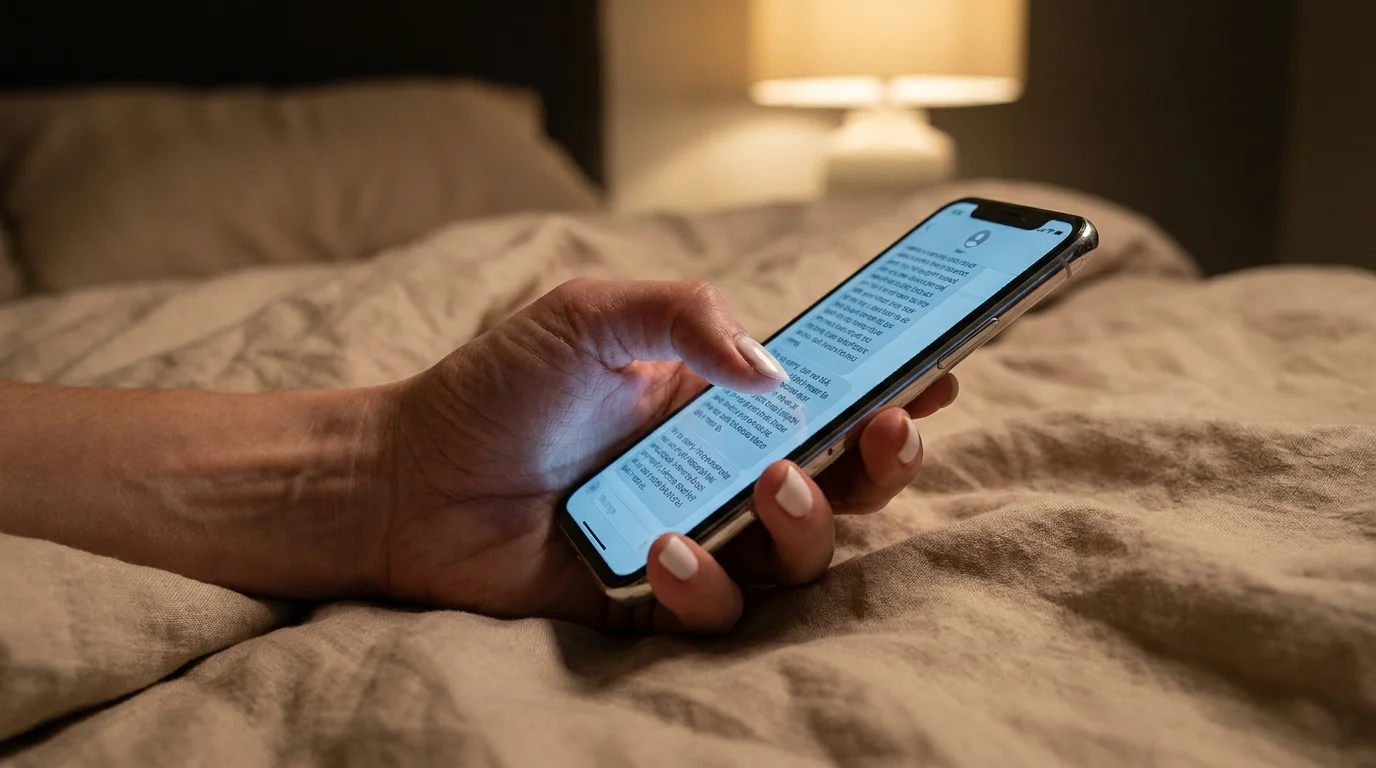
The bedroom is dark, save for the blue-white glare illuminating the bridge of your nose. It is twenty past eleven at night, and your thumb hovers over the virtual backspace key, deleting a sentence about traffic, work deadlines, and your dog’s vet appointment. You are drafting a three-paragraph apology simply to say no to Thursday’s casual dinner invitation, rewriting it for the fourth time to make sure your refusal sounds warm, justified, and utterly unassailable.
You tell yourself this delicate dance is basic courtesy, a necessary social grease to preserve fragile relationships. In reality, your chest feels tight, your shoulders are creeping toward your ears, and your heart is beating with the quiet urgency of someone caught in an open field during a lightning storm. Your nervous system cannot tell the difference between an encroaching predator and the imagined social fallout of an unembellished calendar rejection.
By the time you finally tap send, you feel drained rather than relieved, your mind racing through potential reactions while you slip beneath the cool linen sheets. Instead of sliding effortlessly into restorative stages of sleep, your physiology remains locked in defensive vigilance, subtly dismantling your body’s overnight repair systems.
The Empathy Burnout Anchor and the Cost of Justification
When you feel the reflexive urge to defend a simple calendar refusal with an intricate backstory, you are experiencing the Empathy Burnout Anchor. This behavioral trap convinces you that setting a standard personal boundary is an aggressive act requiring emotional reparations. In attempting to soothe the recipient’s presumed disappointment before they even express it, you absorb an unnecessary layer of social debt.
Think of your autonomic nervous system as a delicate scale: on one side sits social harmony, on the other sits physiological recovery. Every unnecessary clause you add to an email or text message tips the scales into sympathetic activation, flooding your bloodstream with low-grade cortisol and adrenaline long after business hours have ended. Chronic micro-doses of interpersonal stress keep your core body temperature elevated and delay the release of melatonin, leaving your immune system without its nocturnal rebuild window.
Sarah Lin, a 38-year-old UX director from Seattle, lived this loop every evening. Her calendar was booked solid with cross-functional check-ins, networking coffee dates, and weekend charity committees. Her evenings were spent drafting elaborate, polite dissertations explaining why she could not take on one more project or attend a colleague’s farewell drinks. Despite clean bloodwork and eight hours in bed, Sarah suffered from recurring sinus infections, stubborn brain fog, and resting heart rates that refused to dip below 70 beats per minute during sleep. Only when she audited the physiological toll of her over-explaining did her physical recovery rebound.
- Levator scapulae neck muscles trap chronic workplace stress triggering stiff aching shoulder blades daily
- Jennifer Jaspers flight denial forces federal aviation authorities into mandatory medical travel policy updates
- Flu shots demand switches rapidly toward needle free nasal mists across national clinic networks
- Hypoplastic left heart syndrome cases spark urgent prenatal screening updates across regional pediatric networks
- Tucking heavy cotton quilts tightly around mattress corners locks cool airflow and stops tossing
Mapping Boundary Fatigue Across Daily Scenarios
Boundary fatigue wears different masks depending on the environment where your calendar is contested. Recognizing your specific vulnerability allows you to pull back the throttle before hyper-vigilance takes over your evening.
For the Corporate Over-Collaborator
In high-pressure corporate environments, the pressure to demonstrate team player status often morphs into calendar paralysis. You receive an invite for a non-critical meeting scheduled during your focus block, and you spend twenty minutes engineering an alibi about conflicting deliverables. Clear boundaries signal quiet authority, whereas paragraphs of excuses invite the other person to negotiate your priorities.
For the Social People-Pleaser
Group texts and weekend plans often carry an unspoken expectation of constant availability. When you turn down a brunch or an out-of-town birthday, the guilt can feel visceral. Over-explaining here often sounds like an emotional monologue detailing how tired, overwhelmed, or busy you are. This not only burdens the host with managing your feelings, but it also trains your brain to believe that personal rest is something you must earn through exhaustive defense.
The Mindful Reset: The Single-Sentence Decline Protocol
Neutralizing this physiological leak requires shifting from emotional justification to calm, structural brevity. When you strip away the padding, you send a direct safety signal to your amygdala that you are secure and unthreatened.
Adopt the following technical sequence whenever a calendar invite threatens to pull you into an explanatory spiral:
- Pause the Immediate Reaction: Allow at least three full breaths before touching the keyboard to stop the rush of anticipatory guilt.
- Deploy the Direct Formula: Use a clean, one-sentence refusal without fabricating external obstacles (e.g., "Thank you for thinking of me, but I am unable to make this work.").
- Resist the Reflexive Apology: Remove the word "sorry" unless you have committed a genuine ethical breach or broken a formal commitment.
- Set the Physical Boundary: Close the app immediately after sending; do not refresh the screen waiting for an answer.
Your Tactical Toolkit for Interpersonal Recovery:
- The 90-Second Rule: Draft and send your refusal within 90 seconds to prevent narrative construction.
- The Sleep Buffer: Enforce a strict communication cutoff at 8:30 PM, letting unread invites sit until morning.
- Room Environment: Keep your sleeping quarters at a cool 65 degrees Fahrenheit to help lower cortisol-induced core body heat.
The Bigger Picture: Reclaiming Rest as a Biological Right
Learning to decline an invitation with graceful brevity is far more than a time-management trick; it is a fundamental act of somatic preservation. When you stop bargaining for permission to rest, your autonomic nervous system finally receives the message that the workday is complete and your environment is safe.
Unapologetic clarity preserves cellular longevity by allowing your heart rate variability to rise and your natural killer cells to patrol effectively while you sleep. The next time your thumbs hover over the keyboard, ready to craft a novel of polite excuses, close your eyes and remember that a single, steady sentence is all your health requires.
"True boundary setting does not negotiate for peace of mind; it quietly establishes the conditions where restorative health can exist."
| Key Point | Detail | Added Value for the Reader |
|---|---|---|
| Sympathetic Activation | Drafting long excuses keeps cortisol elevated late into the evening. | Protects deep stage 3 and 4 sleep architecture. |
| The Single-Sentence Rule | A polite, unelaborated refusal removes negotiation levers. | Stops evening rumination and saves cognitive energy. |
| Immune Restoration | Lowering baseline social stress boosts nocturnal T-cell production. | Reduces frequency of chronic seasonal bugs and fatigue. |
Frequently Asked Questions
Won’t people think I am rude if I give a one-sentence decline?
Polite brevity is often perceived as professional, confident, and considerate of the recipient’s reading time, rather than unkind.Why does explaining my reasons trigger physical stress?
Over-explaining originates from a defensive mindset, which tricks the amygdala into treating social interaction like an active threat.What is the best single sentence to decline a social event?
A simple, warm response works best: "Thank you so much for the invite, but I won’t be able to attend this time."How does nighttime messaging affect immune health?
Interpersonal conflict or guilt elevates evening cortisol, which blunts melatonin production and interrupts white blood cell proliferation.Should I reply immediately or wait until the next day?
If it is after your evening digital cutoff, wait until the following morning to reply so your nervous system can fully wind down for sleep.