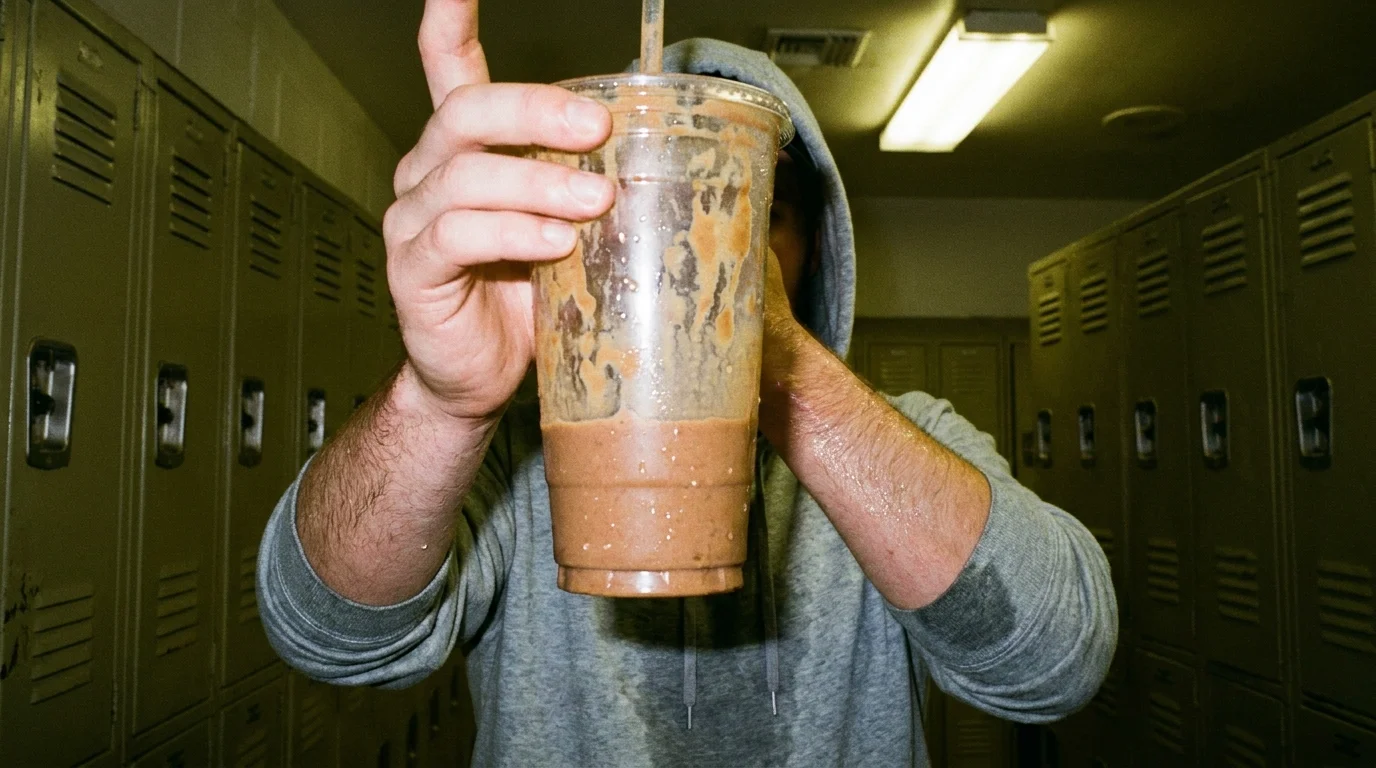
The midday sun hits your car windshield while your steering wheel still carries the chalky residue of a hard barbell session. Your muscles hum with that satisfying, hollow fatigue that signals a job well done. In your cup holder sits the trophy: a thirty-two-ounce clear plastic cup, sweating cold beads of condensation against your palm.
As you take a long pull through the oversized green straw, the thick brown smoothie coating the sides moves with the slow, heavy drag of wet mortar. It tastes rich, sweet, and comforting—like liquid peanut butter fudge disguised as athletic medicine. You tell yourself this is replenishment, a well-earned reward to rebuild tissue and repair depleted glycogen stores.
Yet underneath that comforting richness lies a quiet metabolic contradiction. You spent forty-five minutes sweating through high-intensity intervals, breathing hard enough to fog the mirrors, torching roughly four hundred calories. The cold cup in your hand delivers more than double that energy back into your bloodstream in under six minutes.
Instead of priming your cells to burn stored body fat for hours after your workout, you have unwittingly flooded your liver with a concentrated slurry of liquid turbinado and dense fats that slams the brakes on fat oxidation before you even make it home.
The Metabolic Freeze: Pouring Wet Concrete on a Running Engine
To understand why this beloved post-gym indulgence stalls your body composition goals, you have to look at what happens in your muscle cells right after exercise. When you finish a strenuous workout, your metabolism remains elevated—a physiological state known as excess post-exercise oxygen consumption. During this window, your body actively seeks fatty acids to break down for cellular repair and basal fuel.
Introducing a massive spike of simple sugars alongside dense vegetable fats creates an immediate biochemical traffic jam. Think of your post-workout metabolism as a roaring wood stove. When you drink heavy nut pastes blended with refined liquid cane sugar, you are not adding dry kindling; you are dumping heavy, wet clay directly onto the coals.
Insulin surges immediately to clear the immense glucose spike from your bloodstream. High circulating insulin acts as a one-way chemical valve: it forces nutrients into storage and shuts off fat breakdown entirely. Instead of drawing from your existing fat stores to recover, your metabolism switches gears to manage an acute flood of dietary energy.
- Cutting creamy whole egg yolks forces your resting metabolism into stubborn starvation mode
- Built Puff marshmallow bars derail afternoon energy reserves sparking intense syrupy cravings
- Pruning overgrown garden hedges demands dense muscular activation stripping stubborn waistline fat
- Managing family group chats sparks severe neurological exhaustion leaving heavy burning morning eyelids
- Rhomboid back muscles trap daily workplace tension demanding targeted tennis ball pressure
What Marcus Discovered in the Blending Base
Marcus Vance, a thirty-six-year-old strength coach based in Dallas, watched dozens of dedicated clients hit an inexplicable plateau every spring. They followed their lifting programs with militant precision, logged their daily steps, and pushed through grueling conditioning blocks, yet their waistlines remained unchanged for months at a time.
When Marcus asked his athletes to photograph every post-gym stop, the pattern was unmistakable: the iconic red-and-white drive-thru cup appeared four to five days a week. Upon auditing the commercial recipe sheet, Marcus found that a standard medium Peanut Power Plus carried upwards of eighty grams of added turbinado sugar—equivalent to two entire candy bars dissolved into nut spread.
Once his athletes swapped that dense commercial puree for whole-food recovery meals, the stubborn water retention vanished within ten days, and their stalled fat loss resumed without altering their training volume.
Deconstructing the Cup: How the Calories Compound
The issue with commercial blends is rarely the whole peanuts themselves; it is the commercial processing aids, high-fructose purees, and dense sugary syrups used to create an addictive, milkshake-like mouthfeel. Breaking down the anatomy of the drink exposes why the caloric density catches people off guard.
For the Calorie-Deficit Dieter
If your goal is fat reduction, drinking your calories is the fastest way to bypass natural satiety signaling. Liquid calories fail to trigger the mechanical stretch receptors in your stomach wall that tell your brain you are full. You absorb eight hundred to one thousand calories in minutes, yet your appetite returns with a vengeance two hours later.
For the Strength Athlete
While muscular repair requires protein, your body can only synthesize roughly twenty-five to forty grams of protein in a single feeding window for muscle protein synthesis. The remaining hundred-plus grams of fast-digesting carbohydrates in heavy commercial blends simply overflow your liver glycogen capacity, spilling over into adipose tissue storage.
For the Busy Commuter
Using a dense peanut smoothie as a hurried lunch replacement often triggers a violent mid-afternoon blood sugar crash. The initial surge of energy gives way to brain fog, low motivation, and intense sugar cravings by three o’clock as insulin overcorrects the sudden glucose spike.
Rebuilding the Recovery Ritual: A Mindful Blueprint
You do not need to abandon satisfying, creamy smoothies entirely. The secret lies in taking control of the ingredient balance, stripping out liquid sugars, and keeping fat-to-protein ratios aligned with your actual daily energy expenditure.
- Eliminate the liquid turbinado: Order your drinks without added cane sugar, turbinado, or fruit concentrates, opting instead for whole unsweetened berries or half a frozen banana for sweetness.
- Measure the nut butter: Cap whole peanut butter at a single level tablespoon rather than the generous commercial scoops that pack hundreds of unmeasured calories.
- Prioritize lean protein isolates: Use clean, cold-processed whey or pea protein powder mixed with unsweetened almond milk or water to hit recovery targets without the hidden fat load.
- Add volume with fibrous greens: Blend in frozen spinach, zucchini slices, or ice to create that thick, rich texture without adding a wall of empty calories.
Use this tactical toolkit when crafting your post-training fuel:
- Blending ratio: 8 oz unsweetened liquid base, 1 scoop clean protein (25g), 1 tbsp natural nut butter, 1/2 cup frozen berries.
- Target temperature: Cold enough to require slow sipping over fifteen to twenty minutes, giving your digestive hormones time to register satiety.
- Timing window: Consume within sixty to ninety minutes following your workout, paired with a large glass of plain water.
The Bigger Picture: Reclaiming Your Hard Work
True fitness progress is built on alignment. When your sweat equity inside the gym matches the nutritional signals you send your body afterward, results follow naturally and without constant struggle.
Viewing food as genuine nourishment rather than an unexamined treat transforms your relationship with daily training. By leaving behind thick, syrupy rewards that work against your physiology, you honor the effort you put onto the floor, keeping your metabolic engine clear, responsive, and primed for long-term health.
Real recovery fuels cellular repair without burying your metabolism under a mountain of liquid sugar.
| Nutritional Element | Commercial Peanut Smoothie | Optimized Home Blend |
|---|---|---|
| Added Sugars | 60g to 90g (Liquid Turbinado) | 0g (Naturally sweetened with fruit) |
| Fat Density | 30g to 45g (Heavy Nut Paste) | 8g to 12g (Measured Whole Nut Butter) |
| Metabolic Impact | Shuts down fat oxidation immediately | Sustains post-exercise fat burning and repair |
Frequently Asked Questions
Why is turbinado sugar so detrimental after a workout?
Turbinado sugar is essentially unrefined sucrose that rapidly digests into glucose and fructose. The sudden glucose spike causes an insulin surge that turns off post-exercise fat burning, while the fructose goes directly to the liver, where excess amounts are converted into fat.Can I still order a Peanut Power Plus if I ask for no turbinado?
Yes, ordering it without turbinado significantly reduces the simple sugar content. However, be aware that the commercial peanut base and dairy powders still carry substantial calories and natural sugars that make it very calorie-dense.How many calories should a fat-loss recovery smoothie contain?
For most people aiming for fat loss, a recovery drink should stay between 250 and 350 calories, offering at least 25 to 30 grams of protein and minimal added fats.Does drinking peanut butter slow down protein absorption?
Yes. The high fat content in large servings of peanut butter slows gastric emptying, which delays the delivery of amino acids to your muscles when they need them most after training.What is the best whole-food alternative to a commercial smoothie?
A cup of plain Greek yogurt topped with a handful of fresh blueberries and a light sprinkle of crushed walnuts provides superior protein purity, gut-friendly probiotics, and stable blood sugar control.