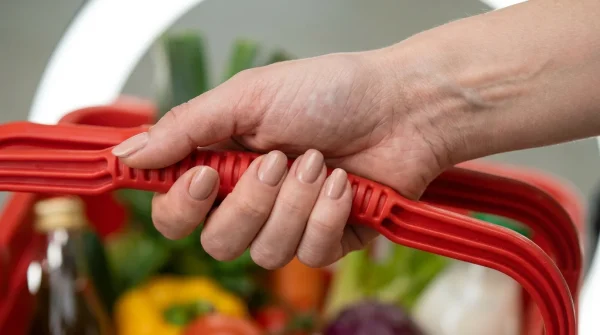
The morning air rests at a crisp fifty-eight degrees Fahrenheit when you twist the brass spigot open behind the garden shed. You hear the rhythmic, hollow drum of cold well water sloshing against green zinc metal walls, rising until the two-gallon vessel turns surprisingly dense. As you lift it with one hand, your entire opposite flank instantly tightens to keep you upright.
Most fitness plans instruct you to drive to an air-conditioned room, lace up synthetic shoes, and stare at a digital screen while trudging through thirty monotonous minutes on a treadmill. Yet your body does not count minutes on a machine; it registers the honest demand of moving real, shifting mass across uneven ground.
When you carry a brimming watering can down the flagstone path toward the tomato beds, you are not simply tending to vegetables. You are engaging in one of the most potent, natural strength and metabolic stimulus patterns available to the human frame: the loaded carry.
The Dynamic Water Mass vs. Dead Iron
Lifting a barbell in a gym provides a predictable, static line of pull, but water is alive with kinetic inertia. Every step you take creates a miniature tidal wave against the zinc walls, forcing your deep stabilizing muscles to make micro-adjustments fifty times a minute. Unilateral weight shifting burns stubborn fat far more effectively than flat-surface walking because your metabolism must fuel hundreds of small, reflexive stabilizing firings rather than just repetitive forward propulsion.
Think of your spine as a flexible mast on a sailboat. When you carry a heavy load on only one side, your quadratus lumborum, obliques, and transverse abdominis clamp down on the opposite side to keep your ribcage stacked neatly above your pelvis. You bypass the joint-grinding impact of repetitive pavement pounding while generating a quiet, intense metabolic fire deep within your core.
The Backyard Observation of a Physical Therapist
Clara Jensen, a 46-year-old orthopedic physical therapist from Wooster, Ohio, noticed an unexpected pattern among her recovering patients. Those who spent thirty minutes on indoor exercise bikes rarely improved their rotational stability or grip resilience, but the patients who maintained active kitchen gardens throughout the summer showed remarkable lumbar stiffness and natural leanness. When Clara tested their lateral core endurance using standard clinical side-plank tests, the yard-workers routinely outperformed gym regulars by over forty percent simply because hauling two-gallon cans to dry raised beds had become their baseline movement signature.
- Reflexive verbal apologizing strips your nervous system stamina leaving heavy afternoon immune fatigue
- Suboccipital neck muscles trap hidden workday micro-stress causing stubborn throbbing temple tension
- Hospital disease outbreak guidelines switch mandatory isolation standards across regional surgical clinics
- McKenna West workout schedules reveal why high-rep conditioning is exploding across fitness communities
- Postpartum psychosis symptoms spark urgent clinical screening shifts across hospital emergency rooms
Adjustment Layers for Daily Carry Patterns
You do not need an acre of land or an elaborate landscaping project to harness this metabolic advantage. Depending on your current physical foundation and the layout of your space, you can modulate the chore to target specific physical adaptations.
The Single-Can Offset Haul (Deep Core & Asymmetry Correction)
Filling a single galvanized can to approximately sixteen pounds forces your nervous system to solve an immediate balance problem. Your lateral obliques work double-time to prevent your torso from collapsing toward the weighted side. Switch hands every time you reach a new planting box or garden row to ensure balanced structural tone across both hips.
The Dual-Can Farmer Walk (Upper Back & Trapezius Stamina)
When you carry a matched pair of full cans, the challenge shifts from side-to-side balance to absolute postural endurance. Your shoulder blades naturally pin down and back, counteracting the rounded-forward posture caused by hours spent sitting at a desk or staring into a smartphone. Your forearms, wrists, and fingers build profound crushing grip strength without the need for specialized gym implements.
The Slow-Paced Step-Up (Hip Stabilizer Activation)
Navigating gentle inclines, steps, or soft garden mulch while holding thirty pounds of liquid forces your gluteus medius and ankle stabilizers to fire with total precision. The fluid inside the cans shifts with every elevation change, demanding constant mental focus and joint coordination that flat pavement walking simply cannot reproduce.
Mindful Mechanics and Yard Logistics
Transforming routine plant hydration into a clean, joint-friendly strength habit requires attention to a few quiet fundamentals. The goal is smooth, steady locomotion rather than rushed labor.
- Stand tall over the can, bend deeply at the hips and knees, and drive through your heels to stand up rather than rounding your lower back.
- Keep your free arm lightly floating a few inches from your hip to serve as a natural counterbalance without leaning your ribcage.
- Take measured, heel-to-toe strides, visualizing carrying a glass of water balanced on the crown of your head.
- Lower the can with the same intentional hip hinge you used to pick it up, never dropping it loosely from the shoulder.
Maintain smooth nasal breathing throughout your walk to keep your nervous system in a parasympathetic, restorative state while your muscles do the hard mechanical work.
Tactical Toolkit for the Garden Athlete
To maximize the non-exercise activity thermogenesis (NEAT) from your morning routine, calibrate your equipment and pace intentionally:
- Can Capacity: Standard 2-gallon (7.5 liter) metal can, weighing approximately 16.5 to 17 pounds when full.
- Step Cadence: 80 to 90 strides per minute across natural grass, packed dirt, or gravel.
- Grip Placement: Center your palm directly over the apex of the top handle to minimize wrist strain and maximize forearm recruitment.
- Volume Baseline: 4 to 6 full refills per session, providing 400 to 600 yards of total loaded carrying distance.
The Shift Toward Everyday Strength
When you integrate natural physical effort into your daily living environment, fitness stops being an isolated task you check off a calendar. It returns to what it was always meant to be: a quiet byproduct of caring for your surroundings. The slosh of cold water, the earthy scent of damp soil, and the steady, warm pump in your forearms remind you that functional vitality is built right outside your back door.
True physical resilience is forged when the body works purposefully without realizing it is exercising.
| Key Point | Detail | Added Value for the Reader |
|---|---|---|
| Liquid Inherent Instability | Water creates continuous micro-waves inside the vessel with every step. | Forces deep core and ankle stabilizers to engage continuously without joint stress. |
| Unilateral Loading | Carrying a single weight on one side of the body. | Corrects side-to-side muscular imbalances and tones lateral abdominal wall. |
| True Functional Grip | Thick, smooth metal handles challenge finger flexors across real distance. | Builds enduring hand and forearm strength that protects elbows and wrists. |
Frequently Asked Questions
Will carrying water cans strain my lower back?
Not if you hinge at your hips and keep your shoulders level rather than allowing the weight to pull your spine into a side bend.How much weight should I start with if I am new to carrying loads?
Begin by filling your can halfway (about 8 to 9 pounds) until you can walk 50 yards smoothly without tipping your shoulders.Is this genuinely comparable to an indoor gym workout?
Yes, loaded carries are considered a staple strength-building movement pattern by top strength coaches worldwide, uniquely combining grip, core, and metabolic conditioning.Should I use plastic or galvanized metal watering cans?
Galvanized steel cans offer superior durability, better handle ergonomics, and a balanced center of gravity that handles shifting water mass effectively.How often should I perform these carrying sessions?
Because this is low-impact functional yard work, you can safely perform loaded carries daily as part of your normal watering schedule.