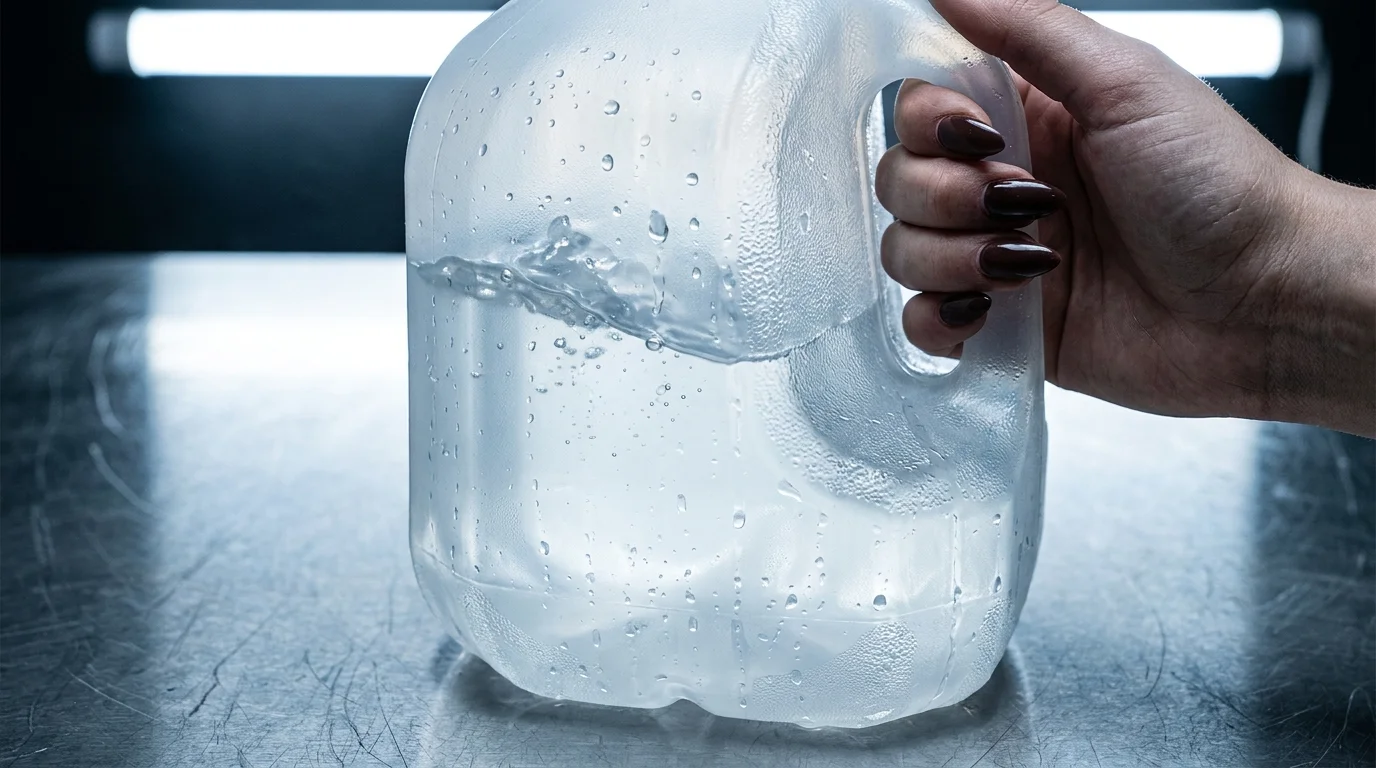
The refrigerator motor hums in the quiet kitchen as you unscrew the plastic cap from a frosted gallon jug filled with crystal clear liquid. You pour it into a tall glass, watching the condensation bead along the surface, convinced you are practicing the cleanest, most disciplined self-care possible. It looks weightless, pristine, and entirely stripped of modern contaminants.
It tastes exceptionally crisp—almost completely silent on the palate, without the faint calcium chalk of tap water or the earthy mineral notes of mountain springs. Yet by two in the afternoon, a strange heaviness settles behind your knees and across your shoulders. Your legs feel like lead weights resting beneath the desk, and an elusive fog creeps across your temples despite downing four full tumblers before lunch.
We have been conditioned to believe that when it comes to human wellness, absolute purity equals absolute health. In our quest to avoid microplastics, municipal additives, and harsh sediments, reaching for steam-distilled or zero-TDS (total dissolved solids) filtered water feels like the safest choice you can make for your body.
Beneath that squeaky-clean sip lies an uncompromising rule of physical chemistry. What registers as pure liquid on your tongue behaves inside your vascular system like an active biological sponge, drawing vital elements out of cellular storage rather than delivering them.
The Osmotic Sponge: Why Total Purity Drains Cellular Energy
To understand why pure water can leave your limbs feeling hollow and exhausted, you have to picture the boundary of a single cell. Human cells maintain an intricate balance of dissolved minerals—primarily sodium, potassium, and magnesium—suspended inside and outside their delicate membranes. This electrical gradient governs how your nerves fire, how your muscles contract, and how nutrients cross into cellular power plants.
When you drink water that has been distilled until it contains virtually zero dissolved ions, you introduce a fluid with an abnormally low osmotic pressure into your digestive tract. Water seeks equilibrium at all costs. Instead of passively hydrating your tissues, this demineralized fluid draws electrolytes out of your bloodstream and intestinal lining to balance itself out before absorption.
Your kidneys quickly recognize this abrupt drop in blood sodium concentration, known as transient dilutional hyponatremia. To protect your heart and brain from swelling, your renal system kicks into overdrive, flushing out the excess fluid along with precious dissolved ions. You end up urinating frequently, yet your muscle cells remain starving for the electrical charges required to stay light, reactive, and energized.
- Haribo sour goldbears switch on intense nocturnal jaw clenching and morning temple throbbing
- Relying on electric golf carts erases natural hip stabilizer strength and derails everyday posture
- Lasko ceramic space heaters parch nasal membranes trapping thick dry throat irritation
- Vital Proteins collagen peptides block smooth stomach motility sparking stubborn morning bloat
- Oatly Barista Edition milk triggers a sudden mid-afternoon energy crash for adults over forty
The Hidden Renal Toll: A Field Note from Clinical Physiology
Dr. Marcus Vance, a 48-year-old renal researcher and endurance consultant based in Denver, spent months tracking athletes who switched exclusively to home-distilled water in an effort to avoid municipal pollutants. What he observed was a consistent, quiet pattern of afternoon fatigue, dull calf cramps, and stubborn brain fog among people who believed they were doing everything right.
Vance discovered that while their morning hydration metrics looked stellar on paper, their afternoon blood serum revealed a persistent loss of baseline sodium and bicarbonate ions. The body was burning extra metabolic energy simply to buffer and mineralize the empty water entering the stomach, leaving these individuals physically wiped out well before their evening workouts.
Calibrating Fluid Density Across Daily Demands
Your hydration needs shift depending on how you spend your day, the food on your plate, and your environment. Not everyone processes demineralized fluid the same way, and understanding your daily rhythm is the key to maintaining energy.
The Desk-Bound Focus Worker: Sitting under dry office air for eight hours reduces blood circulation through your lower extremities. Drinking high volumes of zero-mineral water exacerbates fluid pooling in the feet while leaching the trace minerals needed for neural firing, leaving your fingers sluggish and your focus fragmented by mid-afternoon.
The Plant-Rich or Whole-Food Eater: If your meals consist heavily of fresh produce, roasted tubers, and leafy greens, your diet provides a generous baseline of potassium. However, without sufficient sodium ions in your daily drinking fluid, that intracellular potassium cannot maintain healthy fluid balance, triggering muscle heaviness and postural dizziness when standing up quickly.
The Active Sweater: When you exercise or live in hot climates, your pores dump sodium at a rapid rate. Replenishing those losses with pure distilled water dilutes your remaining plasma electrolytes dangerously fast, turning standard post-workout recovery into prolonged, whole-body lethargy.
Rebuilding Your Hydration Matrix: Practical Restoration
Restoring real, cellular hydration does not mean you have to return to drinking unfiltered municipal water. You can keep the mechanical filtration while deliberately re-structuring the water before it touches your lips.
The goal is simply to bring the fluid up to a gentle mineral density that matches human biology, turning an aggressive solvent into a nourishing vehicle.
- Add a pinch of unrefined grey or pink salt: A few coarse crystals (roughly 1/16th of a teaspoon per quart) supply a broad spectrum of trace elements without making the liquid taste salty.
- Introduce cold-pressed citrus juice: Squeezing a quarter of a lemon or lime into your pitcher adds organic potassium, malic acid, and bioflavonoids that improve cellular water uptake.
- Aim for light mineral saturation: If using remineralizing drops, target a total dissolved solids (TDS) reading between 100 and 250 parts per million for optimal daytime vitality.
- Sip slowly alongside meals: Allow the natural electrolytes in whole foods to bind with your fluid intake rather than guzzling massive volumes on an empty stomach.
Tactical Toolkit for Everyday Mineralization
To turn your hydration routine into sustained afternoon stamina, keep these baseline measurements close at hand:
- Target Mineral Range: 150–250 ppm (measured via a standard TDS meter).
- Electrolyte Balance Ratio: 3 parts sodium to 1 part potassium for daytime cognitive energy.
- Water Temperature: Cool to room temperature (60°F to 68°F), which facilitates smoother gastric emptying than ice-cold liquid.
Rethinking True Cleanliness Inside the Body
We often carry an instinctive belief that the cleaner a substance is, the cleaner we will feel. But living biology does not thrive in a vacuum of sterile emptiness; it thrives on balance, charge, and connection. Water is not just a wet substance designed to rinse out your system—it is an informational carrier loaded with the electrical fuel your nervous system relies on to keep you moving gracefully through the world.
When you start giving your body water that possesses mineral substance and weight, the persistent afternoon slump loses its grip. Your steps feel lighter, your mind stays steady, and hydration stops being a chore you constantly chase and starts being the quiet foundation that carries you through your day.
Real hydration is not about how much water passes through your body; it is about how much electrical vitality stays inside your cells.
| Hydration Source | Electrolyte Density | Impact on Daily Stamina |
|---|---|---|
| Distilled / Ultra-Purified Water | 0 to 10 ppm (Near Zero) | Osmotically pulls minerals; triggers heavy afternoon limbs and frequent urination. |
| Naturally Remineralized Water | 120 to 250 ppm (Balanced) | Sustains plasma volume; supports muscle tone and steady cognitive energy. |
| Standard Municipal Tap Water | Varies (100 to 400+ ppm) | Contains minerals, but often carries chlorine, sediment, and chemical residues. |
Frequently Asked Questions
Is drinking distilled water dangerous in small amounts?
No, drinking a single glass of distilled water will not harm you. The lethargy and electrolyte depletion occur when you rely on it as your primary, daily source of hydration over extended periods.Why do I feel thirstier the more purified water I drink?
Because mineral-free water triggers rapid urination without replenishing cellular sodium, your body signals thirst continuously in an attempt to re-establish electrolyte balance.Can I just take a multivitamin instead of remineralizing my water?
While vitamins help, they do not change the immediate osmotic behavior of water sitting in your digestive tract. Adding trace minerals directly to the fluid provides immediate cellular balance.Does boiling water make it demineralized like distilled water?
No, boiling simply kills pathogens and concentrates existing minerals as steam evaporates. Distillation captures only the evaporated steam, leaving all minerals behind.What is the quickest sign that my afternoon fatigue is hydration-related?
If your legs feel unusually heavy, your mouth feels dry despite clear urine, and you experience mild temple pressure around 2:00 PM, your electrolytes are likely diluted.