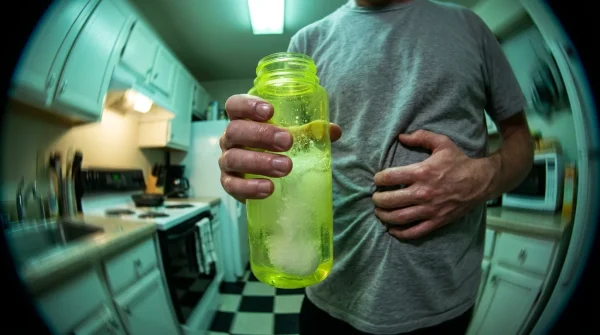
The midday clock strikes one, and you twist off the screw cap of that smooth cardboard carton, catching a faint, chemical waft of synthetic vanilla. You take the last sip, peering down into the chalky plastic bottle with thick white residue around the rim, congratulating yourself on banking thirty clean grams of protein for a mere one hundred and sixty calories. On paper, you just won the nutritional afternoon. Your desk remains tidy, your conscience feels pristine, and hunger seems neatly locked away behind an industrial seal.
Yet two hours later, the office ambient lighting feels harsh against your temples. A sudden, hollow trembling hollows out your stomach, followed by a relentless mental focus on the breakroom snack drawer. You find yourself pacing toward the pantry, overwhelmed by frantic cravings for chocolate chip cookies or salted chips that feel completely detached from your willpower. You did everything right by the label, yet your nervous system is sounding five-alarm sirens for fast carbohydrates.
This is not a failure of discipline or moral fortitude. It is a biological rebound triggered by a sophisticated illusion. What felt like a metabolic shield was actually an uncoupling of sensory taste and real cellular fuel, setting off a quiet biochemical sabotage that peaks right around three in the afternoon.
The Phantom Fuel Trap: Why the Pancreas Gets Confused
When you drink an ultra-processed shake, your palate registers an intensely sweet, dense dairy dessert, but your bloodstream never receives the corresponding glucose. Synthetic sweeteners like sucralose interact with sweet-taste receptors in the mouth and gut, signaling your pancreas to release an anticipatory pulse of insulin in preparation for an incoming sugar payload. But because there are virtually no digestible carbohydrates to clear, this circulating insulin sweeps away whatever baseline ambient sugar was already keeping your brain sharp.
At the exact same moment, industrial emulsifiers such as carrageenan, cellulose gel, and xanthan gum coat the lining of your small intestine. These additives create an unnatural viscosity designed to mimic rich cream, tricking your stomach stretch receptors while simultaneously irritating your gut microbiome. Instead of steady, slow-burning nourishment, your enteric nervous system sends a distress beacon directly to your brain: blood sugar has plummeted unexpectedly, and emergency fuel is needed immediately.
Consider Marcus Rivera, a 39-year-old software architect from Austin who relied on two ready-to-drink vanilla shakes daily during long sprint cycles. By 3:15 PM every single workday, Marcus experienced severe brain fog, cold fingers, and a desperate urge to devour bakery sweets, accompanied by low-grade abdominal bloating. When he traded the shelf-stable cartons for three hard-boiled eggs and a handful of raw pumpkin seeds, his afternoon energy leveled out within forty-eight hours, entirely eliminating the manic cookie urges that had plagued him for eighteen months.
- Wooden cutting boards switch on deep core stabilizers during evening dinner prep
- Constantly smoothing tense conversations triggers deep neurological exhaustion and strips deep sleep
- Intercostal rib muscles trap hidden micro-stress and enforce tight shallow breathing patterns
- Cyclospora outbreak clusters force regional health departments to demand strict produce wash rules
- Semaglutide prescriptions spark an intense nationwide run on compounding pharmacy alternatives
Mapping the Digestive Fallout by Routine
The severity of this metabolic snapback depends heavily on how and when you introduce these shelf-stable shakes into your day.
For the Fasted Morning Commuter
Gulping cold processed whey on an empty stomach creates an aggressive osmotic shock. Without the buffering matrix of dietary fats or complex fibers, the high dose of isolated milk protein concentrate speeds into your digestive tract, provoking rapid transit times and acute gas. If you drink this while driving under morning traffic stress, elevated cortisol amplifies the blood sugar drop, leaving you exhausted before your 10 AM team meeting even begins.
For the Afternoon Desk Jockey
Using a vanilla meal replacement as a bridge between lunch and dinner backfires because your sedentary musculature is not clearing circulating amino acids efficiently. The thickeners linger in the gut lumen, drawing water and producing that familiar heavy, tight lower-belly distension while your brain continues to scream for fast calories. You end up grazing on whatever treats your coworkers brought in, completely defeating the shake’s low-calorie promise.
Mindful Replacements: The Whole-Food Reconstruction
Reclaiming your afternoon focus requires transitioning away from industrial chemistry and returning to mechanical, whole-food digestion. Real satiety does not come from engineered thickeners; it comes from food that requires enzymatic breakdown and steady gastric emptying.
Building a resilient metabolic baseline involves simple swaps of real whole foods that provide stable amino acids alongside natural lipids:
- Swap the carton for plain Greek yogurt: Stir half a cup of whole-milk yogurt with a dash of pure vanilla extract and crushed walnuts. The lactic acid and natural milk fats slow protein breakdown naturally.
- Rely on the humble boiled egg: Pair two eggs with cucumber slices sprinkled with mineral salt. This delivers bioavailable choline and steady sulfur compounds without spiking cephalic insulin.
- Choose real nut butter with celery: Two tablespoons of single-ingredient almond butter provide the chewing resistance that signals true satiety centers in your hypothalamus.
- Hydrate with raw electrolyte water: Often, the panic signal for sugar is actually a cellular thirst signal aggravated by the high sodium-potassium imbalance in commercial diet shakes.
The Tactical Afternoon Protocol
If you need quick desk-side fuel that protects your focus without the sugar drop, use these precise benchmarks:
- Target Protein Density: Aim for 15 to 25 grams of protein sourced from whole foods rather than ultra-filtered isolates.
- Minimum Natural Fat Floor: Ensure your snack contains at least 8 grams of unrefined dietary fat to blunt gastric emptying speed.
- Mastication Factor: Always choose foods that require at least twenty deliberate chews per mouthful; liquid meals bypass the oral signaling that informs your brain you have eaten.
- Timing Window: Consume your bridge fuel between 1:30 PM and 2:00 PM, well before the 3:00 PM cortisol dip pulls your energy down.
The Bigger Picture: Trusting Natural Hunger Signals
The modern obsession with squeezing maximum protein into zero-sugar, shelf-stable plastic packaging has quietly distanced us from how our biology actually processes fuel. Real energy is not a sterile equation of numbers on a shiny label; it is a harmonious dialogue between your taste buds, your gut wall, and your liver.
When you stop outsourcing your nourishment to ultra-processed gums and synthetic sweeteners, the frantic 3 PM panic evaporates. Your afternoon transforms from a daily battle against cookie cravings into several hours of steady, quiet clarity. You discover that feeding your body real food requires far less effort than constantly managing the crashes caused by artificial shortcuts.
Real metabolic calm comes from foods your body recognizes instantly, not chemical formulations that promise everything while delivering empty signals.
| Key Point | Detail | Added Value for the Reader |
|---|---|---|
| Synthetic Sweetener Rebound | Cephalic insulin release without incoming glucose drops blood sugar. | Explains why you crave intense sugar two hours after a zero-sugar shake. |
| Industrial Thickener Burden | Gums and emulsifiers disrupt gut flora and mimic fullness artificially. | Resolves mysterious afternoon bloating and digestive tightness. |
| Whole Food Pacing | Natural fats and real chewing slow down gastric clearance. | Maintains razor-sharp cognitive stamina past 4 PM without willpower drain. |
Frequently Asked Questions
Why do I feel hungrier after drinking a protein shake than if I ate nothing?
The intense artificial sweetness prepares your metabolism for incoming energy that never arrives, while circulating insulin clears your existing blood sugar and triggers urgent hunger alarms.Are all vanilla protein shakes causing this crash?
Shakes containing sucralose, acesulfame potassium, and thickeners like carrageenan or cellulose gum are the main culprits. Minimally processed powders without synthetic additives create far fewer cravings.How do industrial gums cause digestive bloating?
Additives like xanthan and guar gum are non-digestible polysaccharides that draw water into the bowel and ferment rapidly with gut bacteria, producing gas and physical distension.What is the best immediate alternative for a busy workday?
A simple container of full-fat cottage cheese or Greek yogurt with a handful of raw pumpkin seeds delivers clean protein and healthy fats without triggering an insulin drop.How long does it take for cravings to stop after quitting processed shakes?
Most people experience a total reset of their afternoon sugar cravings within three to five days of switching to whole-food protein sources.