The room shrinks until all you can hear is the frantic, uneven hammering behind your ribs. You are sitting completely alone on the edge of your bed or parked on a dark highway shoulder, cold sweat gathering at the nape of your neck while the ceiling fan hums indifferent overhead. Conventional wisdom tells you to sit cross-legged, clear your thoughts, and try to meditate your way out of the surge. But trying to calm a runaway mind using pure willpower is like trying to put out an engine fire by arguing with the flames.
When an acute panic wave hits, your cognitive machinery is already locked out. The prefrontal cortex surrenders to ancient survival circuitry, leaving you trapped in an involuntary neurochemical loop where high carbon dioxide ratios and adrenaline feed off one another. The air feels thin, your throat tightens, and every shallow gasp makes you feel like you are breathing through a pillow. Your nervous system demands mechanics, not mindfulness mantras.
The physical way out does not require thirty minutes of quiet reflection or expensive biofeedback tools. It requires a hard biological override built directly into your autonomic wiring. By using two rapid nasal inhalations paired with an extended, open mouth release, you can seize the mechanical brake pedal of your cardiovascular system and bring your heart rate down within seconds.
The Alveolar Reset: Shifting from Mental Calming to Mechanical Overrides
For decades, standard stress management handed people fragile advice: take long, slow, equal breaths. But when you are spiraling in solitary panic, attempting equal-ratio breathing often worsens air hunger, making you feel as though your lungs refuse to fill completely. The real secret lies in understanding how your lung tissue behaves under acute stress.
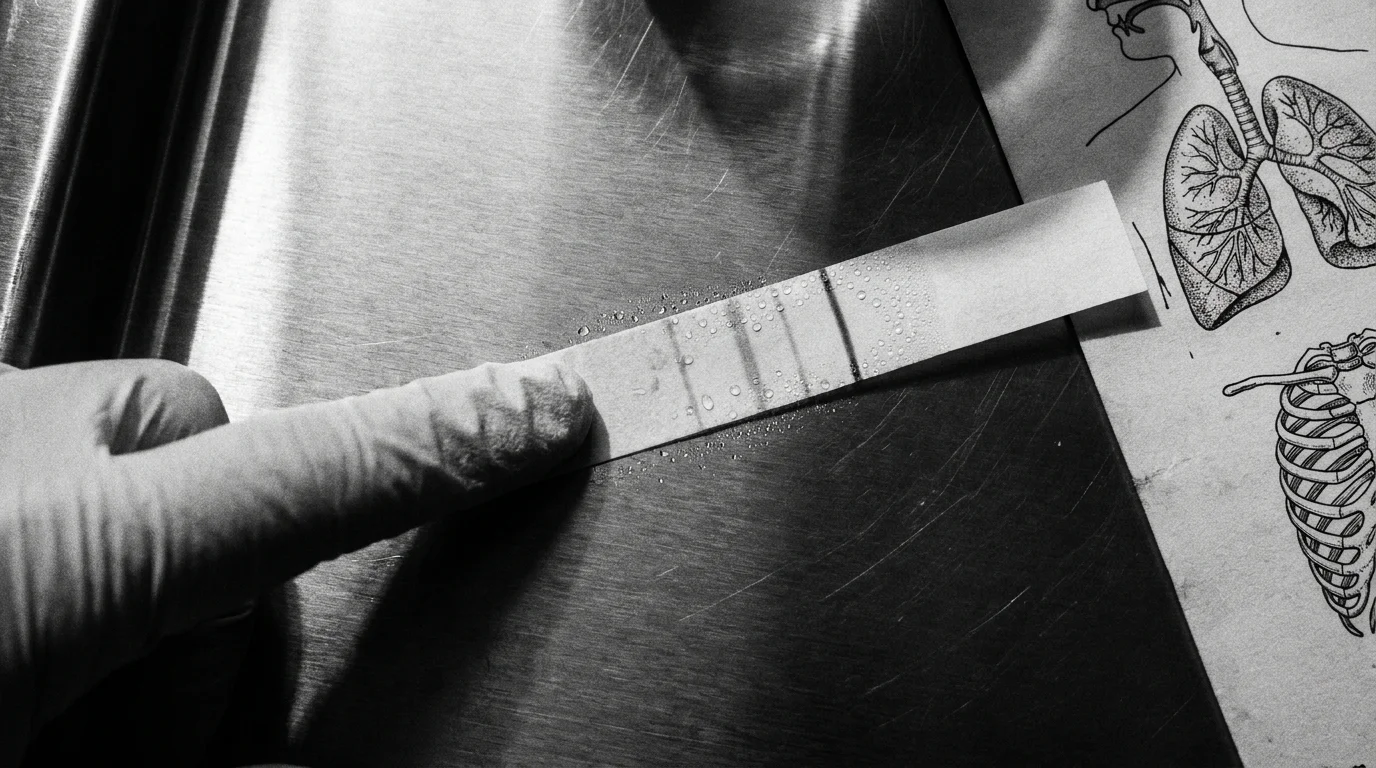
Under intense anxiety, your breathing becomes shallow and rapid, causing millions of tiny microscopic air sacs in your lungs—known as alveoli—to collapse like deflated paper bags. As these tiny pockets flatten, oxygen exchange stalls and carbon dioxide spikes in your bloodstream, sending an urgent danger alarm straight back to your brainstem. Two distinct inhales pop open these collapsed sacs, instantly maximizing surface area before the long release purges built-up gas.
When you draw that second, sharp sip of air on top of an already full lung, you mechanically stretch the diaphragm and expand the thoracic cavity to its absolute limit. The subsequent slow exhalation allows the heart to physically expand. As blood flows more slowly through the expanded chambers, specialized pressure sensors called baroreceptors detect the shift and signal the vagus nerve to instantly throttle down your pulse.
- Textured thumbnail cuticle pressing halts boardroom panic attacks without drawing single coworker stares
- Wasabi paste pea snacks switch off acute panic loops with shocking nasal burn
- Microban antibacterial kitchen sprays strip defensive microflora sparking recurring seasonal throat tickles
- Chipotle keto chicken salad bowls force icy cold fingers and sudden midday eyelid droop
- Aquasana whole house filters leak microscopic chlorine vapors triggering raw morning throat scratchiness
The Clinical Shift: How Real-World High-Stakes Operators Halt Panic
Consider the experience of Marcus Vance, a 38-year-old high-altitude flight paramedic based in Reno, Nevada. During a turbulent night transport over the Sierra Nevada mountain range, an unexpected equipment failure left Marcus managing an unstable patient while fighting off an abrupt, overwhelming claustrophobic panic spike in the unpressurized rear cabin. He did not have ten minutes to practice progressive muscle relaxation or listen to ambient soundscapes; he needed an instant biological anchor. Marcus turned to the two-step physiological sigh—expanding his chest tightly twice through his nostrils before venting the air out in a single, unhurried whisper—and within four breath cycles, his peripheral vision cleared and his resting pulse plummeted by twenty-two beats per minute.
Customizing the Reset: Tailoring the Sigh to Your Crisis Profile
Not every panic episode feels identical. Depending on whether your distress manifests as cold motor tremors, rapid hyperventilation, or crushing chest tightness, adjusting your physiological sigh rhythm ensures the fastest biological response.
For the Rapid Hyperventilator
If you find yourself gasping quickly and feeling lightheaded, your blood carbon dioxide levels have plummeted too low. You need to prolong the final exhale without letting the initial double inhale become frantic. Focus on the second sip of nasal air being very brief—less than half a second—followed by a six-to-eight second unforced sigh through slightly parted lips. This rebuilds systemic vascular balance.
For the Chest-Bound Clencher
When panic strikes as heavy, vice-like tension across your sternum, your intercostal muscles are locked in defensive guarding. You must prioritize the mechanical stretch. Fill your lungs to seventy percent on the first inhale, pause for a microsecond, and then pull in a forceful second breath to stretch the upper rib cage to capacity before releasing a low, hollow exhale that empties you completely.
The Mindful Solo Application
Executing this override correctly requires attention to physical posture and breath geometry. You do not need ideal conditions; you only need two square feet of floor space or the seat you are currently occupying.
Drop your shoulders down and away from your ears to unclamp your neck muscles. Rest your hands flat on your thighs to ground your proprioceptive sensors. Draw two consecutive nasal breaths without exhaling in between, feeling your upper chest expand tightly, then let go with a slow hollow whisper of exhaled breath until your lungs are entirely vacant.
- Step 1: Inhale smoothly through your nose for roughly two to three seconds to fill roughly eighty percent of your lung volume.
- Step 2: Without releasing that air, immediately snap a second, sharp sip of air through your nostrils to top off your lungs and pop the alveoli open.
- Step 3: Open your mouth slightly and let the air glide out effortlessly in a slow, continuous sigh for six to eight seconds.
- Step 4: Allow a natural one-second pause at the bottom of the breath before repeating the cycle three to five times.
The Bigger Picture: Reclaiming Autonomy Over Your Biology
There is profound comfort in knowing that your body carries its own emergency brake. Panic often feels terrifying because it convinces you that you are fundamentally broken or at the mercy of runaway neurochemistry. But panic is simply an involuntary physical program, and physical programs can be interrupted by precise mechanical inputs.
Mastering this simple dual-inhalation habit restores your confidence when you are entirely on your own. You no longer have to dread the sudden onset of rapid heartbeats or fear being stranded without support. With a single double-breath, you take the wheel back from your survival reflexes, grounding your heart and reclaiming stillness on demand.
The physiological sigh is the fastest real-time tool nature gave us to lower autonomic arousal and regain control over a runaway pulse.
| Key Point | Detail | Added Value for the Reader |
|---|---|---|
| Alveolar Recruitment | Double nasal inhale pops flattened lung sacs open completely. | Stops the physical feeling of air hunger immediately. |
| Vagal Activation | Elongated exhale slows blood flow through expanded cardiac chambers. | Forces baroreceptors to rapidly dial down heart rate. |
| Autonomous Reset | Requires zero equipment, apps, or ideal quiet environments. | Functions reliably during isolated, high-stress emergencies. |
Frequently Asked Questions
Why is the second nasal inhale so important?
The second quick sip forces open the tiny alveoli sacs in your lungs that collapse during shallow panic breathing, allowing optimal gas exchange.How many breath cycles should I do during an attack?
Most people experience significant heart rate reduction and mental clarity within two to three breath cycles, though you can safely perform five to six.Can I do this if my nose is partially congested?
Yes. While nasal inhalation is ideal for nitric oxide release, you can perform the double-inhalation through pursed lips if your nasal passages are blocked.Will this prevent panic attacks from ever returning?
The physiological sigh is an acute physical circuit breaker, not a preventative cure; it stops the immediate physical spiral in real time.Why is mouth exhalation preferred over nasal exhalation here?
A loose, soft-mouth exhale lowers airway resistance, allowing you to sustain a much longer, unforced release that maximally stimulates the vagus nerve.