The morning routine settles in with predictable quiet: hot coffee steaming against the desk lamp, the hum of a desktop tower, and the gentle give of dense foam beneath your seat. Yet twenty minutes into drafting an email, a sharp, electric hum sparks along the back of your right thigh. It feels like a pinched wire, a sudden burning needle threading down toward the calf.
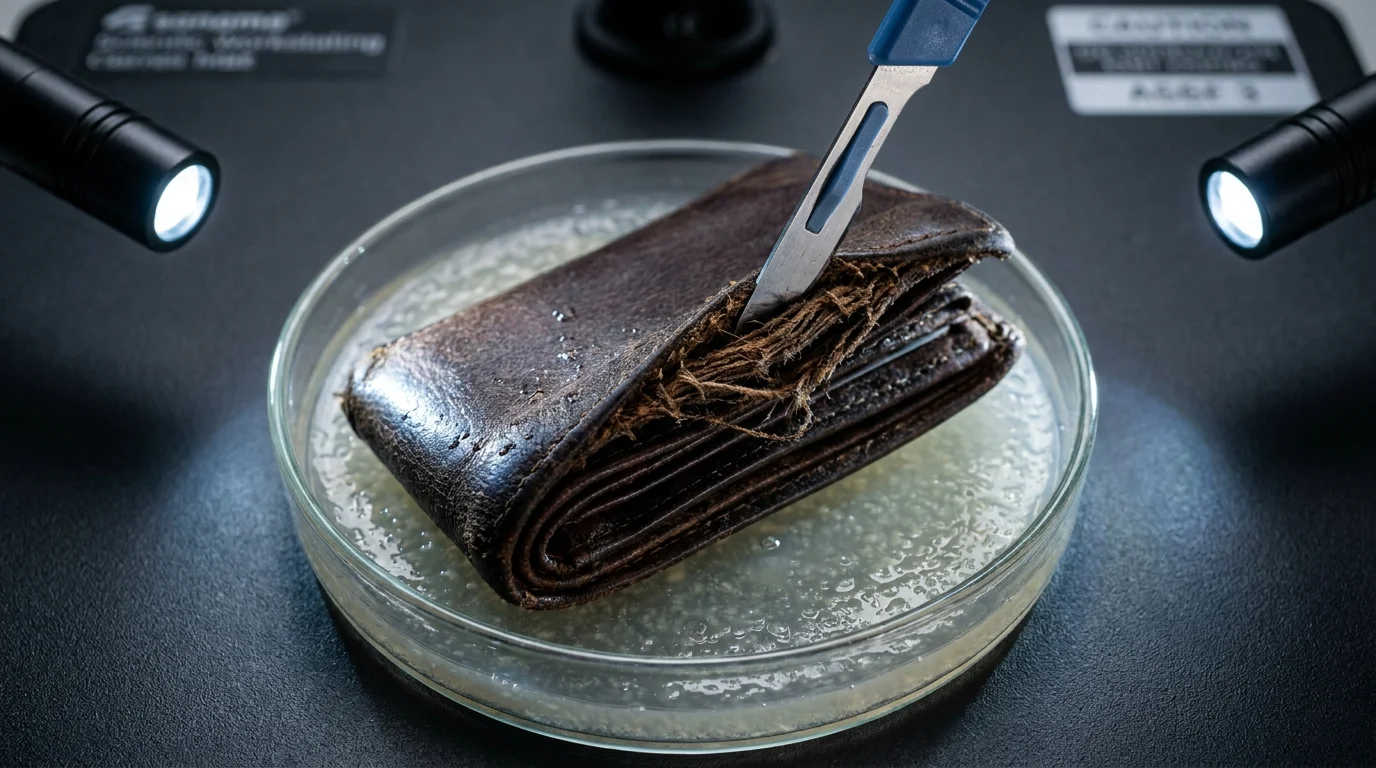
You instinctively shift, adjust the armrests, or blame an aging office chair, completely unaware of the dense wedge resting beneath your right hip. That bulky folded leather billfold, stuffed with expired receipts, plastic cards, and folded bills, acts as an unyielding wooden block under your pelvis. Every minute you spend seated turns that minor half-inch elevation into an invisible structural wedge.
While traditional posture advice tells you to pull your shoulders back and sit straight, it ignores the foundational surface beneath you. Your body attempts to find level ground where none exists, forcing muscles and ligaments into a silent tug-of-war that ends in radiating nerve pain.
The Architecture of the Uneven Foundation
Imagine building a timber frame house on a foundation where one corner slab sits an inch higher than the rest. The walls might look upright at first glance, but every joint, rafter, and support beam will bend sideways to keep the roof level. In your seated body, your pelvis is that concrete slab.
When one ischial tuberosity—the bony sit-bone at the base of your pelvis—is artificially elevated, your entire pelvic bowl tilts sideways. To prevent your head and shoulders from listing like a ship in a storm, your lumbar spine executes an immediate compensation trick. It bends and rotates, forcing the delicate facets between the L4 and L5 vertebrae to pinch together on one side while stretching the opposite lateral ligaments to their limit.
Directly beneath this twisted alignment lies the piriformis muscle, a flat, band-like stabilizer running across the gluteal pocket. Sandwiched between your hardened leather wallet and the pelvic bone, this muscle goes into a protective spasm, clamping directly down onto the thick bundle of the sciatic nerve passage. What begins as a convenient place to stash your cards becomes an aggressive mechanical clamp on your nervous system.
- Baking soda foot baths strip stubborn crusty heel calluses without abrasive metal rasps
- Pungent horseradish root sniffing sparks instant morning focus without sour caffeine crashes
- Deep physiological sigh exhalations reverse racing heartbeats and intense solo panic in seconds
- Textured thumbnail cuticle pressing halts boardroom panic attacks without drawing single coworker stares
- Wasabi paste pea snacks switch off acute panic loops with shocking nasal burn
Clinical Sightings from the Hybrid Workspace
Marcus Ramirez, a 44-year-old structural estimator from Cleveland, spent months treating what he assumed was a deteriorating lumbar disc. His work days were split between site visits and marathon spreadsheet sessions, punctuated by a gnawing ache in his right glute that flared whenever he drove his truck home. Ice packs, ergonomic footrests, and standing desks failed to quiet the fire in his lower leg.
It was during an evaluation with physical therapist Elena Choi that the root cause surfaced. When Elena asked Marcus to sit on an unpadded examination bench, his spine curved instantly to the left to offset the three-quarter-inch thick billfold tucked firmly into his back pocket. After two weeks of clearing out his pockets and leveling his seated base, the chronic radiating pain disappeared entirely without a single injection or medical scan.
Segmented Load: How Daily Routines Dictate the Strain
The severity of pelvic torque varies dramatically depending on where and how you spend your seated hours. Identifying your specific usage pattern allows you to dismantle the habit before joint inflammation sets in.
The Long-Distance Commuter
Bucket car seats feature angled side bolsters that curl inward, wedging the hip even tighter against a rear pocket item. As your right foot toggles between the accelerator and brake pedals, the hip flexor contracts against a pre-tilted pelvis, amplifying the pressure on the piriformis.
Keep your console clear and make dropping your wallet into the cup holder as automatic as fastening your seatbelt. This single change eliminates the asymmetric vibration transferred from the road directly into your compressed nerve root.
The Hybrid Desk Worker
Soft task chairs disguise the asymmetry better than hard benches, allowing you to sit crooked for hours without noticing the tilt. Over time, the quadratus lumborum muscle locks into a chronic lateral hike, creating persistent lower back stiffness when you stand up.
Switch to an ultra-slim cardholder carried exclusively in your front pocket or desk tray. If you must carry cash and receipts, keep a minimalist leather slip that flexes naturally with your movement.
Mindful Steps to Rebalance the Pelvic Floor
Undoing weeks or years of asymmetric sitting requires conscious resetting of both your muscular length and your daily pocket habits. Small, measured adjustments bring swift structural relief.
- Empty the Rear Pockets: Remove every item from your back pockets before your hips touch the chair cushion. Your sit-bones must make equal, flush contact with the seat pan.
- The 90-Degree Floor Check: Plant both feet flat on the ground with knees tracking directly over your ankles, feeling your weight distribute evenly across both sit-bones.
- The Figure-Four Release: While seated, cross the ankle of your affected side over the opposite knee, keep your spine tall, and lean forward gently from the hips for 30 seconds to lengthen the piriformis.
- The Tactical Toolkit: Use a flat desk tray for personal items, a 0.25-inch slim wallet, and a simple 2-minute timer every hour to stand and reset your spinal neutral.
By giving your pelvic base a flat, uninterrupted foundation, you remove the physical trigger before nerve irritation can cascade into chronic inflammation.
The Symmetry of Daily Peace
True physical comfort rarely demands expensive gadgets or complex workout routines. Often, it asks only that you stop introducing artificial obstacles to your natural alignment. Taking the burden out of your back pocket restores the quiet symmetry your body was designed to maintain, turning everyday sitting back into a restful, painless pause.
Small, repeated asymmetries in your seat create structural storms throughout your spine; remove the wedge, and the body will happily level itself.
| Key Point | Detail | Added Value for the Reader |
|---|---|---|
| Pelvic Tilting | One-sided elevation of the ischial tuberosity | Prevents premature facet joint wear at L4-L5 |
| Piriformis Compression | Direct pressure on the deep gluteal nerve passage | Eliminates mysterious shooting leg numbness |
| Pocket Relocation | Moving cards to front pockets or desk trays | Restores effortless spinal neutral without extra cost |
Frequently Asked Questions
Can sitting on a wallet cause permanent spinal damage?
While rarely permanent if caught early, chronic uneven sitting can lead to persistent muscle imbalances, pelvic torsion, and long-term joint wear in the lower lumbar vertebrae.How thin does a wallet need to be to be safe in a back pocket?
No object should sit beneath your sit-bones while seated; even a quarter-inch cardholder creates measurable pelvic tilt and nerve pressure over prolonged periods.Why does the pain travel all the way down into my calf or foot?
The sciatic nerve runs directly underneath or through the piriformis muscle; when compressed, it sends referred electrical pain and tingling down its entire sensory pathway.How quickly does wallet-induced sciatica clear up once the habit stops?
Most people experience significant relief within 7 to 14 days of eliminating the wedge and practicing gentle piriformis stretching.Is it fine to keep my wallet in my back pocket while standing or walking?
Yes, the asymmetric nerve compression only occurs when your body weight drives the pelvis downward against the firm object on a seated surface.