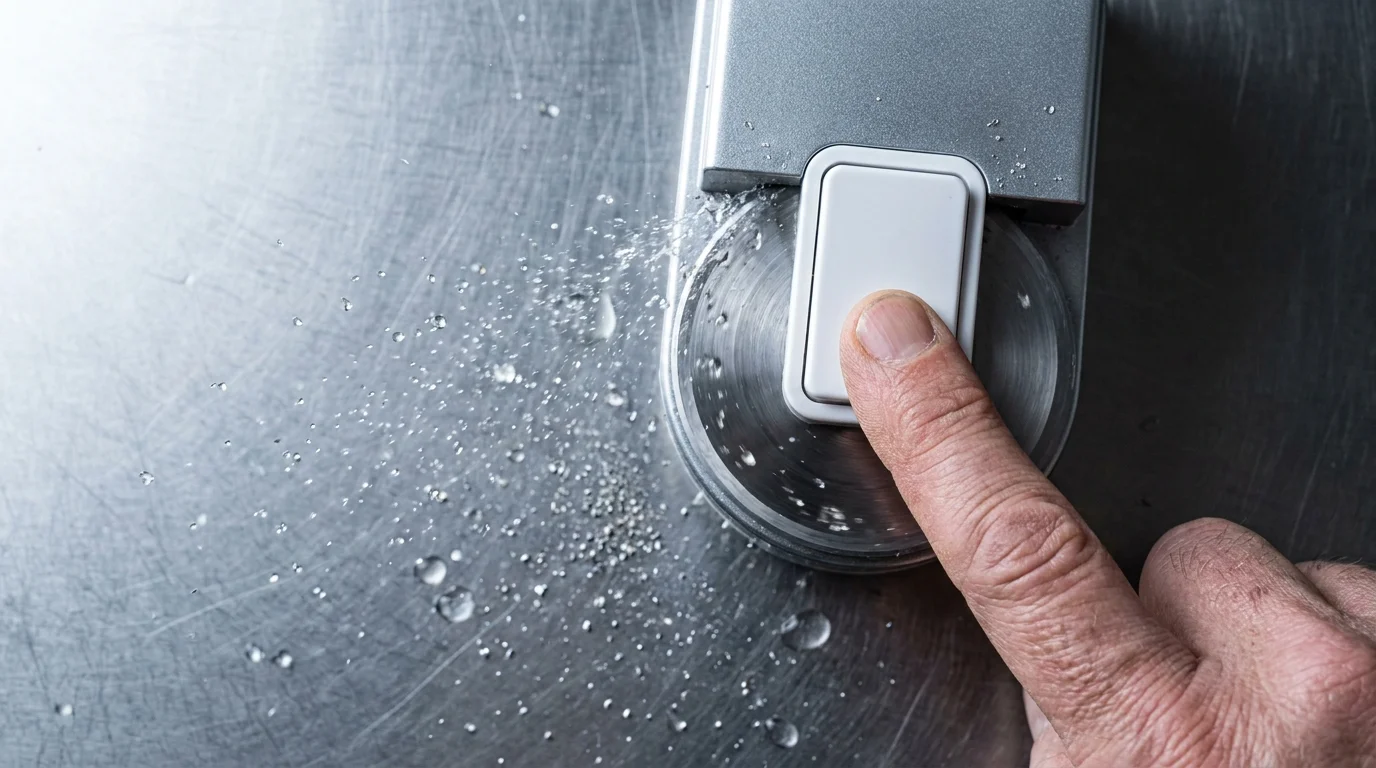
A sharp shaft of morning sunlight cuts across your laminate counter, reflecting off a smooth white plastic countertop machine with a whirring silver cutting wheel. You drop a can of crushed tomatoes into place, press the single top-mounted trigger with the tip of one finger, and step back while electric gears do every ounce of the work. The metal lid lifts off cleanly, completely hands-free. It feels like simple modern ease, a tidy upgrade to your daily kitchen routine.
Yet decades ago, that exact same small preparation required something entirely different. You held a heavy steel manual tool in your dominant hand, pinched two handles together with noticeable clamping pressure, and cranked a rigid metal butterfly wing through stubborn tinplate. Your forearm muscles fired automatically, stabilizing your wrist against eccentric resistance while every finger joint maintained continuous, focused tension.
Modern small appliances have spent the last few decades quietly systematically excising these micro-demands from domestic life. By engineering out physical resistance, we have inadvertently stripped our hands of their most reliable, incidental resistance training. That effortless whir on the countertop is not just opening your food; it is slowly retiring the dynamic grip strength you rely on to open jars, turn stiff door handles, and carry your own life forward.
The Silent Toll of Vanishing Household Torque
Our bodies operate under a strict metabolic economy: what you do not regularly challenge with physical loads, your central nervous system slowly prunes away. In human movement, rotational grip—the specific ability to twist against load while holding a clamped position—is an intricate dance between the flexor digitorum superficialis, the supinator, and the deep pronator muscles of the forearm.
When you swap manual tools for push-button electric can openers, you eliminate one of the few remaining unscripted torque events in your day. Incidental torque preserves deep tendon elasticity and keeps muscle fibers recruited without the need for formal gym sessions. Without this baseline mechanical challenge, mature hands slowly slip into muscle fade, where fingers lose their pinch strength and wrists feel shaky under sudden loads.
Think of your hand function like a stone pathway through high grass. If footsteps tread across it every morning during meal prep, the path remains crisp, functional, and clear. But when automated gadgets handle every twist and pull, that neurological pathway fills with weeds, turning ordinary tasks into sudden, frustrating struggles.
- Cast iron skillet scrubbers burn stubborn waist fat without dedicated workout routines
- Glycolic acid toner pads strip natural facial oils exposing crepey morning forehead creases
- Folding metal lawn chairs lock stiff hip joints during casual backyard lounging
- Pure Protein chocolate deluxe bars trigger intense sugar crashes behind hidden maltitol syrups
- Oatly barista oat milk cartons spark sharp afternoon exhaustion for adults over forty
The Clinic Floor Secret: Everyday Resistance as Therapy
Dr. Paul Vance, a 58-year-old occupational therapist based in Ohio, regularly sees this pattern unfold among mature adults who walk into his rehabilitation practice complaining of sudden weakness. “People assume their grip failed overnight because of a birthday milestone,” Vance explains during an afternoon clinic session. “Then we review their daily routines and discover that between automated jar grippers, electric openers, and smart home dials, their hands haven’t generated ten pounds of rotational torque in five years.”
Vance points out that manual kitchen tools act as functional biofeedback instruments. Twisting a mechanical butterfly knob forces the stabilizer muscles around the carpal tunnel to engage dynamically, bathing the joints in lubricating synovial fluid and preserving forearm bone density through direct axial loading.
Calibrating Hand Resilience Across Kitchen Styles
For the Smart Appliance Devotee
If you already rely on small motor-driven kitchen gadgets to speed up batch cooking, you do not have to throw away every convenient device. Instead, balance passive appliance use by keeping two or three manual tools active for quick single-ingredient meals. Using a manual crank on a lone can of black beans takes less than twelve seconds but delivers a concentrated burst of grip engagement that keeps your forearm tendons resilient.
For the Joint-Conscious Cook
If stiff finger joints or morning aches make you naturally reach for an automated opener, the answer is not total immobilization. Immobility accelerates joint stiffness and muscle atrophy. Select a high-leverage manual tool equipped with thick, rubberized handles. The wider grip diameter reduces acute joint stress while still requiring your hand muscles to produce healthy, stabilizing rotational force.
Restoring Rotational Muscle Tone at the Countertop
Rebuilding your hand stamina does not require hand-gripper gadgets or awkward rubber band drills. It simply asks you to reclaim small moments of physical engagement right where you prepare your meals.
Pay attention to how your hand interacts with routine pantry items. Treat daily food prep deliberately as a series of micro-conditioning opportunities rather than chores to be automated away.
- Choose a classic heavy-gauge manual can opener with broad, non-slip handles that fill your palm comfortably.
- Position your elbow at a 90-degree angle close to your ribs before clamping the blades to maintain shoulder stability.
- Rotate the turn-key using a steady, rhythmic cadence, feeling the tension travel through your thumb pad and outer forearm.
- Switch hands periodically across the week, allowing your non-dominant side to build matching stabilizer strength.
The Hand Resilience Toolkit
- Tool Spec: All-metal rotary manual can opener with minimum 1.5-inch butterfly key.
- Grip Cadence: 1 full rotation every 2 seconds to maximize muscular time under tension.
- Weekly Volume: 4 to 6 manual container openings distributed across regular cooking prep.
Functional Independence Begins in the Palm
True functional capability is rarely built in an hour of dedicated gym workouts; it is maintained through hundreds of unthinking physical encounters scattered across your waking hours. The tools you touch every morning shape the tone of your muscles and the durability of your connective tissues decades down the road.
Stepping back toward simple mechanical tools is not an inconvenient step backward into the past. Reclaiming manual kitchen torque builds genuine self-reliance that keeps your hands agile, capable, and firmly in control of your daily world.
“Every time you let an electric motor do the twisting, your forearm surrenders a fraction of its natural strength.”
| Key Point | Detail | Added Value for the Reader |
|---|---|---|
| Mechanical Torque Loss | Electric units remove rotational and clamping forearm resistance. | Understanding why modern kitchens secretly weaken grip over time. |
| Synovial Activation | Manual cranking circulates protective fluid through finger and wrist joints. | Reduces long-term joint stiffness through natural movement. |
| Incidental Micro-Loading | Routine meal prep provides consistent, no-cost functional strength work. | Maintains grip independence without needing special exercise gear. |
Frequently Asked Questions
Does using an electric can opener really cause noticeable hand weakness?
Yes, over extended periods. Grip strength operates on a use-it-or-lose-it principle; removing daily twisting and squeezing tasks eliminates the baseline neuromuscular stimulus that keeps forearm muscles dense and responsive.What if I have mild arthritis in my knuckles?
Opt for manual tools with oversized, cushioned handles rather than full automation. Larger handles distribute mechanical load across the entire palm, protecting individual finger joints while preserving essential muscle activity.How much grip strength does a manual opener actually require?
Most standard models require between 5 and 10 pounds of sustained pinch force and 3 to 6 foot-pounds of rotational torque—an ideal low-intensity conditioning load for mature hands.Are manual smooth-edge safety openers better than traditional cutting models?
Smooth-edge manual models often feature larger, ergonomic turn-keys with smoother gear ratios, making them an excellent middle ground for joint comfort and functional resistance.Can I regain forearm strength if I have used electric openers for years?
Absolutely. Hand and forearm musculature responds quickly to restored mechanical loading; switching back to manual tools typically produces noticeable improvements in grip security within four to six weeks.