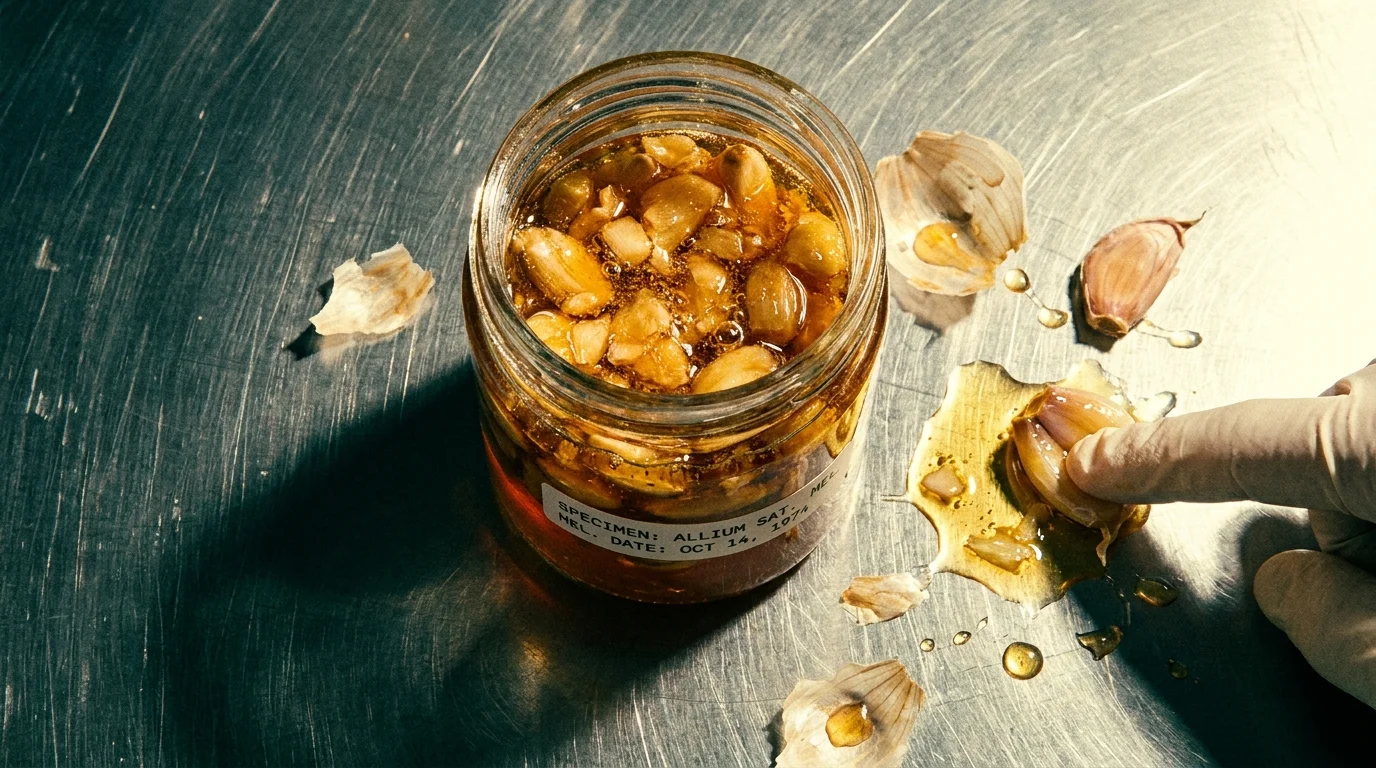
The early morning light creeps across your kitchen counter, catching the heavy glass walls of a mason jar filled with crushed, amber-glazed cloves. You wake up with that familiar, dry drag at the back of your throat—a rasping scratchiness that feels like swallowing coarse wool. The instinct is to tear open a foil packet of commercial lozenges, flooding your mouth with synthetic menthol and corn syrup that merely numbs the surface for twenty minutes before the raw sting returns.
Instead, you lift the metal lid of the jar. A sharp, warm aroma rises immediately—the pungent sulfur bite of crushed garlic softened by the thick, floral undertones of unheated wildflower nectar. Nature builds a far sturdier shield than any factory-pressed tablet when you allow pantry chemistry to do its quiet work.
When you crush fresh garlic and submerge it in raw honey, you are not just making a folk syrup. You are initiating an enzymatic reaction that transforms sharp kitchen staples into a thick, soothing antimicrobial glaze designed to coat irritated pharyngeal tissue directly.
Understanding this process changes how you handle the first cold snap of the season, turning a frantic medicine cabinet search into a grounded pantry ritual.
The Liquid Shield: Why Enzymatic Armor Beats Synthetic Numbing
Most drugstore lozenges operate on distraction. They use mild anesthetics or high doses of evaporative menthol to trick your nerve endings into feeling cold air, while a base of refined sugar feeds the very bacteria clinging to your mucosal lining. The moment the hard candy dissolves, your throat is left drier than before, stripped of its natural protective saliva film.
Raw garlic operates on an entirely different physiological level. When you crush a clove, you rupture its cellular membranes, allowing the enzyme alliinase to mix with the amino acid alliin. This instant union synthesizes allicin—garlic’s primary antimicrobial powerhouse. Left on its own in the open air, allicin degrades quickly. But when you drown those crushed cloves in raw honey, the dense sugar matrix captures and preserves those volatile compounds while drawing out garlic juices through natural osmosis.
Raw, unpasteurized honey supplies its own biological arsenal, containing glucose oxidase, an enzyme that steadily generates microscopic traces of hydrogen peroxide as it contacts moisture. When this thick amber mixture slips down your esophagus, it forms an adhesive barrier that physically seals micro-abrasions in the throat while the preserved allicin neutralizes pathogens at the cellular wall.
- Whole star anise pods spark crisp morning focus without any bitter caffeine jitter
- Suboccipital pressure release switches off acute nervous distress lowering racing heartbeats in minutes
- Textured pocket stones enable covert palm grounding stopping boardroom panic surges completely unseen
- Salt and vinegar chips shock panicked neural loops halting runaway anxiety attacks in seconds
- Quaternary disinfectant wipes strip protective skin microflora leaving households vulnerable to persistent sinus bugs
Elena Vance, a 42-year-old voice coach and choral director from upstate New York, discovered this mechanic out of sheer desperation. Faced with back-to-back winter performances and a persistent morning rasp that synthetic sprays only aggravated, she turned to a jar of steeped garlic and wildflower honey kept by her grandmother. By taking a slow half-teaspoon before breakfast, she found the thick glaze calmed the pharyngeal friction within minutes, allowing her vocal cords to glide effortlessly without the rebound dryness caused by alcohol-based throat gargles.
Adjustment Layers: Calibrating the Glaze to Your Needs
Not every morning scratch requires the same concentration. Depending on your digestive sensitivity and daily routine, you can tailor this pantry remedy to match your exact tolerance level.
For the Sensitive Stomach
If raw garlic on an empty stomach makes your midsection churn, steep whole, lightly bruised cloves rather than finely minced pieces. Let the jar rest for at least forty-eight hours; the honey draws out the medicinal sulfur compounds while mellowing the acrid heat, creating a gentle infused syrup you can take without digestive friction.
For the Immediate Acute Flare
When you wake up with an aggressive, razor-blade sting that demands immediate intervention, finely mince two cloves and let them breathe on your cutting board for ten minutes. Stir them directly into a single tablespoon of raw buckwheat or thyme honey, then swallow the paste slowly, allowing the active allicin paste to cling directly to the rear pharynx.
For the Seasonal Commuter
If you face dry subway heat or drafty office ventilation daily, prepare a continuous fermented jar. Keep whole peeled cloves submerged in raw honey for two to three weeks until the honey thins out into a dark, runny liqueur. A single spoonful of this aged elixir in the morning coats the mucous membranes against dry indoor heating without leaving a lingering raw-garlic breath.
Mindful Preparation: Crafting Your Pantry Tincture
Executing this remedy requires respect for biological timing. Rushing the process destroys the very enzymes that make the remedy effective.
- Crush and Wait: Always peel and gently crush your garlic cloves using the flat side of a chef's knife, then allow them to sit exposed to the air for ten minutes. This pause allows alliinase to synthesize maximum allicin before exposure to acidic honey.
- Submerge Completely: Place the crushed cloves into a clean glass jar and pour unheated, unfiltered raw honey over them until fully submerged. If the cloves float, turn the sealed jar upside down daily to prevent mold growth on exposed garlic surfaces.
- Slow Ingestion: Do not wash the mixture down with boiling water. High heat degrades the delicate enzymes in raw honey; swallow a small spoonful slowly at room temperature, letting the viscous liquid coat the back of your mouth.
Keep your batch small and fresh. A half-pint mason jar provides enough medicine for two weeks of seasonal defense without losing potency.
The Tactical Toolkit
Equip your pantry with deliberate choices: choose unpasteurized, dark raw honey (such as wildflower, buckwheat, or forest varietals) which possesses higher polyphenol counts than light clover honeys. Source fresh, firm organic garlic heads—avoid pre-peeled grocery tubs soaked in preservatives—and store your mixture in an airtight 8-ounce glass jar kept in a dark cupboard between 60°F and 70°F.
Reclaiming the Simplicity of the Kitchen Apothecary
Modern marketing convinces us that healing must arrive inside blister packs, wrapped in warnings and filled with stabilizers. Yet the human body responds with remarkable efficiency to whole-food compounds that address physical distress directly at the tissue level.
Taking a moment in the quiet morning light to spoon an amber-glazed clove from a glass jar is more than symptom relief. It restores genuine self-reliance to your daily health, trading artificial fixes for the quiet, potent power already resting on your pantry shelf.
When you pair the cellular defense of freshly activated allicin with the osmotic seal of raw honey, you create a biological dressing that synthetic lozenges simply cannot replicate.
| Key Point | Detail | Added Value for the Reader |
|---|---|---|
| Allicin Activation | 10-minute resting period after crushing | Maximizes enzyme synthesis before the garlic compounds are stabilized in the honey base. |
| Raw Honey Matrix | Unheated, enzyme-rich wildflower nectar | Produces mild natural hydrogen peroxide while adhering directly to inflamed throat tissue. |
| Mucosal Coating | Thick viscosity taken at room temperature | Provides extended contact time over irritated vocal folds without triggering rebound dryness. |
Frequently Asked Questions
How long does a jar of garlic-infused honey stay fresh?
Stored in a cool, dark cupboard, raw garlic fermented in honey can safely last for several months. Ensure the garlic remains fully coated in honey to maintain its natural preservation shield.Will consuming this remedy cause intense garlic breath all day?
Because raw honey encapsulates the volatile sulfur compounds, the lingering scent is significantly reduced compared to eating raw garlic alone, especially when using honey aged past seven days.Can I dissolve this mixture into hot tea instead?
Pouring boiling water over the mixture destroys the active enzymes in raw honey and degrades the delicate allicin structure; swallow it straight or stir it into lukewarm water below 105°F.Is there a risk of botulism when putting raw garlic in honey?
Raw honey is naturally acidic and possesses low water activity, which typically inhibits pathogen growth. To ensure total safety, you can check that the honey mixture maintains a pH below 4.6 using a simple test strip.How many times per day can I take this glaze?
For acute morning scratchiness, one half-teaspoon upon waking is usually sufficient. You may repeat this up to three times daily between meals as symptoms require.