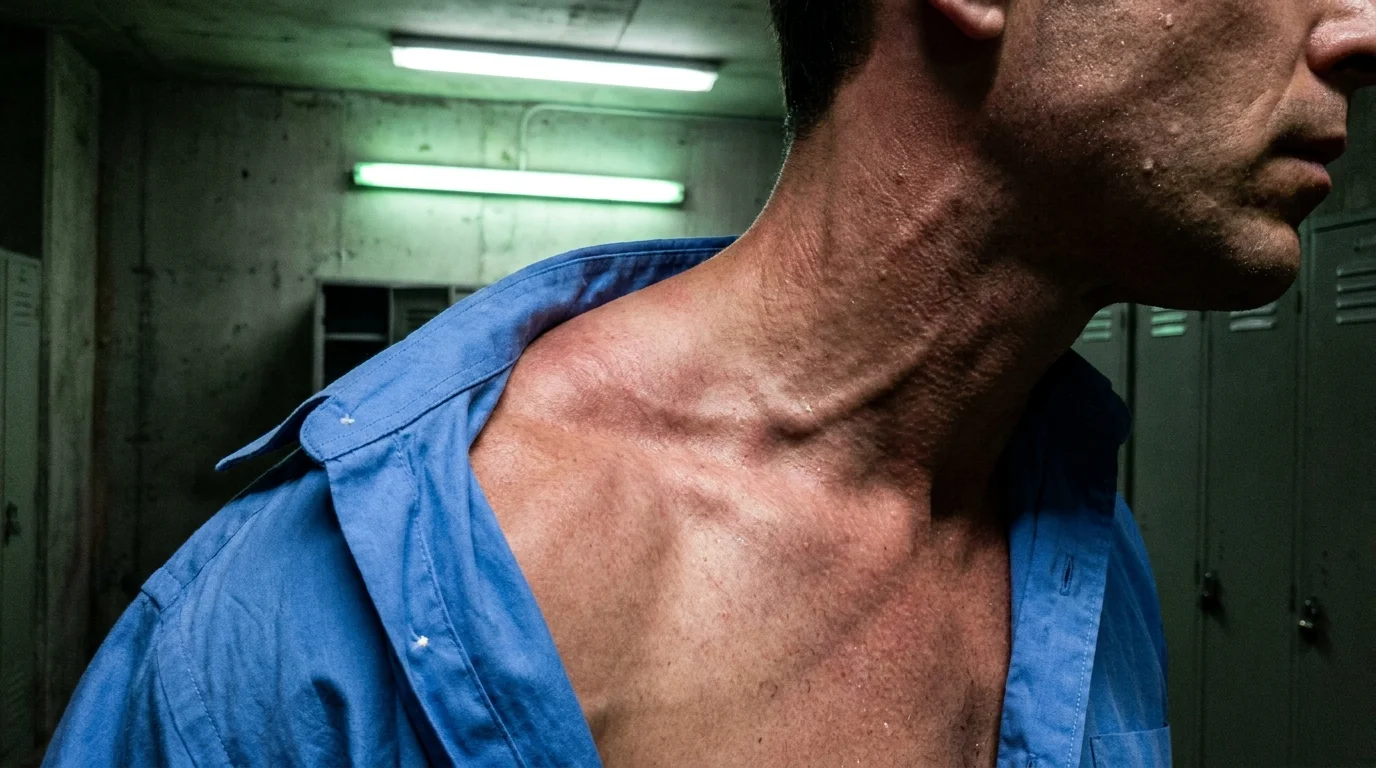
The late afternoon sun cuts through the blinds of your office, casting pale amber stripes across a cluttered desk. You reach back instinctively with one hand, your fingers kneading the hot, knotted cord connecting your neck to your shoulder blade. You feel tight ropy muscular bands bulging visibly beneath the collar of your crisp cotton shirt, throbbing with an irritating, low-grade fire. It feels like someone poured warm sand into your upper fascia, a persistent sting that turns every turn of your head into an act of negotiation.
You likely blame your ergonomic chair, your screen height, or that extra hour spent hunched over your laptop before dinner. You have probably tried rolling on dense foam cylinders, stretching your neck side to side until the joints pop, or applying mentholated salves that cool your skin without touching the underlying knot. Yet, by mid-afternoon tomorrow, that familiar heat will flare right back up in the exact same spot.
The traditional narrative tells you that your posture is simply weak. It insists that if you just pull your shoulder blades down and back with military discipline, the pain will evaporate. But your body is not failing a mechanical engineering test. Instead, your upper back is doing something far more sophisticated and far more exhausting: it is physically acting as a protective shield against every unspoken frustration, tense email exchange, and swallowed boundary of your working day.
The Protective Shield: How Unspoken Tension Warps Upper Back Fascia
Your trapezius muscles are uniquely wired to your autonomic nervous system. Unlike the muscles in your legs or forearms, which primarily respond to conscious mechanical demand, your upper shoulders are the body’s primary startle-response tissue. When you sit in a meeting and quietly swallow a sharp disagreement, your primitive nervous system registers that interpersonal tension as an immediate threat. It does not distinguish between a difficult boss and a physical predator.
Because modern etiquette demands that you remain completely still and pleasant, you cannot run or fight. Instead, your nervous system initiates a quiet, partial freeze. It triggers an unbroken low-voltage isometric contraction throughout the upper trapezius and levator scapulae. You do not notice your shoulders creeping a fraction of an inch toward your ears, but the muscle fibers stay perpetually switched on. Over months, this continuous micro-bracing starves the local tissue of fresh oxygen and blood flow, trapping metabolic waste and sparking that distinct, fiery neck burning.
Consider Elena Vance, a 42-year-old corporate logistics manager from Chicago. Elena spent two years cycling through physical therapy clinics, dry needling, and resistance band routines to fix a burning ache beneath her left shoulder blade. Her scans were clean, yet her neck remained rock hard. It was only when she tracked her physical symptoms against her daily calendar that the pattern emerged: her trapezius flared not after lifting boxes or sitting for eight hours straight, but within twenty minutes of her weekly cross-departmental budget negotiations, where she spent an hour holding her tongue while nodding politely.
- Hospital saline IV bags trigger emergency surgical rationing protocols across nationwide medical centers
- Xylitol sweetener packets spark urgent heart alerts after exposing hidden blood clot risks
- Propping bedroom closet doors open traps warm air pockets wrecking deep sleep cycles
- Crossed-leg desk sitting twists pelvic alignment triggering sharp sciatic nerve pinches
- Traditional Epsom salt soaks draw out stubborn swelling and restore stiff tired arches
Adjustment Layers: Pinpointing Your Somatic Storage Pattern
Not every desk worker holds conversational friction in the exact same pattern. Understanding your specific physical bracing style lets you interrupt the feedback loop before the burning sensation takes hold.
The Polite Suppressor (Upper Trapezius Banding): If your pain concentrates right at the ridge where your neck meets your shoulder, you are likely a habitual placator. During moments of sudden conversational friction, you tend to inhale slightly, hold your breath in your upper chest, and gently elevate your collarbones to appear attentive while quietly suppressing your true response.
The Defensive Armorer (Rhomboid and Scapular Pinch): If your ache feels like an acute, stabbing knot tucked tightly beneath the inner edge of your shoulder blade, you are bracing against incoming demands. You tend to pull your shoulder blades tightly inward and lock your elbows against your ribs when reading challenging messages, essentially tucking your limbs into a defensive shell.
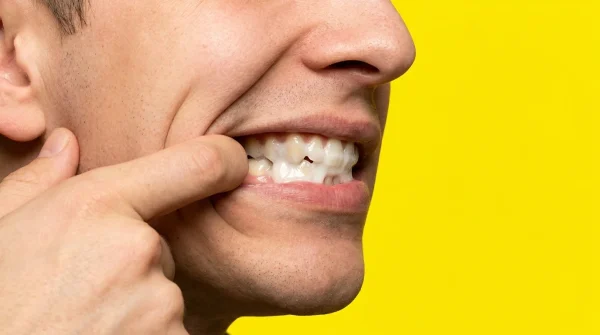
The Jaw-to-Shoulder Clamp (Levator Scapulae Strain): If your burning radiates upward into the base of your skull and brings a dull temple headache along with it, your conversational stress is shared between your masseters and your upper spine. You are clenching your back molars every time you type a diplomatic response, transmitting continuous structural strain down the side of your neck.
Mindful De-Armoring: The Somatic Reset Protocol
Releasing this chronic burning does not require aggressive stretching, which often causes irritated, starved muscle fibers to spasm even harder. Instead, you must signal to your nervous system that the conversational threat has passed, allowing the motor units to finally power down.
Practice this brief reset directly at your desk immediately following any tense conversation, difficult call, or frustrating digital exchange:
- The Audible Intercostal Sigh: Take a normal breath through your nose, follow it with a quick second sip of air to fully expand your lower ribs, and let out a long, heavy vocal sigh through an open mouth. This directly stimulates the vagus nerve and mechanically drops the clavicles.
- The Micro-Shoulder Exaggeration: Rather than forcing your shoulders down, gently shrug them upward two millimeters higher toward your ears. Hold them there for 5 seconds, then consciously let them fall with gravity, allowing the weight of your arms to stretch the upper fascia passively.
- The Tongue-Palate Drop: Rest the tip of your tongue gently behind your bottom front teeth and let your lower jaw hang loose inside a closed mouth. Releasing the trigeminal nerve tension in your jaw instantly decreases tonic signaling to the trapezius.
- Tactical Somatic Toolkit: Perform this sequence for 90 seconds at 68 to 72 degrees Fahrenheit in an environment free from screen glare, repeating it three times during your peak afternoon meeting window.
Reclaiming the Space Between Your Shoulders and Your Ears
The burning ache in your upper back is not a sign that your body is broken, frail, or improperly configured for modern life. It is undeniable proof that your physical self is listening intently to your emotional life. Your trapezius muscles have simply been working overtime, trying to carry the weight of words you chose not to say and tensions you were forced to absorb.
When you begin to recognize these ropy bands of tension as subconscious armor rather than mere postural failure, your entire relationship with your workday changes. You stop fighting your anatomy on the foam roller and start offering your nervous system the safety it needs to stand down. Give your shoulders permission to drop, let your breath settle deep into your belly, and allow the quiet fire in your neck to finally burn out.
The trapezius is an emotional sponge; it will carry every unspoken boundary until your conscious mind grants it permission to put down the weight.
| Key Point | Detail | Added Value for the Reader |
|---|---|---|
| Underlying Cause | Autonomic micro-bracing during suppressed interpersonal conflict | Shifts focus from mechanical ergonomics to nervous system regulation |
| Physical Mechanism | Low-voltage continuous isometric spasm starving local tissue | Explains why passive stretching often makes burning worse |
| Daily Intervention | 90-second jaw, breath, and passive gravity resets between calls | Provides an immediate, non-disruptive workplace protocol |
Frequently Asked Questions
Why does my upper back burn more at the end of the workday than during heavy exercise?
Heavy exercise involves dynamic contraction and relaxation cycles that pump oxygenated blood through the tissue. Desk work combined with conversational stress creates a continuous, static isometric hold that cuts off micro-circulation, generating intense metabolic burn without physical movement.Will a deeper massage fix this chronic knot under my shoulder blade?
Deep tissue massage provides temporary relief by mechanically flushing stagnant fluids, but if your nervous system resumes protective bracing the moment you return to your desk, the ropy bands will reform within 24 to 48 hours.How can I tell if my neck pain is structural or somatic?
Structural issues typically flare with specific mechanical angles and physical loads regardless of context. Somatic tension fluctuates noticeably alongside social stress, tight deadlines, and emotionally charged workplace dynamics.Should I stop doing upper-body strength training if my neck is burning?
No, but you should avoid exercises that emphasize aggressive upper-trap shrugging. Focus on wide horizontal rows and lower-body movements while ensuring your jaw and neck stay completely relaxed during exertion.How quickly can the burning sensation stop once I begin somatic resets?
When you successfully interrupt the startle reflex during moments of frustration, the local blood flow returns within minutes, offering noticeable relief from the acute fiery sting by the end of your first consistent day.