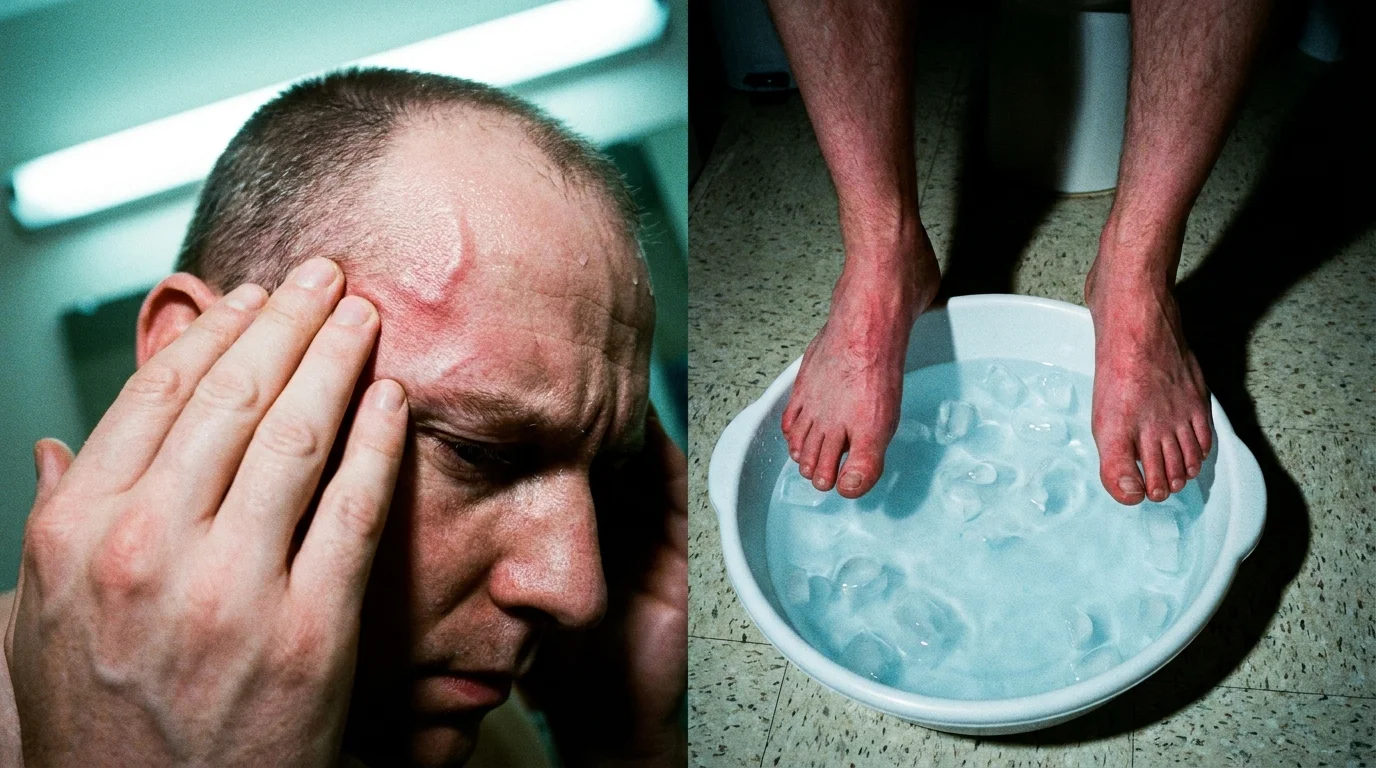
The late afternoon sun leaves the asphalt radiating heat long after you step indoors. Your work shoes slip off onto the cool floorboards, leaving your soles swollen, heavy, and hot to the touch. In the bathroom, you prepare what feels like the ultimate sanctuary: a wide basin brimming with frigid water, peppermint salts dissolving into a swirling pale blue liquid surrounded by melting ice cubes in a plastic foot tub.
You lower your heels into the pale water. The initial bite of frost is immediate, followed by the tingling, synthetic chill of concentrated menthol sinking through your skin. For three minutes, the sensation mimics sheer relief, a numbing wave erasing eight hours of standing, walking, or pavement pounding.
Then, without warning, the rhythm changes deep within your skull. What began as a soothing ritual shifts into an irregular, dull pounding behind your eyes, quickly sharpening into rhythmic arterial temple spasms. You lean back against the tub, pressing two fingers against your hairline, wondering why an innocent lower-body recovery habit feels like an ice pick driving into your temples.
The Garden Hose Metaphor: Unpacking Vascular Pressure Rebound
To understand this sudden cranial pulse, think of your vascular network not as a passive lake, but as a garden hose running at full volume. When you spend an hour walking in warm air, your lower limbs widen their microscopic capillary beds to shed heat. Blood volume pools intentionally down at your feet, keeping your core stable.
The sudden plunge into an icy, menthol-spiked basin triggers an aggressive, instantaneous survival reflex. Menthol targets the TRPM8 sensory receptors in your skin, chemically convincing your nervous system that your tissue is freezing solid far faster than the water temperature alone indicates. In an instant, intense peripheral capillary vasoconstriction clamps down on millions of tiny vessels in the soles, toes, and ankles.
That displaced fluid has nowhere to go but backward. It surges up through the great saphenous veins and deep femoral pathways, crowding into the central arterial trunk. This immediate redistribution of fluid creates a swift, sharp surge in systemic pressure. Your body attempts to buffer this sudden wave by shunting fluid toward the compliant vascular beds of the neck and head, stretching sensitive meningeal arteries and triggering the distinctive, throbbing temple spasm known as vascular pressure rebound.
- Organic spirulina powder smoothies deposit unlisted mineral silt provoking sharp digestive cramps
- Grapeseed oil pan searing releases smoky aerosol fumes sparking sudden post meal sinus pressure
- Smartwater vapor distilled bottles drain vital baseline sodium trapping sluggish afternoon mental fog
- Late night raw almond snacking enforces intense nocturnal jaw clenching locking stiff morning temples
- Dyson bladeless cooling fans dry delicate nasal membranes sparking gritty morning eye irritation
A Clinical Reality in Neighborhood Basements
Dr. Julian Vance, a 48-year-old vascular sonographer in suburban Denver, sees the aftermath of this wellness trend throughout the hottest stretches of midsummer. Last July, he consulted on a series of persistent post-work migraines in a dedicated neighborhood running club whose members were following a viral trend of dunking tired feet into mentholated ice baths directly after hill sprints.
“The runners thought they were reducing inflammation,” Vance noted while reviewing micro-ultrasounds of their lower limbs. “In reality, they were slamming the door shut on a wide-open circulatory highway. By forcing dilated capillary networks to snap shut against a high cardiac output, they were bouncing a fluid wave straight into their carotid junctions. The head takes the blow every single time.”
Dialing Down the Contrast: Tailored Adjustment Layers
Your circulatory anatomy requires transitional pacing rather than abrupt shock. Adjusting how you cool down depends entirely on how your day unfolded.
For the High-Pavement Commuter
If you spend your afternoon walking through train stations or standing on concrete, your lower limbs contain substantial venous pooling. Avoid cold water altogether for the first thirty minutes. Rest your bare feet flat on unheated bathroom tile to bleed off surface heat steadily before introducing any liquid.
For the Desk Worker with Sluggish Flow
Sitting behind a screen creates stagnant pressure without the high heart rate of a long walk. Skip the menthol entirely; it overstimulates peripheral thermoreceptors without aiding venous return. Instead, choose a neutral, lukewarm foot bath at room temperature, allowing your vessels to relax naturally without triggering a defensive clamp-down.
For the Post-Workout Runner
Your heart is still working to circulate blood volume away from working muscles. Gradual evaporative cooling protocols protect your cranial vessels far better than plunge tubs. Strip off your socks, mist your ankles with tap water, and let a low ambient fan evaporate the moisture slowly over fifteen minutes.
Mindful Application: The Step-Down Protocol
Tending to exhausted feet does not require violent swings in vessel diameter. The goal is to encourage venous return without triggering a central arterial rebound surge.
- Allow a ten-minute thermal buffer: Never step from a warm walk directly into cold water. Sit quietly with your shoes off until your skin stops radiating active heat.
- Phase the water temperature: Begin your soak with lukewarm water around 85 degrees Fahrenheit. Allow your feet to adjust before adding small amounts of cooler tap water over five minutes.
- Ditch the high-dose menthol: Avoid concentrated peppermint essential oils or crystal salts in cold water. Menthol exaggerates the physiological cold response by up to tenfold at the receptor level.
- Elevate gently after soaking: Once finished, dry your feet thoroughly and rest with your heels propped on a soft pillow slightly above your hip line for eight minutes to facilitate drainage without shock.
The Bigger Picture: Learning to Speak Your Body’s Language
We often treat physical recovery like an industrial process: hot means we apply freezing, tired means we apply intense stimulation. Yet the circulatory tree is an elastic, living instrument that favors gradual shifts over sudden shocks. Taking a gentler approach to evening recovery preserves your vascular balance, keeping your head clear and letting your body rest without the defensive jolt of an avoidable pressure surge.
“Peripheral vessels respond to thermal violence with defensive recoil; true recovery occurs only when the nervous system feels secure enough to ease open.”
| Key Point | Detail | Added Value for the Reader |
|---|---|---|
| Trigger Mechanism | TRPM8 chemical sensitization coupled with freezing water temperature. | Reveals why menthol makes cool water feel violently cold to the nervous system. |
| Physiological Chain | Peripheral Capillary Vasoconstriction leads to sudden central blood volume surge. | Explains the direct physical pipeline connecting cold toes to thumping temples. |
| Optimal Soaking Temp | 85°F to 75°F introduced over a five-minute gradual descent. | Prevents the acute vascular rebound that sparks severe evening headaches. |
Frequently Asked Questions
Why do my temples throb within minutes of soaking my feet?
The sudden shock of ice and menthol causes millions of tiny vessels in your feet to instantly snap shut. This forces trapped blood back into your core and upward toward your cranial vessels, creating a sudden spike in pressure that triggers throbbing spasms.Does menthol actually change the temperature of the water?
No. Menthol activates sensory receptors on nerve endings that signal cold directly to the brain. This tricks your nervous system into responding as if the water is drastically colder than it actually is, multiplying the vascular contraction.Is this reaction dangerous for people with normal blood pressure?
For most healthy adults, it causes temporary, uncomfortable headaches and temple pressure. However, placing unnecessary strain on cerebral arteries after heat exposure is an avoidable stressor that disrupts restorative evening recovery.What is the best water temperature for tired feet after a hot day?
Start with tepid water around 85 degrees Fahrenheit. This temperature gently removes heat from swollen tissue without prompting your blood vessels to violently constrict in defense.Can I still use peppermint salts safely?
Yes, but save them for warm or neutral-temperature soaks. Combining menthol with freezing ice water creates an exaggerated shock reflex that is far too intense for dilated evening blood vessels.