You know that distinct, frustrating sound of a split thumbnail catching on the ribbed cuff of your wool sweater in mid-January. It is a quiet, jagged snap that signals another season of peeling layers, throbbing cuticles, and chalky vertical ridges. Outside, the frozen wind scours the streets, while indoors, parched radiator heat pulls every trace of ambient moisture directly out of your skin and fingertips.
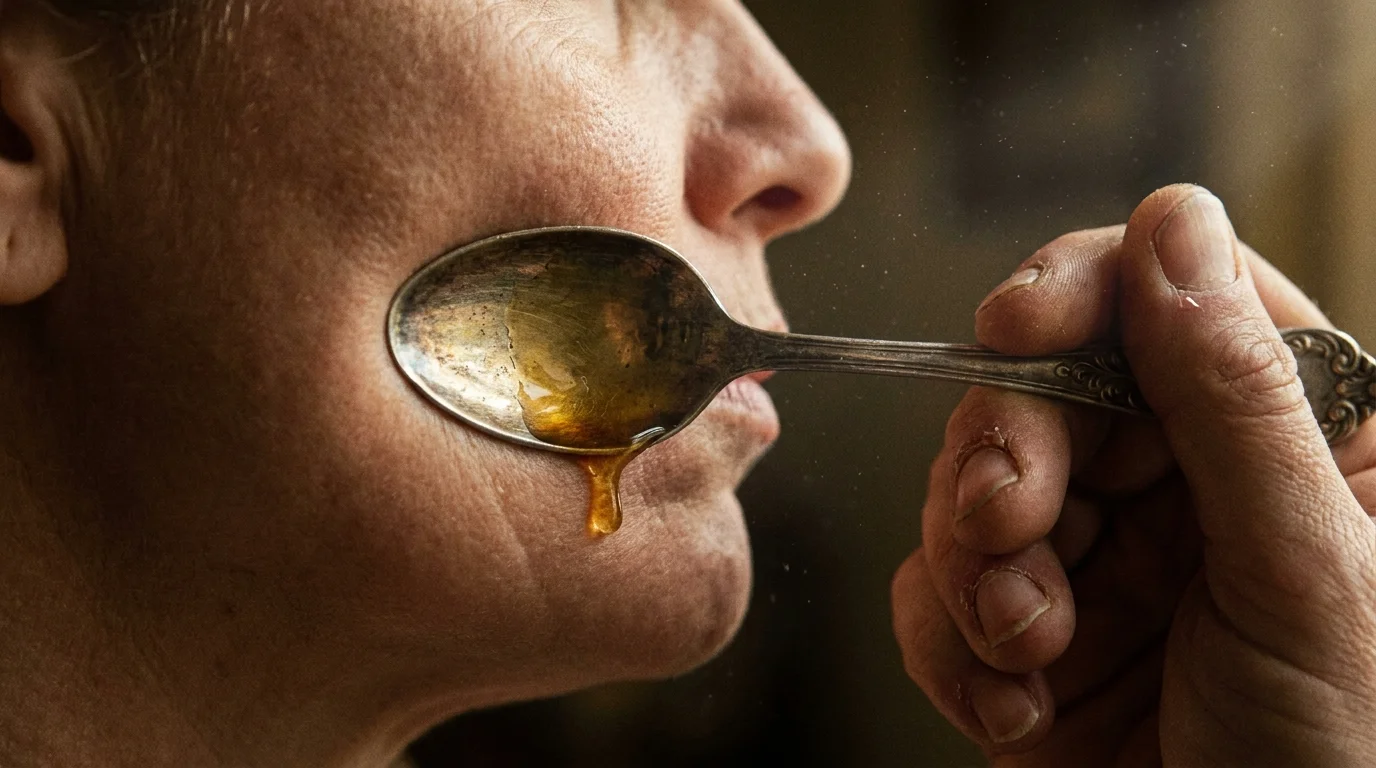
A heavy amber liquid pooling in the hollow of a tarnished silver tablespoon looks unapologetically antique, like an artifact pulled from a coastal apothecary shelf in 1890. It moves with a deliberate, viscous weight under the early morning window light. There is no candy-coating here, no pastel dye, and no attempt to hide behind a cloud of artificial strawberry flavor.
For the past thirty years, modern retail shelves convinced you that this pungent golden oil was an obsolete punishment from childhood storybooks, easily swapped out for sugary biotin chews and fruit-flavored collagen powders. You dutifully took those bright gummies every morning, yet as soon as the temperature dropped below freezing, your nails resumed their familiar pattern of flaking away in brittle, paper-thin sheets.
What vintage coastal households understood intuitively was that parched winter keratin starves without animal-derived, fat-soluble compounds. When winter sets in, your circulatory system prioritizes blood and warmth for your core organs, leaving your fingertips at the far edge of the supply chain. If the fuel reaching those extremities lacks structural fats, your nail beds simply cannot build resilient armor.
The Mortar in the Matrix: Why Keratin Starves in Winter
To understand why brittle nails split during the colder months, picture your nail plate not as a solid piece of plastic, but as a stack of dry slate shingles on an old cottage roof. Keratin cells form those overlapping shingles, but without a dense, oily mortar holding them together, the entire structure shatters the moment dry air strikes. When you wash your hands in warm water and step into sub-freezing air, that missing mortar causes the shingles to lift and shear apart.
Modern beauty marketing often pushes mega-doses of isolated, synthetic water-soluble vitamins that your body flushes down the drain within hours. In contrast, true biological nail repair relies on native retinyl esters (real vitamin A) and preformed calciferol (vitamin D3) naturally suspended in marine fatty acids. These nutrients act as the missing mortar. They do not just sit on the surface like a brittle clear polish; they integrate into the deep nail matrix where new cells germinate.
- Ground turmeric root paste stops burning summer heat rash within ten soothing minutes
- Pennsylvania measles outbreaks force regional health clinics to switch mobile immunization protocols immediately
- North Carolina amoeba infections trigger emergency freshwater triage warnings across regional rural clinics
- Nature Made magnesium oxide caplets expose gut linings to chalky residue sparking bloated bellies
- Ice-chilled Olipop prebiotic sodas trigger sharp gastric cramps by freezing sensitive stomach linings
When these bioavailable fats enter your digestive system, they do not require complex chemical conversion before your tissues can use them. They lubricate the cellular matrix from the root, providing the flexible resilience your fingers need when tapping keyboards, opening stubborn car doors, or gripping freezing metal handles.
The Maker’s Discovery: A Ceramicist’s Winter Hands
Clara Vance, a 52-year-old architectural tile maker in coastal Maine, spent three decades watching her fingers deteriorate every November. Working daily with wet clay, lime washes, and icy rinse buckets left her cuticles raw and her nails splitting down to the quick before the holidays even arrived. High-end topical balms washed away in minutes, and rows of synthetic hair-and-nail capsules did nothing to stop the deep vertical cracks that made simple clay throwing excruciating. On the advice of a retired boatbuilder who kept a bottle of untamed Norwegian oil in his workshop icebox, she began taking a single spoonful of unrefined cod liver oil with her morning coffee; within seven weeks, the jagged fissures stopped forming, and her nail plates grew out with the dense, flexible ring of cured heartwood rather than fragile glass.
Tailoring the Tonic: Adapting to Your Everyday Routine
No two pairs of hands face the exact same winter trials. Depending on how you spend your waking hours, your nail matrix requires a slightly adjusted rhythm to rebuild its protective lipid layers.
The Screen Worker and Heated Office Inhabitant
If your days are spent typing under forced-air heating vents, your nails suffer from rapid moisture evaporation combined with repetitive mechanical micro-trauma. The constant tapping against plastic keys acts like a tiny jackhammer on dehydrated keratin tips. A modest daily serving of traditional cod liver oil supplies steady systemic lipids, restoring the bounce-back flexibility your nail tips need to absorb thousands of keystrokes without fraying at the free edge.
The Outdoor Enthusiast and Cold-Water Swimmer
Those who spend long stretches exposed to freezing wind, ocean spray, or wet outdoor chores endure rapid cycles of tissue contraction and expansion. In this high-exposure environment, your body rapidly depletes fat-soluble stores just maintaining baseline barrier function. Pairing your daily spoonful with a warm, mineral-rich bone broth or salted pasture butter provides the caloric and micronutrient foundation needed to keep peripheral microcapillaries open and fed.
The Recovering Manicure Devotee
Years of acrylic applications, acetone soaks, and harsh UV curing lamps can leave natural nails thin, sensitive, and visibly scooped. If you are stepping away from artificial enhancements to rehabilitate your bare hands, your nail beds are in a state of localized famine. For the first month, consistent fat-soluble nourishment provides the cellular building blocks required to grow a fresh, smooth nail plate from the cuticle base upward without weak spots or bubbling.
Mindful Integration: Building the Morning Habit
Adding a heritage oil to your morning routine does not require holding your nose or enduring an oily film for the rest of the day. A few mindful, deliberate adjustments make the ritual clean, grounding, and effortless.
- Keep it bone cold: Store your bottle in the coldest corner of the refrigerator; chilled oil has a cleaner mouthfeel and keeps its delicate marine lipids perfectly stable.
- Pair with sour notes: Take your spoonful immediately before a glass of warm water infused with fresh lemon juice or a slice of raw orange to naturally cut through any lingering rich oiliness.
- Never heat the oil: Avoid stirring your dose into piping hot tea or boiling porridge, as excessive heat breaks down native retinyl esters before they reach your stomach.
- Time it with solid food: Consume the oil alongside a small bite of whole food—like a soft-boiled pasture-raised egg or a slice of sourdough—to trigger natural bile secretion for complete absorption.
Your Tactical Toolkit should remain refreshingly simple. You do not need expensive dispensers or specialized gadgets. A dedicated heavy teaspoon made of stainless steel or silver, a clean glass dropper if you prefer precise measurements, and a dependable small refrigerator are all the hardware this practice demands.
Reclaiming the Wisdom of Simple Sustenance
There is a profound, quiet relief in stepping away from the endless carousel of neon beauty products and returning to remedies that sustained coastal communities through centuries of brutal winters. When your nails stop tearing and your cuticles stay soft despite freezing drafts, you realize that your body was never broken or deficient in synthetic lab chemicals. It was simply waiting for the dense, unvarnished nourishment that human hands were designed to use.
Real physical resilience is not engineered in a laboratory; it is inherited from whole foods that withstood the coldest seas.
| Key Point | Detail | Added Value for the Reader |
|---|---|---|
| Nutrient Source | Native Vitamin A & D esters in natural marine triglycerides | Immediate cellular bioavailability without digestive conversion lag |
| Structural Mechanism | Replenishes internal lipid bonds between keratin shingle layers | Restores elastic bend and stops horizontal peeling at the tips |
| Winter Durability | Sustains peripheral circulation and cuticle moisture retention | Hands stay protected against dry forced-air heating and ice wind |
Frequently Asked Questions
Will traditional cod liver oil give me a persistent fishy aftertaste?
High-grade, unoxidized oils that are kept refrigerated possess a mild, clean ocean flavor rather than a foul odor. Taking your dose immediately before a squeeze of fresh lemon juice or a morning meal completely neutralizes any lingering taste.How long does it take to see visible improvements in peeling nails?
Because human fingernails grow at an average rate of three millimeters per month, you will see a noticeably thicker, smoother band of fresh nail emergence near the lunula (the cuticle base) within four to six weeks of daily intake.Why is this better than taking a standard biotin supplement?
Biotin is a water-soluble vitamin that primarily supports cellular turnover speed, but it cannot lubricate cell membranes. Natural cod liver oil provides the structural fat-soluble lipids that physically glue keratin cells together, preventing brittleness.Can I use modern fermented cod liver oil instead of cold-processed versions?
Both varieties offer exceptional nutrient profiles. Fermented options carry a tangier, stronger flavor profile, while gentle cold-pressed oils are milder on the palate; both deliver the critical natural vitamin esters required for nail repair.Should I apply the oil topically to my cuticles as well?
While topical application will soften rough edges, cod liver oil functions far more effectively from within. For external cuticle care, a simple jojoba or tallow balm is much more pleasant, leaving the cod liver oil to rebuild your nail matrix from the inside out.