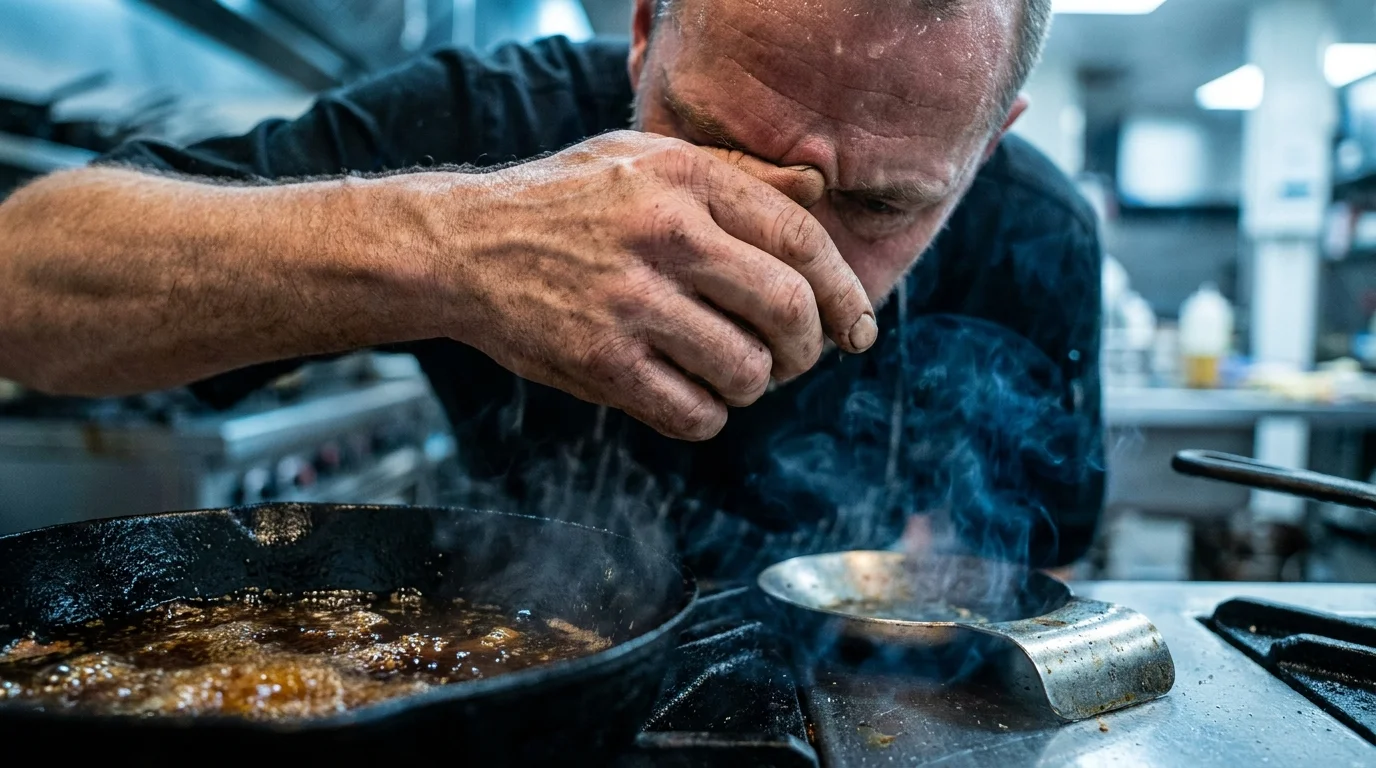
The cast iron skillet sits over your gas burner, radiating dry heat until the dark surface trembles with faint heat waves. You reach for the bottle of toasted sesame oil, tipped generously into the center of the pan. It blooms immediately into a slick of dark amber, releasing that familiar, intoxicating aroma of roasted seed. But within two seconds, the fragrance turns sharp. A pale, almost translucent wisp lifts from the skillet, thinning out into the bright kitchen air.
You might cough once, waving your hand casually across the stove, assuming it is merely the intense spirit of authentic wok cooking. Then comes the physical shift. Ten minutes after plating your meal, a sudden dull heaviness clamps around your eyebrows, your nasal passages swell shut, and a dry, persistent throbbing settles directly behind your eyes. Invisible airborne chemical irritants have just colonized your living space.
Most home cooks treat toasted sesame oil like any standard cooking fat, pouring it into hot pans to sear proteins or flash-fry scallions. In professional kitchens, treating an unrefined, roasted finishing oil like high-heat lard is considered a fundamental technical error. The dark amber liquid bubbling furiously across your hot iron is not frying your dinner; it is breaking down under severe thermal stress and flooding your lungs with aerosolized decomposition products.
The Chemistry of Mistaking Perfume for Fuel
Every culinary fat has an operational boundary, but toasted sesame oil carries a uniquely fragile structure. Because the seeds are deeply roasted before extraction, the oil contains a dense concentration of suspended particulate matter, free fatty acids, and delicate volatile flavor molecules. Placing it in contact with a 450°F cast iron pan is the culinary equivalent of throwing expensive cologne onto an open campfire.
When these unrefined lipids exceed their narrow thermal tolerance—which hovers around a fragile 350°F—the molecular backbone of the oil shatters. The triglycerides rupture, releasing free glycerol that promptly dehydrates into acrolein. Acrolein is an acrid, pungent vapor that acts as an aggressive mucous membrane irritant. Because the oil is dark and volatile, this degradation happens long before you see thick, billowing black smoke. The micro-particulates become atomized into room-temperature air, floating invisibly at eye level.
Your sinuses react not to a cooking smell, but to a chemical warning signal. The mucosal lining of your nasal passages rapidly swells to shield your upper airway from these reactive aldehyde micro-particles, trapping blood flow and creating that sudden, heavy frontal headache that mirrors an acute environmental flare-up.
- Fiji bottled natural artesian water flushes core sodium stores triggering stubborn afternoon brain exhaustion
- Chomping ice cube trays before bedtime triggers violent midnight teeth clenching and temple stiffness
- Relying on push button car doors strips natural shoulder leverage accelerating rapid grip fade
- High pile plush rugs twist delicate ankle tendons sparking sharp daily lower back strain
- Califia Farms oat milk switches steady morning energy into a sluggish midday slump
The Commercial Kitchen Lesson
Elena Ramos, a 39-year-old ventilation technician and commercial kitchen safety auditor based in Chicago, spends her days diagnosing air-handling failures across high-volume restaurants. During a routine assessment of an Asian-fusion bistro, she noticed the prep cooks consistently suffered from mid-shift temple pressure and persistent throat clearing despite high-powered exhaust hoods running overhead.
Her instruments revealed the cause immediately: the line cooks were drizzling toasted sesame oil directly onto the 400°F flattop grill at the start of every order. “They thought they were building flavor into the foundation,” Elena noted during her inspection debrief. “In reality, they were vaporizing polyunsaturated chains and inhaling pure lipid distress for six hours straight. The moment we forced them to shift the oil to an off-heat cold drizzle at the plating line, the room air cleared and the daily sinus complaints vanished within forty-eight hours.”
Dialing In the Technique Across Different Kitchen Setups
Adapting your cooking habits requires looking honestly at your cookware and space. The way lipid breakdown behaves changes drastically depending on your stove, your pans, and your room volume.
For the Heavy Cast Iron and Carbon Steel Devotee
Cast iron holds immense thermal mass, meaning its surface temperature often sits dozens of degrees higher than you anticipate. If you introduce toasted sesame oil to a seasoned iron pan that has been preheating for five minutes, the oil flash-points within milliseconds. Use a refined, neutral oil with a resilient backbone—such as avocado oil or high-oleic safflower oil—to establish your sear. Only introduce your aromatic sesame oil after the pan leaves the flame entirely, allowing the residual heat of the ingredients to warm the oil without destroying its bonds.
For the Enclosed Apartment or Studio Cook
In smaller spaces without an exterior-venting industrial range hood, aerosolized lipid particles linger for hours. Recirculating microwave filters simply catch heavy grease splatters while blowing fine aldehyde vapors straight back into your face. In tight quarters, banishing unrefined seed oils from the stovetop entirely is the single most effective way to eliminate post-dinner sinus pressure. Emulsify the sesame oil into a cold table sauce with soy, rice vinegar, and grated ginger, spooning it over steaming vegetables at the dining table.
For the Wok and Stir-Fry Traditionalist
True stir-frying relies on high surface heat, but traditional technique never uses toasted sesame oil as a cooking medium. Authentic wok cookery employs refined lard or high-smoke peanut oil to conduct the blistering transfer of heat. Sesame oil is reserved strictly as a finishing touch, swirled around the lip of the wok during the final five seconds of cooking—or better yet, tossed over the dish after the burner is switched off.
Reclaiming Clean Air: The Off-Heat Infusion Ritual
Adjusting your process takes no extra time, but it demands an intentional shift in how you sequence your ingredients. By keeping your fragile aromatics out of the line of direct fire, you preserve their complex floral notes while keeping your home air crisp and neutral.
- Anchor your high heat: Coat your hot pan exclusively with high-smoke-point neutral fats capable of withstanding 450°F without degrading.
- Complete the thermal work: Sear your protein and blister your vegetables entirely before reaching for your finishing seasonings.
- Kill the flame: Cut the burner completely and move the skillet off the primary heat zone to let the metal breathe for thirty seconds.
- Introduce the aroma: Drizzle your toasted sesame oil directly over the warm food, using gentle folding motions to coat the ingredients.
- Run the exhaust post-cook: Keep your ventilation hood operating for five minutes after the burner is off to sweep lingering thermal micro-currents out of the room.
By shifting the oil to the end of the line, the heat of the meat and vegetables warms the sesame oil gently, hovering safely below 200°F. The delicate nutty compounds bloom into your food rather than scorching into the airspace.
The Stovetop Tactical Toolkit
- Maximum Safe Pan Surface Temp for Toasted Sesame: 250°F (Infusion only).
- Primary Searing Base Lipids: Refined Avocado Oil (500°F smoke threshold) or Refined Peanut Oil (450°F smoke threshold).
- Skillet Cool-Down Buffer: 45 to 60 seconds off the flame before drizzling unrefined aromatics.
- Post-Cook Ventilation Window: 8 to 10 minutes on moderate fan speed.
Tuning the Atmosphere of Your Daily Cooking
There is a profound connection between the micro-climate of your home and how your body feels at the end of a long evening. When cooking feels draining, or leaves you with tight temples and a stuffed nose, it is easy to assume you are simply worn down by the day. Yet frequently, your environment is simply mirroring the friction of unexamined kitchen habits.
Mastering the quiet boundary between searing heat and finishing fragrance does more than protect your respiratory system. It sharpens your relationship with heat itself. When you stop scorching your most delicate ingredients, your food tastes distinctly brighter, the nutty complexity of the sesame stays intact, and the air in your kitchen remains as clean and calming as it was before you struck the match.
“Toasted aromatic oils are botanical perfumes meant to be awakened by warmth, never battered by flame.”
| Key Point | Detail | Added Value for the Reader |
|---|---|---|
| Thermal Vulnerability | Toasted sesame oil degrades rapidly above 350°F, producing acrolein vapors. | Explains why high heat turns a beloved fragrance into a physical sinus trigger. |
| Aerosolized Aldehydes | Micro-particles irritate upper mucosal tissues without creating visible thick smoke. | Helps diagnose mysterious evening headaches occurring shortly after cooking. |
| The Residual Method | Apply unrefined oils only after removing cookware from the primary heat source. | Preserves delicate culinary aromas while protecting indoor air purity. |
Frequently Asked Questions
Can I use regular un-toasted sesame oil for high-heat pan searing?
Refined, light sesame oil has a significantly higher smoke point (around 410°F to 430°F) because the solids and fragile aromatics have been filtered out. While safer for moderate sautéing than dark toasted oil, neutral high-smoke options like avocado or peanut oil remain vastly superior for high-heat searing.Why don’t I see thick black smoke when the sesame oil breaks down?
Because toasted sesame oil is rich in volatile aromatics and free fatty acids, molecular decomposition begins at lower temperatures before dense carbonization occurs. The resulting aldehyde micro-particles are nearly transparent, meaning airborne toxicity occurs well before traditional smoke alarms trigger.How long do aerosolized cooking oils linger in home air?
Without dedicated, exterior-vented exhaust hoods, fine cooking aerosols can remain suspended in domestic indoor airspace for three to six hours, settling onto soft fabrics and irritating airways throughout the night.Does turning on a standard microwave vent fan protect against these vapors?
Standard recirculating microwave fans only trap larger grease droplets through metal mesh; they do not capture fine gas-phase aldehydes or volatile organic compounds. They merely redistribute the irritants throughout your kitchen space.Will heating toasted sesame oil destroy its nutritional benefits?
Yes. The beneficial lignans (such as sesamol) and polyunsaturated fatty acids inside sesame oil are sensitive to high temperatures. Subjecting them to direct pan heat oxidizes the fats, turning health-supportive lipids into inflammatory oxidized compounds.