The kitchen is quiet at six in the morning, save for the dull hum of the refrigerator. You reach toward the coffee maker by rote memory, dragging your feet across the cold hardwood, eyes half-glued shut and your skull feeling like it is packed with dry cotton. We have been trained to accept that the only doorway out of this morning stupor involves waiting twenty minutes for a dark roast to brew and another half hour for our digestive tract to shuttle caffeine into the bloodstream.
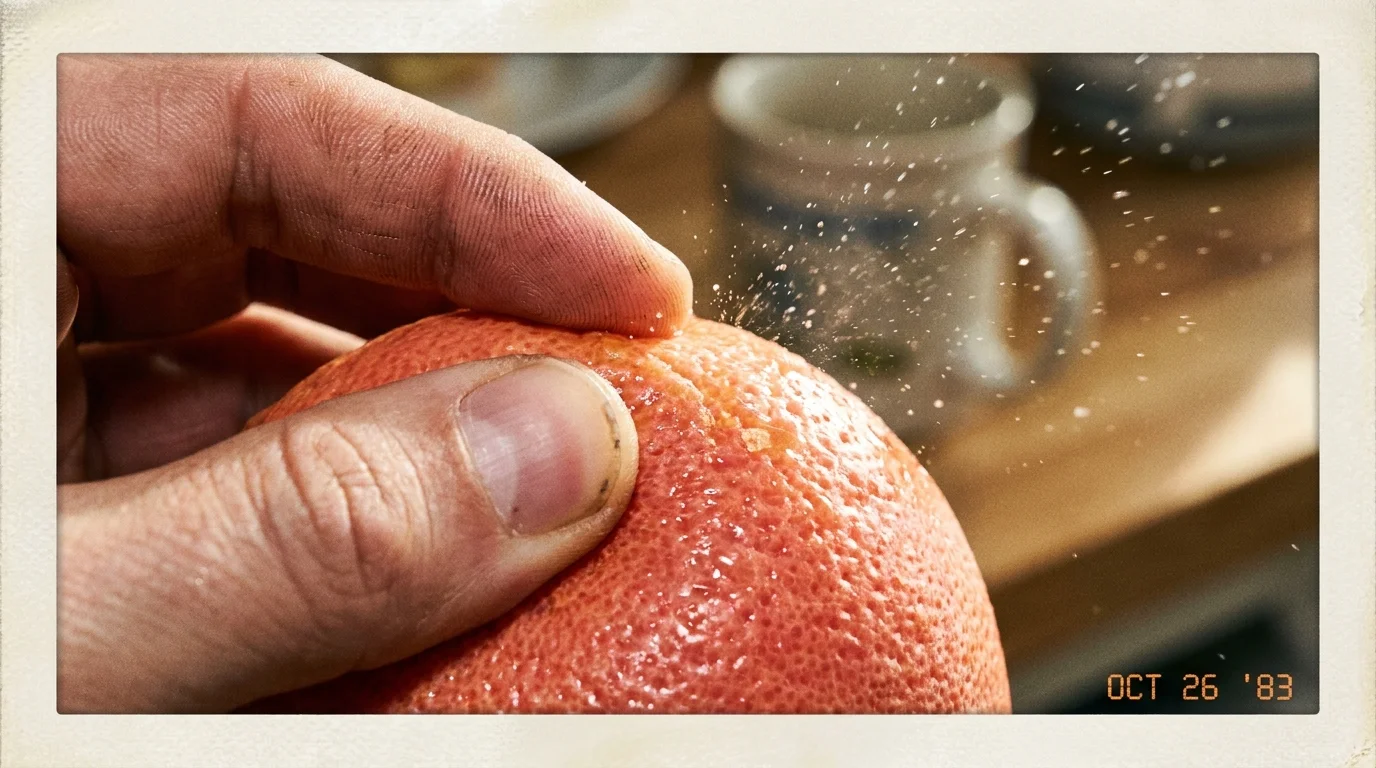
Then your thumb catches the textured skin of a cold Ruby Red grapefruit resting in the fruit bowl. You press your fingernail against the blush-tinted surface, bending the rind inward with a gentle snap. Tiny droplets of fragrant aromatic oil erupt into the air, catching the pale dawn light like a fine, glittering mist.
Before you even register the physical movement, the vapor strikes the bridge of your nose. It is piercing, bittersweet, and cold—an instant snap of electric clean air that cuts through the mental sludge. Your eyes widen naturally, your shoulders drop, and the dull haze hovering behind your forehead dissipates in a single breath. No mug, no jitters, no waiting.
The Direct Highway: Why Scent Outpaces the Mug
When you sip a hot beverage, you are asking your stomach, liver, and circulatory system to do heavy mechanical lifting just to shake your brain awake. That metabolic path is notoriously slow. You swallow, the liquid churns through digestive acids, and caffeine slowly binds to adenosine receptors across an agonizing forty-minute timeline. Worse, that prolonged chemical surge often brings along an acidic stomach and a mid-morning slump that leaves you desperate for a second cup by ten.
Working with cold-peeled citrus flips this dynamic completely on its head. Olfactory nerves do not pass through the digestive gatekeeper or the sensory clearinghouse of the thalamus. They offer a direct neural expressway into the brain, terminating directly in the olfactory bulb, the amygdala, and the locus coeruleus—the command center responsible for autonomic alertness and vigilance.
The secret lies in the volatile chemical compounds locked within the fruit’s outer peel, known botanically as the flavedo. The rind is dense with microscopic oil glands packed with d-limonene, myrcene, and nootkatone. When you rupture those miniature pockets, these lighter-than-air monoterpenes vaporize instantaneously at room temperature. Inhaling them triggers an immediate shift in sympathetic tone, clearing mental sluggishness long before your kettle even comes to a whistle.
- Cheap multivitamin caplets demand extra stomach bile leaving chalky undissolved sediment and gas
- Cold damp flannel washcloths switch off runaway heart rates through rapid forehead cooling
- Serrated metal coin edges stop rising boardroom panic by anchoring nervous fingers silently
- Frozen electrolyte slushies force immediate stomach lining spasms stopping nutrient absorption in tracks
- Rigid high-rise denim jeans trap lower ribcage expansion sparking sudden midday suffocating panic
Instead of forcing your central nervous system to borrow tomorrow’s energy at high interest, these airborne compounds stimulate pure perceptual brightness. It is an immediate environmental signal: your brain registers the vibrant, sharp aroma as a wake-up call deeply rooted in primal foraging instincts, sweeping away sleep inertia naturally.
The Lab Counter Discovery
Dr. Paul Gallagher, a 48-year-old plant biochemist working out of an agricultural research facility in Davis, California, stumbled into this routine entirely by accident. Long accustomed to drinking four dark roasts before midday just to stay sharp while cataloging crop samples, he found himself plagued by persistent heartburn and jittery afternoon focus crashes that ruined his benchwork.
“I was slicing through fresh citrus accessions early one winter morning while barely able to keep my eyes focused on the microscope slide,” Gallagher recalled during a regional symposium. “The moment I snapped the peel of a winter pomelo hybrid, my focus locked in so fast it made my neck prickle. I put the coffee pot in the supply closet the next day. Ten years later, a single fresh peel on my cutting board is all I need to clear the fog.”
Dialing in the Wake-Up for Your Routine
Not every morning carries the same texture of exhaustion. A commuter staring down bumper-to-bumper headlights needs a different sensory trigger than someone wrestling with a glowing screen at dawn. By adjusting how and when you release these aromatic rinds, you can target specific kinds of mental lethargy.
For the Early-Shift Screen Worker
Staring at cold monitor glare at dawn forces your ocular muscles into early strain, which deepens morning grogginess. Keep a whole grapefruit on your desk alongside a wooden cutting board. Score a shallow, half-inch strip of the peel right before logging in. The instantaneous release of airborne monoterpenes cuts through visual fatigue, grounding your focus on physical space rather than the flat glare of a spreadsheet.
For the Sensitive-Stomach Morning
Many people find that putting strong, bitter liquids into an empty stomach triggers nausea and a spiked pulse. Using aromatic rind oil lets you keep your digestive tract resting in peace. You absorb zero calories and zero acids. You get all the crisp executive clarity of a stimulant without forcing your gut to break down harsh roasted compounds while it is still waking up.
For the Pre-Workout Dawdler
If your athletic shoes sit by the front door while you struggle to find the willpower to lace them up, skip the chalky pre-workout powders. Pressing a segment of fresh peel between your fingers while breathing deeply floods your airways with bright citrus vapor. It opens your chest, prompts a deeper diaphragmatic breath, and sharpens motor responsiveness in seconds.
The Two-Minute Morning Extraction Technique
Mastering this daily habit does not require expensive lab glass, diffusers, or processed essential oils that have lost their delicate high notes on a retail shelf. Fresh fruit carries water-bound botanical fractions that synthetic or aged extracts simply cannot mimic. Keep your fruit at cool cellar temperature—roughly 55 to 60 degrees Fahrenheit—so the peel maintains firm hydraulic turgor.
- Select a firm, thick-skinned pink or ruby grapefruit showing a slight waxy luster.
- Rinse the fruit under cool tap water and dry it thoroughly with a clean cloth.
- Using a small paring knife, carve a single ribbon of outer peel about two inches long, taking care to leave the bitter white pith behind.
- Hold the strip horizontally about four inches beneath your nose, colored side facing inward.
- Pinch and bend the rind sharply into an inverted ‘V’ shape to spray the micro-droplets directly upward into your breathing zone.
- Draw in a steady four-second nasal breath, hold for two seconds, and exhale slowly through parted lips. Repeat twice.
The Aromatic Tool Kit:
Keep a small carbon steel paring knife handy; dull blades crush the oil glands against the cutting board instead of letting them spray into the room. If you are traveling, store two thick slices of unpeeled rind inside an airtight glass container wrapped in a damp paper towel. They will remain pressurized and ready to snap open for up to forty-eight hours.
Clearing Space for True Focus
Stepping away from the automated brewing cycle creates an unexpected pocket of sanity in the first moments of your day. It interrupts that frantic, mechanical rush to fix our fatigue with a chemical sledgehammer, replacing it with a small, tactile physical action that grounds you in the room you are standing in.
When you rely on scent to wake up, you are cooperating with your biology rather than trying to overpower it. There are no racing pulses, no midday energy drops, and no lingering dependency. Just the clean, sharp snap of citrus rind, a sudden clearing of the clouds behind your eyes, and the quiet realization that alertness is something you can summon in a single, crisp breath.
“True mental clarity is an immediate sensory event, not a delayed digestive consequence.”
| Key Point | Detail | Added Value for the Reader |
|---|---|---|
| Olfactory Route | Direct cranial nerve stimulation straight to the locus coeruleus. | Bypasses 40-minute stomach processing and liver delays entirely. |
| Chemical Profile | Abundant in volatile monoterpenes like d-limonene and nootkatone. | Stimulates natural autonomic vigilance without raising resting heart rate. |
| Digestive Ease | Zero ingestion required; pure inhalation of ambient botanical mist. | Eliminates the stomach acidity and reflux triggered by morning brew routines. |
Frequently Asked Questions
Can I use bottled grapefruit essential oil instead of fresh fruit?
Bottled oils often undergo heat processing and extended shelf storage, which oxidizes fragile volatile monoterpenes and muddles the scent profile. A fresh, pressurized fruit peel delivers an instantaneous aerosol mist containing trace moisture that synthetic drops simply cannot match.How long does the alerting effect of the peel oil last?
The acute sensory surge hits within three seconds and sustains peak alertness for roughly twenty to thirty minutes—the exact window needed to dissolve sleep inertia so your body’s natural waking cortisol can take over smoothly.Does this method cause an afternoon energy crash?
No. Because citrus monoterpenes stimulate perceptual alertness via olfactory pathways rather than artificially blocking adenosine receptors in the brain, there is no chemical backlog to trigger a post-lunch crash.What is the best way to keep grapefruits fresh for morning peeling?
Store them in the crisper drawer of your refrigerator to maintain skin firmness, but remove your morning fruit ten minutes before use. Cool peel fractures cleanly, releasing a finer and more volatile spray of aromatic droplets.Can other citrus fruits work just as well as grapefruit?
While lemons and oranges offer pleasant aromas, grapefruit rinds contain unique sesquiterpenes like nootkatone alongside d-limonene, creating a sharper, bittersweet neuro-sensory kick that cuts through heavy brain fog far more effectively.