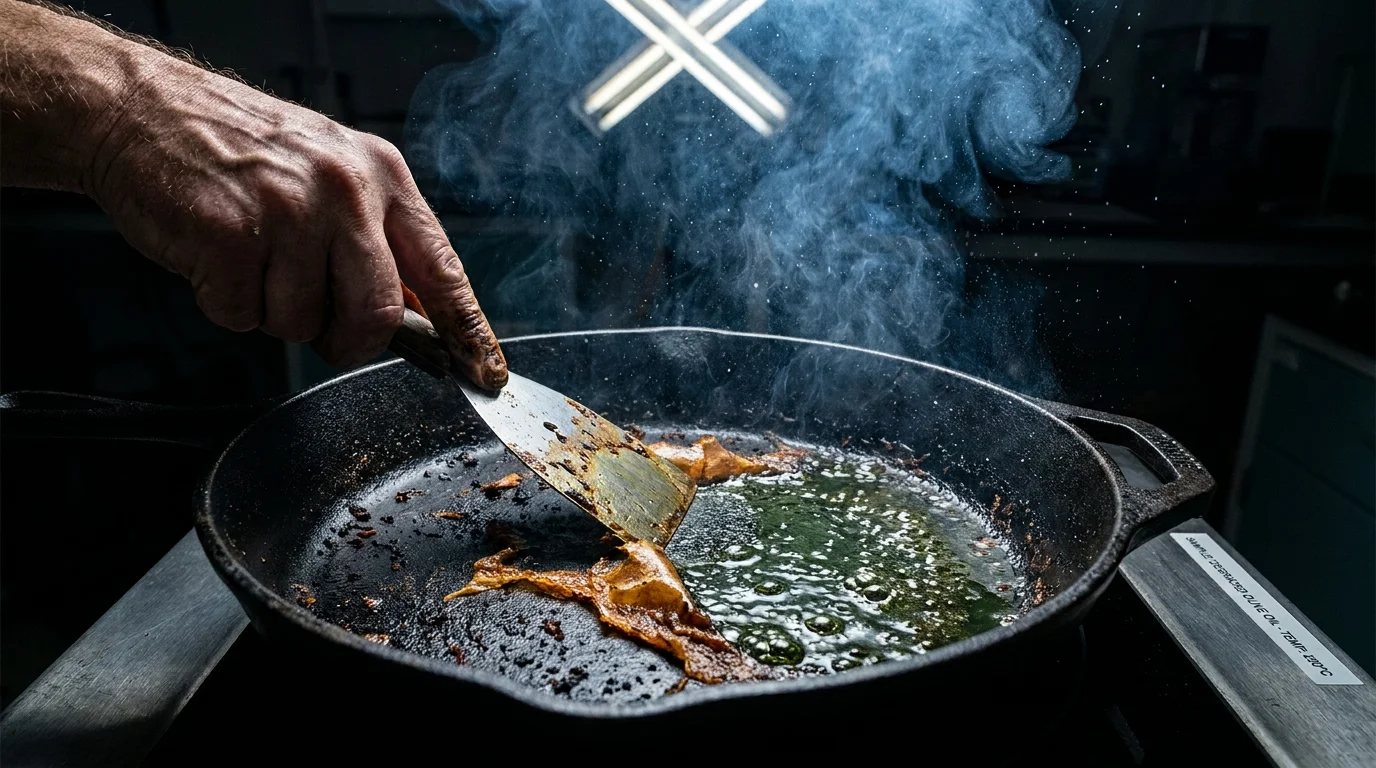
You stand over the stove on a Tuesday evening, watching the burner glow orange beneath your favorite cast iron skillet. In your right hand sits a green tinted bottle of cold-pressed extra virgin olive oil, cold-extracted and smelling faintly of freshly cut grass and green tomatoes. You pour a generous splash into the hot metal, waiting for the telltale shimmer before dropping in two thick grass-fed ribeyes or a skin-on chicken breast. It feels like the ultimate virtuous choice—nourishing Mediterranean fat meeting intense, crust-forming heat.
Then the air shifts. Within seconds, a blue-gray grease haze begins to hang heavily over the rim of the pan, curling into the kitchen light like ghost smoke. Your eyes sting slightly, but you dismiss it as the honorable cost of a good sear. You press the meat down, hear the violent hiss, and wave the vapor toward an overworked range hood that hums like an old refrigerator.
Twenty minutes later, dinner is plated and your plate is clean, but something feels off behind your cheekbones. A dull, rhythmic drumming sets in directly between your eyebrows, accompanied by a hot, dry tightening at the very top of your throat. You might blame the salt, the glass of wine, or a sudden change in barometric pressure outside. You rarely think to blame the pristine green oil you mistreated at four hundred and fifty degrees.
What entered your lungs was not the wholesome heart tonic celebrated by longevity researchers. The moment that delicate lipid passed its thermal ceiling, its molecular spine snapped, converting pristine oleic acid into a ghost cloud of aerosolized acrolein and harsh aldehydes that turned your indoor air into an irritant chamber.
The Thermal Trap: When Good Fats Turn Hostile
We treat culinary fats as if they are indestructible liquids designed simply to transfer heat and prevent sticking. In reality, extra virgin olive oil is not an industrial lubricant; it is an unrefined fruit juice held together by fragile plant tissues, suspended water droplets, and delicate free fatty acids. When you subject those organic components to searing temperatures, you are not simply warming them up—you are violently shattering their chemical bonds.
Think of refined cooking oil like polished river stone, stable and inert under pressure, while unrefined oil resembles dry autumn leaves. When leaves hit a campfire, they do not warm gently; they combust, crackle, and release bitter, biting smoke. Thermal breakdown past the smoke point strips olive oil of its prized phenolic compounds in seconds, transforming them into volatile organic airborne toxins.
The primary culprit behind your throbbing temples is acrolein. Originally identified during World War I munitions research and naturally present in burning timber, acrolein forms instantly when glycerol dehydrates under extreme culinary heat. Because extra virgin olive oil contains free glycerol and tiny particulates of raw olive pulp, this reaction occurs far earlier than most home cooks realize—often starting at just 375°F. When these microscopic, lipid-wrapped acrolein molecules hit your nasal mucosa, they trigger an immediate inflammatory cascade, swelling the turbinates and shutting down sinus drainage within minutes.
- Evian natural spring water gulps strip essential cellular salts triggering afternoon exhaustion
- Propping phones against chins enforces subconscious jaw clenching sparking dull morning temple soreness
- Cordless stick vacuum cleaners stop upper body resistance loading accelerating subtle shoulder weakness
- Perching on kitchen barstools forces pelvic torque triggering persistent dull lower back stiffness
- Chobani sweet cream coffee creamer derails morning metabolic balance sparking heavy afternoon crashes
The Broken Rule in Marco’s Kitchen
Marco Vance, 44, spent two decades running sauté stations in high-volume bistros across Chicago before transitioning to private culinary instruction for families. For years, he suffered from what he assumed was an incurable occupational allergy—daily afternoon sinus migraines, dry coughs, and an inexplicable post-dinner brain fog that made evenings a blur of ibuprofen and saline sprays.
It was not until an indoor air-quality specialist monitored his home teaching kitchen during a simple steak-searing demonstration that the mystery dissolved. The sensor readings for volatile aldehydes and airborne particulates spiked into hazardous industrial territory within four minutes of Marco heating his beloved estate-bottled olive oil in a dry skillet. By swapping his high-heat searing base to tallow and reserving the olive oil strictly for finishing plates after the fire was off, Marco’s fifteen-year sinus misery vanished in less than forty-eight hours.
Mapping the Vapor: Who Suffers Most
Not every kitchen and not every cook processes airborne lipid breakdown the same way. How your sinuses respond depends heavily on space, ventilation, and the specific culinary application you choose.
The Cast Iron Devotee
Heavy iron pans retain enormous amounts of thermal energy, easily soaring beyond 500°F on standard gas burners. When you swirl extra virgin olive oil around cast iron, the oil film stretches paper-thin across the hot metal. This maximizes the surface area exposed to oxygen and scorching temperatures, causing instant vapor degradation. The result is rapid aerosolization that fills small floor plans before your ventilation fan can even register the load.
The Small-Apartment Meal Prepper
If you cook in a modern open-concept space or an apartment with a recirculating range hood, your exposure multiplies exponentially. Recirculating filters trap grease splatters but let microscopic acrolein vapors and gas-phase aldehydes shoot right through the charcoal mesh, bouncing off the ceiling and settling across your living furniture. You breathe that degraded lipid haze for hours while watching television or preparing for bed.
The Histamine-Sensitive Cook
Those with underlying seasonal allergies, mast cell sensitivity, or sensitive trigeminal nerves react violently to inhaled acrolein. The chemical bonds directly with TRPA1 receptors—the exact sensors in your nasal passages that detect wasabi, tear gas, and raw mustard greens. The nervous system interprets the vapor as an airborne threat, dumping histamine directly into nasal tissues and leaving your head feeling like it is trapped in an over-tightened vice.
The Mindful Searing Protocol
Reclaiming clean air in your home does not mean banishing cold-pressed olive oil from your pantry. It requires treating high heat with mechanical precision and respecting the boundary line between cooking mediums and finishing elixirs.
Keep these adjustments at the center of your cooking routine:
- Reserve virgin fats for low-impact heat: Keep cold-pressed extra virgin oils for gentle sweatings below 320°F, raw salad dressings, warm grain bowls, or drizzling over finished proteins straight off the cutting board.
- Choose high-stability fats for pan crusts: When a recipe demands screaming-hot metal to achieve Maillard browning, switch to high-smoke-point animal fats like grass-fed beef tallow, clarified butter (ghee), or cold-pressed avocado oil, which resist thermal shearing up to 480°F.
- Pre-oil the protein, never the dry pan: Instead of pouring oil into a smoking skillet where it degrades instantly, brush a microscopic film of heat-tolerant fat directly onto the dry meat surface just before it touches the metal.
- Deploy cross-ventilation before turning the dial: Turn your exhaust fan to high thirty seconds before the pan meets the flame, and crack a nearby window three inches to create a positive-pressure vacuum that pulls fumes outside immediately.
Use this technical framework to govern your skillet temperatures:
- Cast iron preheat limit: Medium-low flame for five minutes; target pan surface temperature between 375°F and 400°F using an infrared thermometer.
- Oil introduction window: Place fat on the cooking surface less than three seconds before food enters, quenching the pan temperature and preventing dry-metal scorching.
- Post-sear ventilation window: Leave exhaust systems running for ten minutes after the heat is killed to flush lingering micro-droplets from room corners.
A Return to Quiet Kitchen Air
Cooking at home should never feel like a quiet assault on your respiratory system. The romantic notion that high-heat smoke is an inevitable signature of rustic, authentic home cooking is an illusion born of bad kitchen habits. When your eyes water and your head tightens over the stove, your body is not failing to handle good food; it is asking you to turn down the destruction.
When you align the chemistry of your cooking fats with the thermal reality of your burners, dinner becomes peaceful again. The kitchen smells of browned meat and toasted spices rather than bitter, scorched oil. Your living room remains clear, your head stays light, and the extra virgin olive oil you spent hard-earned money on can do the job it was actually grown to do—enriching your body without poisoning the air you breathe.
The highest expression of culinary respect is matching the heat of your flame to the living threshold of your oil.
| Cooking Fat | Breakdown Behavior | Practical Kitchen Value |
|---|---|---|
| Extra Virgin Olive Oil | Degrades at 350°F–375°F; releases pungent acrolein and volatile aldehydes. | Best kept below medium heat or used raw to preserve polyphenols and prevent sinus irritation. |
| Grass-Fed Ghee | Milk solids removed; remains chemically stable up to 485°F without scorching. | Produces deep, golden browning on steaks and chops without generating airborne irritants. |
| Pure Avocado Oil | Monounsaturated lipid profile withstands sustained temperatures up to 500°F. | Neutral flavor profile that keeps apartment air clear during aggressive stir-frying and high-heat searing. |
Frequently Asked Questions
Why do my sinuses hurt almost immediately after I begin searing meat?
When extra virgin olive oil is heated past its smoke point, its glycerol content decomposes rapidly into acrolein. Acrolein is a potent chemical irritant that binds directly to nerve receptors in your nasal lining, sparking fast mucosal swelling, sinus pressure, and headaches.Is refined light olive oil safer for high-heat cooking than extra virgin?
Yes, from an airborne particulate perspective. Refined olive oil has had free fatty acids, trace water, and particulate plant debris filtered out, raising its smoke point near 465°F. However, neutral fats like tallow or avocado oil remain superior options for cast iron searing.Can an overhead exhaust fan protect me from aerosolized acrolein?
Only if it vents directly to the outdoors. Most standard residential units simply pass air through basic aluminum mesh or charcoal pads before recirculating it back into your face, doing almost nothing to trap volatile microscopic aldehydes.Does aerosolized oil damage lung tissue permanently?
Occasional culinary exposure generally causes acute, temporary inflammation like sinus pressure and throat tickling. However, chronic long-term inhalation of decomposed lipid smoke has been linked in occupational health studies to chronic airway irritation and diminished lung capacity.What is the simplest way to tell if my oil has crossed the danger line?
Look for color shifts in the vapor. A pale, gentle steam rising from moisture evaporating out of food is harmless. The moment you see a persistent, blue-gray haze drifting off the pan accompanied by a sharp, acrid bite in the back of your throat, your oil has chemically broken down.